
Travel Guide
Plan your visit around Matira Beach, Mount Otemanu, and more of Bora Bora, French Polynesia.
Discover the best things to do in Bora Bora, French Polynesia, from signature sights to memorable local experiences.
The island concentrates its charms around an emerald lagoon, jagged Mount Otemanu, and a ring of motu. Expect easy shore swimming at Matira Beach, guided lagoon and coral‑garden snorkel tours, visits to a pearl farm, and short boat hops to private motu for picnics.
Vaitape is the arrival and service hub for bookings, while scattered WWII sites and small conservation projects add historical and environmental context to a marine‑focused visit.
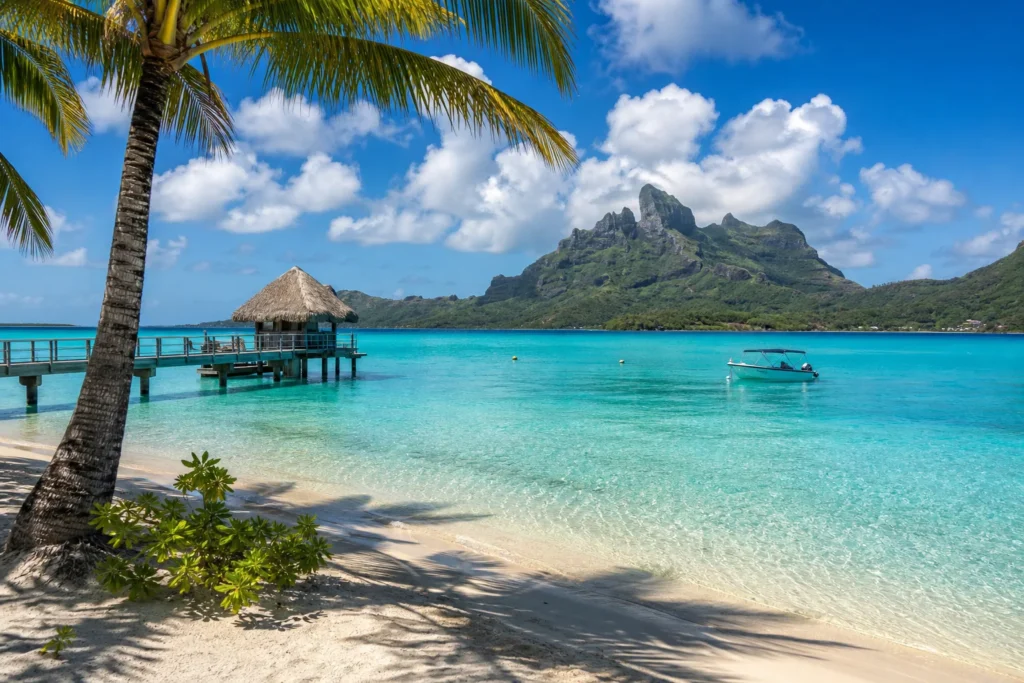
Why Visit Bora Bora
Visitors come to Bora Bora for dramatic scenery and uncomplicated water‑based leisure. The lagoon’s coral gardens and shallow channels make snorkeling and guided reef tours exceptionally accessible.
Mount Otemanu frames the island visually and invites viewpoint visits and aerial flights. Matira Beach provides a rare public stretch of white sand for swimming and sunsets, while Vaitape supplies dining, markets and local life.
Pearl farms, private motu picnics and calm shallow waters create a quintessential South Pacific escape centered on beauty and marine life.
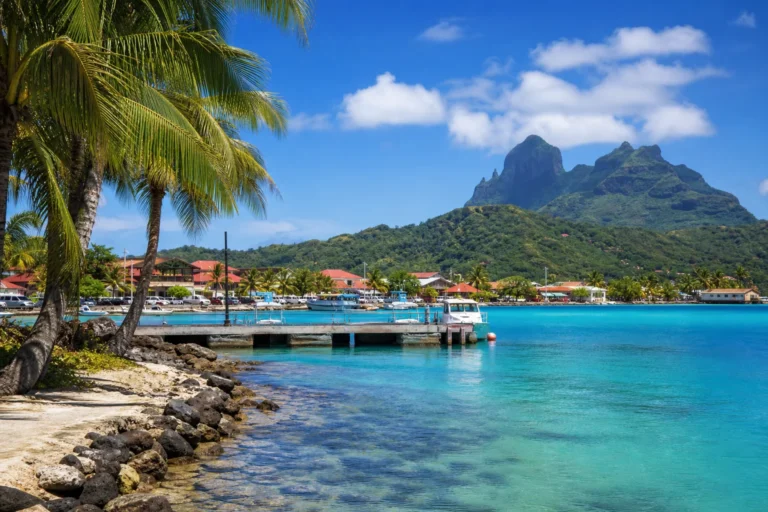
Top Things to Do in Bora Bora, French Polynesia
Bora Bora’s must‑do list centers on the lagoon, its public shoreline, and a handful of cultural and historical experiences. Below are the island’s most notable places and activities to plan into your visit.
Matira Beach
Matira Beach sits at Bora Bora’s southern tip and is the island’s best‑known public shoreline. A long sweep of very pale, crushed‑coral sand meets a broad, shallow lagoon that fades through multiple turquoise shades, giving visitors easy water access and two different lagoon exposures to explore.
People come to swim, picnic under coconut palms, and wade far into waist‑deep water. The lagoon’s gentle slope and warm temperature make Matira family‑friendly and suitable for independent shore snorkeling near rocky points where coral fingers attract small reef fish.
Matira is especially significant because much of the island’s shoreline is private to resorts, while Matira remains open to everyone.
Mount Otemanu
Mount Otemanu rises dramatically from Bora Bora’s interior and is the island’s most iconic peak, reaching about 727 metres. Its jagged summit and sheer basalt faces form a sculptural silhouette visible from the lagoon, motu and many viewpoints around the island—making it the primary natural emblem of Bora Bora.
Visitors most often enjoy Otemanu visually: from boat cruises, scenic photo points, and aerial helicopter flights. Guided hikes and licensed operators provide the safest ways to explore the mountain’s flanks; independent summit attempts are impractical for most because of steep terrain and dense vegetation.
Check trail access and operator credentials before planning a closer visit.
Bora Bora lagoon and coral gardens (lagoon tours & snorkeling)
Bora Bora’s lagoon is the island’s defining visitor landscape: a shallow, protected sea ringed by motu and dotted with living coral gardens. Guided boat tours commonly visit shallow coral flats where snorkelers see reef fish, stingrays and resident blacktip reef sharks, while many excursions combine snorkeling with motu stops and a picnic on a sandbank.
Coral gardens are important ecologically and experientially; restoration projects operate nearby and ethical operators emphasize observation over provoked animal encounters. For larger coral sites and the Lagoonarium you need a boat and a guide, while Matira Point offers easier shore snorkeling.
Bring quality gear and reef‑safe sunscreen and confirm conservation practices with your operator.
Vaitape (main town)
Vaitape is Bora Bora’s compact administrative and commercial hub on the western shore and the usual landing point for navette and boat transfers from Motu Mute airport. The town concentrates small shops, tour desks, banks, supermarkets, cafés and transport services, making it the practical gateway for bookings and local errands.
Vaitape gives visitors a clearer sense of everyday island life than resort areas: you’ll find pearl and souvenir shops, a small maritime museum, and evening food roulottes or weekly markets. Plan transfers around published navette schedules, carry some local cash for small purchases, and confirm tour licensing and pickup points before booking excursions from town.
Bora Bora Pearl Farm
The Bora Bora Pearl Farm sits on a low motu and introduces visitors to cultured black‑pearl cultivation. After a short boat transfer, a guided introduction explains the biology of the black‑lipped oyster and the stepwise care that produces cultured pearls, followed by a supervised snorkeling segment near oyster lines and coral fingers.
The visit combines marine science with local craft and storytelling: demonstrations show how pearls are removed and graded, and a small showroom displays finished pieces. Practical advice: bring swimwear, reef‑safe sunscreen and a snorkel mask, and verify transfers and seasonal access when booking.
Haamare / WWII guns and military sites
Haamare (often shown as Ha’amaire or Pointe Fitiu’u) preserves a compact coastal battery from Bora Bora’s World War II defenses, including a pair of marine guns placed during Operation Bobcat in 1942. Interpretive panels at the site explain the emplacement and the island’s wartime role as a strategic refuelling and staging base.
The battery offers visible traces of the wartime landscape—gun emplacements, a firing post and ammunition dumps—overlooking the controlled reef pass into the lagoon.
Access requires a short, sometimes uneven walk of about fifteen minutes; local guides or drivers often include Haamare on WWII circuits and can provide accurate context while helping visitors avoid trespass on private land.
Motu Tapu (private motu picnic/island visits)
Motu Tapu is a very small, traditionally revered islet set in the inner lagoon and often reserved for private or resort‑arranged visits. Landings are made by short boat transfer from Vaitape or resorts; access is commonly limited and some operators hold exclusive rights, so confirm permissions before booking.
Typical visits pair shallow snorkeling around reef fingers with a shaded picnic ashore. There are no permanent facilities, so visits are temporary and self‑contained—bring drinking water, shade and reef‑safe sunscreen, keep children close, and follow guide instructions to protect the islet’s cultural and environmental values.
Jardin de Corail (Coral Garden)
The Jardin de Corail is a community‑driven coral restoration and shallow reef garden project within Bora Bora’s lagoon. Initiated through partnerships between local conservation groups and resort teams, the garden functions as a nursery and educational snorkeling area where transplanted coral fragments support juvenile fish and invertebrates.
Visitors usually join guided snorkeling tours where staff explain coral biology and restoration techniques; the site is shallow and calm when conditions permit, making it suitable for confident novice snorkelers. Access may be managed by resort concessions or licensed operators, so check permitted entry and favor providers who demonstrate ongoing monitoring and responsible restoration practices.
Best Time to Visit Bora Bora
Bora Bora has a warmer, wetter season roughly November–April and a drier season from May–October. For calmer seas, clearer underwater visibility and lower chances of heavy rain, travel during the drier months (May–October).
Shoulder months such as April and November can offer decent weather with fewer crowds and sometimes lower prices. Always check current forecasts and local operator schedules before booking lagoon activities or motu transfers.
Getting Around Bora Bora
Arrivals fly Air Tahiti into Motu Mute (Bora Bora Airport) and transfer by boat to the main island or resorts. Vaitape is the island’s road and service center; taxis, rental cars, scooters and quad rentals handle short drives while many resorts run shuttle boats.
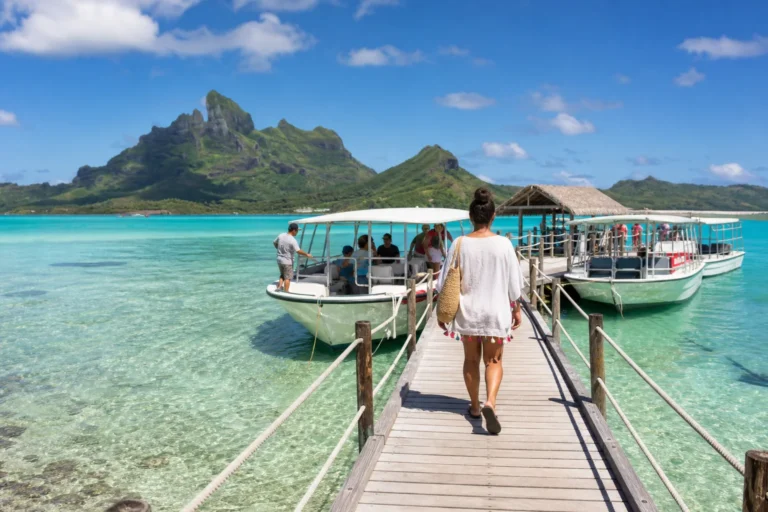
Lagoon access depends on small‑boat operators departing from Vaitape or resort docks—book licensed operators in advance. Walking and bicycling work well around Matira and Vaitape, but expect boat transfers for most motu and coral‑garden activities.
Location
Map of Bora Bora, French Polynesia
The interactive map loads only when you choose to view it.
Plan Your Visit to Bora Bora
Most visitors fly from Papeete and complete a boat transfer to Vaitape or resort docks. The island’s paved coastal road loops about 30 km; public transport is limited so plan taxi or rental arrangements from Vaitape.
Book lagoon activities, pearl‑farm visits and motu picnics ahead during high season. Allow extra time for boat transfers and verify operator credentials, pickup points and any mobility considerations when arranging excursions to motus or reef sites.
Local Tips for Bora Bora
Base short stays near Vaitape for shops, markets and boat connections; Matira Point and Matira Beach are the most accessible public beaches. For snorkeling and coral gardens, choose operators who follow reef‑friendly practices—Jardin de Corail is a well‑known restoration project.
Respect private motu access rules and confirm landing permissions. For WWII sites such as Haamare, consider a guided driver or short tour to avoid trespass and to learn accurate local history.
Live conditions
Current Weather

Updated 2026-09-21 13:45
- Feels like
- 24°C / 76°F
- Today’s high / low
- 25°C / 77°F · 24°C / 76°F
- Humidity
- 60%
- Wind
- → 15 km/h
- Precipitation
- 0 mm
- Chance of rain
- 22%
- Local time
- 2026-09-21 13:50
Safety
Bora Bora’s lagoon and reefs are generally safe when you follow local guidance. Currents near reef passes can be strong—swim and snorkel at supervised or guided sites.
Protect coral and wildlife by not touching reef, anchoring in sand, and using reef‑safe sunscreen. Respect private motu boundaries and follow operator safety briefings for boat transfers and picnics.
Sun exposure is intense: use shade, hydrate, and apply sun protection. For medical or water‑quality concerns, consult local authorities before planning sensitive activities.