
Путеводитель
Короткие маршруты и главные советы по Лимону
Ищете, чем заняться в Лимоне, Коста‑Рика? Этот путеводитель поможет сравнить главные достопримечательности, местные советы, карты и погодные условия.
Ключевые активности: прогулки по набережной (malecón), посещение Parque Balvanero Vargas и культурных площадок вроде Museo Etnohistórico и Casa de la Cultura. Муниципальные пешеходные маршруты объединяют эти точки в удобный центр‑маршрут, который подчёркивает портовую историю и карибское наследие города.

Зачем ехать в Лимон
Посетите Лимон, чтобы почувствовать карибское культурное сердце Коста‑Рики: живые набережные, блюда афро‑карибской кухни и хорошо сохранённая викторианско‑карибская деревянная архитектура.
Общественные парки, например Parque Vargas, и доступные культурные площадки помогают понять портовую и многоэтничную историю провинции. Город также подходит как база для коротких природных вылазок — близлежащие пляжи и островки легко комбинируются с городской программой.
Муниципальные и национальные туристические материалы предлагают готовые пешеходные маршруты, которые концентрируют ключевые объекты в одном удобном визите по центру города.
Чем заняться в Лимоне, Коста‑Рика
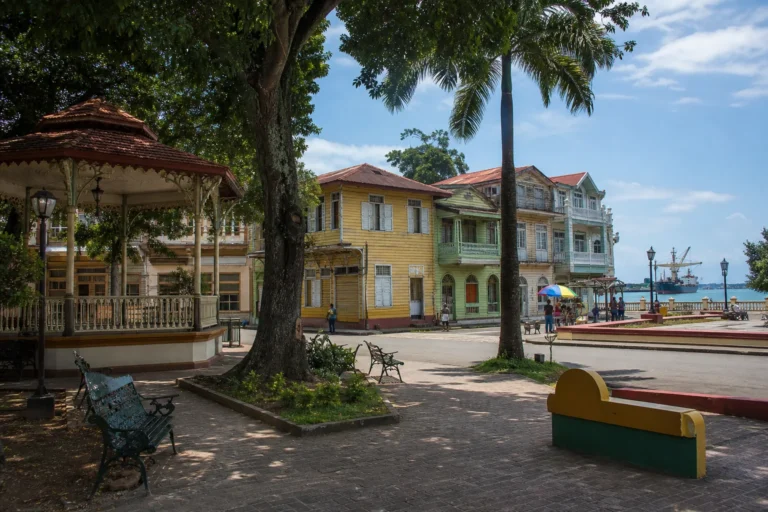
Компактный центр Лимона сосредоточен вокруг Parque Balvanero Vargas, рабочего набережного и нескольких небольших культурных площадок. Официальные пешеходные маршруты сводят эти точки в удобный круговой маршрут через исторические здания, общественные памятники и портовые виды.
Parque Balvanero Vargas (Parque Vargas)
Historic central park of Puerto Limón created from a United Fruit Company land donation in 1895 and named for Governor Balvanero Vargas.
Visitors experience a planted tropical green space in the city centre with tall Caribbean trees, palms and ornamental plantings arranged in a formal, Versailles‑inspired layout; the park contains an octagonal kiosk (originally Victorian metal, replaced in 1911 with a reinforced‑concrete, neoclassical/Art Nouveau structure) and several memorials that reflect Limón’s Afro‑Caribbean and port history.
The park is a durable, public urban green where people walk, rest, photograph the kiosk and view nearby historic streets; it also anchors walking routes that connect to the waterfront (tajamar) and other downtown heritage sites. The site has been recognized as part of Limón’s architectural and historic patrimony.
Practical note: this is an outdoor public park, so visitors should expect typical city‑park conditions (shade and humid microclimate, pedestrian access) and verify any temporary closures or special events with the municipal tourism office before planning a visit.
Puerto de Limón (port and waterfront/malecon)
The Puerto de Limón area is both Costa Rica’s principal Caribbean port complex and the adjacent urban waterfront (often described locally as the tajamar or malecón) that runs along the city’s shoreline.
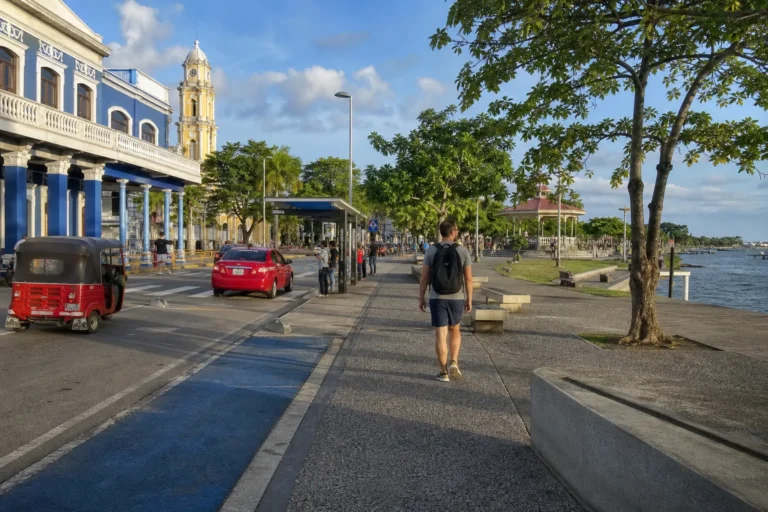
For visitors the waterfront offers coastal views, a working‑port character, and a promenade connection to Parque Vargas and downtown heritage architecture; it is frequently cited in local walking routes and tourism materials as a place to feel the city’s maritime identity.
Important visit implications: much of the waterfront is public and suitable for strolling and photography, but large parts of the port are active, restricted, or industrial (cargo terminals, operational quays and logistics areas).
Cruise passenger facilities and pedestrian improvements have been planned or promoted at times, so guests arriving by cruise or touring near the docks should confirm current passenger access rules, terminal arrangements and any security or restricted‑area limits with the port authority or cruise operator before visiting.
Also verify local safety guidance and any temporary construction or redevelopment projects on official municipal or port pages prior to an inland waterfront visit.
Официальный сайт Puerto de Limón (port and waterfront/malecon) →
Museo Etnohistórico de Limón (Museo de Limón)
Identity and visitor value: The Museo Etnohistórico de Limón (commonly called Museo de Limón) is the regional ethno‑historical museum for Puerto Limón that interprets the province’s Afro‑Caribbean, indigenous and port histories.
It is institutionally recognized in Costa Rica’s museum network (created by executive decree and associated with the Casa de la Cultura / Dirección General de Museos) and has long been housed in a historic civic building in downtown Limón (the former post office / municipal cultural complex).
Why visit: the museum presents local material culture, archival photographs, and an Afro‑Caribbean room/sala that explain migration, banana‑industry and port histories that shaped Limón’s identity—making it a compact, context‑rich stop for visitors wanting the city’s cultural backstory.
Durable visit implications and practical context: the museum occupies a fixed historic building in central Limón and is administered within Costa Rica’s public cultural institutions, but staffing, exhibitions and access policies (temporary closures, special‑access programming or required guided visits) can change.
Visitors should expect a small curated display rather than a large national collection and should confirm current opening status, visitor rules, guided‑tour or group booking requirements, and any accessibility notes with the Casa de la Cultura / Dirección General de Museos or the municipal cultural office before planning a visit.
Sources used to verify identity and institutional status include Costa Rica’s museum registry, municipal cultural pages and national archival records.
Официальный сайт Museo Etnohistórico de Limón (Museo de Limón) →
Kiosko / Anfiteatro del Parque Vargas
Identity and visitor value: The octagonal kiosk (kiosko) and small amphitheatre within Parque Balvanero Vargas are the park’s signature architectural element and a focal point for photography, public performances and civic commemorations.
The present reinforced‑concrete, neoclassical/Art Nouveau structure dates from early 20th‑century repairs/replacement of an earlier Victorian metal kiosk and is linked closely to the park’s creation on United Fruit Company donation land (late 19th century); the park and kiosk form a durable urban green anchor in downtown Limón that highlights the city’s Caribbean streetscape and memorials.
Why visit: the kiosk is visually distinctive and used as a meeting point and occasional performance stage, so it’s useful for short stops, photos and to orient walking routes that continue to the waterfront (tajamar) and nearby heritage buildings.
Durable visit implications and practical context: the kiosk sits in an outdoor public park and is normally accessible to view and photograph; however, it can be subject to municipal maintenance, programmed events, or temporary closures for repairs or festivals.
If visitors plan to attend a performance, use the kiosk for a booked event, or need guaranteed access (e.g., for photography with equipment or a private hire), they should check with the Municipalidad de Limón or the Casa de la Cultura about permits, scheduled events and any current restrictions.
Archival photographs, municipal heritage descriptions and national tourism guides support the kiosk’s historic identity and its role within Parque Vargas.
Centro de Cultura y Comercio del Caribe / Casa de la Cultura
Identity and visitor value: The Casa de la Cultura in downtown Limón is the city’s principal municipal cultural centre—housed in a 1930s reinforced‑concrete civic building that long hosts workshops, performances and the small regional Museo Etnohistórico on its upper floor; it is administered through local cultural authorities and linked to national cultural programs.
Visitors come for scheduled concerts, exhibitions, community festivals and the museum’s displays that interpret Afro‑Caribbean, banana‑industry and port histories; the site is a compact place to learn about Limón’s cultural identity and to join locally run events.
Practical visit implications and verified access notes: recent institutional sources describe the building as the subject of rehabilitation/structural work and note that the Casa operates primarily for programmed events (it is frequently opened only for scheduled activities rather than as an always‑open walk‑in cultural centre).
Because staffing, exhibitions and room access are managed by municipal and national cultural bodies, visitors should confirm current opening status, whether the Museo Etnohistórico’s displays are on‑site, and any requirements for guided visits or group bookings with the Casa de la Cultura (municipal cultural office) or the Dirección General de Museos before planning an indoor visit; the building’s rehabilitation history and local decrees also mean intermittent closures or restricted access are possible. ([adminsi.cultura.cr](https://adminsi.cultura.cr/infraestructura/casa-de-la-cultura-de-limon?utm_source=openai))
Официальный сайт Centro de Cultura y Comercio del Caribe / Casa de la Cultura →
Malecón / rompeolas and historic waterfront walk
Identity and visitor value: Limón’s waterfront (tajamar or malecón) links downtown streets and Parque Balvanero Vargas to the city’s shoreline and is both a public promenade for strolling and photography and the edge of an active port complex.
The stretch offers maritime views, the iconic long breakwater (rompeolas) and a sense of Limón’s working‑port character; it frequently forms the endpoint of heritage walking routes through the historic downtown.
Practical visit implications and verified access notes: the waterfront is a mix of publicly accessible promenade sections and operational port/terminal areas that are restricted for security and cargo operations.
Official port and transport documents confirm large operational facilities, breakwater infrastructure and that passenger‑access arrangements (including cruise terminal or dockside visitor rules) and security controls are set by port authorities; visitors arriving near docks should check the port authority (JAPDEVA / port administration) or their cruise operator for current passenger access rules, temporary construction or maintenance closures, and any safety advisories before visiting.
Also verify municipal guidance for the malecón itself, since maintenance, programmed events or coastal safety measures can alter pedestrian access. ([japdeva.go.cr](https://www.japdeva.go.cr/administracion_portuaria/informacion_portuaria/informacion_general_clp.html?utm_source=openai))
Официальный сайт Malecón / rompeolas and historic waterfront walk →
Edificio del Correo (historic post office / heritage building)
Identity and visitor value: The Edificio de Correos y Telégrafos de Limón is a two‑storey, early‑20th‑century civic building in downtown Puerto Limón notable for its Caribbean‑Victorian and Art Nouveau ornament, cast‑iron details, and symmetrical plan organized around a central patio.
It was declared part of Costa Rica’s architectural heritage in the 1980s and is widely identified in municipal and national cultural guides as one of the city’s signature historic landmarks.
Why visit: the building is an architectural landmark in the heart of Limón and historically housed postal and civic functions; visitors include it on downtown walking routes to appreciate its façade, balconies and decorative reliefs and to understand the port‑era growth of the city.
Durable visit implications and practical context: the second floor has been used to host the Museo Etnohistórico (Museo de Limón) and other municipal cultural activities, but institutional stewardship, rehabilitation work and program staffing have changed over time.
Because the building is heritage‑protected and sometimes subject to repairs, scheduled events or administrative use, visitors should treat it primarily as an exterior architectural stop on a self‑guided walk and verify current indoor access, museum status, guided‑tour or group‑booking requirements with the Casa de la Cultura / municipal cultural office or the national museums registry before planning an indoor visit.
The building’s heritage designation and frequent inclusion in official cultural itineraries make it a durable point of interest for photography and historic interpretation, but do not assume continuous public access to interior rooms without confirmation from local authorities.
Официальный сайт Edificio del Correo (historic post office / heritage building) →
Centro de Turismo Cultural (historic downtown walking route)
Identity and visitor value: The Centro de Turismo Cultural de Puerto Limón is a community/visitor‑facing cultural centre and programming hub operating in historic downtown Limón (notably within or adjacent to an old United Fruit Company building that is itself a heritage structure).
It functions as a venue for rotating exhibitions, cultural workshops, local‑food and heritage interpretation, and publicly announced programs that highlight Afro‑Caribbean, agricultural and port traditions—activities that make it a useful focal point for curated downtown walking routes.
Why visit: visitors can encounter exhibitions, community displays, culinary‑heritage demonstrations and locally organised tours that link Parque Vargas, the waterfront and other nearby historic buildings; the centre is described in recent ministerial, municipal and tourism materials as an active node for cultural tourism in Limón.
Durable visit implications and practical context: the centre operates more like a programmed cultural venue than a continuously open museum—exhibitions and activities are scheduled and sometimes hosted by local operators or social enterprises.
Practicalities that affect a visit (hours, whether a specific exhibition is on display, group bookings, guided‑tour availability, or special events) can change and should be checked with the centre’s organisers, the municipal tourism office or the Instituto Costarricense de Turismo before arrival.
Also note that the centre’s use of a heritage building means occasional restoration, private bookings or event closures can temporarily affect public access; for reliable indoor visits, ask about current opening status and any reservation or guided‑visit requirements in advance.
Официальный сайт Centro de Turismo Cultural (historic downtown walking route) →
Когда лучше ехать
Самые сухие месяцы на карибском побережье, обычно февраль‑апрель, удобнее всего подходят для прогулок на свежем воздухе, набережной и коротких лодочных экскурсий к близлежащим островкам. Лимон лежит в зоне влажного тропического климата, поэтому вне этого периода дождей ожидайте частые осадки и закладывайте гибкий план для уличных активностей.
Проверьте местные источники туризма на даты сезонных событий и возможные временные закрытия перед бронированием посещений внутри помещений или прогулок с гидом.
Транспорт и передвижение
Компактный центр и набережная Лимона удобны для пеших прогулок: муниципальные брошюры с пешеходными маршрутами сводят Parque Vargas, малекон и наследственные здания в один маршрут.
Для коротких поездок используйте такси или мото‑такси. Межгородские автобусы и трассы 32 и 36 связывают Лимон с Сан‑Хосе, Cahuita и другими прибрежными пунктами.
Поездки на острова (например, Isla Quiribrí) и доступ к причалам организуйте через лицензированных перевозчиков и уточняйте места посадки в туристических офисах.
Местоположение
Карта: Limón, Costa Rica
Интерактивная карта загружается только после вашего выбора.
Планирование поездки
Перед посещением закрытых объектов (музеи, Casa de la Cultura, Centro de Turismo Cultural) проверьте официальные муниципальные и национальные страницы на предмет длительных закрытий, реставраций или временной смены программ.
В высокий сезон и в дни захода круизов бронируйте экскурсии и пешие маршруты заранее. Если вы приезжаете автобусом из национальных парков (например, Cahuita), закладывайте дополнительное время на стыковки.
Для ночёвки рядом с портом выбирайте зарегистрированные отели или гостевые дома и подтверждайте наличие мест заранее.
Полезные советы
Центр Пуэрто Лимон компактен: Parque Balvanero Vargas, малекон/rompeolas, Edificio del Correo и Casa de la Cultura находятся в шаговой доступности от набережной и круизного терминала. Захватите солнцезащитные средства и лёгкую непромокаемую одежду — кратковременные ливни часты.
Носите мелкие купюры и карту; некоторые точки предпочитают наличные. Старайтесь приходить утром в будние дни — улицы спокойнее, а культурные объекты чаще открыты.
Учитывайте промышленную активность у порта при планировании фото и прогулок по набережной.
Текущие условия
Текущая погода

Обновлено 2026-09-21 12:00
- Ощущается как
- 32°C / 90°F
- Максимум / минимум сегодня
- 28°C / 83°F · 25°C / 78°F
- Влажность
- 76%
- Ветер
- ↖ 17 km/h
- Осадки
- 0 mm
- Вероятность дождя
- 85%
- Местное время
- 2026-09-21 12:07
Безопасность
В дневное время в туристических районах Лимон обычно безопасен, но соблюдайте обычные городские меры предосторожности: избегайте слабоосвещённых или пустынных улиц ночью, не демонстрируйте ценности и используйте отельное или официальное такси после тёмного времени суток.
Учитывайте портовую и промышленную активность на набережной и соблюдайте ограждения и знаки о запретных зонах. Перед поездкой проверяйте муниципальные оповещения и рекомендации туризма; для удалённых экскурсий сообщайте кому‑то маршрут и время возвращения и по возможности пользуйтесь лицензированными гидами.