
Travel Guide
Plan your visit around Cheong Fatt Tze, Clan Jetties, and more of George Town, Malaysia.
Discover the best things to do in George Town, Malaysia, from signature sights to memorable local experiences.
The city’s compact UNESCO World Heritage core offers a dense blend of Malay, Chinese, Indian and European influences. Walk between murals, clan houses and hawker centres.
Reserve guided tours for the Blue Mansion and Peranakan Mansion and check official sites for any temporary museum closures.
Why Visit George Town
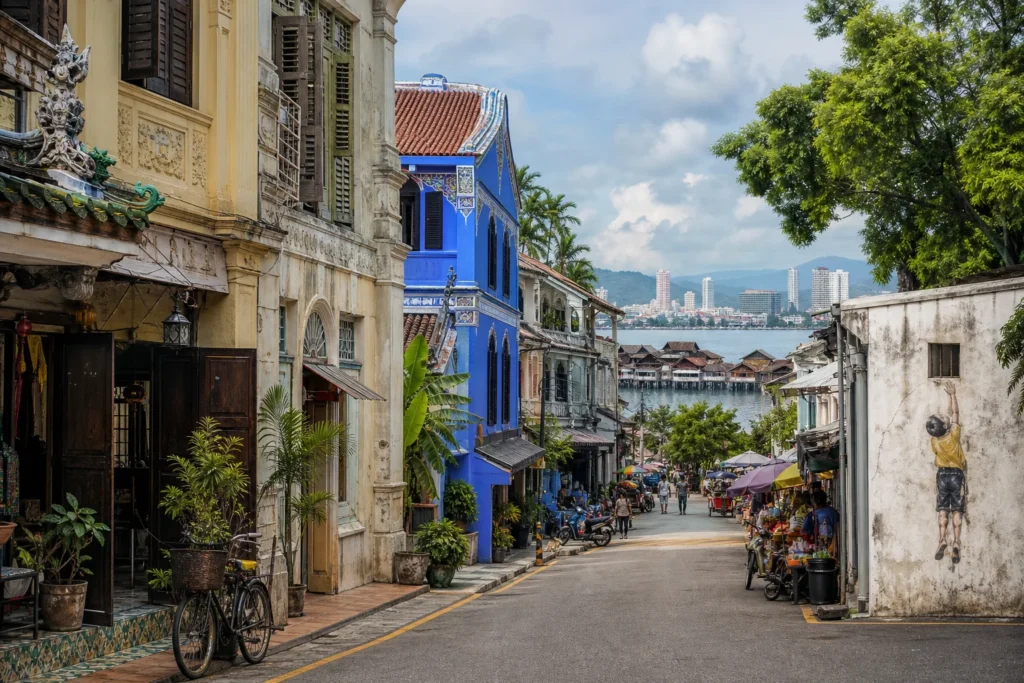
Visitors come for a rare combination of well‑preserved colonial streetscapes, rich immigrant‑community architecture and an outsized food scene. George Town’s UNESCO core contains ornate clan houses, restored Peranakan homes, living clan jetties and a city‑wide street‑art trail.
Nearby botanic gardens and island beaches expand options for nature and day trips.
Many attractions operate guided tours or ticketing, so check official channels before scheduling indoor visits.
Top Things to Do in George Town, Malaysia
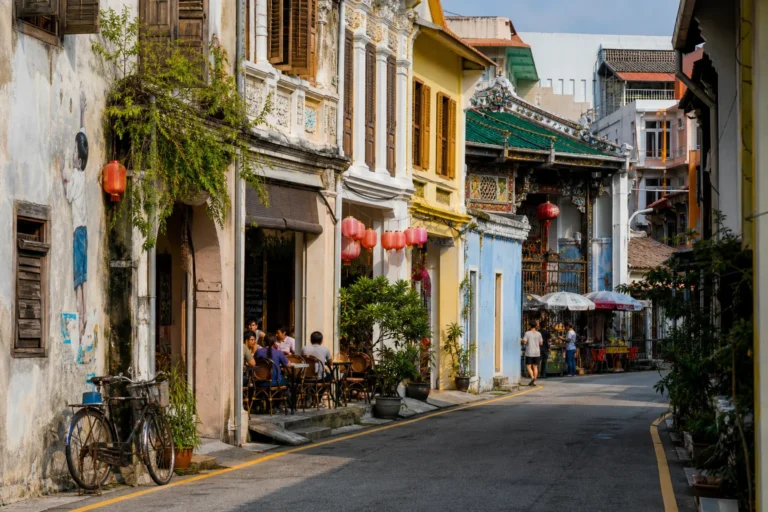
George Town’s compact UNESCO core rewards slow walking. Combine street art, clan houses and waterfront jetties with a guided mansion tour or a visit to the botanic gardens.
Cheong Fatt Tze (The Blue Mansion)
A restored indigo‑painted Straits Chinese courtyard mansion built by merchant Cheong Fatt Tze in the late 19th century. It now functions as a boutique heritage hotel and house‑museum where visitors experience Hakka‑Peranakan architecture, carved woodwork and guided interpretive tours.
Interior access is normally via scheduled tours or a booking; the mansion sometimes restricts public tours for private events or hotel use, so confirm tour availability before planning an interior visit.
Clan Jetties (Chew Jetty / Chew Clan Jetty)
A living stilt‑house community on Weld Quay illustrating 19th‑century Chinese migrant waterfront life. Chew Jetty offers atmospheric wooden boardwalks, family shrines and small stalls, but it is also an inhabited neighbourhood—visitors should be respectful of private homes, avoid blocking access, and check for any conservation or repair closures before visiting.
Facilities on the jetty are limited, so plan for sun, rain and safe footwear.
Official Clan Jetties (Chew Jetty / Chew Clan Jetty) website →
George Town Street Art (murals & wire sculptures)
A city‑wide outdoor trail of painted wall murals and steel‑rod wire sculptures that animate alleys and facades across the UNESCO core. The trail is a self‑guided visual hunt of photographic moments and playful installations—best seen on a short walking route or map.
Works are public and usually free to view but can be altered or relocated, and some pieces sit close to residences or private property, so respect local businesses and check official festival pages for new commissions or conservation work.
Official George Town Street Art (murals & wire sculptures) website →
Khoo Kongsi (Chinese clan house)
Leong San Tong Khoo Kongsi is an elaborate Hokkien clan house complex noted for carved granite and timber, ornate roof sculptures and a ceremonial ancestral hall. Visitors can view richly decorated ritual spaces and on‑site interpretation that explains the clan’s history.
The complex remains an active clan institution, so interior access may be subject to guided‑tour schedules, events or conservation work—check official channels before visiting.
Fort Cornwallis
The largest surviving British‑era fortification on Penang Island, Fort Cornwallis provides an open‑air complex of ramparts, bastions, gun platforms and interpretive displays that illustrate early colonial defence and the city’s founding. The fort anchors the waterfront and serves as a starting point for Esplanade and heritage walks.
It is largely outdoors and walkable but may have restoration areas or ticketing changes—verify access and services on official tourism pages before visiting.
Pinang Peranakan Mansion
A restored 19th‑century Straits Chinese townhouse museum preserving a dense collection of Peranakan furnishings, beaded textiles and decorative tiles. The mansion offers a room‑by‑room interpretation of elite Peranakan domestic life; interiors are compact with narrow circulation, so mobility access is limited.
The site normally admits visitors via general entry and optional guided tours—check official visitor information for booking and guided‑tour schedules.
Penang Botanic Gardens
Known as the ‘Waterfall Gardens’ and established in 1884, Penang Botanic Gardens is a historic public botanical reserve with layered tropical plantings, themed routes, mature specimen trees and informal forest tracks.
The gardens function as a public park and horticultural research site; some areas may be subject to bookings or temporary restrictions for events or research, so confirm access conditions with the gardens department before planning organised activities.
Penang State Museum
The Penang State Museum & Art Gallery is the state’s main museum authority with multiple historic sites in George Town presenting social, cultural and material history alongside rotating galleries.
The board has reopened the Penang State Museum at the Farquhar Street location and continues to operate several addresses; because venues and exhibitions vary and may close for conservation, confirm which buildings and galleries are open and any ticketing arrangements on the museum’s official site before visiting.
Best Time to Visit George Town
The drier months from November through March are the most comfortable for outdoor walking and street‑food hunting, though short tropical downpours and warm temperatures still occur. Shoulder months (April–June, September–October) often have fewer crowds and lower rates but higher humidity and intermittent heavy rain.
Confirm festival dates and municipal notices before planning indoor visits.
Getting Around George Town
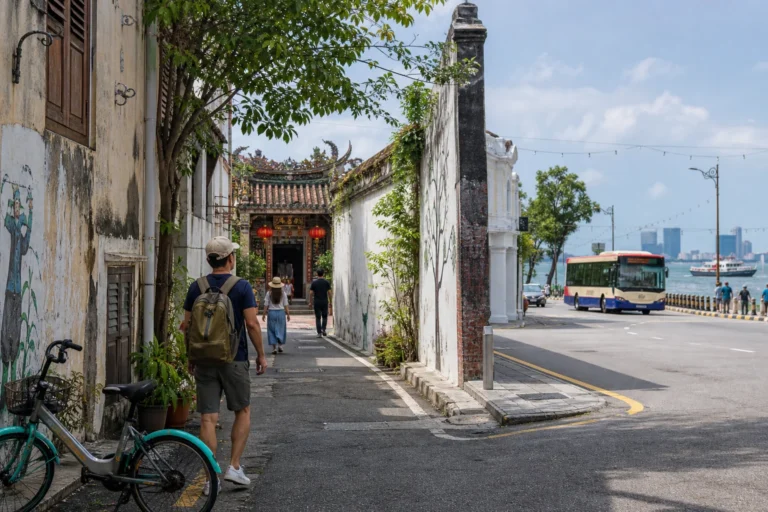
The historic core is highly walkable and best explored on foot to see murals, shophouse fronts and alley temples. For longer distances use the CAT shuttle, Rapid Penang buses, ferries or ride‑hail apps.
Cycling and rented e-bikes are common but watch for narrow streets and pedestrian congestion. Verify current routes and service changes before travel.
Location
Map of George Town, Malaysia
The interactive map loads only when you choose to view it.
Plan Your Visit to George Town
Focus visits within the compact heritage core by grouping nearby sites to minimize transit. Rapid Penang buses, the pedestrian ferry and the free central-area CAT shuttle serve short hops; consider a reloadable transit card for bus travel.
Book guided tours (Cheong Fatt Tze/Blue Mansion, Pinang Peranakan Mansion) in advance and confirm museum openings—some state-run venues run off-site programming or refurbishments. Carry small cash for market stalls.
Local Tips for George Town
Explore in the cooler morning or late afternoon to avoid midday heat. Carry a refillable water bottle, sun protection and light rain gear—historic lanes often have uneven surfaces and steps.
Stop by official tourist information counters (for example at The Whiteaways Arcade) for maps, guided‑walk schedules and accessibility info. Use Grab for last‑mile trips outside bus hours and confirm operator bookings online before arrival.
Live conditions
Current Weather

Updated 2026-09-23 09:30
- Feels like
- 30°C / 86°F
- Today’s high / low
- 28°C / 83°F · 26°C / 79°F
- Humidity
- 76%
- Wind
- ↙ 4 km/h
- Precipitation
- 0.24 mm
- Chance of rain
- 85%
- Local time
- 2026-09-23 09:40
Safety
George Town is generally safe for visitors. Use normal urban caution in crowded markets, protect valuables, and choose well‑lit routes after dark.
Road crossings can be fast—use marked crossings—and prefer ride‑hail services for solo or late‑night trips. Respect signage and residents’ privacy at waterfront jetties and stilt settlements, and check local tourist centres for any access advisories before visiting.