
Travel Guide
Plan your visit around Wat Xieng Thong, Mount Phousi, and more of Luang Prabang, Laos.
Discover the best things to do in Luang Prabang, Laos, from signature sights to memorable local experiences.
Luang Prabang is a compact UNESCO World Heritage city on a peninsula where the Mekong and Nam Khan meet. The town concentrates temples, colonial streets, riverside promenades and hilltop viewpoints within easy walking distance.
If you’re planning a short visit, you can see principal sights in two to three days. Focus on the old town temples, the Royal Palace museum, the night market and a river or waterfall day trip.

Why Visit Luang Prabang
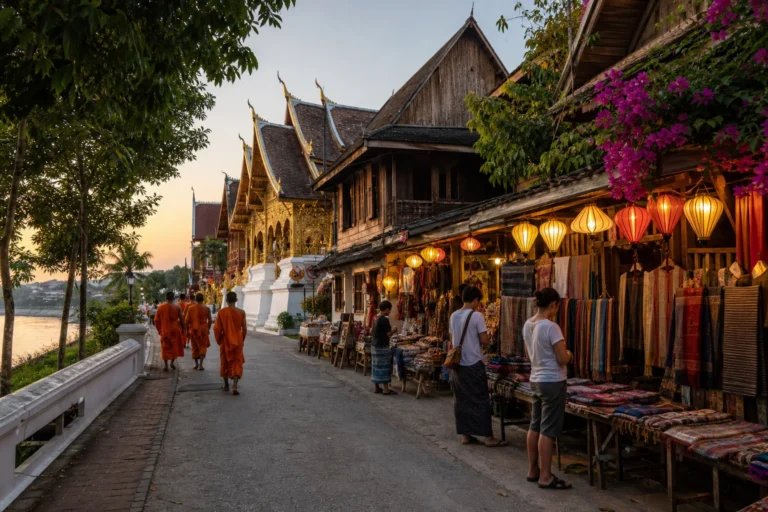
Luang Prabang’s draw is a concentrated cultural atmosphere. Gilded wats such as Wat Xieng Thong, the Royal Palace/National Museum, craft centres and the evening market sit within a compact, walkable town.
The riverside setting and day trips to Kuang Si Falls, Pak Ou Caves and Mekong village cruises add scenic variety. Local conservation and tourism programming emphasise heritage protection and community‑led crafts, making the city ideal for relaxed cultural immersion and craft‑centered learning.
Top Things to Do in Luang Prabang, Laos
Luang Prabang’s principal attractions cluster along the peninsula and riverside, so you can see temples, markets and museums with short walks or brief river trips.
Wat Xieng Thong
A compact royal‑monastery complex at the northern tip of the Luang Prabang peninsula, Wat Xieng Thong is a leading example of classical Luang Prabang temple style.
Founded in the 16th century, it is noted for its low, sweeping multi‑tiered ordination hall, interior lacquer‑and‑gold scenes and the famous glass‑mosaic “Tree of Life.” The site remains an active monastery, so visitors should dress modestly, remove shoes before entering halls and verify current access or conservation closures with official tourism sources.
Mount Phousi (Phu Si)
Mount Phousi (Phu Si) is a prominent limestone hill at the centre of the old town. Well‑paved stairways lead to small temples and a hilltop terrace with panoramic views over the Mekong, Nam Khan and Luang Prabang’s historic core.
The climb is short but steep and is busiest at sunrise and sunset. Treat the summit as a sacred site, follow local rules, and confirm current access with Luang Prabang tourism information if you plan a timed visit.
Royal Palace / Luang Prabang National Museum
The former Royal Palace (Haw Kham) houses the Luang Prabang National Museum and is the city’s principal cultural landmark. The early‑20th‑century palace displays royal regalia, ceremonial objects and important Buddhist icons in richly decorated rooms.
Because it is an active museum and heritage property, verify gallery openings, temporary closures or booking requirements with official museum or tourism channels before planning an indoor visit.
Official Royal Palace / Luang Prabang National Museum website →
Kuang Si Falls
Kuang Si Falls is a multi‑tiered limestone cascade and managed park southwest of the city, known for its aquamarine pools, wooded trails and visitor facilities. Typical visits combine short walks to multiple viewpoints, time at designated swimming pools and optional nearby conservation sites.
Park access rules and which pools allow swimming can change seasonally, so check the official Luang Prabang tourism site or the park operator for current status and any required bookings.
Pak Ou Caves
The Pak Ou Caves (Tham Ting and Tham Theung) are cliffside Buddhist caves above the Mekong, known for thousands of small Buddha images. Visitors normally reach the caves by boat from Luang Prabang and enjoy river scenery and village views en route.
Seasonal water levels and landing arrangements affect access, and the upper cave requires a long flight of steps. Dress respectfully, wear sturdy shoes and confirm boat services and any landing restrictions with official tourism sources before booking.
Luang Prabang Night Market
The Luang Prabang Night Market runs along Sisavangvong Road in the historic centre and showcases locally made textiles, Lao handicrafts, street food and art. The pedestrianised evening market offers concentrated shopping and people‑watching in the UNESCO core.
Check municipal notices for any route changes or temporary restrictions, and take normal precautions against pickpocketing when it is crowded.
Traditional Arts & Ethnology Centre
The Traditional Arts & Ethnology Centre (TAEC) documents and interprets Lao ethnic diversity through exhibitions, multimedia displays and community projects. Visitors can see textiles, ritual objects and village lifeways and join workshops or guided thematic tours.
Many activities and some exhibits require advance booking, so verify opening hours and booking requirements with TAEC before relying on an indoor visit or scheduled workshop.
Ock Pop Tok Living Crafts Centre
Ock Pop Tok is a living‑crafts organisation and social enterprise that interprets Lao textile traditions at a riverside Living Crafts Centre. Visitors can watch weavers and dyers, join hands‑on classes, dine on site and buy fair‑trade textiles.
Specific classes and pickups often require advance booking, and Ock Pop Tok runs multiple venues in Luang Prabang, so check which location runs the program you want.
Mekong river cruise / boat to villages
Day cruises and multi‑day river trips on the Mekong connect Luang Prabang with Pak Ou, riverside villages and scenic riverscape views. Trips range from short long‑boat passages to expedition‑style cruises and typically combine river scenery, village stops and a cave visit.
River conditions and operator standards vary, so confirm vessel safety equipment, navigability, landing arrangements and booking contingencies with your operator and official tourism sources before reserving.
Best Time to Visit Luang Prabang
The clearest and most comfortable travel window is the dry season from roughly November through April. Cool mornings, lower humidity and little rain make temple visits, mountain walks and river trips most pleasant.
Shoulder months (late October and May) can still work but bring more rain and hotter temperatures. The heaviest rains arrive June–September and can disrupt road and river travel.
Book popular river excursions and guided visits in advance during the November–February peak.
Getting Around Luang Prabang
The UNESCO peninsula is highly walkable for central sights and evening markets. For destinations beyond the core use tuk‑tuks, songthaews, bicycles or organised boat services.
Expect restricted vehicle access and designated drop‑off points within the heritage zone.

Location
Map of Luang Prabang, Laos
The interactive map loads only when you choose to view it.
Plan Your Visit to Luang Prabang
Major cultural sites, parks and river trips are managed by municipal or national bodies. Check official museum, park or tourism pages for current openings, booking rules and any prolonged closures before planning indoor visits or organised day trips.
Local Tips for Luang Prabang
The town is compact—most temples, cafés and markets are within short walking distances on the peninsula. Carry small‑denomination Lao kip for markets and tuk‑tuks; cash remains dominant.
Dress modestly at temples (shoulders and knees covered) and remove shoes before entering halls. Arrive early for the morning alms and for sunset at Mount Phousi to avoid crowds.
Expect 30–90 minute transfers for Kuang Si or Pak Ou and check provincial tourism pages for recommended routes and transport options.
Live conditions
Current Weather

Updated 2026-09-20 20:45
- Feels like
- 29°C / 84°F
- Today’s high / low
- 31°C / 88°F · 20°C / 68°F
- Humidity
- 81%
- Wind
- ↘ 4 km/h
- Precipitation
- 0 mm
- Chance of rain
- 17%
- Local time
- 2026-09-20 20:57
Safety
Use normal urban vigilance in Luang Prabang: carry ID and copies of travel documents and avoid isolated riverbank areas at night. Monitor UNESCO and official provincial tourism updates for any conservation or river‑access notices that could affect itineraries.