
מדריך טיול
מפות, טיפים וקצרי מידע לפורטלנד
מחפשים דברים לעשות בפורטלנד? השתמשו במדריך זה כדי להשוות אטרקציות מובילות, טיפים מקומיים, מפות ומזג אוויר.
אם אתם מחפשים דברים לעשות בפורטלנד, העיר משתלמת בסיור שכונות ובביקורים בפארקים, והיא גם בסיס נוח לנסיעות נופיות קצרות אל Columbia River Gorge.
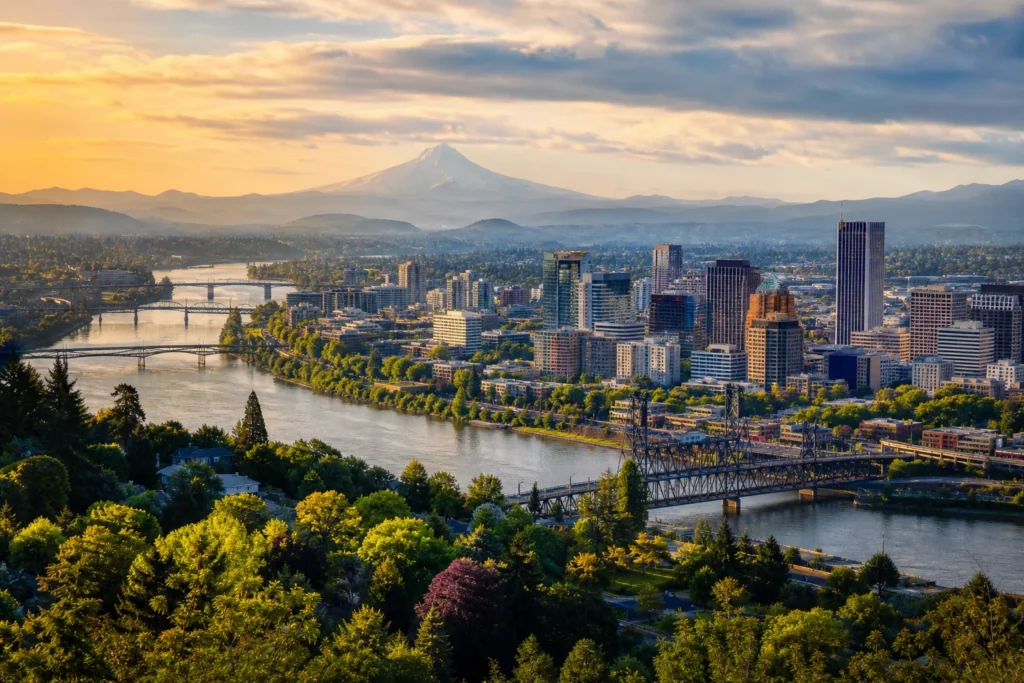
למה לבקר בפורטלנד
מבקרים מגיעים לשכבות הניגודים של פורטלנד: סצנות אוכל וקפה מקומיות חזקות, חנויות ספרים עצמאיות ידועות ומבשלות בירה בוטיק. לעיר מערכת פארקים עירונית גדולה עם גנים בוטניים, אשכולות ורדים ומילי קילומטרים של שבילים.
פורטלנד היא גם בסיס נוח לגורדג' של נהר קולומביה, עמק וילמייט וחופי אוהיו. לוח התרבות והכלכלה היצרנית מעודדים חקר שכונות במקום רצועת תיירות יחידה.
העיר מתאימה למסלולי קצב איטי, ממוקדי אוכל וטבע, שמשלבים נוחות עירונית עם הרפתקאות חיצוניות נגישות בקלות.
דברים לעשות בפורטלנד
פורטלנד משלבת תרבות שכונתית עם גישה נוחה לטבע מרהיב בקרבת העיר. להלן מוזיאונים מובילים, פארקים, אתרים הסטוריים והדגשים לטריפ יום.
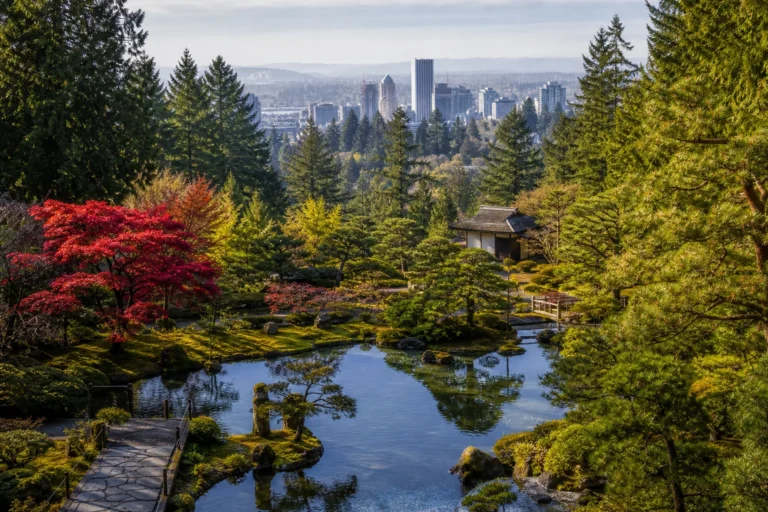
Portland Japanese Garden (Washington Park)
A 12.5-acre, nonprofit-operated traditional Japanese garden set into the wooded slopes of Washington Park, widely regarded for authenticity, careful horticulture and composed landscapes (flat garden, sand-and-stone, tea garden, strolling gardens, a Pavilion Gallery and a Cultural Village).
Visitors experience intentionally framed views, seasonal plantings, quiet pathways and indoor gallery/learning spaces; the site is valued for cultural programming, exhibitions and contemplative design rather than large-scale recreational amenities.
Practical visit implications: the garden recommends advance online ticketing (walk-up tickets are possible but lines and limited parking in Washington Park make reservations advisable), some areas are on steep terrain and only specific routes and facilities are ADA accessible (there is an ADA-accessible shuttle from the Welcome Center and accessible gallery/flat garden areas and amenities), and the garden is managed independently of Portland Parks so policies (admissions, closures, special-event access) are set on the garden’s official site.
Visitors should verify current admission, membership benefits, accessibility details, any temporary closures or construction, and shuttle/parking updates on the Portland Japanese Garden’s official site before planning travel.
International Rose Test Garden (Washington Park)
Portland’s International Rose Test Garden is a public, city-managed rose-testing and display garden in Washington Park, historically important as one of the oldest continuously operated public rose test gardens in the United States.
It features thousands of rose bushes arranged on terraces with broad views across the city; its value to visitors is the extensive rose collections, interpretive plant labeling, seasonal color displays and panoramic vantage points.
Practical visit implications: operated by Portland Parks & Recreation, admission to the garden itself is free (it is an open public park site), but parking in Washington Park is limited and can be congested during peak visitation—public transit (TriMet Line 63 and the Washington Park MAX stop plus the park’s free shuttle) and arriving earlier in the day are commonly recommended.
As a municipal outdoor site, event closures, testing/maintenance areas or temporary access restrictions may occur; confirm current status, special-event impacts and any path or terrace work with Portland Parks/Explore Washington Park before your visit.
האתר הרשמי של International Rose Test Garden (Washington Park) →
Powell's City of Books
Powell’s City of Books is the world’s largest independent new‑and‑used bookstore, occupying an entire Pearl District city block in central Portland.
Visitors come for its vast, color‑coded rooms and floor plan (complimentary maps are available), an extensive inventory of new, used and rare volumes, a dedicated Rare Book Room, regular author readings and in‑store events, gifts and a café — in short, a browsing destination as much as a retail shop.
Practical visit implications: the store does not operate a dedicated customer parking lot, so expect to use nearby paid garages, on‑street parking, or transit (Portland Streetcar, MAX and local buses stop within a block); allow extra time to navigate four floors and crowds during author events or weekends; store maps and staff can help you find room‑by‑room collections; accessibility accommodations are available but specific routes and entrances may vary, so confirm details with Powell’s official visitor information before your trip.
Also check the official Powell’s site for event schedules, special‑event access, temporary closures, or changes to hours before you go.
Oregon Museum of Science and Industry (OMSI)
OMSI is Portland’s major hands‑on science center on the Willamette River waterfront, known for interactive exhibit halls and labs, the Kendall Planetarium, an Empirical/OMSI theater program, and a real naval exhibit submarine on display.
Visitors typically experience hands‑on science exhibits for all ages, live demonstrations and labs, planetarium shows, rotating ticketed traveling exhibitions, and education programs and camps.
Practical visit implications: many featured or traveling exhibitions and some experiences (planetarium shows, submarine tours, large ticketed exhibitions) use timed or separate ticketing—buy tickets or reserve timed entries in advance when available; OMSI operates on‑site parking (pay kiosks and mobile pay options) but traffic and access can be affected by city or highway construction projects, so check current driving/parking guidance; the museum offers accessibility and inclusive‑visit resources (sensory guides and certain services such as Aira) but specific program accessibility and physical route details vary by exhibit, so verify accessible entrances, exhibit closures, or lab availability on OMSI’s official visit pages before planning.
If you need to know about prolonged closures, building relocation, or major capital work that might close large parts of the museum, consult OMSI’s official site or contact the museum directly—public information pages and visitor notices are the authoritative source for such impacts.
האתר הרשמי של Oregon Museum of Science and Industry (OMSI) →
Portland Art Museum
Identity & visitor value: Founded in 1892, the Portland Art Museum is the region’s largest art museum and a major cultural anchor on the South Park Blocks.
The institution holds a collection of more than 50,000 objects spanning ancient to contemporary art, with especially strong holdings in Pacific Northwest and Native Northwest Coast art, 20th‑century American painting and photography, prints and drawings, and traveling special exhibitions.
What visitors experience: a mix of permanent‑collection galleries and rotating, often ticketed special exhibitions across connected historic and modern buildings (the original Belluschi building, the Mark Building and the glass Mark Rothko Pavilion), plus education programs, lectures, and film/screening series.
Setting & why it matters: the museum’s placement in Portland’s cultural district, its landmark architecture and large print/drawing and Native art holdings make it an efficient one‑stop for regional art history and major loaned exhibitions.
Practical visit implications (source‑supported): the museum sells admission and recommends/permits advance ticketing for special exhibitions—some large shows or events may use timed tickets or separate fees; accessible routes and accommodations are provided (ramps, designated accessible parking spaces, advance companion‑ticket procedures and visitor services); street and nearby garage parking are commonly used and public transit serves the area; verify current exhibition ticketing, any temporary gallery closures, major capital projects, and exact accessibility arrangements on the Portland Art Museum’s official visitor pages before you go.
If your interest is a specific gallery, program, or school/group visit, contact Visitor Services in advance to confirm booking needs and accessible entry points.
Pittock Mansion
Identity & visitor value: Pittock Mansion is a restored 1914 hilltop house museum that interprets Portland’s turn‑of‑the‑century civic and industrial history through the Pittock family story, period rooms, decorative arts and architecture.
It sits high in the West Hills adjacent to Forest Park and is valued for its historic interiors, architectural details and expansive downtown and river views from the estate grounds.
What visitors experience: self‑guided and guided house tours (including occasional focused architecture or themed tours), temporary exhibits in the Gate Lodge or special‑exhibit spaces, and broad grounds and viewpoints that are free to walk—many visitors combine the house tour with short walks on nearby trails.
Setting & why it matters: the site illustrates early 20th‑century domestic technology and design in Portland’s development narrative and occupies a prominent scenic site above the city.
Practical visit implications (source‑supported): Pittock Mansion operates as a ticketed house museum (members often get free entry) and manages an on‑site parking lot (the City and museum publish seasonal/temporary managed parking rules and occasional paid parking during high‑season/special programs); free parking on nearby gravel pullouts and trail access is commonly available for those willing to walk up the drive, and visitors with accessibility needs are prioritized in the main lot—some paths and viewpoints are steep, so check accessibility details before visiting.
The museum offers group and education tour options that may require advance reservation.
Because management, parking rules and event schedules can change, confirm current admission, tour availability, parking policy (including any seasonal paid parking or lot restrictions), and temporary closures or maintenance on the official Pittock Mansion site or Portland Parks pages before planning your visit.
Pioneer Courthouse Square
Identity & distinctive value: Pioneer Courthouse Square is Portland’s central one‑block public plaza — nicknamed “Portland’s Living Room” — anchored by the historic Pioneer Courthouse and framed by downtown shops, transit stops and public art.
What visitors experience: an open urban amphitheater with a fountain, sculptures (including the Allow Me statue), the Weather Machine performance at noon, frequent programmed events and a mix of casual uses from people‑watching to food‑cart vending.
Setting & why it matters: its location at SW Broadway and Yamhill places it at the hub of downtown transit (MAX, buses, streetcar) and makes the Square a convenient first stop for orientation, short visits and event attendance.
Practical visit implications: the Square is a public outdoor plaza managed in partnership with the city and a nonprofit steward; it is generally open daily but hosts more than 300 events a year so parts of the plaza can be fenced, reserved or repurposed for permitted events without advance public notice.
There is no dedicated public parking for the Square; transit, short walks from downtown garages, or rideshare are typical. Because event scheduling, temporary closures for permitted activities, or maintenance can change day‑to‑day, verify current events, special‑event closures or any permit impacts on the Square’s official site or the Square’s event calendar before planning a visit.
Washington Park (general)
Identity & distinctive value: Washington Park is a large, historic city park on Portland’s West Hills that contains major cultural institutions and viewpoints (including the International Rose Test Garden, Portland Japanese Garden, Oregon Zoo, World Forestry Center, and several memorials and woodland trails).
What visitors experience: a mix of municipal open‑space amenities — terraced formal gardens, museum and garden ticketed facilities, picnic and viewpoint areas, forested walking trails and seasonal shuttle connections — all within a compact but topographically steep parkland setting.
Setting & why it matters: the park’s wooded slopes provide city views and a concentration of visitor attractions serviced by the Washington Park MAX station plus a free seasonal/operational shuttle that improves access across the hill.
Practical visit implications: Washington Park is managed by Portland Parks & Recreation and host institutions operate under varied policies — some attractions inside the park are free public landscapes (for example the city‑run Rose Test Garden), while others are independently operated, ticketed cultural institutions (for example the Portland Japanese Garden and the Oregon Zoo) with their own admissions, reservation and accessibility rules.
Parking in Washington Park is limited and can be congested during peak seasons or special events; the Explore Washington Park shuttle, TriMet MAX service to the Washington Park station and arriving earlier in the day are commonly recommended.
Because exhibit closures, special events, shuttle schedules, parking management and access routes are set by different organizations and can change, visitors should check the official Portland Parks/Explore Washington Park pages and the specific institution’s official site for the latest information about reservations, prolonged closures, accessibility routes and any temporary access restrictions before visiting.
Multnomah Falls (Columbia River Gorge)
Identity & visitor value: Multnomah Falls is a 620‑foot, two‑tiered waterfall on Multnomah Creek in the Columbia River Gorge and is one of Oregon’s most visited natural landmarks.
The site’s distinctive value is the dramatic vertical drop framed by the Historic Columbia River Highway, the early‑20th‑century Multnomah Falls Lodge at the base, and short interpretive trails that deliver close viewing platforms and a crossing of the Benson Bridge offering classic waterfall vistas.
Visitors come for the iconic waterfall views, photography, short hikes (to the bridge and beyond), the lodge’s food and visitor facilities, and the broader Gorge scenery nearby.
Practical visit implications and access: vehicle parking at the main lot off I‑84 (Exit 31) is highly constrained and—during the late‑spring to summer peak period—requires a timed use permit for access to the I‑84 parking lot between roughly mid‑May and early September; permits are issued through the Recreation.gov timed‑entry system.
Arrival by shuttle, public transit, bicycle or an organized tour is often recommended because permits are not required for visitors arriving by those modes and lot capacity can fill early.
The Historic Columbia River Highway and nearby viaducts have been under phased repair projects in recent seasons; work has led to periodic lane or trail closures and temporary changes to vehicle access or pedestrian routes.
Multnomah Falls Lodge and the visitor center remain the primary on‑site services, but portions of trails, elevators or lodge facilities may have intermittent maintenance or renovation impacts—check the lodge and the Columbia River Gorge National Scenic Area/US Forest Service project pages for current construction notices before travel.
Accessibility and visitor experience notes: there is a short paved route and viewing platform near the base that provides accessible viewpoints, but many hiking routes are steep with switchbacks; an accessible parking area and viewing ramp exist but exact accessible routes, elevator availability at the lodge, and ADA accommodations can change with maintenance or construction.
Because permit rules, construction schedules, parking conditions and shuttle options are updated seasonally, verify the current timed‑entry permit requirements, real‑time lot capacity (ODOT/TripCheck webcams), shuttle/tour operators, and any temporary closures on the official Recreation.gov timed‑entry page, the US Forest Service/Columbia River Gorge National Scenic Area alerts, ODOT project notices, and the Multnomah Falls Lodge visitor pages before you go.
If specific parts of the site are closed or heavily restricted (for example a viaduct or a trail segment), those official pages will state the scope and duration of the impact; do not assume full access when status is unknown.
מתי כדאי לבקר בפורטלנד
מאמצע האביב ועד תחילת הסתיו (סוף מאי–ספטמבר) הוא החלון הנוח ביותר למזג אוויר חמים ויבש, פסטיבלים חיצוניים ושווקי איכרים. הקיץ מספק אוכל בחוץ, אירועים פתוחים ואור יום ארוך.
מאמצע האביב פורח גנים, כולל International Rose Test Garden.
סתיו (ספטמבר–אוקטובר) מציע חום ממושך וצבעי סתיו אך עלול לכלול ימים מעשנים בעקבות שריפות אזוריות בחלק מהשנים. פורטלנד מתאימה גם לביקור כל השנה למוזיאונים, אוכל ותרבות מקורה; בדקו תחזיות איכות אוויר לפני תכנון פעילויות חיצוניות.
אירועים מיוחדים
אירועים קרובים
Portland Film Festival
- תאריכים
- September 30, 2026 - October 4, 2026
- מקום
- Center for Native Arts + Cultures (CNAC)
Portland Marathon
- תאריכים
- October 4, 2026
- מקום
- Portland Waterfront Park (start/finish)
Biamp Portland Jazz Festival (PDX Jazz)
- תאריכים
- March 4, 2027 - March 13, 2027
- מקום
- Multiple venues across Portland
Waterfront Blues Festival
- תאריכים
- July 2, 2027 - July 4, 2027
- מקום
- Tom McCall Waterfront Park
Art In The Pearl: Fine Arts & Crafts Festival
- תאריכים
- September 4, 2027 - September 6, 2027
- מקום
- North Park Blocks (Northwest Park Blocks of the Pearl District)
איך לנוע בעיר
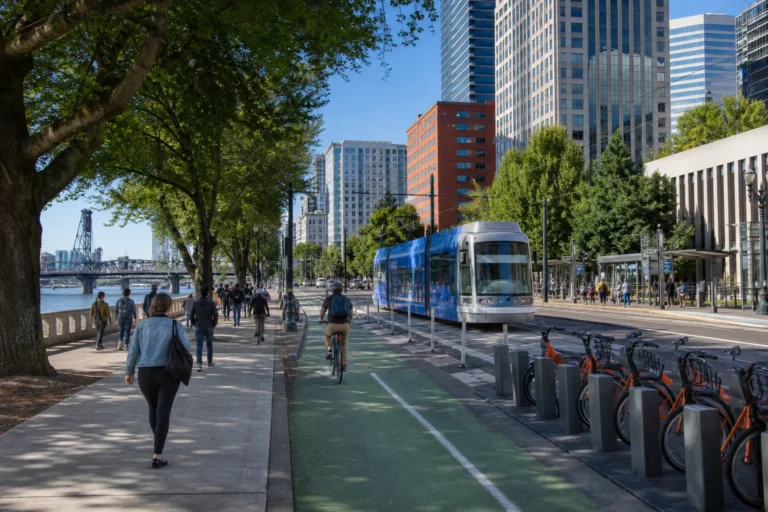
מרכז פורטלנד קומפקטי ומתאים להליכה ולרכיבה על אופניים; יש רשת שבילי אופניים מוגנת ושירות שיתוף אופניים.
התחבורה הציבורית האזורית מנוהלת על‑ידי TriMet; אוטובוסים ו‑MAX מקשרים את מרכז העיר לפרברים ולשדה התעופה.
Portland Streetcar משרתת את אזור הדאונטאון ו‑South Waterfront, וה‑Portland Aerial Tram מקשרת ל‑OHSU.
שירותי שיתוף נסיעות ומוניות זמינים ברחבי העיר. נהיגה נוחה לנסיעות יום, אך החנייה בשכונות פופולריות יכולה להיות נדירה; תכננו זמן העברות ובדקו עדכוני שירות של TriMet ו‑PBOT.
מיקום
מפה של Portland, Oregon, United States
המפה האינטראקטיבית נטענת רק כאשר בוחרים להציג אותה.
תכנון מעשי לביקור
תכנן את הניוד באמצעות TriMet (אוטובוסים ו‑MAX), Portland Streetcar ושירותי שיתוף־נסיעות; רוב האטרקציות המרכזיות מרוכזות בקרבת דאונטאון וה‑Pearl District. הזמינו כרטיסים מראש לאתרים פופולריים (מוזיאונים, תערוכות מיוחדות, סיורים ב‑Pittock Mansion) בעונת השיא או בסופי שבוע של פסטיבלים.
לנסיעות יומיות לגורג' או לחוף, הקצו זמן לעצירות נופייות והיו מוכנים לשינויי מזג אוויר בהרים. למידע עכשווי ועזרה בהגעה, פנו ל‑Portland Visitor Center עם שאלות על גישה ונגישות.
טיפים מקומיים לפורטלנד
מרכז פורטלנד הקומפקטי ואופי השכונות הופכים את העיר לקלה לחקירה ברגל, באופניים או בתחבורה ציבורית. התחילו ב‑Portland Visitor Center (בדאונטאון) לקבלת מפות, סיוע בתחבורה והמלצות שכונתיות.
קחו מעיל גשם קל כל השנה ונעליים נוחות למדי ובגבעות ולרצפות מאובנות. טעמו מטעמים בעגלות אוכל (food carts) שהן חלק מהעיר והביאו בקבוק מים רב‑פעמי — פורטלנד מדגישה נקודות מילוי מים.
לטיולים אזוריים (Columbia Gorge, Mount Hood, Willamette Valley) בדקו הודעות של פארקים מדינתיים ויערות מראש לגבי סגירות עונתיות או סגרים על דרכים ושבילים.
תנאים נוכחיים
מזג האוויר הנוכחי
עודכן 2026-09-21 14:30
- מרגיש כמו
- 73°F / 23°C
- הגבוה / הנמוך היום
- 77°F / 25°C · 55°F / 13°C
- לחות
- 38%
- רוח
- ↖ 3 mph
- משקעים
- 0 in
- סיכוי לגשם
- 8%
- שעה מקומית
- 2026-09-21 14:45
בטיחות
פורטלנד ידידותית למבקרים; שמרו על זהירות עירונית רגילה — שמרו ממזומנים וחפצים יקרי ערך במקומות בטוחים והשתמשו במעברי חציה מסומנים. בעיות של חסרי בית בולטות בחלקים מהעיר; הימנעו מעימותים ופנו לשירותים לא־חירום (311) לנושאים שאינם דחופים.
בעונת הקיץ והשריפות עקבו אחרי איכות האוויר וההתראות המדינתיות — עשן עלול להשפיע על פעילויות חוץ ומבקרים רגישים. בחירום התקשרו 911 ולעניינים שאינם דחופים השתמשו בקשרי 311 או בשירותי משטרה לא־חירום ובדקו ייעוצים רשמיים לפני נסיעה.