
Travel Guide
Plan your visit around Phú Quốc National Park, Dương Đông (Duong Dong) town and night ma, and more of Phu Quoc, Vietnam.
Discover the best things to do in Phu Quoc, Vietnam, from signature sights to memorable local experiences.
The island-city blends long sandy beaches, a coral-rich archipelago and a protected tropical interior—ideal for beach time, island‑hopping and short rainforest hikes.
Dương Đông is the service hub for dining, shops and transport while the An Thới islands and Phú Quốc National Park provide the main natural attractions.

Why Visit Phu Quoc
Phú Quốc is Vietnam’s largest island, offering warm shallow waters, coral-rich islets and a protected rainforest interior. Visitors mix beach relaxation, snorkeling and diving in the An Thới cluster with nature hikes in Phú Quốc National Park, plus local coastal culture.
Fishing villages, seafood markets, pearl farms and fish‑sauce workshops.
Recent infrastructure growth adds direct international flights, a landmark cable car to Hòn Thơm and large family‑oriented resort complexes.
Top Things to Do in Phu Quoc, Vietnam
Phú Quốc combines long sandy beaches, a protected rainforest interior and island clusters ideal for snorkeling and short boat trips. Below are the island’s principal natural and visitor attractions with practical notes for planning visits.
Phú Quốc National Park
Phú Quốc National Park protects large tracts of evergreen tropical forest, mangroves, ridgelines and streams across the island’s interior. Visitors come for hiking, wildlife viewing, wild orchids and scenic viewpoints that contrast with the resort coastline; many popular trails and viewpoints are best visited with a local guide.
Verify trail access, permits and seasonal closures with park channels before travel.
Dương Đông (Duong Dong) town and night market
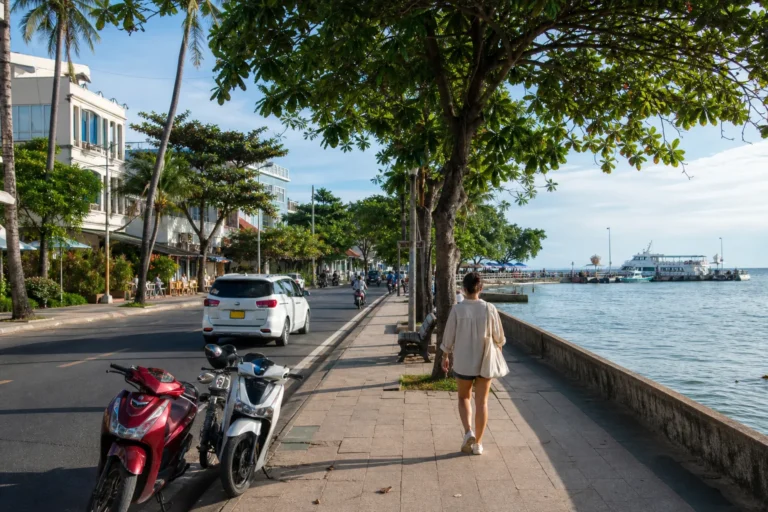
Dương Đông is Phú Quốc’s main service town on the west coast, centered on the riverside Duong Dong market and a concentrated strip of cafés, shops and services. After dark the night market runs along waterfront streets and is a prime spot for street food, seafood stalls, souvenirs and local atmosphere.
Market layout and hours shift seasonally, so check local sources for current operating times.
Official Dương Đông (Duong Dong) town and night market website →
An Thới archipelago boat trips and islands
The An Thới archipelago south of Phú Quốc comprises sandy islets, coral reefs and sheltered snorkeling sites. Day boats and speedboats from An Thới harbour offer island‑hopping, snorkeling over reef patches, short beach stops and simple seafood lunches.
Island visits vary by operator and sea conditions; some islets are undeveloped and visitors should follow marine‑park rules on anchoring and reef protection.
Official An Thới archipelago boat trips and islands website →
Hàm Ninh fishing village
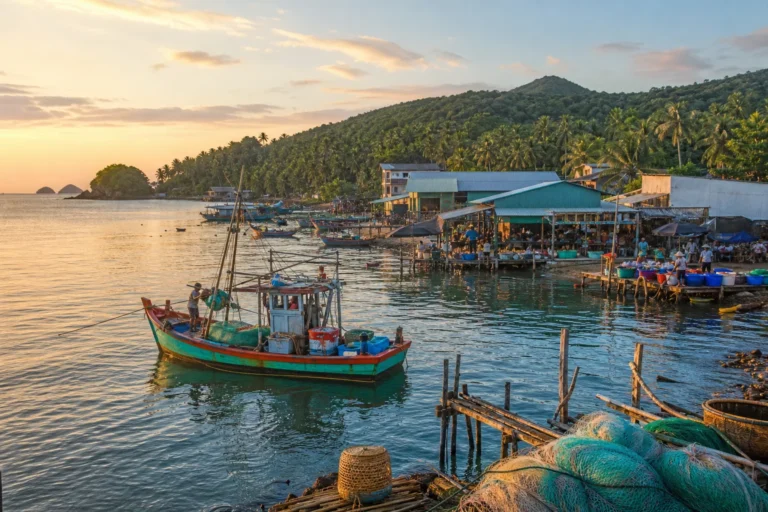
Hàm Ninh is an active fishing village on the island’s east coast known for its working pier, fresh seafood stalls and simple seaside restaurants. Visitors stroll the pier, buy freshly cooked or raw seafood (the village is famed for crab) and watch small‑scale fishing activity.
Infrastructure is basic compared with resort zones, so plan arrivals by car or motorbike and check local conditions for pier access.
Phú Quốc Pearl Farms and workshops
Phú Quốc pearl farms and workshops breed salt‑water oysters, nucleate and harvest pearls, then sort and process them into jewellery. Typical visits are short and interpretive—demonstrations of nucleation/harvest, pearl grading displays and showroom retail.
Many operations prioritise retail or require appointments, so contact a specific farm in advance to confirm demonstrations, group rules and photography policies.
Cáp treo (cable car) to Hòn Thơm / An Thới cluster
The An Thới–Hòn Thơm cable car provides a long over‑water aerial route between An Thới and Hòn Thơm with panoramic sea and island views. Riding the cable car is primarily a scenic transport experience often combined with time on Hòn Thơm’s beaches and visitor facilities.
The operation is privately run and subject to maintenance or temporary closure, and peak‑season queues and timed tickets are common—confirm operating status before travel.
Official Cáp treo (cable car) to Hòn Thơm / An Thới cluster website →
VinWonders Phú Quốc / large resort-entertainment area
VinWonders Phú Quốc is a large, privately operated amusement and resort‑entertainment complex featuring rides, themed areas, live shows and an aquarium. Its main appeal is family entertainment and high‑capacity attractions that contrast with the island’s nature offerings.
Access, ticketing and specific ride availability are controlled by the operator—check the park’s official channels for current operating hours and any timed‑entry or maintenance notices.
Official VinWonders Phú Quốc / large resort-entertainment area website →
Visit Trường Sa / Thổ Châu (Thổ Châu archipelago) area
The Thổ Châu archipelago (including Hòn Thổ Châu) lies southwest of Phú Quốc and offers an off‑the‑beaten‑path island experience with simple settlements and coastal scenery. Access is limited: regular public services are sparse and many landings require prior permission from provincial or military authorities.
Travel toward distant Trường Sa (Spratly) islands is tightly controlled and typically organised only by official government or navy vessels.
Official Visit Trường Sa / Thổ Châu (Thổ Châu archipelago) area website →
Best Time to Visit Phu Quoc
The most reliable beach, boat and diving conditions are during the dry season from November through April when seas are calm and rain is minimal. Late October and May are shoulder months with fewer crowds but more variable seas.
The wet season (roughly May–October) brings heavier rainfall and occasional storms, reducing diving visibility and sometimes suspending sea trips.
Getting Around Phu Quoc
Phú Quốc International Airport and fast ferries (Rạch Giá, Hà Tiên) are the main gateways. On the island, motorbike rentals are widespread and taxis or Grab operate around Dương Đông; coverage can be sparse in remote north/south areas.
High‑speed ferries and passenger boats serve the An Thới islands, and the Hòn Thơm cable car links An Thới to Hòn Thơm. Public bus services are limited, so plan transfers and bookings in advance for island‑hopping.
Location
Map of Phu Quoc, Vietnam
The interactive map loads only when you choose to view it.
Plan Your Visit to Phu Quoc
Plan around the island’s seasonal weather: the wet season runs roughly May. October with the stormiest months often in September.
October, and the most reliable beach and diving conditions occur November. April.
Book flights, resort transfers, popular boat trips and cable‑car tickets in advance for high season and holiday weekends.
If you’ll island‑hop, check operator status, vessel type and permit requirements; car ferries operate slower but are generally more tolerant of rough seas than fast boats. Medical facilities handle routine care; for serious emergencies referral hospitals are on the mainland—verify evacuation plans with your accommodation.
Local Tips for Phu Quoc
Fly to Phu Quoc International Airport (PQC) for fastest access. Ferry schedules from Hà Tiên and Rạch Giá change seasonally, so reconfirm operator and terminal before travel.
Buy a local SIM at the airport or in Dương Đông for reliable data; carry Vietnamese dong (VND) and small notes for markets and rural vendors.
Rent scooters only if you’re confident with local road conditions—wear a helmet and check insurance coverage. Respect conservation rules in the national park and marine areas: avoid collecting coral or shells and use reef‑safe sunscreen.
Live conditions
Current Weather

Updated 2026-09-20 18:45
- Feels like
- 31°C / 88°F
- Today’s high / low
- 31°C / 87°F · 26°C / 79°F
- Humidity
- 80%
- Wind
- ↖ 22 km/h
- Precipitation
- 0.05 mm
- Chance of rain
- 76%
- Local time
- 2026-09-20 18:55
Safety
Sea conditions can change quickly; follow local weather advice and avoid swimming when red flags are posted. Some beaches have strong currents and occasional jellyfish reports—use lifeguarded beaches when available and ask hotel staff about conditions.
Helmet use is mandatory for motorbike riders; avoid night riding on unfamiliar rural roads. Petty theft is possible—use hotel safes and secure valuables.
For snorkeling and diving, choose operators that follow safety protocols and carry oxygen; verify vessel and guide certification.