
Travel Guide
Plan your visit around Ubud, Tanah Lot Temple, and more of Bali, Indonesia.
The best things to do in Bali bring together living Hindu culture, traditional arts, fertile volcanic landscapes, and dramatic coastal scenery. From Ubud’s galleries and rice fields to sea temples, highland lakes, and volcanic mountains, Bali offers a varied island experience shaped by daily offerings, ceremonies, food, crafts, wellness, and time beside the sea.
Why Visit Bali
Bali is a compact but remarkably varied destination. Temple architecture, dance, music, artisan traditions, and village customs remain central to island life, while the landscape shifts from surf beaches and limestone cliffs to forested mountains, volcanic lakes, and cultivated rice terraces.
Ubud works well as a base for arts, galleries, wellness, and inland excursions. Southern Bali offers beaches, dining, nightlife, and major sunset viewpoints, while central and northern areas provide cooler highland scenery and important temple complexes.
Pair cultural landmarks such as Tanah Lot, Uluwatu, Tirta Empul, and Taman Ayun with a Mount Batur hike, countryside exploration, marine activities, or relaxed beach time.
Top Things to Do in Bali, Indonesia
Bali’s highlights span cultural heartlands, sacred temples, working rice landscapes, forest sanctuaries, highland lakes, and volcanic terrain. Group nearby sights by region so you can experience each place without spending the day in traffic.
Ubud
Ubud is a cultural and artistic centre in central Bali, surrounded by rice fields, river valleys, and tropical greenery. Visitors find a blend of village life, galleries, craft markets, temples, wellness studios, restaurants, and performance venues.
Use the town as a base for nearby landscapes, including the Tegallalang rice terraces, forest paths, waterfalls, and rural communities. Temple ceremonies, offering-making, processions, dance, music, painting, woodcarving, and farming remain visible parts of daily life.
The centre is walkable in sections, but hills, narrow roads, traffic, and scattered attractions make transport useful. Early mornings suit rice-field walks and quieter temple visits.
Dress modestly at sacred sites and follow local instructions.
Tanah Lot Temple
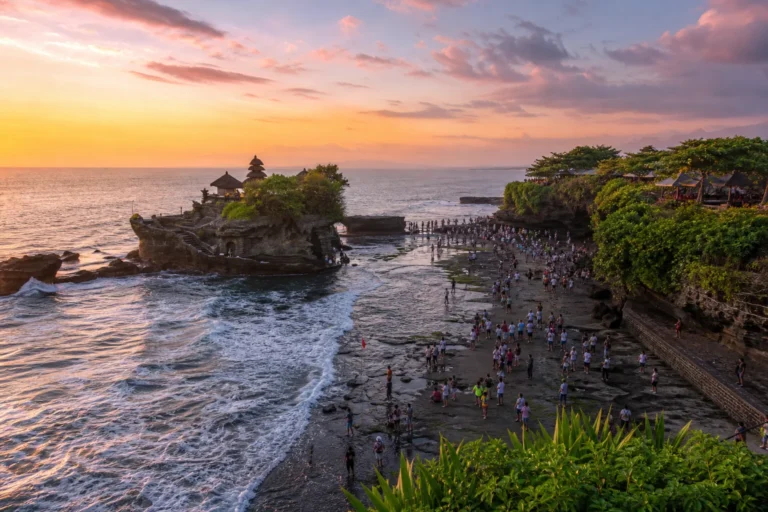
Tanah Lot Temple is one of Bali’s best-known sea temples, standing on a rocky formation off the coast near Beraban Village in Tabanan. Waves surround the rock, creating one of Bali’s most recognisable coastal views and sunset silhouettes.
Visitors walk through a developed cultural landscape containing viewpoints, paths, shops, restaurants, information services, and nearby temples such as Pura Batu Bolong and Pura Pekendungan. Morning can provide softer light and fewer people, while tides affect access around the rock.
Avoid wet surfaces and restricted areas, and remember that Tanah Lot remains an active sacred place. Modest clothing, respectful behaviour, and attention to ceremony-related instructions are important.
Uluwatu Temple
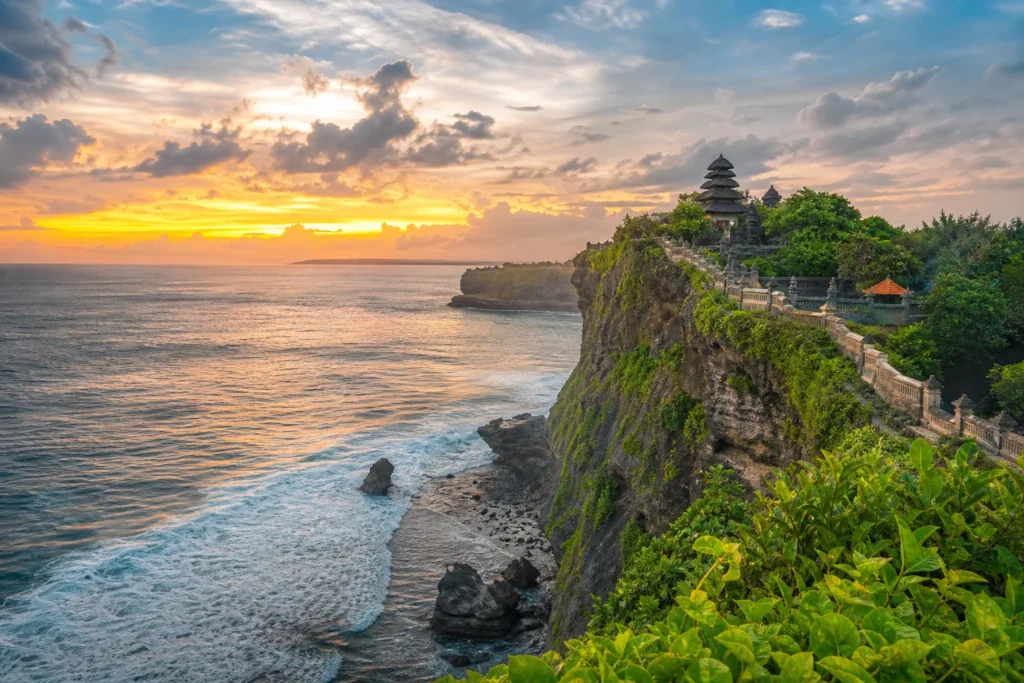
Uluwatu Temple, or Pura Luhur Uluwatu, is a major Balinese Hindu sea temple on Bali’s southwestern Bukit Peninsula. It stands on a limestone cliff about 70 metres above the Indian Ocean, offering wide coastal views, strong sea winds, and memorable sunset scenery.
The sacred complex includes traditional gateways, shrines, outer courtyards, and cliffside paths. A Kecak performance in the wider temple area combines chanting, movement, Ramayana storytelling, and sunset views.
The inner sanctuary is reserved for Hindu worshippers. Wear modest clothing and follow local dress rules.
Keep loose belongings secure around the resident long-tailed macaques, and take care on exposed, uneven, or slippery paths.
Tegallalang Rice Terraces
Tegallalang Rice Terraces form a striking agricultural landscape north of Ubud, where rice fields descend through the Ceking valley in carefully shaped steps. Green slopes, narrow ridges, coconut palms, village viewpoints, and working farms create a changing scene shaped by planting, growth, harvest, and fallow periods.
The terraces illustrate Bali’s subak irrigation system, which links canals, farmers, temples, rituals, and shared responsibilities. Visitors can begin at roadside viewpoints and walk into the valley along paths between terraces.
Lower routes offer closer views of irrigation channels and farming activity, although the return climb can be strenuous. Wear shoes with reliable grip, carry water, follow local directions, and treat the fields as working agricultural land.
Sacred Monkey Forest Sanctuary
Sacred Monkey Forest Sanctuary, also known as Mandala Suci Wenara Wana, is a protected forest and temple complex in Padangtegal, central Ubud. Shaded paths lead through dense tropical vegetation, moss-covered stonework, ravines, bridges, and areas occupied by long-tailed macaques.
The sanctuary combines nature conservation, Balinese Hindu worship, and customary village stewardship. Three important temples stand within the area: Pura Dalem Agung Padangtegal, Pura Beji, and Pura Prajapati.
The macaques live in a semi-wild environment and are not domesticated. Follow sanctuary instructions, avoid touching or feeding them, secure loose belongings, and do not chase or corner the animals.
Wear respectful clothing and expect uneven, sometimes slippery paths.
Tirta Empul Temple
Tirta Empul Temple is a sacred Hindu water temple in Manukaya Village near Tampaksiring. Its holy spring supplies the temple’s bathing pools, while carved gateways, shrines, courtyards, offerings, and flowing water create an atmosphere of active worship.
The main experience is observing or joining melukat, a purification ritual performed beneath water spouts. The pools and fountains have different religious purposes, so follow temple attendants, local guides, and worshippers rather than creating your own sequence.
Bring dry clothing if entering the water and use the required sarong and sash. Tirta Empul’s spring is connected with irrigation and the Pakerisan watershed, part of Bali’s wider cultural heritage.
Dress modestly and avoid interrupting prayers.
Ulun Danu Beratan Temple
Ulun Danu Beratan Temple stands beside Lake Beratan in Candikuning Village, within Bali’s cool Bedugul highlands. Mist, forested hills, calm water, and mountain air shape the visit, while parts of the complex appear to float when the lake surrounds their bases.
Visitors explore landscaped grounds, courtyards, shrines, gateways, and lakeside viewpoints, including the distinctive three-tiered Pura Lingga Petak. The complex serves sacred purposes including worship of Dewi Danu, the lake goddess, and the Hindu trinity of Brahma, Vishnu, and Shiva.
A nearby Buddhist stupa reflects the area’s layered religious history. Lake Beratan supplies water for agriculture and plantations.
Wear modest clothing and remain outside restricted worship areas.
Taman Ayun Temple
Taman Ayun Temple is the former royal temple of the Mengwi kingdom in Mengwi, Badung Regency. Its name means “beautiful garden”, reflected in the spacious grounds, water channels, trees, and carefully planned courtyards.
From outside, water gives the complex a floating impression.
King I Gusti Agung Putu established the temple in 1634. It served the Mengwi royal family, honoured ancestral rulers, and functioned as an important regional water temple.
Visitors move through layered courtyards separated by walls and gateways, with gardens, ponds, pathways, and tall meru shrines representing sacred mountains. Taman Ayun remains an active sacred place.
Dress modestly, follow posted guidance, and allow time to walk calmly around the compound.
Mount Batur
Mount Batur is an active volcano in Kintamani, Bangli Regency, rising to 1,717 metres beside crescent-shaped Lake Batur. The surrounding landscape forms part of Batur UNESCO Global Geopark, recognised for volcanic geology, cultural heritage, biodiversity, and links with local communities.
The classic experience is a pre-dawn hike to the summit or upper rim. The route crosses volcanic soil, loose sand, and rocky sections before opening onto views of Lake Batur, the caldera walls, Mount Abang, and Mount Agung.
The climb requires steady footing and reasonable fitness, particularly on slippery loose gravel during the descent. Wear shoes with good grip, carry water, and bring warm layers.
Check official volcanic-status information, trail access, registration, and local guiding arrangements before departure.
Best Time to Visit Bali
Bali can be visited year-round, although the generally drier period from about April to October is often easiest for beach days, temple touring, hiking, and outdoor excursions. June through August is typically the busiest part of this period.
April to May and September to October can offer a useful balance of comparatively settled conditions and a less intense travel atmosphere, though conditions vary by year.
The wetter season, broadly November to March, brings more humidity and rain, but showers can be intermittent and the island remains active. Landscapes are often especially green then.
Coastal plans, mountain hikes, and marine activities may experience different conditions, so check locally before heading out. Plan around Nyepi, Bali’s day of silence, when normal activity pauses across the island.
Getting Around Bali
Ngurah Rai International Airport near Denpasar is Bali’s principal gateway. Travel within the island is primarily by road, and journey times depend heavily on congestion, road width, and the mountainous or rural setting.
App-based car and motorcycle services, taxis, private cars with drivers, tour vehicles, and scooter rentals are widely used. A car with a driver is practical for temple circuits, day trips, families, and longer journeys.
App-based rides or taxis suit shorter urban trips where available. Scooters offer flexibility for experienced, properly licensed riders who are comfortable with local traffic and road conditions.
Public buses, including the Trans Sarbagita network, serve selected routes, but coverage is limited for many sightseeing itineraries. Allow generous travel time and group nearby attractions geographically.

Location
Map of Bali, Indonesia
The interactive map loads only when you choose to view it.
Plan Your Visit to Bali
Bali is an island destination rather than a compact city, so plan by area and avoid combining distant sights in one day. Ngurah Rai International Airport is the main arrival point, while ferry connections serve western and eastern gateways.
For sightseeing, a private car with driver is often the simplest option, especially for routes linking Ubud, temples, rice terraces, and Mount Batur. Ride-hailing cars and motorbike taxis are useful for shorter trips, while walking works best within established centres.
Foreign visitors should arrange the Bali tourist levy through the official Love Bali system or an approved payment point and retain the electronic receipt.
Local Tips for Bali
Choose accommodation near the activities you most want to do, since traffic can make short distances unexpectedly slow, particularly in southern Bali. Use app-based transport where available and confirm pickup points, as access may be restricted around some tourist areas.
For full-day sightseeing, agree the itinerary, inclusions, waiting time, and return arrangements with a licensed or reputable driver before departure. If renting a scooter, carry the legally required motorcycle authorisation and use a properly fitted helmet.
Keep Indonesian rupiah for small purchases, use authorised money changers, and download maps for areas where mobile coverage may be inconsistent.
Live conditions
Current Weather

Updated 2026-09-21 00:30
- Feels like
- 22°C / 72°F
- Today’s high / low
- 30°C / 86°F · 20°C / 68°F
- Humidity
- 97%
- Wind
- ↑ 6 km/h
- Precipitation
- 0 mm
- Chance of rain
- 26%
- Local time
- 2026-09-21 00:46
Safety and respectful travel in Bali
Respect Balinese religious customs at temples and ceremonies: wear suitable clothing, follow site instructions, and do not enter restricted areas or climb sacred trees. Obey traffic laws and take extra care on unfamiliar, congested, or poorly lit roads.
Scooter riding requires experience and appropriate licensing.
At beaches, rivers, waterfalls, and on Mount Batur, follow local warnings and guides because conditions can change quickly. Protect valuables in crowded places and use registered accommodation and transport providers.
Foreign visitors should carry a passport or secure copy, follow immigration and local regulations, and understand that serious violations can lead to legal penalties or deportation.