
Travel Guide
Plan your visit around Angkor Wat, Angkor Thom — Bayon Temple, and more of Siem Reap, Cambodia.
Things to Do in Siem Reap starts with the Angkor Archaeological Park and the town’s cultural hubs. Use this guide to compare top sights, local tips, maps, and weather for planning temple circuits and nearby excursions.
Siem Reap is the compact base for multi‑day exploration of Angkor Wat, Angkor Thom (Bayon), and Ta Prohm. The town also offers museums, markets, Tonle Sap boat trips, and easy access to Phnom Kulen’s waterfalls and carved riverbeds.
APSARA National Authority oversees conservation and visitor management, so plan park passes and timed visits accordingly.

Why Visit Siem Reap
Siem Reap is the gateway to Angkor’s Khmer monuments and an immersive temple experience. Sunrise at Angkor Wat, the Bayon’s carved faces, and Ta Prohm’s root‑entwined galleries are premier draws.
The city also supports cultural learning at the Angkor National Museum, traditional performances, and handicraft workshops. From here you can reach Tonle Sap’s stilted villages, Phnom Kulen’s waterfalls and archaeological trails, and hilltop viewpoints like Phnom Bakheng.
Top Things to Do in Siem Reap, Cambodia
Plan temple circuits early in the day, pair a museum visit with a Tonle Sap boat trip, and save a sunrise or sunset viewpoint for photography. Allow time to move slowly through the major monuments and to rest from the heat between sites.
Angkor Wat (Angkor Archaeological Park)
Angkor Wat is the largest and most emblematic monument inside the Angkor Archaeological Park. Built in the early twelfth century as a state temple and funerary monument for King Suryavarman II, it combines temple‑mount and galleried plans of Khmer architecture.
A broad moat and long causeway frame a ceremonial approach into successive enclosures and long colonnaded galleries. Those galleries display continuous bas‑reliefs that illustrate Hindu epics, celestial dancers, and royal scenes.
Angkor Wat sits within a conservation framework managed by APSARA and international partners, so confirm official visitor guidance and restricted zones before specialized access.
Angkor Thom — Bayon Temple
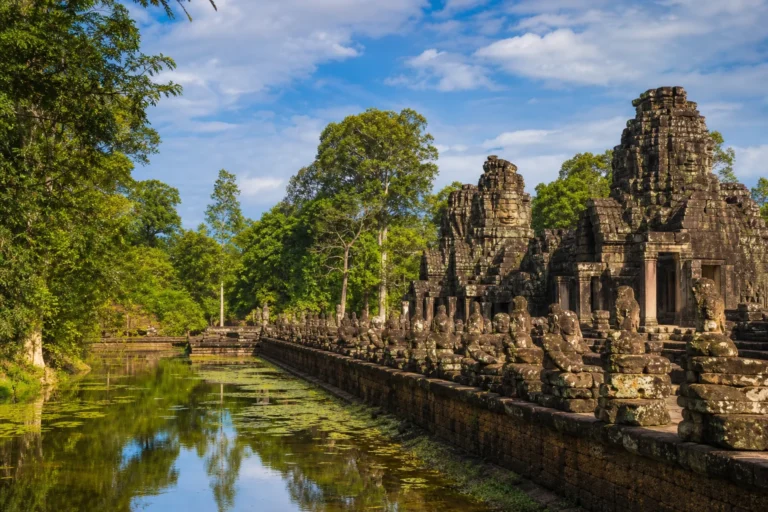
The Bayon stands at the geometric center of Angkor Thom and is famed for its many serene stone faces carved on broad towers. Constructed under King Jayavarman VII around the turn of the thirteenth century, the Bayon departs from earlier forms with interlocking galleries and a dense sculptural program.
Most striking are the towers carved with smiling faces on all sides and the deep bas‑reliefs that portray daily life, rituals, and battles. Move slowly through the inner galleries to follow changing relief themes.
Wear firm shoes for uneven sandstone and respect conservation rules maintained by heritage authorities.
Ta Prohm Temple
Ta Prohm presents carved stone entwined with living forest and remains purposely preserved in a romantic ruined state. Built in the late twelfth century under Jayavarman VII as a Mahayana Buddhist monastery and shrine, it offers layered courtyards, narrow chambers, and massive tree roots that thread through the masonry.
Conservation programs balance structural stability with the site’s iconic appearance, so visitors should move slowly and notice patched masonry and conservation anchors. Many areas are fragile; respect ropes and fenced zones managed by the park authority.
Angkor National Museum
Angkor National Museum in Siem Reap is a modern, interpretation‑focused venue that introduces the Angkor world before or after temple visits. Galleries are arranged thematically and chronologically, using stone sculpture, inscribed stelae, ritual objects, and multimedia displays to explain religion, kingship, and temple symbolism.
The museum includes a dedicated Gallery of 1,000 Buddhas and rooms on Angkor Wat and Angkor Thom to give visual anchors for the monuments. Climate‑controlled galleries and audio guides make it a useful break from temple heat; allow roughly ninety minutes to explore the permanent collections.
Pub Street (Street 08) and Old Market (Psar Chas)
Pub Street (Street 08) and the adjoining Old Market (Psar Chas) form Siem Reap’s lively tourist nucleus a short block from the Siem Reap River. By day the area functions as a market and service hub; by night it becomes a pedestrianized strip of restaurants, bars, and street food where visitors unwind after temple days.
Psar Chas sells textiles, lacquerware, carved souvenirs, dried fish, spices, and some fresh produce. Haggling is common; bring small bills and check quality carefully.
The district concentrates visitor services, transport links, and shops in a compact, walkable area.
Official Pub Street (Street 08) and Old Market (Psar Chas) website →
Tonle Sap floating villages — Kompong Phluk
Kompong Phluk sits on the northern edge of Tonle Sap’s floodplain where seasonal water levels reshape village life. The settlement is known for very tall stilt houses—often six to ten metres high—and for the flooded forest that surrounds the hamlet in the wet season.
Visits typically combine a motored boat across open water with a small skiff into narrow channels beneath submerged tree canopies. In the dry season you can walk beneath raised houses to see original stilts and fish‑processing activity.
Hire licensed local operators and verify ethical visiting guidance to respect community routines and the lake’s sensitive ecology.
Phnom Bakheng (sunrise/sunset viewpoint)
Phnom Bakheng is a low temple‑mount at the southern edge of the Angkor complex prized for sweeping panoramas. Built in the late ninth and early tenth centuries, it crowns a gradual ascent and offers wide views over forest canopy, flooded barays, and distant temple towers.
The terraced summit frames views toward Angkor Wat and the Western Baray and is a classic choice for sunrise or sunset photography. Sunrise tends to be quieter than sunset, while dusk can be crowded.
Wear sturdy shoes for uneven stone, expect cooler air on the terrace, and respect ropes and conservation measures.
Preah Vihear Kulen (Phnom Kulen) National Park
Phnom Kulen is a sacred plateau and protected forest north of Siem Reap with waterfalls, carved riverbeds, and scattered temple remains. The River of a Thousand Lingas (Kbal Spean) contains carved lingams and mythic figures cut into the riverbed, visible after a forested walk.
Visitors also find reclining Buddhas, stone sanctuaries, and seasonal natural pools on the plateau. Phnom Kulen is managed as a national park that balances archaeological protection, reforestation, and community livelihoods.
Trails can be steep and muddy when wet, so bring good footwear, insect protection, and water, and check local park offices or guides for current access.
Best Time to Visit Siem Reap
The most reliable travel window runs November through February, when drier weather, lower humidity, and clearer skies make temple exploration pleasant. March through May grow hot and can be uncomfortable for long walks.
June through October brings the monsoon and heavier rains, muddy tracks, and fewer crowds. For photography and lighter visitor flows, aim for early mornings at key temples and hilltop viewpoints.
SPECIAL EVENTS IN Siem Reap
Angkor Wat International Half Marathon
A long-running annual charity road race that finishes in front of the Angkor Wat temple complex, the event raises funds and awareness for landmine survivors and community causes. Runners and spectators value the unique pre-dawn start, race routing through the Angkor archaeological landscape, and the rare opportunity to experience a World Heritage Site at close quarters. Travelers may attend for the cultural spectacle, photo opportunities, and local charity impact; visitors should plan logistics early because access and tourism services around the temple are tightly managed.
- Dates
- December 6, 2026
- Venue
- In front of Angkor Wat Temple
Angkor Empire Marathon
The Angkor Empire Marathon is an annual road-racing event held at the Angkor archaeological park that attracts both domestic and international runners across full, half, 10K and fun-run distances. Sanctioned by AIMS and organized with Cambodian sports and tourism authorities, the race offers a distinctive early-morning course framed by UNESCO-listed temples and rural landscapes. Travelers value it for the unique cultural backdrop, strong local engagement, and opportunities to combine athletic participation with sightseeing and community-support initiatives that boost Siem Reap’s sports-tourism profile.
- Dates
- August 8, 2027
- Venue
- In front of Angkor Wat
Getting Around Siem Reap
Siem Reap is compact and easy to navigate. Short inner‑town trips commonly use tuk‑tuk, songthaew, or bicycle.
Private cars or guided drivers serve full‑day temple circuits and excursions to Tonle Sap or Phnom Kulen.
Inside Angkor Archaeological Park, organized circuits (small, medium, large loops) reduce transit time between dispersed monuments. For regional travel use Siem Reap International Airport or intercity buses, and choose licensed drivers and reputable operators.

Location
Map of Siem Reap, Cambodia
The interactive map loads only when you choose to view it.
Plan Your Visit to Siem Reap
Buy an Angkor Park pass from APSARA for multi‑day access and structure days around established temple circuits. Base yourself in central Siem Reap for easy access to Pub Street, Old Market, and museum sites.
Plan temple visits for early morning or late afternoon to avoid heat and peak crowds. Use licensed tuk‑tuks or reputable tour operators listed by provincial resources and confirm official visitor guidelines before specialized access.
Local Tips for Siem Reap
Dress respectfully at temples: cover shoulders and knees and follow the Angkor visitor code of conduct. For Tonle Sap, choose Kompong Phluk or Kompong Khleang in the dry season to see raised houses and stilted communities, and hire locally recommended boat operators.
For Phnom Kulen bring sturdy shoes, water, and consider a local guide for archaeological and sacred‑site context. Carry cash for rural areas and support community homestays and craft workshops.
Live conditions
Current Weather

Updated 2026-09-20 23:00
- Feels like
- 29°C / 85°F
- Today’s high / low
- 32°C / 90°F · 25°C / 76°F
- Humidity
- 90%
- Wind
- ← 12 km/h
- Precipitation
- 0.09 mm
- Chance of rain
- 87%
- Local time
- 2026-09-20 23:17
Safety in Siem Reap
Siem Reap is generally safe for tourists, but use normal Southeast Asia precautions: secure belongings in crowds and verify driver or operator credentials. At Angkor and Phnom Kulen follow APSARA and park guidance to protect fragile structures—do not climb unstable ruins or remove artifacts.
On Tonle Sap boat trips, use operators that provide life jackets and follow local advice on seasonal water levels. Heed ranger or guide instructions on trails for conservation and personal safety.