
Panduan Perjalanan
Cari tarikan utama, tempat setempat, peta, cuaca dan petua ringkas untuk Beijing.
Mencari Perkara untuk dilakukan di Beijing? Gunakan panduan ini untuk membandingkan tarikan utama, petua tempatan, peta dan cuaca.
Jika anda mencari perkara untuk dilakukan di Beijing, mulakan dengan koleksi tumpu tapak imperial bandar dan jiran-jiran berlapisannya.
Beijing ialah ibu negara politik dan budaya China, di mana Forbidden City dan Tiananmen Square membentuk paksi pusat istana dan taman, sementara kompleks kuil, taman klasik, lorong hutong dan kawasan seni kontemporari seperti 798 memberi ganjaran untuk penerokaan berhari-hari.
Kenapa Melawat Beijing
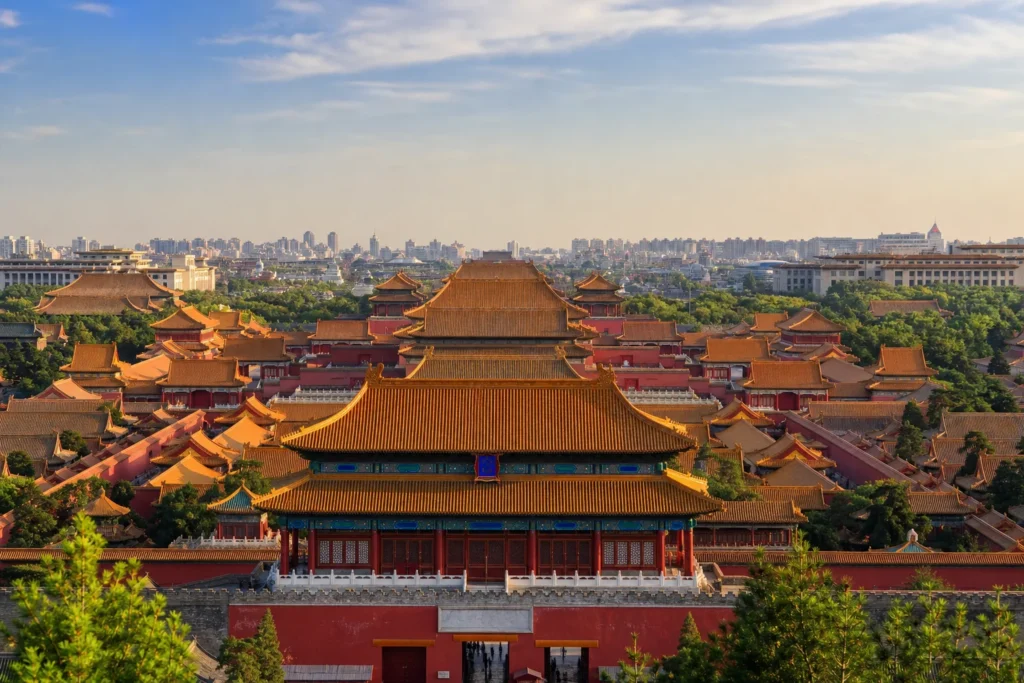
Pengunjung datang ke Beijing untuk mengalami beberapa warisan paling ikonik China dalam bentuk tumpu: Palace Museum (Forbidden City), teras sivik Tiananmen, lanskap ritual Temple of Heaven, tasik bertaman di Summer Palace dan bahagian Great Wall yang boleh diakses seperti Badaling.
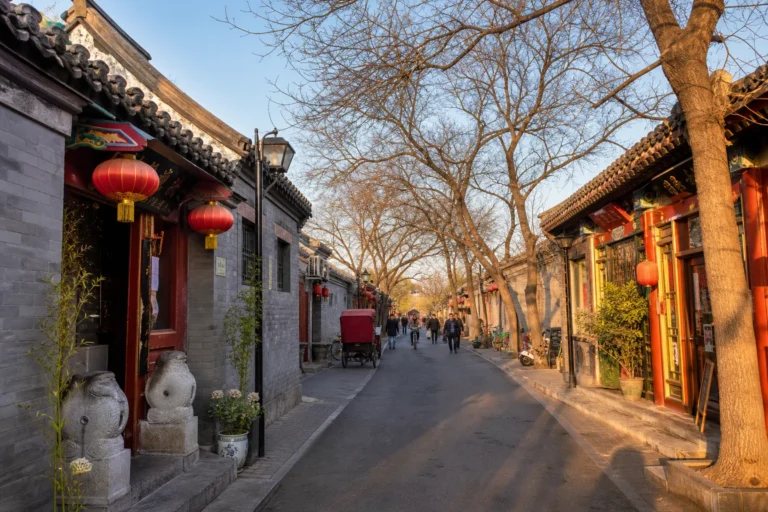
Di luar monumen, hutong yang terpelihara (Nanluoguxiang), dewan Buddha-Lamai utama seperti Yonghe Temple, dan 798 Art Zone menawarkan kepelbagaian budaya dari jarak dekat serta pemandangan seni kontemporari yang meriah.
Perkara untuk dilakukan di Beijing
Di bawah ialah tapak dan kawasan tanda tangan bandar, setiap satu menunjukkan aspek berbeza sejarah, ritual, seni taman dan budaya kontemporari Beijing. Rancang beberapa hari untuk menggabungkan mercu tanda utama dengan berjalan perlahan melalui hutong dan galeri.
The Forbidden City (Palace Museum)
The Palace Museum, commonly called the Forbidden City, sits on Beijing’s central axis as the best-preserved imperial palace complex in China. Built beginning in 1420 under the Ming Yongle Emperor, the complex served as the political and ceremonial heart of the Ming and Qing dynasties and housed twenty-four successive emperors.
Visitors move through a formally ordered sequence of outer ceremonial courts to the more private inner court and the emperor’s living quarters, with visual highlights such as the Meridian Gate and Hall of Supreme Harmony.
Today the museum presents large collections of ceramics, paintings, calligraphy, bronzes and court objects while operating conservation and restoration programs.
Tiananmen Square
Tiananmen Square lies immediately south of the Forbidden City and functions as Beijing’s central civic plaza. Framed by major national institutions—the Monument to the People’s Heroes, the Chairman Mao Memorial Hall, the National Museum of China and the Great Hall of the People—the square conveys urban scale and modern political significance.
Its broad layout reflects nineteenth- and twentieth-century changes and serves as a stage for state ceremonies and public rituals such as the daily flag-raising.
Visiting is a practical way to read Beijing’s imperial-to-modern narratives; expect security checks and occasional restricted access during official meetings, and pair a square visit with nearby museums and the Gate of Heavenly Peace (Tiananmen) for fuller context.
Temple of Heaven (Tiantan)
The Temple of Heaven is an imperial ceremonial complex where Ming and Qing emperors performed seasonal rites to communicate with Heaven. The axis links three principal structures—the Hall of Prayer for Good Harvests, the Imperial Vault of Heaven and the Circular Mound Altar—whose forms and materials express a coherent ritual cosmology.
The Hall of Prayer for Good Harvests is a triple-gabled wooden building built without nails and noted for its circular form and layered roof.
The monuments sit within a broad park of ancient cypresses, lawns and processionways that locals use for tai chi and music. Many visitors book timed tickets in advance and combine close-looking at carved timber and painted motifs with the popular everyday life around the precinct.
Summer Palace (Yiheyuan)
The Summer Palace is a large imperial garden centred on Longevity Hill and Kunming Lake, where landscape, architecture and imperial taste combine across water, pavilions and covered walkways. Originally created in the mid-18th century and later rebuilt, it served as both a pleasure garden and a political retreat.
Framed vistas, painted verandas, classical pavilions and the Tower of Buddhist Incense create a sequence of designed views toward the lake and city beyond.
Boat piers, bridges and the Marble Boat are frequent photographic subjects. Restoration and conservation work is ongoing; check official channels for any access requirements to inner areas and allow time to read both the water vistas and compact architectural sequences.
Badaling Great Wall (Great Wall at Badaling)
Badaling is one of the most visited and best-known stretches of the Ming-dynasty Great Wall, located northwest of Beijing on a rugged ridge. Walking its ramparts highlights the Wall’s defensive logic—stepped paths, crenellated parapets and regularly spaced watchtowers that trace high ground.
The masonry largely dates to the Ming period, when fortifications were rebuilt and standardized, and the site pairs engineered architecture with panoramic mountain scenery.
Parts of Badaling are steep with uneven steps; wear comfortable shoes and pace yourself. The area is a primary visitor hub with conservation and management measures to balance preservation and tourism—check official transport and visitor information before you travel.
798 Art Zone (Dashanzi Art District)
The 798 Art Zone, also called the Dashanzi Art District, occupies former electronics and factory buildings northeast of central Beijing. Its industrial architecture—high ceilings, large windows and rectilinear concrete—was influenced by Bauhaus and German modernist designs and was repurposed by artists beginning in the early 2000s.
The result is a large arts neighbourhood of galleries, studios, institutional exhibition spaces and public art installations.
A visit mixes contemporary exhibitions with street-level cultural life: design shops, small bookstores, cafés and converted workshops. Because the district is spread across a large parcel, allow time to wander and check exhibition listings and gallery opening arrangements through official district channels.
Nanluoguxiang Hutongs (historic hutong district)
Nanluoguxiang preserves a near-continuous pattern of narrow lanes and siheyuan courtyard houses near the Drum and Bell Towers, offering a compact glimpse into historic hutong life. The street mixes surviving courtyard fronts with renovated storefronts, shops, cafés and small museums, and lies on the city’s historic central axis.
Official protection and repair schemes have retained much of the visible streetscape rather than allowing wholesale replacement.
For a richer visit, explore side alleys to quieter courtyards and small museums that interpret local crafts. Expect an intense pedestrian atmosphere and many vendors; seek quieter moments in less-traveled side lanes to read detailed rooflines, carved doors and grey-brick walls.
Yonghe Temple (Lama Temple)
Yonghe Temple, commonly called the Lama Temple, is a large lamasery that blends Chinese imperial palace architecture with Tibetan Buddhist motifs. Originally an 18th-century princely residence that became a monastery under the Qing, the complex progresses through gate courtyards to sacred halls filled with carved columns, painted ceilings and large gilt Buddhas.
The temple is noted for large images carved from single timbers and finely cast bronzes.
Incense and active devotional practice give the site a living religious atmosphere rather than a museum setting. Visitors should move slowly, respect worship practices, and check authoritative visitor guidance before attending specific ceremonies or photography-sensitive moments.
Masa Terbaik untuk Melawat Beijing
Musim bunga (April–Mei) dan musim luruh (September–Oktober) adalah musim paling selesa: suhu sederhana, langit lebih jelas dan taman-taman kelihatan menarik. Musim sejuk sejuk dan kering dengan lebih sedikit pelancong; musim panas boleh menjadi panas, lembap, sesak dan kadang-kadang berkabus.
Cuti kebangsaan dan tarikh perayaan utama menarik orang ramai domestik dan boleh menjejaskan pengangkutan serta akses tapak.
Acara khas
Acara akan datang
Beijing International Book Fair (BIBF)
- Tarikh
- June 16, 2027 - June 20, 2027
- Lokasi
- China National Convention Center
Cara Bergerak di Beijing
Rangkaian pengangkutan Beijing luas dan cekap: sistem metro yang semakin berkembang menghubungkan paksi pusat dan banyak tarikan, manakala bas, teksi terkawal dan pemindahan pinggir bandar mencapai tapak luar seperti Badaling. Menjelajah hutong terbaik dengan berjalan kaki atau e-basikal.
Benarkan masa tambahan untuk pemeriksaan keselamatan di tapak utama dan untuk perjalanan semasa cuti kebangsaan; rancangkan perjalanan ke Great Wall melalui bas khas, bas antara bandar atau kereta persendirian.

Lokasi
Peta Beijing, China
Peta interaktif hanya dimuatkan apabila anda memilih untuk melihatnya.
Rancang Lawatan Anda ke Beijing
Rancang mengikut saiz bandar dan tahap kesesakan. Gunakan sumber rasmi bandar (seperti GO BEIJING / Beijing Tourism) serta saluran tiket rasmi atau akaun WeChat tiap tarikan untuk menempah lawatan ke Palace Museum, Summer Palace, Temple of Heaven dan Great Wall lebih awal.
Bawa pasport/ID apabila mengumpul tiket. Bergantung pada rangkaian metro untuk lawatan pusat dan tempah pemindahan luar bandar untuk lawatan ke Great Wall.
Jadualkan lawatan luar supaya tidak bertembung dengan waktu puncak tengah hari atau cuti kebangsaan untuk mengelak orang ramai yang padat.
Petua Tempatan untuk Beijing
Pembayaran mudah alih (Alipay/WeChat) adalah kebiasaan—bawa telefon yang menyokong pembayaran atau sejumlah kecil tunai. Di tapak warisan dan kuil, berbual perlahan, elakkan menyentuh artifak dan patuhi papan tanda.
Hutong memberi ganjaran kepada berjalan perlahan—pakai kasut selesa dan perhatikan lorong sempit serta lalu lintas motosikal/basikal bersama. Tawar-menawar biasa di pasar jalanan tetapi bukan di muzium dan galeri yang harga tetap.
Keadaan semasa
Cuaca semasa

Dikemas kini 2026-09-21 21:45
- Terasa seperti
- 24°C / 75°F
- Tertinggi / terendah hari ini
- 31°C / 88°F · 18°C / 64°F
- Kelembapan
- 50%
- Angin
- ↓ 12 km/h
- Kerpasan
- 0 mm
- Kemungkinan hujan
- 2%
- Waktu tempatan
- 2026-09-21 21:52
Keselamatan
Kualiti udara boleh berubah — semak ramalan dan kurangkan aktiviti lasak di luar pada hari pencemaran tinggi; bawa topeng jika anda sensitif. Berhati-hati ketika melintas jalan lebar dan gunakan sambungan subway bila sesuai.
Kecurian kecil dan penipuan sasaran pelancong berlaku di kawasan sibuk; lindungi pasport, telefon dan aplikasi pembayaran. Untuk kecemasan, gunakan nombor kecemasan tempatan dan minta bantuan di pusat maklumat pelancongan rasmi; berhati-hati di lantai tidak rata, anak tangga dan batu binaan di tapak bersejarah.