
Travel Guide
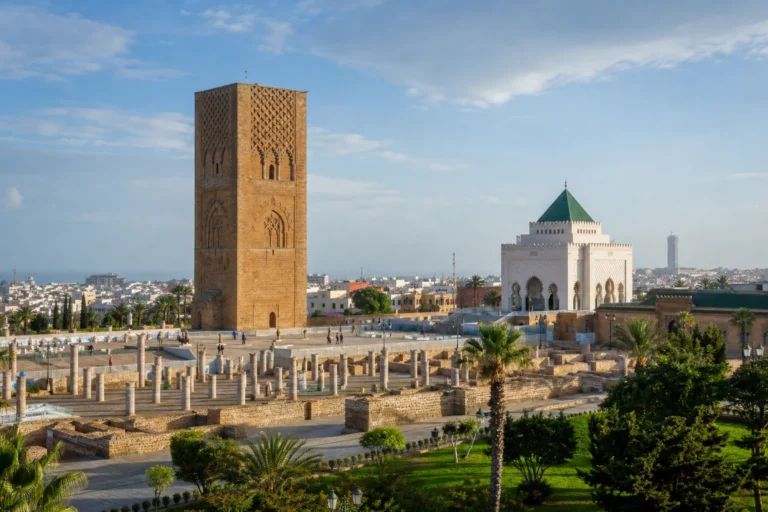
Plan your visit around Hassan Tower and the incomplete Almohad M, Mausoleum of Mohammed V, and more of Rabat, Morocco.
Rabat blends a conserved UNESCO medina, Almohad monuments and modern museums along the Atlantic and the Bouregreg river. If you’re searching for things to do in Rabat you’ll find a compact city where Hassan Tower, the Kasbah of the Udayas, Chellah and the Mohammed VI Museum are all walkable or a short tram ride apart.

Why Visit Rabat
Visitors come to Rabat for layered heritage that pairs Roman and medieval ruins with early 20th‑century urban planning and contemporary cultural venues. The medina and Kasbah offer atmospheric streets, craft shops and viewpoints over the Bouregreg estuary, while Chellah is a walkable archaeological park within the city.
Museums, gardens and seaside promenades make Rabat a balanced destination for history, photography and relaxed strolling, and the city serves as a convenient hub for nearby day trips.
Top Things to Do in Rabat, Morocco
Rabat’s compact historic core and riverfront monuments make it easy to combine ruins, gardens and museums in a single day. Below are the city’s most visited heritage sites and cultural institutions.
Hassan Tower and the incomplete Almohad Mosque (Tour Hassan)
The Hassan Tower is a 12th‑century unfinished minaret and the most visible remnant of a vast Almohad mosque project. Visitors see the soaring masonry tower, the flagged floor of the intended prayer hall and low pillar bases on a large esplanade overlooking the Bouregreg.
The open‑air ruins offer striking photo viewpoints and a clear sense of the original medieval ambition; expect an outdoor archaeological visit and confirm access in case of conservation work or special events.
Official Hassan Tower and the incomplete Almohad Mosque (Tour Hassan) website →
Mausoleum of Mohammed V (Esplanade near Hassan Tower)
The Mausoleum of Mohammed V is a 20th‑century royal memorial on the esplanade beside the Hassan Tower. Known for its white marble, zellij mosaics and green pyramidal roof, the mausoleum houses the tombs of King Mohammed V and other royals and is often photographed with ceremonial guards at the entrance.
Visits focus on the architecture and decorative arts; respectful dress and quiet behaviour are expected and access can be affected by state ceremonies or security measures.
Official Mausoleum of Mohammed V (Esplanade near Hassan Tower) website →
Kasbah of the Udayas (Oudayas) and its Andalusian Garden
The Kasbah of the Udayas is an Almohad fortress and seaside medina above the Bouregreg estuary, noted for its white‑and‑blue lanes, the Bab Oudaia gate and small museums. The adjacent Andalusian Garden offers terraced planting, fountains and shaded walks with panoramic views across the river toward Salé.
The ensemble is a living neighbourhood best explored on foot; some small museums may have intermittent closures for restoration.
Official Kasbah of the Udayas (Oudayas) and its Andalusian Garden website →
Chellah archaeological site (necropolis and Roman/Medieval remains)
Chellah is a fortified archaeological necropolis and ruined town on the Bouregreg’s edge where Roman foundations meet a Marinid medieval cemetery, mosque fragments and city walls. The landscaped park lets visitors walk among excavated foundations, a decorated minaret and funerary monuments—often with storks nesting among the ruins.
It’s an outdoor archaeological visit; verify access and any restricted sectors before you go.
Official Chellah archaeological site (necropolis and Roman/Medieval remains) website →
Mohammed VI Museum of Modern and Contemporary Art (MMVI)
The Mohammed VI Museum (MMVI) is Morocco’s principal public institution for modern and contemporary art, housing a permanent collection of 20th‑ and 21st‑century Moroccan works alongside rotating exhibitions, an auditorium and education spaces.
The purpose‑built galleries present major national artists and younger practitioners in museum‑grade displays; check the Fondation Nationale des Musées for exhibition schedules, ticketing and temporary closures.
Official Mohammed VI Museum of Modern and Contemporary Art (MMVI) website →
Musée de l'Histoire et des Civilisations / Rabat Archaeological Museum
The Musée de l'Histoire et des Civilisations is Rabat’s principal archaeological and history museum, presenting material from prehistory through Roman and Islamic periods. Exhibits include prehistoric tools, Roman mosaics, funerary objects and large architectural fragments that provide context for nearby sites such as Chellah and Volubilis.
As a national museum, galleries can close for conservation or loans—confirm access before your visit.
Official Musée de l'Histoire et des Civilisations / Rabat Archaeological Museum website →
Jardin Zoologique National de Rabat (Rabat Zoological Garden)
The Jardin Zoologique National de Rabat is a modern zoological park rebuilt in the 2010s with landscape‑style enclosures and themed zones for Moroccan, Saharan and African fauna. The site features visitor facilities, educational displays, a vivarium and family services; it’s a park‑scale outdoor visit with walking routes, viewing platforms and programmed animal‑care operations.
Check the zoo’s official pages for ticketing, schedule changes and any restricted sectors.
Official Jardin Zoologique National de Rabat (Rabat Zoological Garden) website →
Andalusian Garden of the Kasbah (Gardens of the Oudayas)
The Andalusian Garden within the Kasbah of the Udayas is a small, early‑20th‑century garden of terraces, tiled fountains and orange trees that references Islamic/Andalusian garden traditions. It provides a fragrant, shaded counterpoint to the kasbah’s narrow alleys and offers terraces that frame panoramic estuary views.
The garden is an outdoor, walkable feature best visited on foot as part of the Kasbah ensemble.
Official Andalusian Garden of the Kasbah (Gardens of the Oudayas) website →
Best Time to Visit Rabat
Spring (March–May) and autumn (September–November) are the most pleasant seasons for exploring Rabat’s coastal breezes, gardens and outdoor sites. Temperatures are milder and humidity lower than in summer, improving comfort for walking the medina, riverside esplanades and archaeological parks.
Winter is mild but can be wetter; plan indoor alternatives like museums in case of rain.
SPECIAL EVENTS IN Rabat
Jazz à Rabat (formerly Jazz au Chellah)
Jazz à Rabat is an annual jazz festival produced by the European Union delegation in Morocco in partnership with Moroccan cultural authorities. The program pairs European and Moroccan musicians in concerts, collaborative creations and public encounters that highlight cross‑cultural exchange and musical fusion. The festival is a useful draw for travelers seeking live music, short evening performances, artist workshops and a chance to experience contemporary Moroccan jazz scenes alongside international acts in a civic festival setting.
- Dates
- September 24, 2026 - September 26, 2026
- Venue
- Amphitheatre, Parc Hassan II
Festival International du Cinéma d'Auteur de Rabat (FICAR)
A long-running annual film festival in Morocco’s capital celebrating auteur cinema from Morocco, Africa and worldwide. FICAR programs feature feature-length and short films, retrospectives, industry panels and guest filmmakers, making it a key cultural draw for cinephiles and professionals. Travelers may attend curated screenings, Q&A sessions and networking events, experience Rabat’s cinema venues and broader cultural scene, and combine attendance with museum visits and guided city walks. The festival is organized by the Association du Festival International de Rabat pour la Culture et les Arts and maintains an official website for schedules and accreditations.
- Dates
- November 7, 2026 - November 13, 2026
Getting Around Rabat
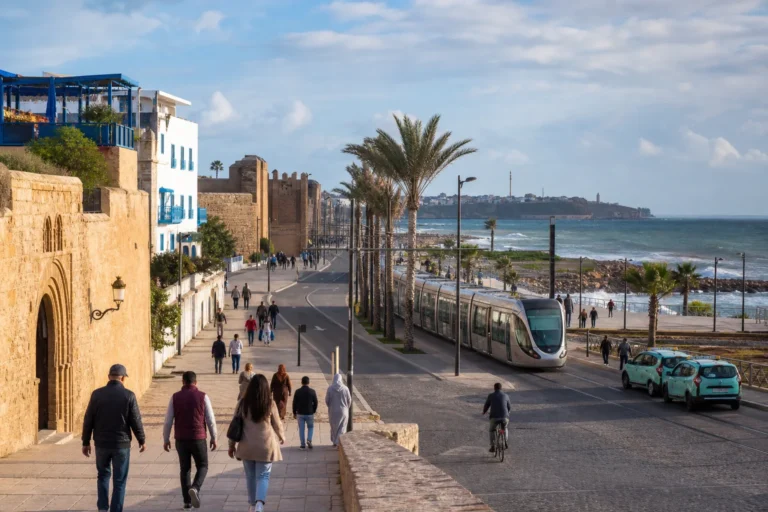
Rabat is compact and highly walkable across the UNESCO‑inscribed medina, the Kasbah of the Udayas and the Ville Nouvelle. A modern tram links central neighborhoods across Rabat–Salé, and ONCF regional trains connect to Casablanca and Fes.
Petit taxis are plentiful for short trips; grands (shared) taxis serve longer regional journeys. Cyclists should favour quieter streets and waterfront promenades, and prebook airport transfers or taxis in advance.
Location
Map of Rabat, Morocco
The interactive map loads only when you choose to view it.
Plan Your Visit to Rabat
Rabat’s principal attractions cluster around the medina and Kasbah of the Oudayas, the Hassan Tower/Mausoleum area, Chellah, and the modern museum quarter. Check the Fondation Nationale des Musées and official Rabat tourism pages for museum hours, closures or special booking requirements.
Allow extra time for security screening near official buildings and the royal palace precinct, and plan half‑day walking loops (medina, Kasbah, esplanade) to avoid backtracking.
Local Tips for Rabat
Plan walking visits in separate half‑day blocks: the medina, the Oudayas kasbah and the Hassan Tower/Chellah esplanade work well as distinct circuits. Use official municipal and national tourism sites to confirm closures or special events before visiting heritage sites, and buy timed tickets for high‑demand cultural venues when available.
Dress respectfully around religious sites and royal precincts; wear comfortable shoes for uneven medina streets and archaeological ruins. Carry water, small change, and a basic first‑aid kit.
Live conditions
Current Weather

Updated 2026-09-22 00:30
- Feels like
- 25°C / 76°F
- Today’s high / low
- 30°C / 86°F · 22°C / 72°F
- Humidity
- 61%
- Wind
- ← 8 km/h
- Precipitation
- 0 mm
- Chance of rain
- 3%
- Local time
- 2026-09-22 00:41
Safety in Rabat
Rabat is generally safe for visitors but use normal urban precautions: watch for pickpockets in crowded medina lanes and transit hubs, secure valuables, and avoid poorly lit side streets at night. Stay aware of temporary access restrictions near government or royal areas by checking official municipal notices.
Near Bouregreg riverbanks and some Chellah edges, watch your footing on uneven surfaces and respect posted barriers. In hot months, carry water and limit long outdoor walks during midday.