
Travel Guide
Find top sights, local places, maps, weather, and simple trip tips for Venice, Italy.
Looking for Things to Do in Venice, Italy? Use this guide to compare top sights, local tips, maps, weather, and nearby places.
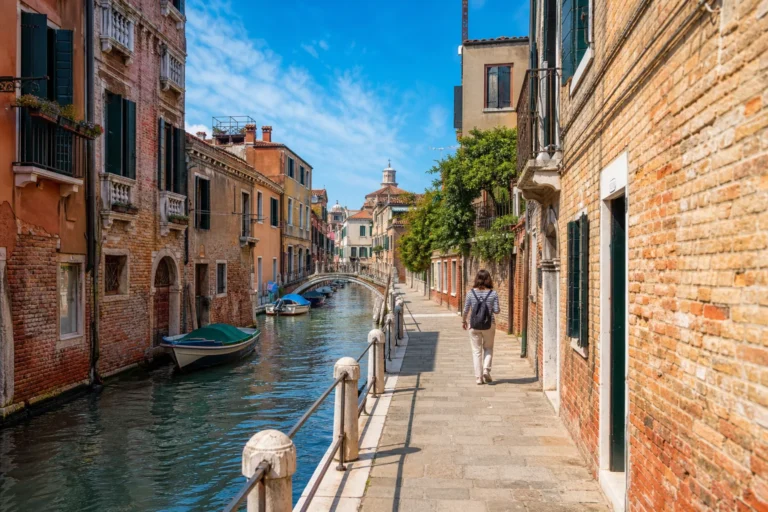
Looking for things to do in Venice? This compact, walkable city is built across a saltwater lagoon and threaded by canals, narrow calli and pedestrian bridges.
Venice’s highlights cluster around Piazza San Marco and the Grand Canal, while short boat rides link island communities such as Murano and Burano, which preserve long artisan traditions. Expect a heritage environment shaped by waterborne transport, conservation priorities, and occasional acqua alta (high tide) events that affect low-lying areas.
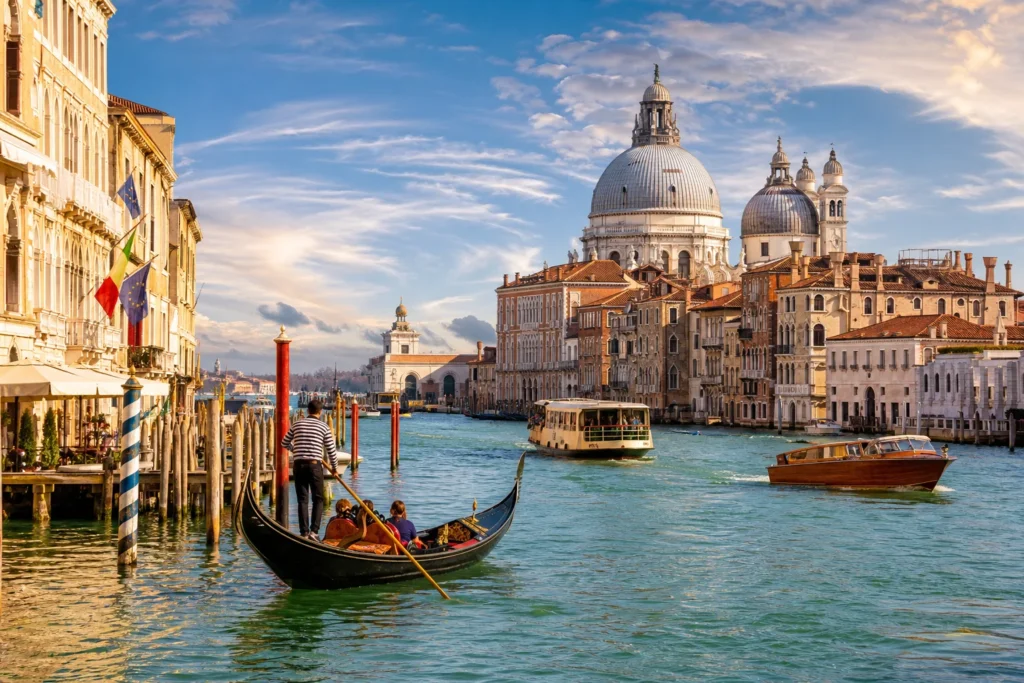
Why Visit Venice
Venice concentrates world-class architecture, museum collections and living craft traditions within a uniquely waterbound setting. Monumental religious and civic sites in the San Marco quarter, palace interiors and civic art along the Grand Canal, and specialized museums such as the Gallerie dell’Accademia and the Peggy Guggenheim Collection showcase the city’s cultural depth.
Short boat trips connect to Murano’s glass workshops and Burano’s lace and painted houses, while Teatro La Fenice anchors Venice’s operatic heritage.
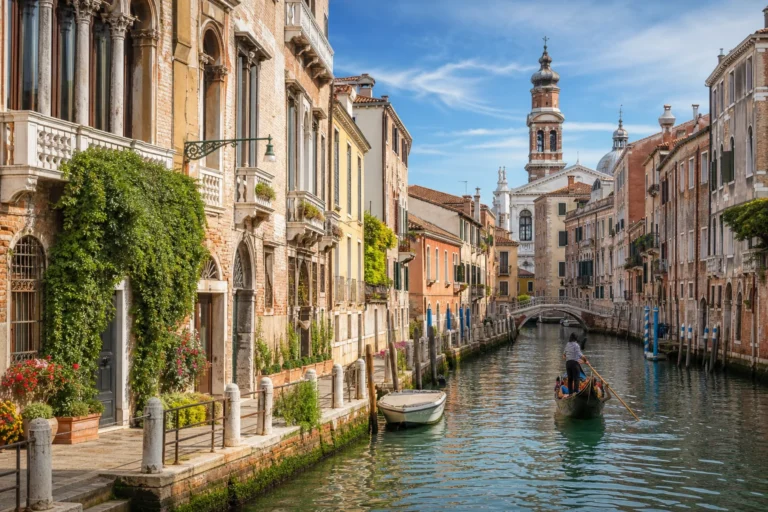
Top Things to Do in Venice, Italy
Explore a tight cluster of cathedral, palace, and canal landmarks, then take short vaporetto rides to islands where traditional crafts remain active. Below are the core sites and island excursions that define the Venetian experience.
St. Mark's Basilica (Basilica di San Marco)
Sited at the eastern end of Piazza San Marco, this basilica grew from the Doge’s private chapel into Venice’s principal church and a monumental public showcase. The building blends Byzantine, Romanesque and later influences and is crowned by five domes that shape the skyline and frame lagoon views.
Inside, near‑continuous golden mosaics cover vaults, domes and walls, narrating Gospel stories, the life and translation of Saint Mark’s relics, and liturgical feasts. The high altar faces the Pala d’Oro, an exceptionally rich gilded altarpiece set with enamels and gems.
The complex includes a treasury and a small museum that preserve liturgical objects and original sculptures moved indoors for conservation.
Official St. Mark's Basilica (Basilica di San Marco) website →
Doge's Palace (Palazzo Ducale)
Palazzo Ducale stands beside St. Mark’s as the secular heart of the old Republic. Its Venetian Gothic facades and later wings housed the Doge’s residence, deliberative councils, courts and administrative offices, expressing civic government across centuries.
Visitors move through ceremonial halls such as the Scala d’Oro and the Sala del Maggior Consiglio—dominated by Tintoretto’s Il Paradiso—which illustrate how Venice represented political power. The complex also contains judicial spaces and the route to the Bridge of Sighs, linking the palace to the New Prisons.
Special itineraries reveal administrative machinery and former prison cells. Many areas require controlled access for conservation, so consult the palace’s official resources for current visiting paths and tours.
Piazza San Marco (St. Mark's Square)
Piazza San Marco is Venice’s principal public square and ceremonial centre, opening toward the lagoon and framed by the basilica, Doge’s Palace and the campanile. The long arcaded Procuratie buildings enclose the square with historic cafés and shops.
The square evolved over centuries into its present trapezoid form, with the adjoining Piazzetta marked by two granite columns topped by Saint Theodore and the winged lion of Saint Mark. Sound and light behave openly here, and cafés beneath the arcades attract people‑watching crowds.
Piazza San Marco is also susceptible to acqua alta; raised walkways and municipal measures alter circulation during high tides.
Grand Canal (Canal Grande)
The Grand Canal is Venice’s main waterway and visual spine, following an S-shaped route through the historic centre for about 3.8 kilometres. It divides the city into two halves and presents a near-continuous sequence of merchant palaces, Gothic facades, Renaissance loggias and Baroque fronts facing the water.
Visitors commonly experience the canal by boat: vaporetto Line 1 offers a slow, panoramic option, while traghetto ferries, private gondolas and water taxis provide shorter crossings and point‑to‑point travel. Notable bridges—the Rialto, the Accademia and the Scalzi—mark key viewpoints.
Because the canal carries substantial boat traffic and delivery operations, choose slower routes and outside‑facing seats for the best uninterrupted views, and check transport maps before planning a specific itinerary.
Rialto Bridge (Ponte di Rialto)
The Rialto Bridge is Venice’s oldest and most celebrated crossing of the Grand Canal, marking the city’s historic commercial heart. The current masonry single‑span arch, completed in the late sixteenth century from Antonio da Ponte’s design, replaced earlier wooden structures and remains a notable engineering and urban landmark.
Architecturally it features twin rows of small shops along its sides and a raised central walkway that provides panoramic views down the Grand Canal. The stepped approaches concentrate pedestrian flow into narrow passages, and nearby markets and bacari (small wine bars) reinforce the bridge’s trading role.
Expect heavy pedestrian crowds at this key junction; for visitor routes or temporary conservation work, consult municipal and heritage sources before visiting.
Gallerie dell'Accademia
Gallerie dell’Accademia houses the most important single collection of Venetian painting, arranged to show the city’s pictorial development from the late Middle Ages through the eighteenth century.
Located in the former church and convent of Santa Maria della Carità on the Grand Canal’s south bank, the museum concentrates works by Bellini, Giorgione, Titian, Tintoretto, Veronese and others.
The display follows a roughly chronological route so visitors can trace transitions from Gothic tempera panels to Renaissance colorism and Baroque practices. Galleries range from intimate chapels to larger halls, and curatorial presentation highlights workshop relationships and technical developments.
Allow time to move slowly through consecutive rooms and consult the museum’s official resources for ticketing, visitor routes and temporary closures.
Peggy Guggenheim Collection
Housed in Palazzo Venier dei Leoni on the Grand Canal, the Peggy Guggenheim Collection occupies the collector’s former home and reads as a domestic museum. The collection concentrates on twentieth‑century European and American modernism, with works by Kandinsky, Magritte, Miró, Pollock, Calder and notable Italian modernists.
The house setting and a compact sculpture garden change the scale and proximity of works compared with conventional museums, and the sequence of living rooms, studios and terraces frames the display. Temporary exhibitions and conservation projects complement the permanent holdings.
Verify photography rules, guided‑route options and conservation restrictions on the official site before visiting, and allow time to see house and garden together.
Murano (Glassmaking and island visits)
Murano is a cluster of small islands in the lagoon historically specialised in glassmaking and reached easily by vaporetto or private water taxi. The islandscape mixes working furnaces, small canals and showrooms near landing points, and many visitors combine the Museo del Vetro (Glass Museum) with short demonstrations at active furnaces.
Murano’s glass identity dates from medieval decrees that concentrated furnaces on the islands from the late thirteenth century, encouraging guild regulation and technical continuity. The Museo del Vetro traces roughly seven hundred years of the craft with objects, tools and documentary displays.
Burano (Colourful island and lace-making)
Burano is a compact working island in the northern lagoon known for brightly painted houses and a long tradition of needle and bobbin lace.
Visitors arrive by vaporetto or private boat and find narrow canals, low arched bridges and small squares with cafés and family‑run shops; early morning and late afternoon are especially photogenic as façades reflect in calm water.
Lacemaking on Burano is a continuity of technique and teaching preserved over centuries; the Lace Museum and historic lace school display tools, samples and archives. Many ateliers practise traditional stitches and sometimes offer demonstrations or courses—verify programs in advance.
Official Burano (Colourful island and lace-making) website →
Teatro La Fenice
Teatro La Fenice is Venice’s historic opera house with a long association to Italian opera and many important premieres. Named “The Phoenix” for its repeated rebirth after destructive fires, La Fenice combines a richly decorated foyer with a horseshoe‑shaped auditorium arranged around tiers of private boxes.
Restorations have used archival research to recover original sightlines and decorative schemes while adding modern stage machinery and safety systems for contemporary productions. Visitors can often tour the public rooms, museum displays and the auditorium when no performance is running; tours and audio guides explain stagecraft, backstage routes and the theatre’s restoration narrative.
Check the theatre’s official resources for tickets and tour options before visiting.
Best Time to Visit Venice
The most pleasant times are the shoulder seasons—late spring (April–June) and early autumn (September–October)—when temperatures are moderate and crowds are smaller than midsummer. Winter offers quieter streets and lower rates but shorter daylight and a higher chance of acqua alta (November.
March), so plan for raised walkways and occasional service changes.
Summer is warm and busy; if you travel then, book key cultural sites in advance and start early to avoid congestion.
Getting Around Venice
Venice is primarily a pedestrian city: walking across calli and bridges is the most reliable way to move around the historic islands. Waterborne public transit (vaporetti and local motorboats) runs regular routes along the Grand Canal and to islands such as Murano, Burano and the Lido.
Water taxis and private boats provide point-to-point transfers. Mainland rail and bus connections arrive at Venezia Santa Lucia and Mestre, with short public-transport rides linking terminals to the historic islands.
Expect reliance on scheduled water services and walking for most sightseeing.
Location
Map of Venice, Italy
The interactive map loads only when you choose to view it.
Plan Your Visit to Venice
Plan to travel on foot and by vaporetto between major sites and islands. Buy ACTV transit tickets or a Venezia Unica pass in advance and carry a printed or mobile copy.
Allow extra time for security checks and separate ticketing at St. Mark’s and the Campanile. Large rolling suitcases are awkward on bridges and steps; use luggage storage at stations or hotels near Piazzale Roma or the railway if needed.
Check official visitor resources for current routes and conservation‑related limits before you go.
Local Tips for Venice
Wear comfortable shoes for cobbled lanes and many steps. Check Comune di Venezia tide forecasts and high‑tide alerts before visiting low‑lying areas like Piazza San Marco; raised walkways are used during higher tides.
Use vaporetto lines 1 or 2 for scenic Grand Canal transfers and board at less crowded stops when possible. Buy timed-entry tickets for busy museums and St. Mark’s attractions to reduce waiting; tourist offices can confirm route disruptions and ferry changes.
Live conditions
Current Weather

Updated 2026-08-24 06:30
- Feels like
- 19°C / 66°F
- Today’s high / low
- 28°C / 83°F · 20°C / 67°F
- Humidity
- 70%
- Wind
- ↗ 10 km/h
- Precipitation
- 0 mm
- Chance of rain
- 5%
- Local time
- 2026-08-24 06:38
Places to Visit Near Venice
Piazza San Marco and St. Mark’s Basilica (Basilica di San Marco) and the Campanile are immediate neighbours and form the city’s ceremonial core. Doge’s Palace (Palazzo Ducale) sits adjacent to the square, while the Rialto Bridge (Ponte di Rialto) and the nearby Rialto market mark Venice’s historic commercial quarter.
The Grand Canal (Canal Grande) vaporetto route links the city’s palaces and major bridges.
Gallerie dell’Accademia and the Peggy Guggenheim Collection are grouped in Dorsoduro and pair well for a museum day. Teatro La Fenice near Campo San Fantin anchors Venice’s operatic tradition.
Island trips to Murano (glassworks) and Burano (coloured houses and lace) depart from central fondamente and northern lagoon piers and make convenient half‑day or full‑day excursions.
Safety in Venice
Venice is generally safe for visitors but take normal precautions: secure valuables and be alert for opportunistic pickpockets in crowded squares, on public transport, and around major sites. Follow posted guidance and security checks at religious sites and museums; staff or police may redirect flows during peak times.
Acqua alta can flood low zones—consult Comune di Venezia tide forecasts and siren alerts, avoid standing water, follow marked raised walkways, and heed transit advisories. In emergencies call EU 112 and consult tourist offices for official updates.