
Travel Guide
Find top sights, local places, maps, weather, and simple trip tips for Bangkok, Thailand.
Looking for Things to Do in Bangkok, Thailand? Use this guide to compare top sights, local tips, maps, weather, and nearby places.
Bangkok is Thailand’s sprawling capital where gilded palace complexes and riverside temples sit beside high-rise shopping, bustling market lanes, and leafy parks.
This guide highlights things to do in Bangkok across the Chao Phraya riverfront and historic Rattanakosin Island, while pointing to markets, museums, and green spaces like Lumpini Park that reveal the city’s cultural breadth.
Why Visit Bangkok
Bangkok rewards visitors who want variety in a compact area: world-class temple architecture at the Grand Palace, Wat Phra Kaew, Wat Pho and Wat Arun. Immersive markets such as Chatuchak and Yaowarat (Chinatown).
And a lively riverfront served by longtail and express boats.
Cultural sites like the Jim Thompson House explain Thai textiles and design, while public parks such as Lumpini Park offer a cooling contrast to urban bustle. Quick day trips and a wide dining scene make Bangkok a practical base for exploring Thailand’s heritage.
Top Things to Do in Bangkok, Thailand
Start with the riverfront and historic Rattanakosin core, then branch out to markets, museums, and green spaces. Below are the essential places and experiences that reveal Bangkok’s layered history and daily life.
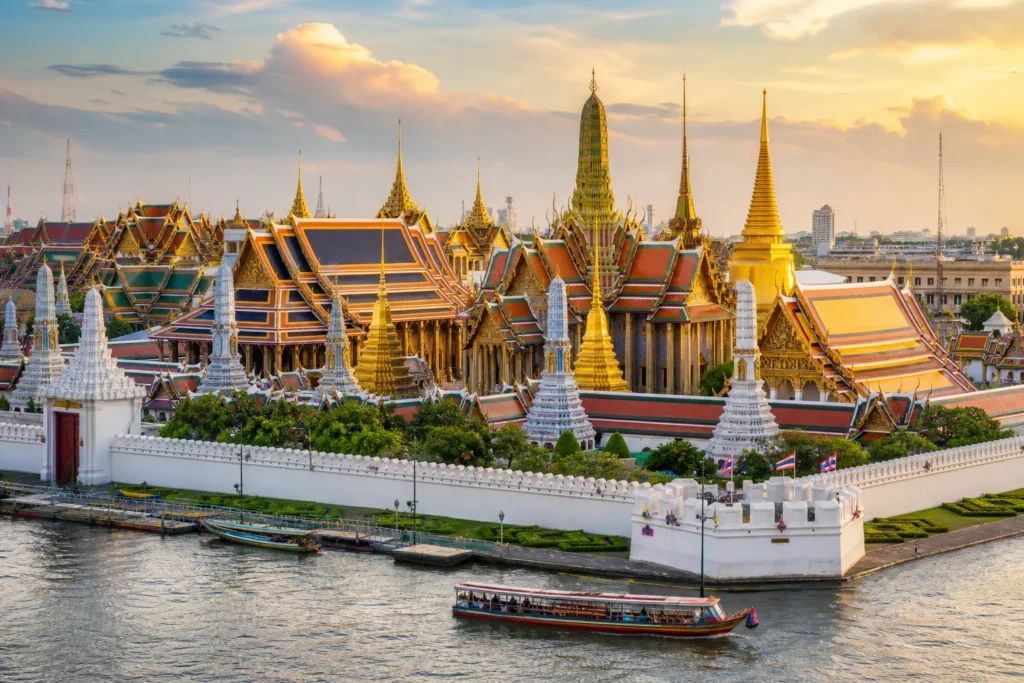
The Grand Palace and Wat Phra Kaew (Temple of the Emerald Buddha)
The Grand Palace complex sits at the historic heart of Rattanakosin Island and unfolds as a tightly composed sequence of courtyards, throne halls and temple buildings.
Established after 1782 when King Rama I made Bangkok the capital, the palace mixes Thai ornament, glass mosaic, gilt roofs and European decorative ideas in ceremonial spaces that once housed royal administration.
Wat Phra Kaew, the chapel royal inside the palace, contains Thailand’s most revered image: the Emerald Buddha, a small green‑stone figure about 66 centimetres tall. The image is treated as a national palladium with seasonal robe‑changing rituals linked to the royal household.
Visitors should dress modestly and check official palace notices for closures or ceremonial restrictions before visiting.
Official The Grand Palace and Wat Phra Kaew (Temple of the Emerald Buddha) website →
Wat Pho (Temple of the Reclining Buddha)
Wat Pho sits immediately south of the Grand Palace and reads as a compact learning monastery shaped by nineteenth‑century royal restorations. The temple’s signature is the gilded Reclining Buddha, roughly 46 metres long and about 15 metres high, whose mother‑of‑pearl decorated soles bear 108 auspicious symbols that reward close looking.
Beyond the reclining hall, Wat Pho’s chedis, murals and sheltered cloisters reflect its role as an early public university of traditional arts and sciences. The site continues to host a traditional massage school and interpretive displays about Thai medicine.
Remove shoes and wear modest clothing when entering sacred buildings.
Wat Arun (Temple of Dawn)
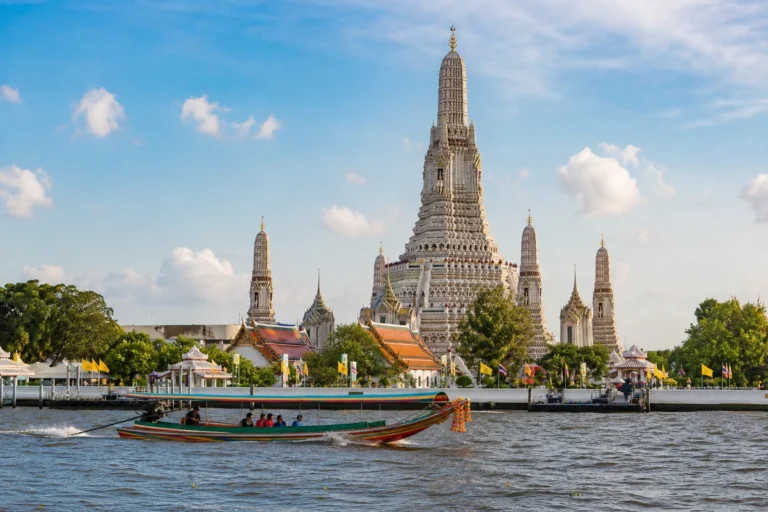
Wat Arun reads as a dramatic riverside silhouette on the Chao Phraya, anchored by a steep Khmer‑style prang faced with colorful porcelain fragments and seashells. Craftspeople embedded broken Chinese porcelain and tiles into the plaster to form floral motifs and figurative inlays that scatter sunlight across the tower’s tiers.
Visitors approach by short river crossings and can climb steep terraces for wide river views of the skyline and opposite quays. The temple’s history ties to Thonburi and early Rattanakosin periods; expect outdoor steps and check for any conservation‑related closures before visiting.
Chatuchak Weekend Market
Chatuchak Weekend Market is a sprawling, market‑city experience made from thousands of stalls organized into numbered sections. Distinct areas concentrate clothing, homewares, ceramics, plants, antiques, books and pets, so printed or online maps and section numbers help shoppers find specialties and repeat vendors.
The market grew from railway‑adjacent land into a major weekend destination for traders across Thailand. Practical tips: arrive early to beat heat and crowds, carry water and cash for small purchases, and use nearby MRT and BTS links to avoid long walks.
Lockers and station access points provide staging for larger hauls.
Chao Phraya River (riverfront sights and riverboat experience)
The Chao Phraya River functions as Bangkok’s central spine, passing heritage sites, markets and mixed‑use quays. Public commuter launches, cross‑river ferries and private long‑tail boats animate the waterway and shape how locals move and trade, while riverfront promenades and piers frame views of gilded roofs and decorated prangs.
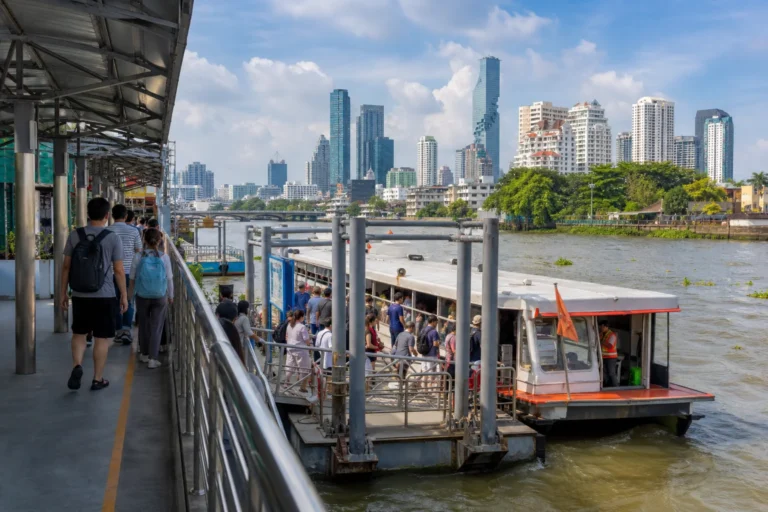
A riverboat ride is both transport and interpretation: an express boat between major piers gives rapid orientation and reveals daily commuting patterns. Short ferries connect temple piers and riverside neighborhoods—bring sun protection, small bills for purchases, and verify current routes before travel.
Official Chao Phraya River (riverfront sights and riverboat experience) website →
Yaowarat (Bangkok Chinatown)
Yaowarat Road and its lanes form Bangkok’s historic Chinatown, shaped by generations of Chinese‑Thai traders. The area features narrow shophouses, gold shops, herbal stores and family‑run eateries, with small community shrines and decorative Chinese signage mixed into Thai shopfronts.
Yaowarat’s food culture is a major draw: open‑fronted kitchens, noodle shops and street stalls concentrate along the main road and alleys, offering regional Chinese influences filtered through Thai ingredients. Allow time to drift down lanes, visit temples, and sample street food—expect heavy pedestrian traffic and occasional festival closures.
Jim Thompson House (silk museum and historic house)
The Jim Thompson House is a compact museum of raised teak pavilions and a private garden compound in central Bangkok. Guided house tours lead through arranged rooms and verandas while explaining the architecture, provenance of objects, and Jim Thompson’s role in reviving the Thai silk industry.
The collection includes Southeast Asian and Chinese ceramics, Buddhist sculpture and textiles that illustrate regional craft connections.
Architecturally the site is assembled from several traditional timber houses brought together; the guided tour is the primary access route and the best way to understand the house’s objects and stories.
Official Jim Thompson House (silk museum and historic house) website →
Lumpini Park (central public park)
Lumpini Park is Bangkok’s principal inner‑city green space, where walkers, joggers, tai chi groups and families use lakeside paths, shady trees and open lawns. The central pond, broad promenades and scattered exercise areas create a calm urban refuge amid surrounding high‑rises.
The park originated as royal land in the 1920s and was named after Lumbini, the Buddha’s birthplace, giving it a symbolic civic role. Lumpini is best visited early morning for active scenes or late afternoon for relaxation—allow time to walk the loop, pause at benches, and watch everyday park life.
Best Time to Visit Bangkok
Bangkok has three broad seasons: hot, rainy, and a relatively cooler period. November through February is the most comfortable for most visitors, with lower humidity and milder daytime temperatures.
March to May is hotter; plan early starts and indoor breaks. The southwest monsoon brings heavier showers from June through October—downpours are often intense but short.
Pack sun protection, lightweight clothing, and a compact rain layer year-round.
Special events
Upcoming Events
Bangkok Art Biennale
The Bangkok Art Biennale is a large-scale contemporary art festival that transforms Bangkok into a citywide exhibition, presenting installations, performances and gallery shows across public sites and cultural venues. It attracts international and Thai artists and offers a mix of free outdoor works and curated exhibitions, making it appealing to travelers who want to combine museum visits with walking routes, temple and riverside explorations, and special programmes such as artist talks, guided tours and family activities.
- Dates
- October 29, 2026 - February 28, 2027
Amazing Thailand Marathon Bangkok (ATMBKK)
The Amazing Thailand Marathon Bangkok (ATMBKK) is the official capital-city marathon promoted by Thailand’s tourism and sports authorities. It’s a large, fast urban race that routes through Bangkok’s landmark temples, royal grounds and major boulevards, attracting tens of thousands of runners and spectators. Travelers may value the race for its iconic course, road closures that showcase central sights, race weekend festival atmosphere, and opportunities to combine city sightseeing with a timed road race. The event is organized with national-level partners and a major title sponsor.
- Dates
- November 28, 2026 - November 29, 2026
- Venue
- Thong Sanam Luang / Ratchadamnoen (start/finish)
Bangkok Design Week
Bangkok Design Week is an annual city-wide festival showcasing contemporary Thai and international design across public spaces, galleries, markets, and cultural districts. It presents hundreds of exhibitions, installations, talks, workshops, and marketplace programs that highlight product, urban, and social design while connecting visitors with local makers and creative businesses. Travelers interested in design, street culture, food, and neighborhood walks gain a layered experience of the city—public art, pop-up markets, guided tours, and community-led projects make it an accessible festival for both casual visitors and design professionals.
- Dates
- February 18, 2027 - February 28, 2027
- Venue
- Charoenkrung–Talad Noi district and multiple locations across Bangkok
Getting Around Bangkok
Match transport mode to the trip: the elevated BTS Skytrain and MRT subway link major shopping and business hubs, while buses and motorcycle taxis reach narrower streets. Metered taxis are convenient but can be slow in rush hour.
The Chao Phraya Express Boat and local ferries are often the fastest, most scenic routes to riverfront temples and piers. For short journeys in dense areas, tuk‑tuks and ride‑hail apps are options—agree fares for tuk‑tuks in advance.
Carry a rechargeable transit card and allow extra time during peak traffic.
Location
Map of Bangkok, Thailand
The interactive map loads only when you choose to view it.
Plan Your Visit to Bangkok
Treat Bangkok as a large, traffic-prone metropolis and plan around travel time rather than distance. Use the BTS, MRT and Airport Rail Link for the fastest cross‑city travel; a Rabbit card speeds BTS journeys and stored-value tokens work for the MRT.
Combine river taxis and the Chao Phraya Express Boat to reach temple piers. For airport transfers, use the Airport Rail Link from Suvarnabhumi or official airport taxis.
Don Mueang is north of the city and reachable by shuttle, bus or ride‑hail.
Carry a copy of your passport and small cash for markets and transit.
Local Tips for Bangkok
Dress respectfully at temples—cover shoulders and knees and remove shoes before entering inner shrine buildings. Choose street‑food stalls with high turnover and visible preparation.
Learn a few Thai words for greetings and carry your hotel name in Thai script for drivers. Visit major sites early to avoid crowds and peak road traffic.
Keep a lightweight rain jacket during the monsoon and sunscreen year‑round.
Live conditions
Current Weather

Updated 2026-08-24 07:15
- Feels like
- 29°C / 84°F
- Today’s high / low
- 34°C / 93°F · 27°C / 81°F
- Humidity
- 71%
- Wind
- ← 17 km/h
- Precipitation
- 0 mm
- Chance of rain
- 23%
- Local time
- 2026-08-24 07:21
Places to Visit Near Bangkok
The Grand Palace and Wat Phra Kaew sit on Rattanakosin Island alongside Wat Pho and the Tha Tien ferry pier, which together form a compact historical core easily visited by short river crossings.
Wat Arun stands across the Chao Phraya on the Thonburi side and is reached by short ferries or long-tail boats. For markets, head north to Chatuchak Weekend Market or explore Sampeng Lane and Yaowarat (Chinatown) for food and gold shops.
The Jim Thompson House lies near Siam’s shopping district, Lumpini Park provides a central green space, and major transit hubs include BTS Siam/Asok, MRT Silom/Sam Yan and Hualamphong train station for regional rail.
Safety
Bangkok is generally safe for visitors but petty theft and pickpocketing occur in crowded places—keep valuables secure and use hotel safes. Prefer metered taxis or app-based rides and avoid unlicensed drivers offering fixed tours.
Respect local rules at religious sites, including photography limits around monks and sacred images. For emergencies contact Tourist Police (1155) or national emergency services, and keep digital copies of travel documents.
Monitor weather advisories and avoid areas where authorities advise caution during demonstrations.