
Travel Guide
Find top sights, local places, maps, weather, and simple trip tips for Rio de Janeiro, Brazil.
Looking for Things to Do in Rio de Janeiro, Brazil? Use this guide to compare top sights, local tips, maps, weather, and nearby places.
If you're searching for things to do in Rio de Janeiro, this guide highlights the city's best viewpoints, beaches, cultural sites, and green spaces.
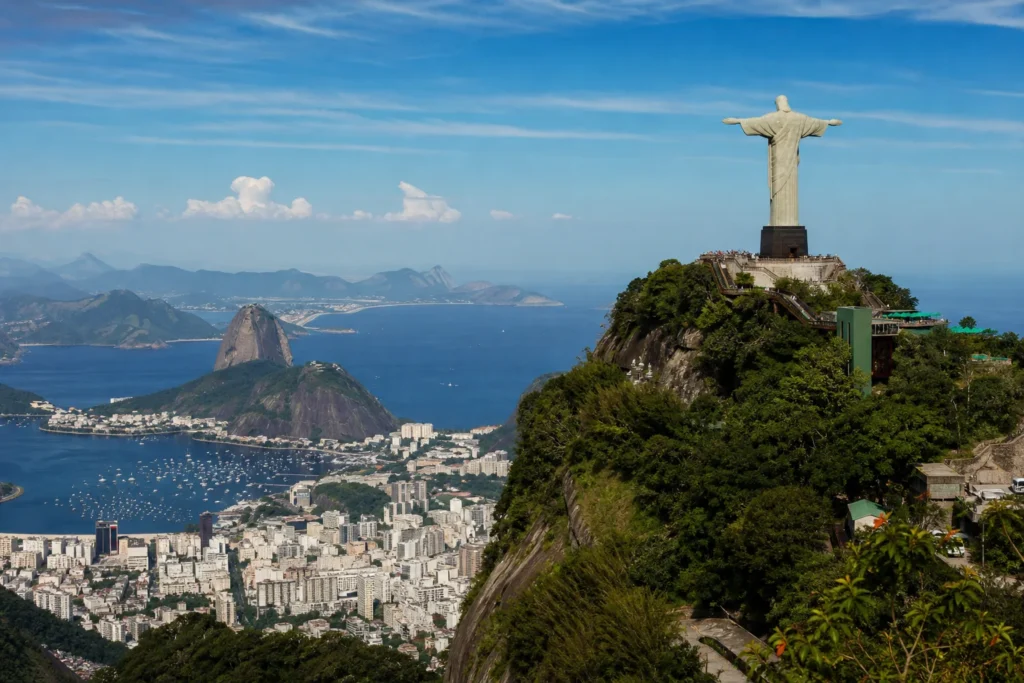
Rio’s skyline is defined by Corcovado and Sugarloaf, while Tijuca National Park, Copacabana and Ipanema beaches, and lively neighborhoods such as Santa Teresa and Lapa offer a mix of outdoor activity, music, and contemporary museums.
Why Visit Rio de Janeiro
Visitors come for the dramatic scenery, outdoor activities, and vibrant cultural life. Panoramic viewpoints and coastal beaches invite hiking, swimming, and photography, while samba, live music in Lapa, and neighborhoods from bohemian Santa Teresa to beachfront Ipanema showcase the city’s social energy.
Major civic sites like Maracanã and institutions such as the Museum of Tomorrow add sporting and museum-going interest, making Rio appealing to nature lovers, culture seekers, and photographers.
Top Things to Do in Rio de Janeiro, Brazil
Rio’s most-visited attractions cluster between the bay, the South Zone beaches, and the forested Tijuca massif; these highlights are good anchors for day plans and photography.
Christ the Redeemer (Corcovado)
Christ the Redeemer crowns Corcovado Mountain and defines Rio’s skyline. The Art Deco statue measures about thirty metres tall on an eight-metre pedestal, with arms stretched roughly twenty-eight metres across, and was completed in 1931 in a collaboration between Brazilian architect Heitor da Silva Costa and French sculptor Paul Landowski.
The monument sits inside Tijuca National Park about 710 metres above sea level; the summit platform offers sweeping views of the city, beaches, bay, and surrounding hills from circular terraces. Access options include the historic rack railway from Cosme Velho, official Paineiras shuttle vans, and steep walking routes through the forest.
Weather can change quickly at the summit, and ticketing and transport options vary—verify official sources before you go.
Sugarloaf Mountain (Pão de Açúcar)
Sugarloaf Mountain is a dramatic granite monolith at the entrance to Guanabara Bay, rising to about 396 metres and paired with the smaller Morro da Urca. Its compact, largely vertical form frames many of Rio’s classic views and has been a city landmark for more than a century.
The visitor experience centers on a two-stage cable-car ride—Praia Vermelha to Morro da Urca, then Urca to the Sugarloaf summit—combined with short walks and viewpoints. Morro da Urca’s plateau has easy trails, eateries, and small exhibits, while the summit affords broad panoramas of Copacabana, Botafogo, downtown Rio, Corcovado, and the Atlantic.
Operations are weather dependent; check the cable-car operator or municipal notices before planning your visit.
Copacabana Beach
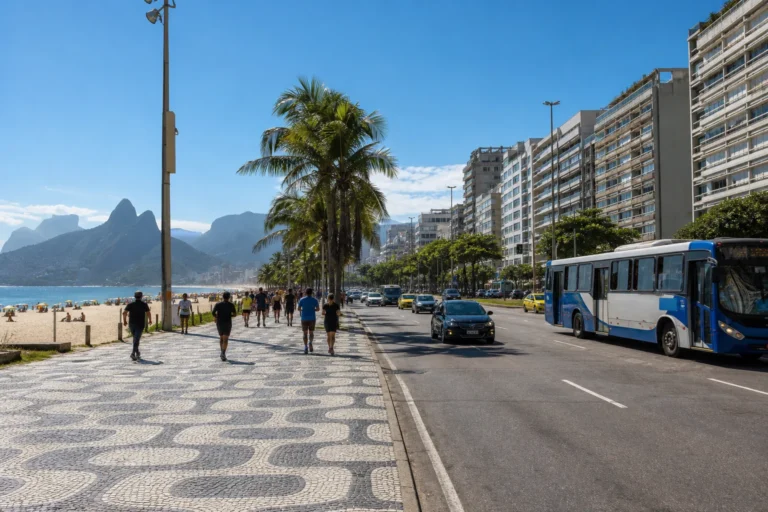
Copacabana Beach is a broad, curved bayfront of roughly four kilometres in Rio’s South Zone and remains one of the city’s most photographed public spaces, with views toward Sugarloaf and the bay. The beach is defined by its black-and-white Portuguese-stone mosaic promenade developed under landscape designers including Roberto Burle Marx.
Visitors move easily between sunbathing, informal sport courts, and kiosks along the sand; the Forte de Copacabana anchors one end of the bay with a museum and café. Sea conditions and flags change with tides and weather, so check official beach-condition information before swimming.
Lifeguard stations operate along the length and sand width and currents can vary.
Ipanema Beach
Ipanema Beach lies between the Arpoador headland and Leblon and is famed for its musical and cultural associations, including the song “Garota de Ipanema.” The beachfront avenue and patterned promenade provide easy access to cafés, shops, and cultural addresses inland.
The beach’s breaks vary along its length: the Arpoador rocks create a surf point and a popular sunset gathering, while stretches such as Posto 9 are known as social meeting points with visible LGBTQ+ presence. Avenida Vieira Souto’s pavement and cycle path encourage walking and people-watching.
Verify sea flags and lifeguard advice before entering the water and be mindful of belongings while enjoying the shore.
Tijuca National Park
Tijuca National Park is a large protected remnant of Atlantic Forest within the city limits, offering waterfalls, shaded trails, and high viewpoints. The park contains landmarks such as Corcovado, the Coroa da Tijuca ridge, and Pico da Tijuca, which provide dramatic views back toward Rio and the bay.
The park covers roughly thirty-three square kilometres and combines regrown secondary forest, steep ridgelines, and urban-edge green space. Trails range from short, accessible walks to steep, strenuous routes; a visitor centre offers interpretive material and trail orientation.
ICMBio and municipal partners manage conservation and visitor services—check official guidance for trail conditions and safety measures before setting out.
Museum of Tomorrow (Museu do Amanhã)
The Museum of Tomorrow is a science museum focused on environmental, social, and technological futures. Its permanent exhibition is organized around thematic modules—Cosmos, Earth, Anthropocene, Tomorrows, and Us—and uses immersive multimedia to explore planetary limits, systems thinking, and future scenarios rather than single predictions.
Housed in a landmark Santiago Calatrava building on Pier Mauá, the museum’s architecture includes long cantilevers, movable roof wings, passive ventilation, and photovoltaic elements, which form part of the visitor experience. The site links indoor galleries with outdoor plazas and bay views; verify programme schedules and special exhibitions on the museum’s official channels before visiting.
Maracanã Stadium
Maracanã, officially Estádio Jornalista Mário Filho, is one of Brazil’s most storied football venues. Opened in 1950, the stadium has hosted World Cup finals and major matches; renovations have updated facilities while preserving its historic memory.
Guided tours typically include backstage areas, locker rooms, press boxes, and a compact museum displaying trophies and historic jerseys. The venue also hosts concerts and civic events.
Check official sources for tour availability and matchday procedures, and note that access is straightforward from the Maracanã metro station and multiple bus lines.
Selarón Steps (Escadaria Selarón)
The Selarón Steps (Escadaria Selarón) are a colorful mosaic staircase linking Lapa with Santa Teresa. Chilean-born artist Jorge Selarón began covering the roughly 125-metre stair with thousands of tiles—flags, ceramics, and found fragments—from around the world, creating a compact public artwork and a popular photographic spot.
The staircase comprises about 215 steps amid narrow streets and local cafés. After Selarón’s death in 2013, conservation efforts increased to maintain the mosaic as a living artwork.
Visit respectfully—avoid blocking pedestrian flow, expect other visitors in photos, and combine the stop with nearby Lapa Arches and Santa Teresa attractions.
Lapa Arches (Arcos da Lapa)
The Lapa Arches (Arcos da Lapa) are the former Carioca Aqueduct and a defining colonial landmark in central Rio. Built in the 18th century to carry water from the Carioca River, the structure stretches roughly 270 metres and features forty-two double arches in a Romanesque-inspired style, marking the edge of the Lapa music quarter.
Visitors experience the arches as both architecture and a lively public threshold: by day they frame urban movement and vendors; by night the surrounding streets become a music and nightlife district. The aqueduct later carried the elevated Santa Teresa tram route.
Conservation work is ongoing, so check municipal notices for any access or maintenance updates.
Santa Teresa neighborhood
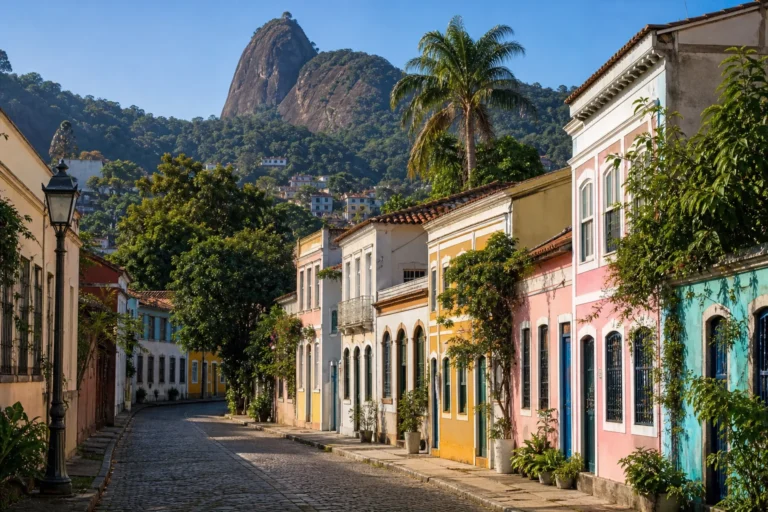
Santa Teresa is a steep, historic neighborhood perched above central Rio, known for narrow streets, colonial mansions, and an artistic identity. Its tram (bonde) is a cultural symbol dating to the late 19th century and remains central to the area’s character, together with small museums, ateliers, and preserved chácara houses.
Key stops include Parque das Ruínas, a ruin-turned-cultural center with city and bay views, and Museu da Chácara do Céu with period interiors and collections. Cobblestone lanes, galleries, and cafés around Largo dos Guimarães invite slow exploration—wear sturdy shoes for the steep terrain and check local sources for current tram service and conservation projects.
Best Time to Visit Rio de Janeiro
Rio has a tropical climate with hot, humid summers (December–March) and milder, drier winters (June–August). For most visitors, spring (September–November) and autumn (March–May) balance lower humidity, comfortable temperatures, fewer crowds, and beachable weather.
Festival dates vary, so plan around confirmed event schedules. For outdoor activities pick clear days and be prepared for occasional tropical showers year-round.
Special events
Upcoming Events
Rock in Rio (Rio de Janeiro)
Rock in Rio is a large multi-day international music festival held in Rio de Janeiro’s Cidade do Rock. It combines major global headliners with prominent Brazilian artists across multiple stages, plus food, cultural pavilions, and large-scale production that attracts wide national and international attendance. Travelers should expect strong demand for accommodation, busy transport around Barra da Tijuca, and a festival atmosphere that showcases contemporary Brazilian music and culture. The event is a major cultural draw and an important reason many visitors time trips to Rio.
- Dates
- September 4, 2026 - September 13, 2026
- Venue
- Cidade do Rock (Parque Olímpico, Barra da Tijuca)
Festival do Rio (Rio de Janeiro International Film Festival)
Festival do Rio is Latin America’s major international film festival, showcasing a wide program of world and Brazilian cinema, retrospectives, debates and industry activities. The event attracts filmmakers, critics and audiovisual professionals and includes an industry market strand aimed at networking and business. Travelers appreciate the festival for early access to premieres, curated thematic strands, and the chance to experience Rio de Janeiro’s cinemas and cultural life through special screenings and public events.
- Dates
- October 1, 2026 - October 11, 2026
Maratona do Rio (Maratona da Cidade do Rio de Janeiro)
Maratona do Rio is a multi-day road-running festival in Rio de Janeiro offering marathon, half-marathon, 10K and 5K races plus a combined challenge. It is one of Brazil’s largest running events, attracting domestic and international participants alongside race expos and community programming. Travelers value its scenic coastal and city-center routes, lively spectator atmosphere, and convenient opportunities to combine racing with sightseeing and beach time. The festival also supports a range of services for visitors, from travel partners to race-day logistics.
- Dates
- May 27, 2027 - May 30, 2027
Getting Around Rio de Janeiro
Travel around Rio using the metro for major corridors and the modern VLT light-rail in the downtown and port zone. Buses and regulated taxis or rideshare services cover areas beyond rail.
Walks suit the promenades at Copacabana and Ipanema; Santa Teresa is reached by the historic tram and short uphill streets. Hilltop attractions and park entrances often require short drives or organized shuttles—allow extra time for traffic during peak hours and major events.
Location
Map of Rio de Janeiro, State of Rio de Janeiro, Brazil
The interactive map loads only when you choose to view it.
Plan Your Visit to Rio de Janeiro
Rio’s attractions are spread across distinct neighborhoods—Copacabana, Ipanema, Cosme Velho, Lapa, Santa Teresa, and the port revitalization—so choose lodging close to your priorities. Use official operators for protected sites: Christ the Redeemer access is managed via the Paineiras Corcovado consortium and authorized vans.
Tijuca National Park is managed by ICMBio with formal trail access.
Book transfers and museum tickets (Museum of Tomorrow, Cristo, Pão de Açúcar) ahead and allow extra time for traffic and event congestion.
Local Tips for Rio de Janeiro
Match your accommodation to planned activities. Stay in Copacabana or Ipanema for beach access, Santa Teresa for bohemian charm, or Cosme Velho and Alto da Boa Vista for Corcovado/Tijuca proximity.
Use Riotur resources for recommended routes and official walking tours.
For mountain and park trails carry water, insect repellent, and rain protection; follow ICMBio trail guidance and respect closures. Prefer official cable-car and concession-operated ascents for Sugarloaf and Corcovado.
Live conditions
Current Weather

Updated 2026-08-23 23:00
- Feels like
- 15°C / 59°F
- Today’s high / low
- 17°C / 63°F · 12°C / 54°F
- Humidity
- 96%
- Wind
- ↓ 4 km/h
- Precipitation
- 0.03 mm
- Chance of rain
- 55%
- Local time
- 2026-08-23 23:13
Places to Visit Near Rio de Janeiro
Copacabana’s four-kilometre curved bay and its black-and-white patterned calçadão are major public spaces for swimming, sport, and promenades. Ipanema, framed by Dois Irmãos and Arpoador, blends surf points, sunset gatherings, and a vibrant avenue-front scene.
Lagoa Rodrigo de Freitas offers a popular walking and cycling loop close to the South Zone, while the Jardim Botânico presents botanical collections near Zona Sul and makes a quiet natural complement to nearby beaches.
Tijuca National Park (Corcovado and Serra da Carioca sectors) provides forested trails and viewpoints. The Pão de Açúcar cable car at Urca is a compact, panoramic companion visit.
Praça Mauá and the Museum of Tomorrow lie on the waterfront, and Maracanã Stadium is located in Tijuca.
Safety in Rio de Janeiro
Exercise heightened situational awareness: travel advisories note elevated crime risks in urban areas. Avoid informal housing areas (favelas) unless on vetted guided visits.
Petty theft and other risks are documented—keep valuables out of sight, use hotel safes, and prefer licensed taxis or ride-hail services at night. Follow local police and event guidance in crowded areas.
For natural areas, follow ICMBio and concessionaire instructions on permitted access and closures. Consult your government travel advisory for current, location-specific warnings.