
Travel Guide
Find top sights, local places, maps, weather, and simple trip tips for Paris, France.
Looking for Things to Do in Paris, France? Use this guide to compare top sights, local tips, maps, weather, and nearby places.
Paris is a compact, walkable capital of layered history, museums, parks, and boulevards. For visitors wondering about things to do in Paris, the city pairs world-class museums and iconic monuments with neighbourhood cafés, markets and riverfront promenades.
Many of the major attractions sit close together, making it realistic to mix a museum morning with an afternoon of strolling and people-watching in a single central district.
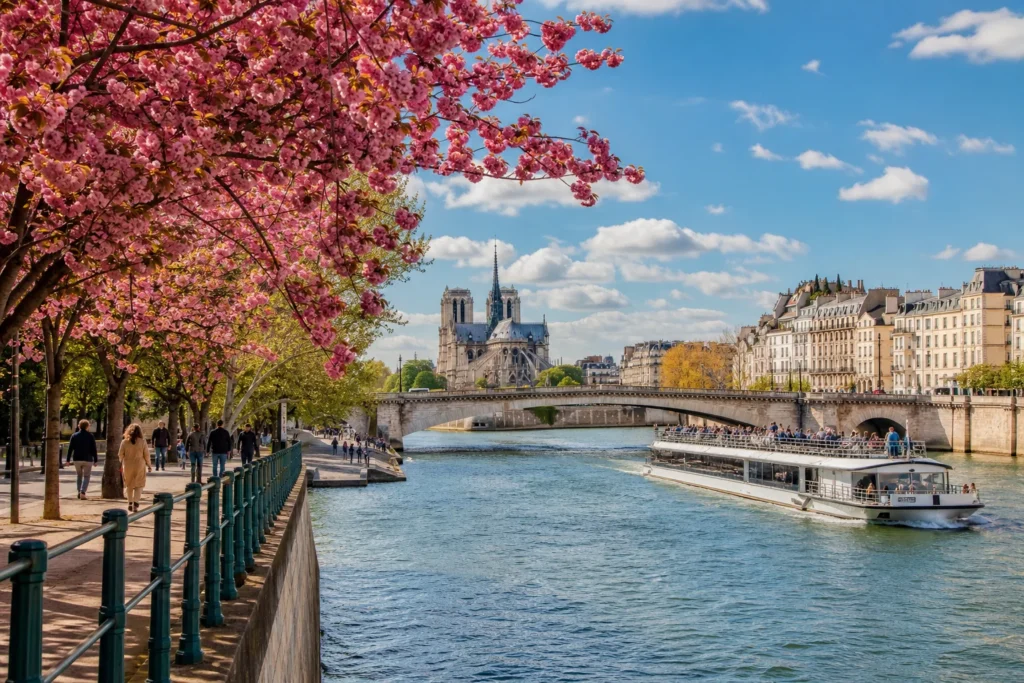
Why Visit Paris
Paris pairs concentrated cultural density with everyday pleasures. Major museums and monuments collect centuries of European art and architecture in a few kilometres.
Meanwhile neighbourhoods such as Le Marais, Saint‑Germain and Montmartre offer markets, restaurants and strolling that reveal modern Parisian life beyond the postcards.
Top Things to Do in Paris, France
These highlights give a balanced first-time itinerary: panoramic viewpoints, leading museums, medieval island streets, lively neighbourhoods and restful gardens. Each stop rewards focused time and links easily to nearby sights.
Eiffel Tower
The Eiffel Tower is both a landmark and an urban viewing platform rising above the Champ‑de‑Mars. Visitors generally follow a sequence of experiences: time on the ground-level lawns, then ascending by stairs or lift to one of three observation levels for broad panoramic views that shift from intimate street patterns to the full city axis.
The iron latticework and visible riveted construction are central to its character; reading a little about its engineering deepens appreciation.
Practicalities matter: security screening, queues, and timed-entry tickets often shape a visit. Elevators serve each level while fit visitors can climb stairs to the second floor.
Musée du Louvre
The Musée du Louvre occupies a former royal palace and presents an exceptionally broad collection that spans antiquity through the mid‑19th century. Its galleries include famous highlights alongside thematic displays and countless lesser‑known works that reward slow exploration.
The glass Pyramid marks the main entrance and arrival hall, but the palace’s distinct wings and courts are integral to the experience.
Because the museum is vast, navigate with a map or suggested route to focus on must‑sees and avoid spending the entire day wandering. Expect dense galleries and long corridors; guided tours or audio guides help with context.
Ticketing, temporary exhibitions, and conservation work can change access, so verify details on the museum’s official site before visiting.
Musée d’Orsay
Musée d’Orsay occupies a converted Beaux‑Arts railway station on the Seine whose grand interior and retained clock faces frame displays of late 19th‑ and early 20th‑century art. The museum concentrates Impressionist and Post‑Impressionist painting, sculpture, photography, and decorative arts from roughly 1848 to 1914, making it a compact narrative of artistic change during that era.
Walking the main nave under the vaulted iron‑and‑glass roof feels like moving through time; large canvases and sculptures are arranged to show stylistic and chronological shifts. Key artists include Monet, Manet, Renoir, Van Gogh, Cézanne and Degas.
Because it is smaller than the Louvre, Musée d’Orsay often fits a half‑day visit; check the official site for special exhibitions and access notes.
Notre‑Dame and Île de la Cité
Notre‑Dame sits at the historic heart of Paris on the Île de la Cité; its west façade, flying buttresses and rose windows exemplify Gothic architecture. The island concentrates medieval civic and religious history, making a compact, walkable district of carved façades, tall vaults and stained glass.
Nearby sites include the Conciergerie and the medieval Palais de Justice, as well as riverfront views that shaped the city’s early growth.
Because restoration and security phases have affected access in recent years, interior visits, tower access and guided options can vary. Visitors should check official sources for current arrangements and timed‑entry rules.
A stroll along the Seine or a short ferry crossing provides complementary viewpoints of the island and its monuments.
Sainte‑Chapelle
Sainte‑Chapelle is a compact royal chapel on the Île de la Cité, celebrated for its soaring stained glass. Built in the mid‑13th century for King Louis IX to house sacred relics, its upper chapel reads like a glass book where light and colour dominate the interior experience.
Visitors enter the lower chapel and climb to the upper level where nearly uninterrupted stained‑glass walls depict dense biblical narratives.
The chapel’s jewel‑like atmosphere rewards slow looking; because the space is small, it can feel crowded and hushed. Conservation and visitor‑flow measures sometimes limit capacity, so booking ahead is advisable.
For accessibility, guided options, and combined tickets consult the official monument authority before planning your visit.
Centre Pompidou
The Centre Pompidou is a multidisciplinary cultural hub for modern and contemporary art, notable for its exposed-structure architecture that places mechanical systems on the façade. Inside, permanent collections and frequent temporary exhibitions cover 20th‑ and 21st‑century painting, sculpture, film, design and new media, alongside a large public library and spaces for performance and research.
The building encourages moving between permanent displays and temporary shows; rooftop terraces offer views across central Paris. Because programs and building works can affect galleries, check the Centre Pompidou’s official site for current access notes.
Allow time to explore the public spaces around Beaubourg as well as the collections themselves.
Montmartre and Sacré‑Cœur
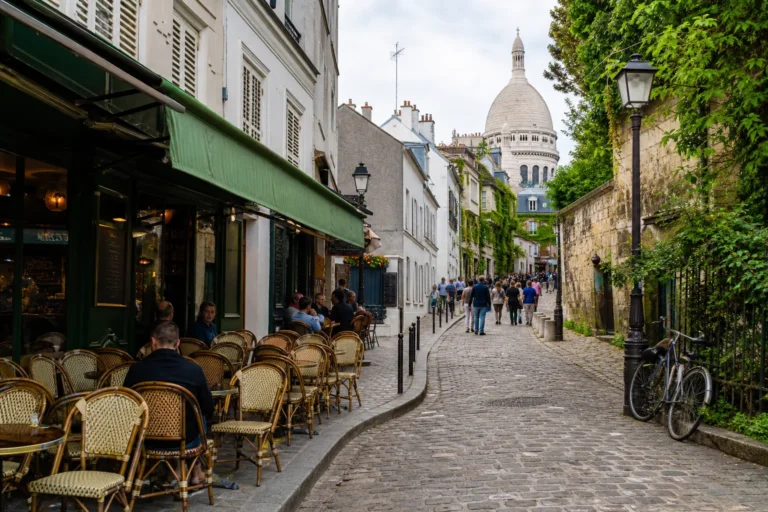
Montmartre is a hilltop district known for its artists, narrow lanes and panoramic views, climbing to the white-domed Sacré‑Cœur basilica. Place du Tertre and adjacent alleys still showcase portraitists and painters, while museums and former studios recount the neighbourhood’s connections to artists such as Picasso and Van Gogh.
The basilica’s luminous stone and interior mosaic create a monumental focal point at the summit.
Arrival options include a short funicular ride or steps up the hill; the dome offers a narrow but rewarding ascent for those who climb. Because crowds concentrate at the summit, visit early or late to enjoy quieter streets, and verify museum opening times on official sites if you plan indoor visits.
Seine river cruise
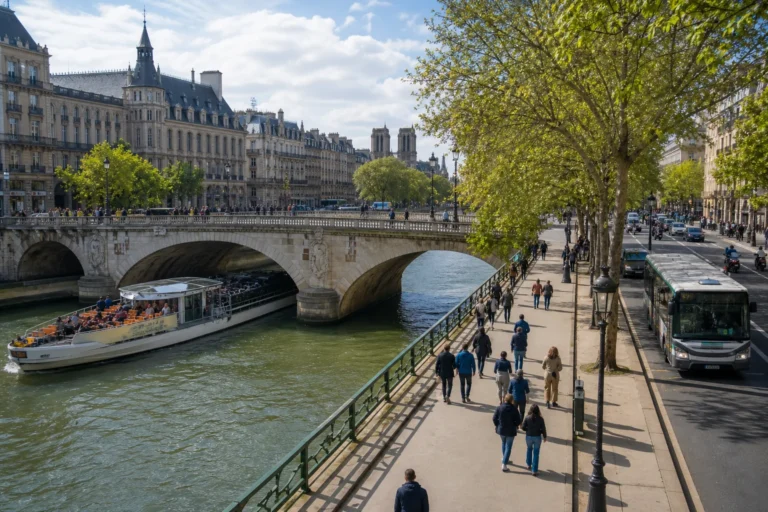
A Seine river cruise presents Paris’s bridges, embankments and façades as a continuous panorama, passing landmarks such as the Eiffel Tower, Musée d’Orsay, Notre‑Dame and the Louvre in sequence.
Cruises include daytime sightseeing loops, hop‑on services and evening dinner options, each offering different perspectives: daytime trips favour detail and photography, while evening cruises emphasise atmosphere and lighting.
Operators vary in boarding points, commentary style and vessel type, so compare offerings to match interests. Consider a short sightseeing cruise for orientation or an evening cruise for the illuminated skyline, and check the operator’s official site for practical information on booking, accessibility and schedules.
Luxembourg Gardens
The Luxembourg Gardens (Jardin du Luxembourg) combine formal French geometry with relaxed plantings around Marie de’ Medici’s palace. The site offers tree‑lined promenades, cultivated flowerbeds, statuary and the Medici Fountain, and functions as both a cultural landscape and a daily urban refuge.
Visitors find cafés, open lawns for lounging, children’s playgrounds and seasonal horticultural interest.
The adjacent Sénat and the garden’s maintained features — including an orchard, apiary and orangery — reveal layers of historical use. Occasional concerts and exhibitions enliven the park; enjoy a leisurely pause here after museum visits and consult the official garden or Senate site for seasonal programs and accessibility information.
Palais Garnier (Opéra)
Palais Garnier is a 19th‑century Beaux‑Arts opera house famed for sumptuous interiors, a monumental staircase and gilded foyers. Designed under Napoleon III by Charles Garnier, the building’s grand spaces reward close visual study; the auditorium ceiling features modern painted decoration that contrasts with the historic ornament.
A library‑museum documents the Opera’s history and material culture.
Visitors often take guided tours that move from the staircase into the grand foyer and the auditorium level. The opera remains a living performing venue for ballet and opera, so check the Opéra national de Paris site for performance scheduling, tour times and accessibility details before you go.
Best Time to Visit Paris
Spring (April–June) and early autumn (September–October) balance mild weather and thinner crowds. Summer brings long daylight and outdoor life but also higher tourist numbers.
Winter is quieter and useful for lower rates and seasonal indoor cultural programming; expect cold weather and shorter daylight.
Special events
Upcoming Events
Roland-Garros (French Open)
Roland-Garros (the French Open) is one of tennis’s four Grand Slam championships, staged on iconic red clay at Stade Roland-Garros in Paris. The fortnight combines top-level singles, doubles and mixed competition with a uniquely intimate clay-court atmosphere—complete with Philippe-Chatrier, Suzanne-Lenglen and Simonne-Mathieu courts. Travelers seek it for world-class matches, vibrant Parisian neighborhoods nearby, and special ticketing and hospitality packages; advance planning is recommended because sessions and finals draw large crowds and affect local transport, accommodation and ticket availability.
- Dates
- May 17, 2027 - June 6, 2027
- Venue
- Stade Roland-Garros
Getting Around Paris
Central Paris is dense and easiest to explore on foot for short visits. The Metro and RER network provide fast cross‑city travel and connections to suburban sites.
Vélib’ bike share, buses and occasional short river ferries complement the rail network for flexible trips. Airports and long‑distance trains connect at Charles de Gaulle and Orly and several major stations across the city; allow extra time for luggage and security when transferring to central services.
Location
Map of Paris, France
The interactive map loads only when you choose to view it.
Plan Your Visit to Paris
Bring a passport or ID and check visa requirements well before travel. The local currency is the euro; credit and contactless cards are widely accepted, though small cash helps at markets and some cafés.
Reserve timed tickets for very popular museums and monuments when possible, and verify current opening arrangements and accessibility details on official sites before you go. Consider a compact daily plan rather than trying to see every museum in a single trip.
Local Tips for Paris
Keep a close eye on personal items in crowded areas, especially on public transport and near major sights. Learn a few basic French phrases — a polite greeting and thank you go far in daily interactions.
Meal times are relaxed; cafés and bistros often seat diners at leisure. Tipping is modest and service is typically included on bills, but small gestures are appreciated for attentive service.
Live conditions
Current Weather

Updated 2026-08-25 01:30
- Feels like
- 18°C / 65°F
- Today’s high / low
- 30°C / 85°F · 17°C / 63°F
- Humidity
- 66%
- Wind
- ↗ 10 km/h
- Precipitation
- 0 mm
- Chance of rain
- 69%
- Local time
- 2026-08-25 01:44
Places to Visit Near Paris
Palace of Versailles — A major royal palace and landscaped gardens reachable by regional train and short onward transit. Versailles is a natural day trip for visitors interested in royal history, gardens and large‑scale architecture.
Giverny (Claude Monet’s house and gardens) — Visit the painter’s restored home and famous water garden. The site is outside the city but reachable by train and local transport for visitors who want Impressionist landscapes.
Château de Fontainebleau. Explore a royal residence with long architectural history and parkland.
Fontainebleau offers varied interiors and walks without the Versailles crowd for those traveling by car or regional rail.
Chantilly (Château de Chantilly). See a compact museum collection, historic stables and formal gardens north of Paris.
Chantilly pairs well with regional rail for a half‑day focused on art and equestrian heritage.
Disneyland Paris (Marne‑la‑Vallée) — A major theme‑park complex accessible by direct regional trains, suited to families combining theme-park time with a Paris stay.
Safety in Paris
Paris is generally safe for visitors who use ordinary urban caution. Stay alert in crowded tourist areas and on public transit to reduce petty theft risk.
Avoid displaying large amounts of cash or unattended valuables and carry a copy of your passport with an emergency contact list separate from your devices. For emergencies dial 112; local police and medical services also use dedicated French numbers.
Strikes and transit disruptions occur occasionally, so allow extra time on important travel days.