
Travel Guide
Plan your visit around Wat Phra That Doi Suthep, Wat Chedi Luang, and more of Chiang Mai, Thailand.
Discover the best things to do in Chiang Mai, Thailand, from signature sights to memorable local experiences.
Start with the city’s compact Old City of moats and wats, then branch out to Nimmanhaemin’s cafés and nearby mountain parks.
Chiang Mai balances Lanna-era temples. Wat Phra Singh and Wat Chedi Luang among them.
With creative neighborhoods and easy access to Doi Suthep, Doi Inthanon and the Queen Sirikit Botanic Garden. This mix of heritage, small‑business culture and accessible nature rewards both short stays and longer explorations.

Why Visit Chiang Mai
Travelers come to Chiang Mai for its concentration of tangible Lanna culture and straightforward access to northern landscapes. The Old City’s historic temples and weekly markets showcase regional crafts and foodways, while Doi Suthep provides pilgrimage significance and panoramic views.
For nature, day trips reach Thailand’s highest peak at Doi Inthanon and the alpine collections at Queen Sirikit Botanic Garden, letting visitors combine urban culture with botanical and highland scenery.
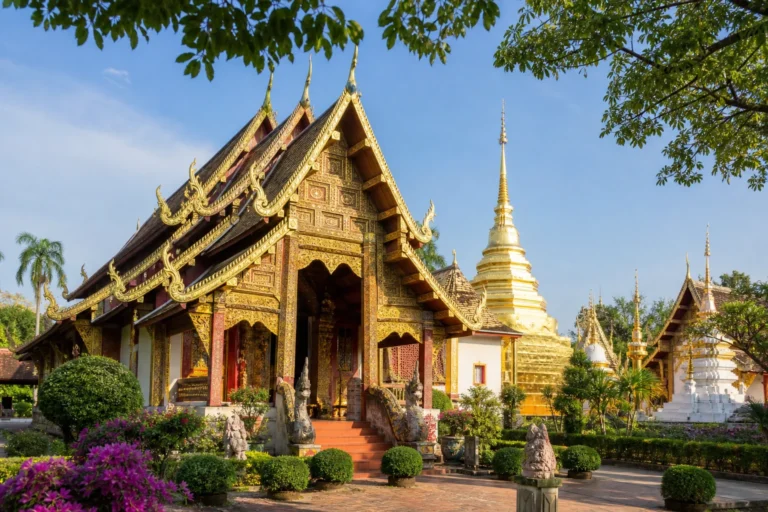
Top Things to Do in Chiang Mai, Thailand
Chiang Mai’s highlights group into heritage temples, lively markets, a contemporary café-and-design district, and nearby natural reserves. Below are the core sites and experiences to plan into your visit.
Wat Phra That Doi Suthep
Wat Phra That Doi Suthep perches on a forested ridge above Chiang Mai and is the city’s most iconic sacred site.
Visitors reach the hilltop by winding road or by ascending the long naga‑lined stairway; the journey prepares you for the gilded central chedi, which enshrines a Buddha relic and reflects Lanna religious design and later restorations.
Inside the compound devotees and visitors walk circuit paths, observe monks, and visit smaller shrines, bell towers, and carved viharns. The temple’s vantage points provide sweeping views over the Chiang Mai plain and distant mountains, especially clear early or late in the day.
As an active monastery, dress respectfully and verify access notes before visiting.
Wat Chedi Luang
Wat Chedi Luang sits near the Old City and once hosted one of northern Thailand’s largest chedis; today its massive brick-and-stucco mound and stabilized ruins hint at original scale and Lanna construction techniques. Walking the base reveals decorative niches, remaining stucco details, and the scale of rebuilding work carried out in modern times.
The temple grounds combine monumental presence with quieter monastic spaces, including viharns and an assembly hall used for chanting and ceremonies. Wat Chedi Luang has deep historical significance—at one time it held the Emerald Buddha—and remains a focus of local festivals and heritage conservation.
Visitors should avoid noise near ceremonial areas and respect active worship.
Wat Phra Singh
Wat Phra Singh stands near the centre of the Old City and exemplifies Lanna temple architecture with varnished wooden viharns, tiered roofs, and finely carved panels. Its most venerated object is the Phra Phuttha Sihing Buddha image, housed in the ornate Wihan Lai Kham, whose gilded interior and lacquer work reward close viewing.
The compact complex shows layers of history—restorations from the 18th and 19th centuries, narrative murals, and a traditional scripture library on stilts. Monastic life remains active, so visitors can observe rituals and offerings.
As a working temple, dress modestly, speak quietly, and check official guidance before visiting.
Doi Inthanon National Park
Doi Inthanon National Park preserves Thailand’s highest mountain and a striking elevation sequence from lowland roads into montane evergreen and cloud forest. The summit area offers short interpretive trails, boardwalks across high‑elevation bogs, and viewpoints that illustrate how plant communities and species shift with altitude.
Two white royal pagodas mark a landscaped summit precinct, while Ang Ka and Kew Mae Pan nature trails and waterfalls such as Mae Ya and Wachirathan provide close‑up forest and birding opportunities.
The park supports biodiversity research and conservation; plan for cooler temperatures, wet ground at elevation, and check official sources for trail and access conditions before you go.
Chiang Mai Night Bazaar
The Chiang Mai Night Bazaar is a long evening market corridor concentrated along Chang Klan Road just east of the Old City.
After dusk the area alternates pavement stalls, covered market halls and low‑rise shops selling handicrafts, textiles, carved wood, silver jewellery and lamps, alongside food vendors and indoor food courts such as Kalare and Anusarn.
The bazaar mixes locally made goods with mass‑market souvenirs, so compare stalls before buying and expect to haggle at many vendors. Food options range from quick snacks to sit‑down dishes, and live entertainment keeps the area active late into the evening.
Wear comfortable shoes, secure valuables, and check official visitor channels for event or access updates.
Tha Phae (Sunday) Walking Street
Tha Phae (Sunday) Walking Street turns the stretch west from Tha Phae Gate into a wide pedestrian market each Sunday evening. The pedestrianized route runs from the gate into the Old City, creating a photogenic corridor where craftsmen display northern‑Thai styles like silverwork and hill‑tribe textiles alongside street food and cultural performances.
Stalls emphasize handmade goods and regional snacks, making the walking street a prime place for authentic craft purchases and sampling local flavors. The route is accessible on foot from many Old City hotels; arriving early reduces crowding and carrying small change speeds transactions.
Verify any municipal route changes or festival additions before planning your visit.
Nimmanhaemin (Nimman) district
Nimmanhaemin — commonly called Nimman — is Chiang Mai’s contemporary creative quarter west of the Old City, known for boutique shops, specialty coffee, galleries and a high concentration of design‑oriented businesses.
Walkable sois reveal hidden cafés, ceramics studios, concept stores and co‑working spaces that give the area a youthful, experimental character distinct from the temple core.
Lifestyle malls such as One Nimman and Maya cluster food, retail and pop‑up markets, while evenings bring compact nightlife—craft beer bars, live music and late‑night eateries.
Nimman suits visitors seeking modern comforts, reliable Wi‑Fi and a sampling of Chiang Mai’s newer culinary and design trends; respect residential sidewalks and avoid blocking narrow lanes when photographing storefronts.
Queen Sirikit Botanic Garden
Queen Sirikit Botanic Garden sits in the Mae Sa valley north of Chiang Mai as Thailand’s principal high‑elevation botanic research and display garden. The site is organized into themed zones featuring glasshouses for orchids and ferns, outdoor demonstration plots, interpretive paths and a long canopy walkway that suspends visitors among tree crowns.
Displays emphasize native and montane plants with labeling that explains uses and conservation status. The garden connects botanical science to agriculture and habitat restoration, and its shaded, cooler setting suits slower, contemplative visits more than hurried sightseeing.
Wear sensible shoes for varied paths and check official garden notices for project‑related access changes.
Best Time to Visit Chiang Mai
The most comfortable season runs November through February, when cooler nights and lower humidity make temple visits and hill hikes pleasant. November often features Loy Krathong/Yi Peng lantern displays that amplify the city’s cultural atmosphere.
March–May is hotter and drier, while the monsoon (roughly June–October) brings regular rain and lush landscapes; choose lower‑rain periods for clearer summit views and safer trails.
SPECIAL EVENTS IN Chiang Mai
Chiang Mai Design Week (CMDW)
Chiang Mai Design Week is an annual city-wide creative festival that showcases Northern Thai design, craft, food, music and experimental projects across multiple neighborhoods. It’s a useful draw for travelers who want to experience local makers, pop-up exhibitions, workshops, and night-time design markets that animate Chiang Mai’s historic center and creative districts. Visitors benefit from encountering community-led design initiatives, finding unique locally made goods, and joining public programs that highlight regional craft, sustainability practices, and collaborative creative economy networks.
- Dates
- December 5, 2026 - December 13, 2026
- Venue
- Multiple venues across Chiang Mai (Klang Wiang/Old City; Chang Moi–Tha Phae; Nimman/Wat Umong; Wua Lai; Wat Ket; San Pa Koi; San Kamphaeng)
Muang Thai–Chiang Mai Marathon (Chiang Mai Marathon)
The Muang Thai–Chiang Mai Marathon is Chiang Mai’s long-running international road race that draws domestic and overseas runners. It combines a city-center start around Tha Phae Gate with scenic stretches that finish toward Mae Rim, plus an athlete expo and community running categories. Travelers value it for cultural street atmospheres, spectator-friendly course sections through historic Chiang Mai, and the chance to pair the race with northern Thailand sightseeing and festivals. The event is organized by JOG&JOY and uses official city permits and race services.
- Dates
- December 20, 2026
- Venue
- Tha Phae Gate (start) / Mae Rim (finish)
Getting Around Chiang Mai
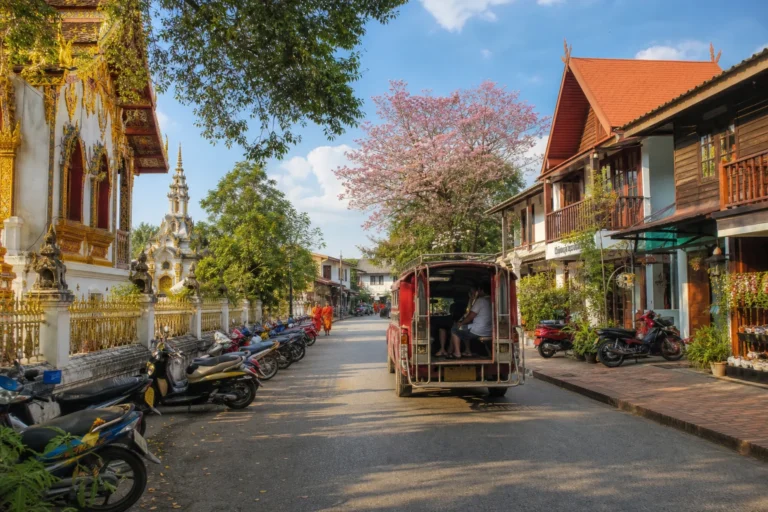
Chiang Mai’s core is compact and walkable—especially the Old City—so plan on pedestrian exploration combined with short taxi, motorcycle‑taxi, or ride‑hailing trips for longer hops. Nimmanhaemin, the Night Bazaar and Tha Phae Gate are short rides from most central hotels.
For Doi Suthep, Doi Inthanon or the Queen Sirikit Botanic Garden, organized tours, private drivers or rented vehicles are common; songthaews and local buses operate on informal schedules and routes.
Location
Map of Chiang Mai, Thailand
The interactive map loads only when you choose to view it.
Plan Your Visit to Chiang Mai
Base yourself near the Old City for easy access to major temples and walking streets, and prebook accommodations for the cool season (November–February). Chiang Mai International Airport offers frequent domestic connections; use metered taxis or arranged transfers for predictable fares.
Day trips to Doi Inthanon or the botanic garden require a full day and are best with licensed operators or a competent driver. Dress modestly at temples (shoulders and knees covered) and carry cash for small vendors.
Local Tips for Chiang Mai
Explore Nimmanhaemin’s side streets for independent cafés, galleries and quieter finds. At the Chiang Mai Night Bazaar and Tha Phae Walking Street practice polite bargaining (start about 30% below asking) and inspect lightweight items for defects.
When booking hill‑tribe visits or national‑park treks, choose operators that state clear animal‑welfare and community‑benefit policies. For highland trips bring layered clothing and sturdy shoes, and carry cash for small stalls that may not accept cards.
Live conditions
Current Weather

Updated 2026-09-23 07:45
- Feels like
- 25°C / 78°F
- Today’s high / low
- 32°C / 89°F · 22°C / 71°F
- Humidity
- 95%
- Wind
- ↖ 4 km/h
- Precipitation
- 0 mm
- Chance of rain
- 57%
- Local time
- 2026-09-23 07:50
Safety
Chiang Mai is generally safe but use standard urban precautions: watch belongings in crowded markets and on public transport to reduce petty‑theft risk. Traffic can be chaotic—wear helmets on motorcycles and avoid riding at night if unfamiliar with local roads.
When booking park excursions, confirm vehicles, driver experience, and permits; mountain weather can change rapidly. Do not patronize elephant rides or attractions with poor animal welfare, and respect temple customs to avoid misunderstandings.