
Travel Guide
Plan your visit around French Quarter, Jackson Square, and more of New Orleans, Louisiana.
Discover the best things to do in New Orleans, Louisiana, from signature sights to memorable local experiences.
Expect a compact historic core, layered cultural traditions, and neighborhoods built for walking. The French Quarter centers on Jackson Square and the riverfront promenade, while nearby Uptown and the Garden District show magnolia‑lined streets and 19th‑century mansions.
The city’s music scene, culinary culture, and major museums. Including The National WWII Museum and the Audubon attractions.
Let visitors mix short museum visits with live music, guided walks, and riverfront time without long transfers.
Why Visit New Orleans
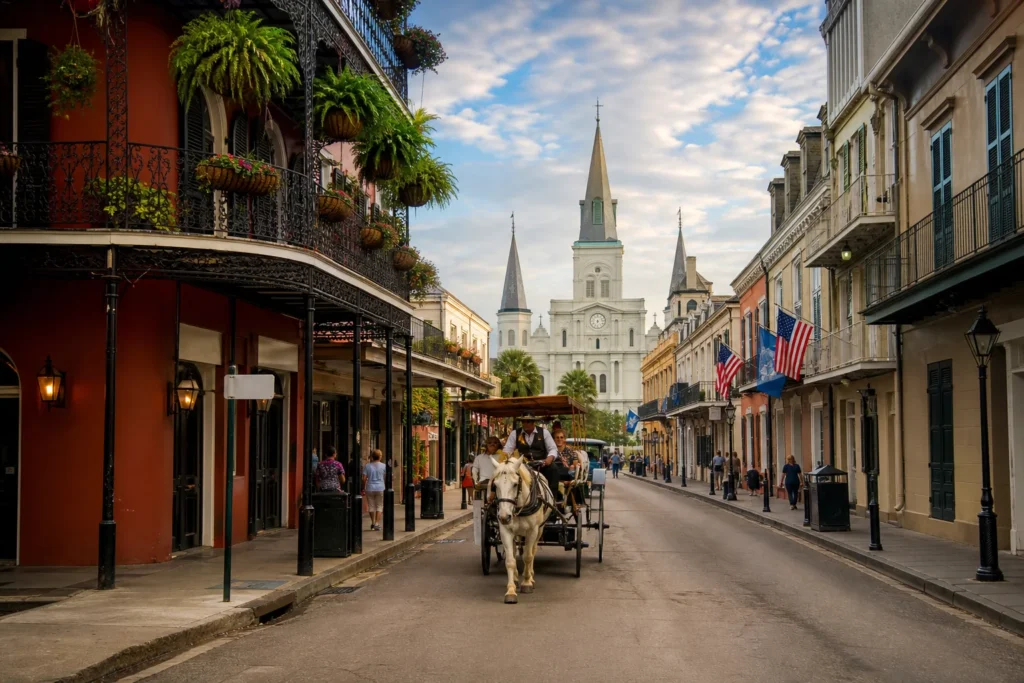
Visitors come for New Orleans’ concentration of live music, distinctive foodways, and festival culture set within walkable neighborhoods. The French Quarter offers street performers and historic architecture.
Frenchmen Street concentrates nightly jazz and brass bands. And the city’s museums and Audubon attractions provide curated, family‑friendly learning.
Parklands, cemetery tours, and architectural walks let you layer history, nature, and nightlife into short itineraries suited to both first‑time and repeat visitors.
Top Things to Do in New Orleans, Louisiana
From wandering the French Quarter to catching a live set on Frenchmen Street or touring The National WWII Museum, New Orleans rewards a mix of walking, museums, and music. Below are the city landmarks and neighborhoods to prioritize on a short visit.
French Quarter (Vieux Carré)
The French Quarter, officially the Vieux Carré, is New Orleans’ oldest neighborhood and the city’s most compact historic district. Its tight street grid, courtyard houses, and layered architecture—from French colonial to Spanish and Creole townhouses—create a distinctive streetscape of wrought‑iron galleries, stuccoed brickwork, and inner courtyards protected by the Vieux Carré Commission.
On foot, the Quarter feels intensely urban: Royal and Chartres Streets host galleries and antique shops, quieter blocks hide jazz clubs and small museums, and Bourbon Street supplies louder nightlife. Allow time for courtyard glimpses, gallery visits, and riverfront promenades, and check official sites for tours and temporary programs.
Jackson Square
Jackson Square sits at the heart of the French Quarter, framed by St. Louis Cathedral, the Cabildo, and the Presbytère. Originally the colonial Place d’Armes, the square’s landscaped pathways, mature trees, and flanking Pontalba Buildings create a deliberately framed public space that has hosted civic life since the eighteenth century.
Today it functions as an active public stage for portraitists, street musicians, and artists, with nearby museums and historic restaurants forming a compact cultural cluster. Visitors should pause to read plaques and notice the square’s long civic uses; verify guided programs and special‑event closures on official listings before planning a visit.
The National WWII Museum
The National WWII Museum chronicles the American experience of World War II across a multi‑pavilion campus in downtown New Orleans. The museum presents a chronological narrative—from the home front through major campaigns—using artifacts, oral histories, restored vehicles and aircraft, and immersive galleries to convey personal testimony alongside larger strategic context.
Highlights include campaign galleries, the US Freedom Pavilion with large artifacts, and the Louisiana Memorial Pavilion interpreting the Higgins boat. The site emphasizes remembrance, primary sources, and conservation; allow several hours or multiple visits and consult the museum’s official site for guided tours and temporary exhibits.
Garden District
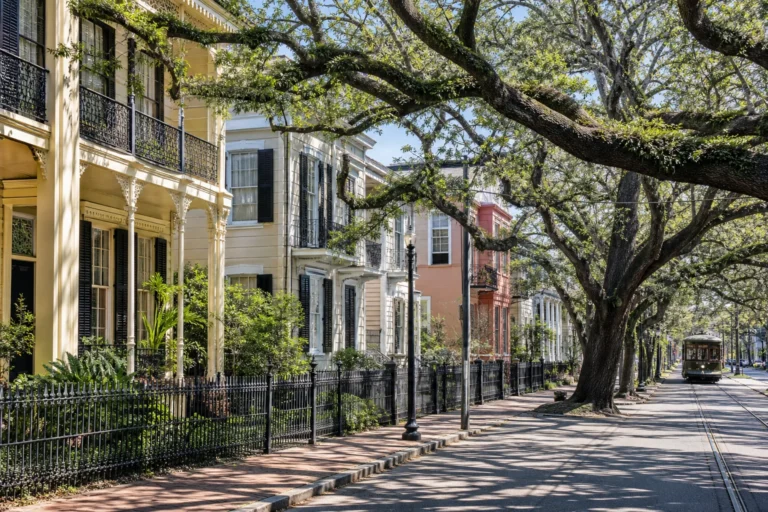
The Garden District is a leafy Uptown neighborhood known for its 19th‑century mansions, formal lawns, and mature live oaks. Architectural styles range from Greek Revival to Italianate and Victorian, with St. Charles Avenue providing a ceremonial spine marked by the historic streetcar line.
Magazine Street offers shops, galleries, and restaurants that complement the residential fabric, while Lafayette Cemetery No. 1 illustrates local funerary traditions with above‑ground tombs.
The district benefits from preservation protections that maintain façades and landscapes; the best ways to explore are on foot, by streetcar, or with a guided walk, and visitors should respect that it remains a living neighborhood.
Audubon Aquarium of the Americas
Sited on the Mississippi Riverfront near the French Quarter, Audubon Aquarium of the Americas presents ecosystem‑focused galleries that move from Gulf and coastal habitats to tropical river and reef environments.
The aquarium combines large viewing windows, immersive tanks, and interactive touch displays to explain regional ecology and species behavior, emphasizing rescue, rehabilitation, and public education linked to the Audubon Nature Institute.
Designed for families and visitors interested in Gulf and Caribbean waterways, the compact facility pairs naturally with riverfront walks; check the aquarium’s official site for ticketing, programs, and accessibility information before you go.
Audubon Zoo
Audubon Zoo occupies a gardenlike campus adjacent to Audubon Park and St. Charles Avenue, with shaded paths beneath an old canopy of live oaks. The zoo organizes animals by habitat regions—African Savanna, Asia‑themed areas, Jaguar Jungle, and a Louisiana Swamp that highlights local species—pairing species displays with landscaped boardwalks and interpretive signage.
Conservation, education, and regional recovery programs are central to the zoo’s mission, and family amenities include interactive play areas and a seasonal waterpark. Plan at least a half day to move comfortably through major habitats, and consult the zoo’s official site for changing exhibits and special experiences.
Frenchmen Street (live music)
Frenchmen Street, on the edge of the French Quarter in the Marigny, is a compact corridor of small clubs, bars, and open‑air stages with a strong focus on live music.
Venues range from intimate listening rooms to louder dance clubs, and nightly offerings include jazz, brass bands, blues, and contemporary roots music performed largely by local working musicians. Street performers and impromptu brass parades add outdoor, communal energy.
Because rooms are small, expect cover charges and limited capacity at peak times; pick one or two venues and arrive early to secure seating and hear multiple sets.
Mardi Gras World
Mardi Gras World offers a behind‑the‑scenes look at float building and parade craftsmanship developed by Kern Studios. The working studio displays large‑scale sculptures, painted scenery, and elaborate float armatures while guides explain how krewes commission floats, the materials and engineering involved, and the collaborative production process.
The attraction ties object spectacle to civic tradition, showing how local artisans sustain Mardi Gras pageantry. Photo opportunities and changing workshop displays are common; verify tour options, booking details, and special access with the attraction before you go.
Best Time to Visit New Orleans
The most comfortable travel season is late autumn through spring, when humidity and summer heat decline and many major festivals occur. Winter and spring host large events that shape visitor rhythms; shoulder seasons (October–November and March–April) balance milder weather with fewer crowds.
Summer is hotter with frequent thunderstorms, but can offer lower rates and quieter neighborhood life outside big festival dates.
SPECIAL EVENTS IN New Orleans
New Orleans Film Festival
The New Orleans Film Festival is the city's flagship international film showcase, highlighting independent narrative, documentary and short work with an emphasis on diverse voices. Travelers benefit from a lively program of screenings, filmmaker Q&As, industry panels, and neighborhood events staged across historic venues, plus a virtual cinema option. The festival's local partnerships, street parades, and late-night screenings offer authentic cultural immersion, making it a convenient cultural draw for visitors seeking film premieres, music-infused nightlife, and curated experiences that showcase New Orleans' creative identity.
- Dates
- October 22, 2026 - October 27, 2026
- Venue
- Contemporary Arts Center (Festival Hub) and multiple partnering theaters across New Orleans (e.g., The Broad, Prytania, Mahalia Jackson Theatre)
Bayou Classic (Grambling State University vs Southern University)
The Bayou Classic is a premier HBCU rivalry weekend centered on the Grambling State vs. Southern University football game in New Orleans. Beyond the game, the multi-day event features marching band showcases, parades, concerts, Greek life and community activities that attract alumni and visitors nationwide. Travelers come for the lively campus traditions, large-venue atmosphere at the Superdome, and the city’s dining and nightlife during Thanksgiving weekend. It’s a culturally rich sports weekend for fans of college football and music alike.
- Dates
- November 26, 2026 - November 28, 2026
- Venue
- Caesars Superdome
Mardi Gras (New Orleans Carnival season)
New Orleans’ Carnival season—commonly called Mardi Gras—is an annual multi-week cultural festival built around krewe parades, masked balls, live music, and deep local traditions. Travelers come for the spectacle of street processions, distinctive cuisine, and immersive neighborhood celebrations that range from free parades to invitation-only balls. The season shapes lodging, transport, and crowd patterns across the city, so visitors planning to attend should book early and review local guidance on parade routes, viewing areas, and safety measures.
- Dates
- January 6, 2027 - February 9, 2027
Irish Channel St. Patrick's Day Parade (Irish Channel St. Patrick’s Day Club)
A long-running neighborhood parade organized by the Irish Channel St. Patrick’s Day Club, the Irish Channel parade is a storied New Orleans celebration centered on the Uptown Irish Channel and Magazine Street corridor. Travelers enjoy a lively mix of marching bands, traditional Irish club participation, a pre-parade Mass, and quirky local throws that create an immersive street-party atmosphere. It’s a cultural outing for visitors who want authentic local parade traditions, photo opportunities, and easy access to neighborhood bars and restaurants before and after the march.
- Dates
- March 13, 2027
- Venue
- Parade route along Magazine Street (Irish Channel neighborhood); St. Mary’s Church (assembly/12 Noon Mass, 923 Josephine St.)
French Quarter Festival
French Quarter Festival is New Orleans’ signature mid‑spring celebration of Louisiana music, food, and culture. The free, multi‑day street festival fills the historic Vieux Carré with dozens of local bands across multiple stages, extensive regional food vendors, and family‑friendly programming. Travelers should care because it’s an efficient way to experience authentic New Orleans music scenes, sample local cuisine, and join community festivities — though visitors should plan for crowds and limited vehicle access in the French Quarter during the event.
- Dates
- April 8, 2027 - April 11, 2027
- Venue
- Multiple outdoor stages and public spaces throughout the French Quarter
New Orleans Jazz & Heritage Festival (Jazz Fest)
The New Orleans Jazz & Heritage Festival (Jazz Fest) is a major, city-rooted celebration of Louisiana music, food, and culture produced by the New Orleans Jazz & Heritage Foundation. Held across multiple stages at the Fair Grounds Race Course, the festival showcases local and international artists across jazz, blues, gospel, R&B, rock, Cajun/zydeco and more, alongside extensive food courts and craft markets. Travelers attend for unparalleled live music, authentic regional cuisine, and immersion in New Orleans’ cultural traditions—making it a cornerstone event for spring travel planning.
- Dates
- April 22, 2027 - May 2, 2027
- Venue
- Fair Grounds Race Course
Getting Around New Orleans
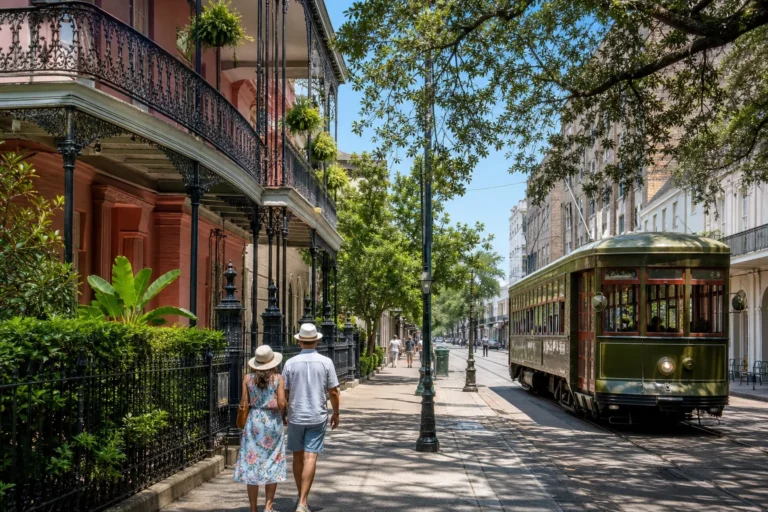
Core neighborhoods are compact and highly walkable; the French Quarter and nearby districts are best explored on foot. Historic streetcar lines provide a scenic, practical option for Uptown, the Garden District, and Canal Street corridors.
Buses and rideshares fill gaps for longer trips, while riverfront promenades and parks link downtown attractions. For planning and transit updates, consult official city and transit sources before you travel.
Location
Map of New Orleans, Louisiana, United States
The interactive map loads only when you choose to view it.
Plan Your Visit to New Orleans
Plan walkable days in the French Quarter and Warehouse District; many attractions sit near each other. Use the RTA streetcar and bus routes for longer trips and consider downloading the RTA app or purchasing fares in advance.
Reserve museum tickets online to skip lines and confirm accessibility options. Schedule outdoor walking for mornings or evenings to avoid heat and afternoon storms, and leave time for meals, live music sets, and transit connections.
Local Tips for New Orleans
Carry a small, secure day bag and keep valuables out of sight in crowded places like Frenchmen Street and Jackson Square. For authentic live music, favor Frenchmen Street’s clubs over Bourbon Street’s louder nightlife and check venue schedules in advance.
Use licensed taxis, rideshare apps, or official pedicabs for late‑night returns. When photographing private homes and churches in residential neighborhoods, be respectful and stay on public sidewalks.
Review official accessibility and visitor guides published by museums and attractions before your visit.
Live conditions
Current Weather

Updated 2026-09-21 19:30
- Feels like
- 85°F / 29°C
- Today’s high / low
- 94°F / 34°C · 79°F / 26°C
- Humidity
- 78%
- Wind
- ↖ 5 mph
- Precipitation
- 0 in
- Chance of rain
- 61%
- Local time
- 2026-09-21 19:45
Safety
New Orleans maintains active public‑safety programs in visitor districts; apply standard urban precautions. Remain aware after dark, travel in groups when possible, and use licensed transport or rideshare for late‑night trips.
Tourist areas can attract pickpocketing and opportunistic theft—secure wallets, carry minimal cash, and avoid leaving belongings visible in vehicles. Follow posted guidance at attractions and transit providers and consult official city or tourism safety pages for recent advisories if you have specific concerns.