
Travel Guide
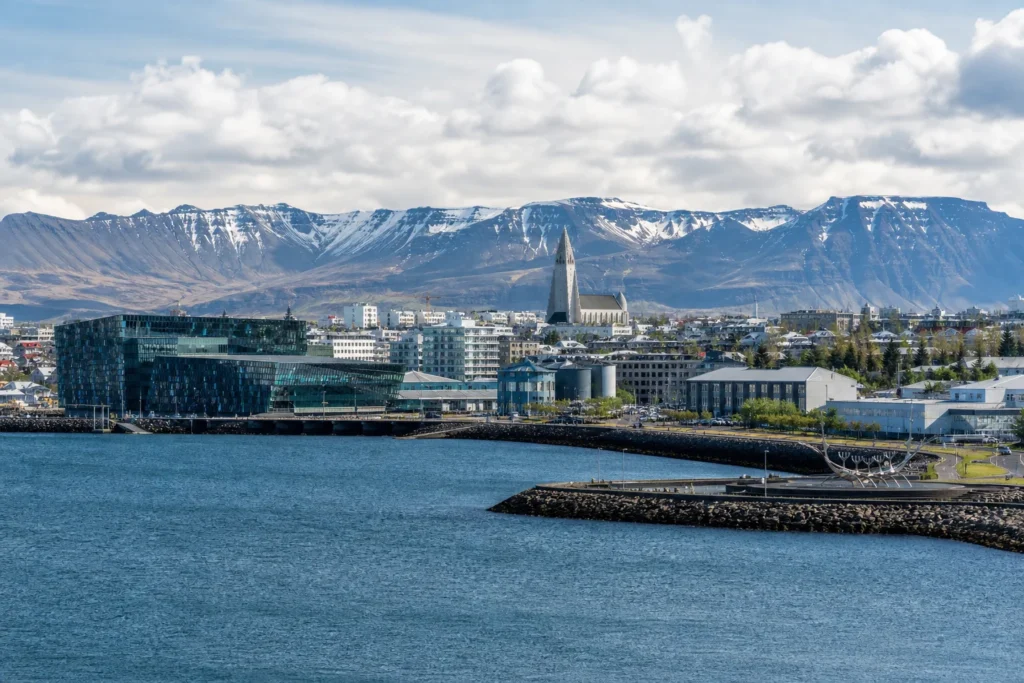
Plan your visit around Hallgrímskirkja, Harpa Concert Hall and Conference Centre, and more of Reykjavik, Iceland.
Things to do in Reykjavik, Iceland are concentrated in a compact, walkable capital where striking architecture meets coastal panoramas and easy access to nature.
Hallgrímskirkja’s tower, Harpa’s faceted glass, Perlan’s dome and the Sun Voyager sculpture form quick orientation points, while nearby museums and the short ferry to Viðey Island let you mix indoor culture with outdoor walks. Use Reykjavík as a base for concise urban exploration before heading into Iceland’s wider geothermal and glacier landscapes.
Why Visit Reykjavik
Visit Reykjavík to combine concentrated civic culture with immediate access to iconic Icelandic landscapes. The city places major landmarks — Hallgrímskirkja, Harpa, the Sun Voyager, Perlan and the National Museum — within a short radius, so efficient sightseeing is straightforward.
Reykjavík’s harbourfront, festivals, galleries and compact neighbourhoods deliver cafés, design shops and concerts year‑round, making the city an ideal short stay or launching point for day trips into Iceland’s geothermal and glacier scenery.
Top Things to Do in Reykjavik, Iceland
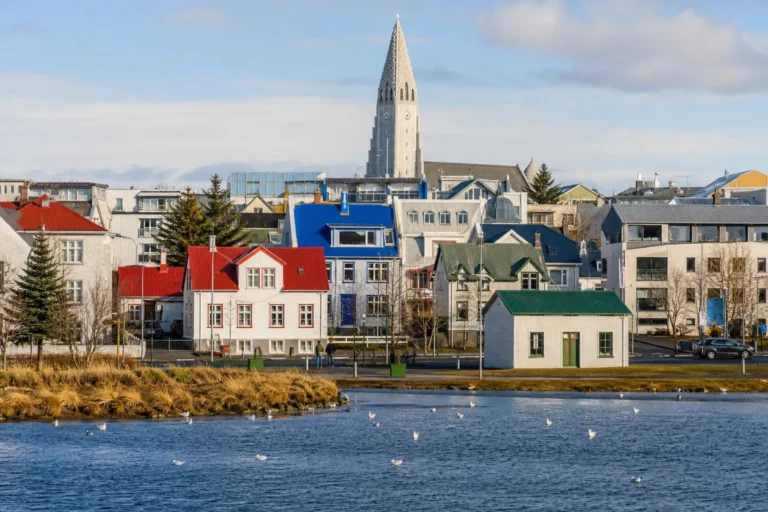
These highlights cluster within easy walking distance of central Laugavegur and the Old Harbour. Each entry below links city landmarks, museums and short outdoor escapes that work well for one‑day visits or quick multi‑stop itineraries.
Hallgrímskirkja
Hallgrímskirkja sits on Skólavörðuholt hill above central Reykjavík and functions as a prominent skyline landmark and civic compass. Commissioned from State Architect Guðjón Samúelsson in 1937 and completed in stages after World War II, the church was consecrated in 1986.
Its stepped concrete façade intentionally echoes Iceland’s basalt columns and volcanic forms, so the building reads as a translation of landscape into architecture.
Inside, the church balances austere modern surfaces with a strong musical life: the Johannes Klais organ, inaugurated in 1992, is the largest in Iceland. A lift provides access to the roughly 73‑metre tower for panoramic city views, and the churchyard frames the bronze Leifur Eiríksson statue near the main approach.
Harpa Concert Hall and Conference Centre
Harpa anchors Reykjavík’s Old Harbour with a sculptural glass shell that reconnects city and sea. Developed as a national concert and conference centre, Harpa opened after prolonged planning and sits between working harbour edges and downtown.
The façades, conceived with input from Ólafur Elíasson and produced in collaboration with Henning Larsen Architects and the Icelandic office Batteríið, use faceted glass modules to mimic basalt geometry and to animate interior light across weather and angle.
Harpa contains multiple performance spaces — including Eldborg, the main auditorium for orchestral events, and flexible halls such as Silfurberg and Kaldalón — plus restaurants and a luminous foyer.
Sun Voyager
The Sun Voyager sits on a headland beside Reykjavík’s seaside promenade as a polished stainless‑steel sculpture whose ribs rise like an abstract ship facing the horizon.
Designed by Jón Gunnar Árnason as a ‘‘dream boat’’ and an ode to the sun, the competition‑winning work dates to the late 1980s and was unveiled on 18 August 1990. Though often mistaken for a Viking longship, the artist intended symbolic openness to sea and light rather than literal historicism.
The setting frames distant Mount Esja across Faxaflói bay, making sunrise, sunset and clear days especially photogenic. The Sun Voyager is public and accessible year‑round; visitors should respect barriers and avoid climbing on the sculpture to protect its finish.
Perlan (The Pearl)
Perlan crowns Öskjuhlíð hill with a glass dome set atop large hot‑water storage tanks and combines civic infrastructure with public interpretation. Opened in 1991, the structure rests on six aluminium‑sided reservoirs that historically held geothermal water for the district heating system; the visible industrial base is integral to Perlan’s story.
Today Perlan operates as a nature exploratorium with glacier and ice‑cave experiences, hands‑on displays about geological forces, a planetarium‑style dome show and changing natural‑history exhibitions. A 360° observation deck unites sea, city and mountain panoramas, and the site includes a restaurant, café and lifts.
Verify current exhibitions and ticketing on Perlan’s official site before visiting.
National Museum of Iceland
The National Museum of Iceland presents the nation’s cultural history from Settlement to modern times. Founded in 1863, the museum collects archaeology, ethnography, photographs and everyday objects and frames national development as a continuous story linking early Norse settlement to contemporary life.
Visitors move through chronological galleries where material culture — household items, textiles, religious artefacts and archaeological finds — illustrates major social changes. The museum also serves as Iceland’s legal deposit for archaeological finds and emphasizes conservation, research and public outreach.
Allow time for the main permanent exhibition and the photography rooms, and check official channels for guided tours and temporary displays.
Reykjavík Art Museum
Reykjavík Art Museum operates across three complementary sites: Hafnarhús, Kjarvalsstaðir and Ásmundarsafn. Hafnarhús at the Old Harbour focuses on contemporary practice and major temporary shows, including displays from Erró’s holdings, linking exhibitions with waterfront life.
Kjarvalsstaðir showcases painting and sculpture tied to Jóhannes S. Kjarval and other modern masters and opens onto Klambratún park, with family learning spaces and a café.
Ásmundarsafn is the former home and studio of sculptor Ásmundur Sveinsson and includes a sculpture garden. Together the venues present modern and contemporary Icelandic art across different building types; consult the museum’s official information for ticketing and current exhibitions.
Árbær Open Air Museum
Árbær Open Air Museum recreates Reykjavík’s earlier built environment by grouping more than twenty preserved buildings into village, farm and town‑square settings.
Many houses were moved from central Reykjavík to save them from demolition, while the original Árbær farmstead remains in situ, so the site lets visitors compare domestic, craft and civic life across two centuries.
Exhibitions layer objects and interiors to show household crafts, building techniques and changing technologies. The museum runs living‑history events, craft demonstrations and seasonal programmes that bring social history to life.
Its compact layout makes it easy to combine with other Reykjavík museums; check the city museum’s official site for guided tours and special displays.
Viðey Island
Viðey Island lies a short ferry ride from Reykjavík and functions as a layered cultural landscape of historic buildings, public art and shoreline walks.
Historic structures include Viðeyjarstofa, one of Iceland’s oldest stone houses, and a modest island church; walking routes thread between village sites, meadows, cliffs and ponds that reveal the island’s settlement and farming history.
Contemporary public artworks are major draws: Yoko Ono’s Imagine Peace Tower projects a vertical beam of light and houses written wishes, while Richard Serra’s Afangar is a large‑scale steel piece. Ferries run from Reykjavík’s harbour; schedules and access details are published by city and ferry operators.
Best Time to Visit Reykjavik
Reykjavík is visitable year‑round, but the experience shifts by season. Late spring through early autumn brings long daylight, milder temperatures and readily accessible trails and ferries.
The most convenient window for outdoor sightseeing and coastal walks.
Winter shortens daylight but increases chances of seeing the northern lights and provides a dense programme of indoor concerts, exhibitions and festivals. Choose season by priority: open‑air exploration and long light in summer; aurora viewing and cultural events in winter.
SPECIAL EVENTS IN Reykjavik
Reykjavík International Film Festival (RIFF)
RIFF is Iceland’s principal international film festival, focusing on independent, art‑house and emerging filmmakers while also hosting industry programming and talent development. The festival pairs competitive and curated screenings with panels, masterclasses, and RIFF Industry Days and Talent Lab sessions—making it relevant both to film lovers and professionals. Travelers attend for unusual venue experiences, premieres with English subtitles, cultural side‑events, and the chance to see new voices before wider release, all set in central Reykjavík’s compact cultural district.
- Dates
- September 24, 2026 - October 4, 2026
- Venue
- Háskólabíó; The Nordic House (main venues)
Iceland Airwaves
Iceland Airwaves is Reykjavík’s flagship multi-venue music showcase, spotlighting emerging Icelandic talent alongside international acts across the city’s downtown venues. The festival combines evening showcases, industry conference programming, and off-venue events that create a lively cultural atmosphere for visitors. Travelers come for discovery — unique live performances in intimate, historic venues, opportunities to experience Reykjavík’s nightlife and music scene, and access to industry panels and showcases. It’s a high-energy cultural draw for music fans and a practical launchpad for artists seeking international exposure.
- Dates
- November 5, 2026 - November 7, 2026
- Venue
- Multiple venues across downtown Reykjavík
Vetrarhátíð (Winter Lights Festival)
Vetrarhátíð, known in English as the Winter Lights Festival, is Reykjavík’s annual midwinter celebration that brightens the city with public light-art installations, free cultural programming, and community highlights such as Museum Night and Pool Night. The festival attracts families and travelers who want to experience Reykjavík’s creative winter atmosphere, outdoor light trails, evening museum openings, and the unique tradition of warm public pools at night. It’s an accessible, largely free event that showcases local artists and the city’s winter character.
- Dates
- February 4, 2027 - February 7, 2027
Íslandsbanki Reykjavík Marathon
The Íslandsbanki Reykjavík Marathon is Reykjavik’s long-running summer running festival, offering marathon, half‑marathon, 10K and family fun‑run distances and raising funds for local charities. It’s organised by the Reykjavík Sports Association and takes place in central Reykjavík, pairing race day with the city’s Culture Night — a lively reason for visitors to combine racing with evening street festivals, food and music. Travelers value the compact, scenic urban course, good on‑course support, and the opportunity to experience Reykjavik’s cultural life around the event.
- Dates
- August 21, 2027
- Venue
- Sæmundargata (start) / Geirsgata (finish)
Getting Around Reykjavik
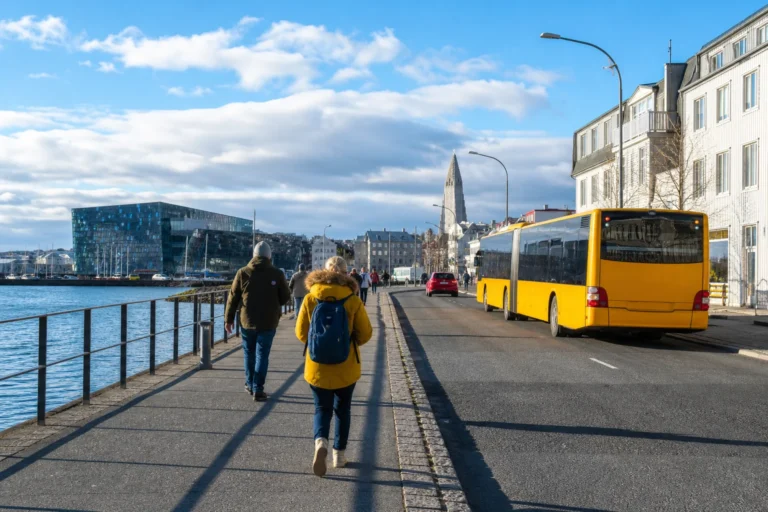
The city centre is highly walkable; many approved sites lie within a 20–30 minute stroll of Laugavegur. Reykjavík runs frequent local buses (Strætó) for trips beyond the central grid, and ferries connect the Old Harbour to Viðey Island.
Coaches serve regional excursions and airport transfers from central hubs. Cycling and short taxi rides are common in warmer months.
Consider a Reykjavík City Card or municipal transport passes if you plan multiple museums and pools.
Location
Map of Reykjavik, Iceland
The interactive map loads only when you choose to view it.
Plan Your Visit to Reykjavik
Most core sights cluster close together, so plan walking routes that link Hallgrímskirkja, Harpa, the Sun Voyager and Perlan in a single day if you like. Use the Strætó Klapp app or contactless payment for local buses, and buy ferry tickets for Viðey at the Old Harbour kiosk.
Tap water is drinkable, credit and contactless cards are widely accepted, and English is commonly spoken. Weather changes quickly—dress in layers and carry a windproof shell year‑round.
Local Tips for Reykjavik
Begin mornings at the Old Harbour for boat tours and seafood, and take time to explore Harpa’s public spaces beyond scheduled performances. For views, compare Perlan’s observation path with Hallgrímskirkja’s tower: they offer distinct city panoramas.
Follow Strætó’s Klapp system or tap to board buses, and purchase ferry tickets for Viðey at the harbour kiosk. Public geothermal pools like Laugardalslaug are local routines—observe shower etiquette before entering.
Bakeries and small supermarkets often stay open later than museums, handy for snacks before island or coastal outings.
Live conditions
Current Weather

Updated 2026-09-21 17:15
- Feels like
- 8°C / 47°F
- Today’s high / low
- 11°C / 52°F · 8°C / 47°F
- Humidity
- 76%
- Wind
- ↓ 53 km/h
- Precipitation
- 0.68 mm
- Chance of rain
- 87%
- Local time
- 2026-09-21 17:29
Safety in Reykjavik
Reykjavík is generally low‑crime and traveler‑friendly, but standard precautions apply: secure valuables in busy areas and avoid poorly lit streets late at night. Weather and wind can change rapidly—check forecasts and municipal advisories before coastal walks or ferry trips, and expect strong gusts and slippery paths.
If you plan to hike outside the city, register your plans and carry appropriate clothing and navigation tools. For emergencies dial 112 and follow official guidance from Reykjavíkurborg, Strætó and Icelandic authorities for closures and severe‑weather alerts.