
Travel Guide
Plan your visit around Ciutat de les Arts i les Ciències, Oceanogràfic, and more of Valencia, Spain.
Discover the best things to do in Valencia, Spain, from signature sights to memorable local experiences.
You'll find a compact, walkable Mediterranean city where medieval streets, bustling markets and futuristic architecture converge along the former Turia riverbed.
Why Visit Valencia
Valencia pairs a walkable old town and centuries‑old monuments with striking contemporary design, family‑oriented cultural institutions and a strong market and seafood tradition. The Turia Gardens, broad plazas and nearby Mediterranean beaches support outdoor life, while Albufera’s wetlands and rice‑field landscapes offer a close nature contrast.
The city’s manageable scale and mild climate suit short breaks, family trips and travellers seeking both historic character and modern architecture.
Top Things to Do in Valencia, Spain
Valencia’s highlights spread from the avant‑garde Ciutat de les Arts i les Ciències to centuries‑old sites in the Ciutat Vella and natural escapes like the Albufera. Perfect for short urban breaks and family visits.
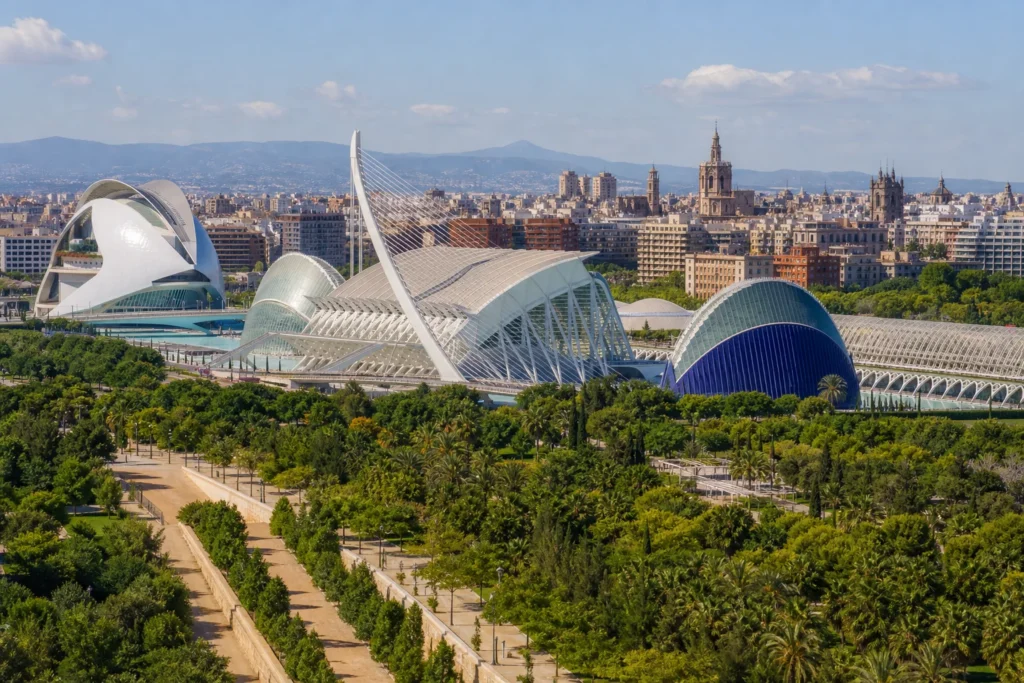
Ciutat de les Arts i les Ciències (City of Arts and Sciences)
A large, purpose‑built cultural and scientific complex on Valencia’s former riverbed, principally associated with Santiago Calatrava. The ensemble includes the Hemisfèric (IMAX/planetarium), the interactive Museu de les Ciències, the Umbracle, the Ágora and waterside promenades.
The complex is notable both for its monumental contemporary architecture and for the programmed exhibitions inside individual buildings; many venues sell separate timed tickets and the site offers combo passes—check the official Ciutat de les Arts i les Ciències pages for which buildings are open and whether advance booking is required.
Official Ciutat de les Arts i les Ciències (City of Arts and Sciences) website →
Oceanogràfic (Valencia Aquarium)
Europe’s largest aquarium complex, sited within the City of Arts and Sciences, that recreates principal marine ecosystems across connected pavilions and outdoor zones. Highlights include large tanks, shark and penguin displays, educational exhibits and conservation programmes, making it a full‑day family attraction.
Oceanogràfic uses timed‑entry tickets and recommends online advance purchase; allow several hours for a visit and confirm opening status or any special closures on the official site before you go.
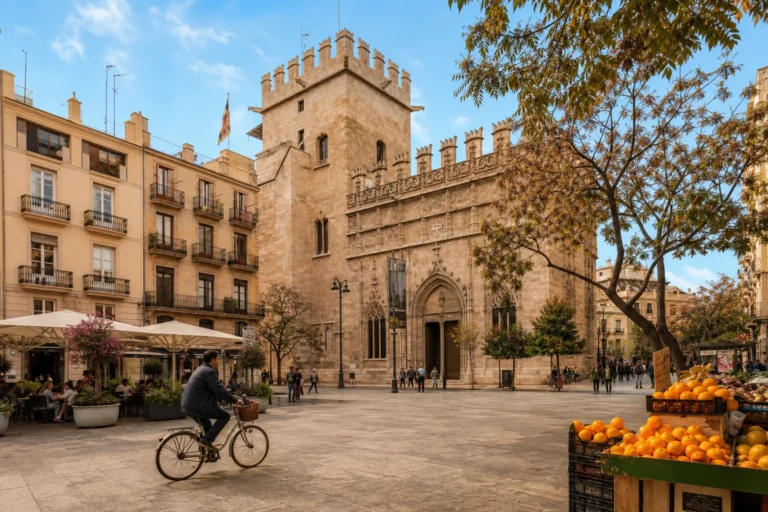
La Lonja de la Seda (Silk Exchange / Lonja)
La Lonja de la Seda is a late‑Gothic silk exchange (c. 1482–1533) and a UNESCO World Heritage site, famed for the vaulted Sala de Contratación, the Patio de los Naranjos and rich sculptural detail.
It illustrates Valencia’s mercantile power in the 15th–16th centuries. The site is administered as a tourist monument with timed tickets and specific access rules—verify guided‑visit options and booking requirements on official visitor pages before visiting.
Official La Lonja de la Seda (Silk Exchange / Lonja) website →
Catedral de València (Valencia Cathedral) and El Miguelete
The Metropolitan Cathedral–Basilica of the Assumption combines Romanesque, Gothic and Baroque elements and houses the Chapel of the Holy Chalice. The cathedral complex includes El Miguelete bell tower, which requires a separate ticket for the climb (about 207 spiral steps) and rewards visitors with panoramic views of the old town.
Check cathedral and municipal cultural pages for current access rules, group restrictions and separate tower tickets before visiting.
Official Catedral de València (Valencia Cathedral) and El Miguelete website →
Mercado Central (Central Market)
Opened in 1928, Mercado Central is a working covered market and a major example of Valencian modernist architecture where hundreds of stalls sell fresh produce, fish, cheeses and cured meats. Visitors experience lively daily trade beneath an ornate roof and stained glass; the market is primarily for local shoppers and normally has free public access.
Expect busy periods and verify municipal notices for any maintenance, restoration or tourist‑management measures before visiting.
Jardín del Turia / Turia Gardens
The Jardín del Turia is a long linear park created in the former Turia riverbed, stretching west to east across the city and linking playgrounds, sports facilities and cultural venues such as the Palau de les Arts and Hemisfèric.
It offers continuous walking and cycling corridors, varied recreational areas and views of both modern and historic landmarks. The park is public but divided into tramos (sections) with varying accessibility and occasional maintenance closures—consult municipal parks pages for maps and current alerts.
Parque Natural de l'Albufera (Albufera Natural Park)
L’Albufera is a protected coastal lagoon and rice‑field landscape south of Valencia, valued for shallow lakes, reedbeds and birdlife.
Typical visits combine birdwatching from hides, gentle walks or bike rides, interpretation at visitor centres near El Palmar/El Saler and traditional boat trips on the lagoon; many visitors pair a park visit with a meal in El Palmar to sample local paella traditions.
The park is managed with conservation rules and several areas or boat services may require advance reservations—check official park pages for visitor‑centre hours and access restrictions.
Official Parque Natural de l'Albufera (Albufera Natural Park) website →
Torres de Serranos and Torres de Quart (medieval city gates)
The Torres de Serranos and Torres de Quart are Valencia’s best‑preserved late‑medieval city gates and defensive towers. Both offer exterior interpretation and tower ascents that provide compact panoramic views over the old town and the Turia Gardens.
They are municipal cultural sites with variable access rules—climbs involve stairs and can be ticketed or temporarily closed for conservation, weather or event reasons—so check city museum notices before you visit.
Official Torres de Serranos and Torres de Quart (medieval city gates) website →
Best Time to Visit Valencia
The shoulder seasons—spring (late March–June) and autumn (September–November)—are ideal: warm, generous daylight and fewer crowds. Winter is mild and quiet for museums and markets.
Summer brings busy beaches and festivals but higher temperatures and heavier visitor volumes, so book popular indoor sites in advance.
Getting Around Valencia
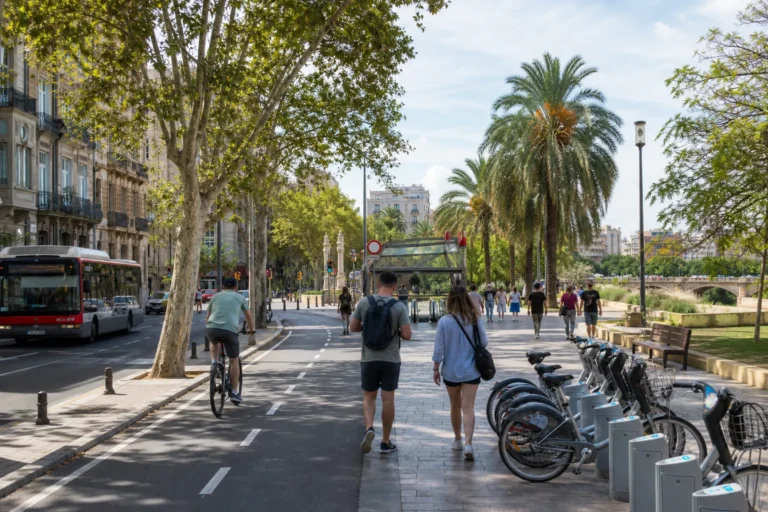
Valencia’s historic centre and the Turia Gardens are best explored on foot. The city also has an integrated metro, tram and bus network plus bike lanes and public bike schemes for short trips.
Taxis and ride‑hail services fill late‑night or luggage needs; regional buses and occasional tram links serve Albufera and nearby beaches, often requiring a short taxi or bike transfer from the nearest stop.
Location
Map of Valencia, Spain
The interactive map loads only when you choose to view it.
Plan Your Visit to Valencia
Buy timed or advance tickets for major indoor venues: the Oceanogràfic and many City of Arts and Sciences buildings operate with timed entries and recommend online purchase. Museums, La Lonja and the cathedral can have separate admissions or guided‑visit requirements.
Use the integrated transit cards for metro, tram and buses and verify any temporary closures or conservation work on official attraction and municipal pages before travel.
Local Tips for Valencia
Concentrate visits on the Ciutat Vella, the Turia Gardens and the Ciudad de les Arts i les Ciències to minimize transit time. Visit Valencia tourist offices for maps, accessibility information and validated transit cards.
Keep valuables secure in busy markets and transport hubs to reduce pickpocket risk. For Albufera day trips check park access rules and book boat tours or guided services in advance when required.
Live conditions
Current Weather

Updated 2026-09-22 01:45
- Feels like
- 26°C / 79°F
- Today’s high / low
- 26°C / 79°F · 24°C / 75°F
- Humidity
- 56%
- Wind
- ← 5 km/h
- Precipitation
- 0 mm
- Chance of rain
- 6%
- Local time
- 2026-09-22 01:50
Safety
Valencia is generally safe for visitors. Use normal precautions in crowded markets and transport hubs, avoid poorly lit or deserted streets at night, and watch traffic when crossing wide avenues near the Turia Gardens.
On urban beaches follow lifeguard instructions and beach‑flag warnings. For Albufera excursions respect protected‑area rules and check park notices for access or boating restrictions.