
Travel Guide
Plan your visit around Hoi An Ancient Town, Japanese Covered Bridge, and more of Hoi An, Vietnam.
Discover the best things to do in Hoi An, Vietnam, from signature sights to memorable local experiences.
Start in the UNESCO-listed Ancient Town and then branch into nearby craft villages, coconut groves, beaches and islands.
The town’s narrow lanes, wooden shop-houses and lantern-lit riverside create a concentrated cultural experience that’s easy to combine with short day trips to Tra Que, Thanh Ha, An Bang and Cu Lao Cham.
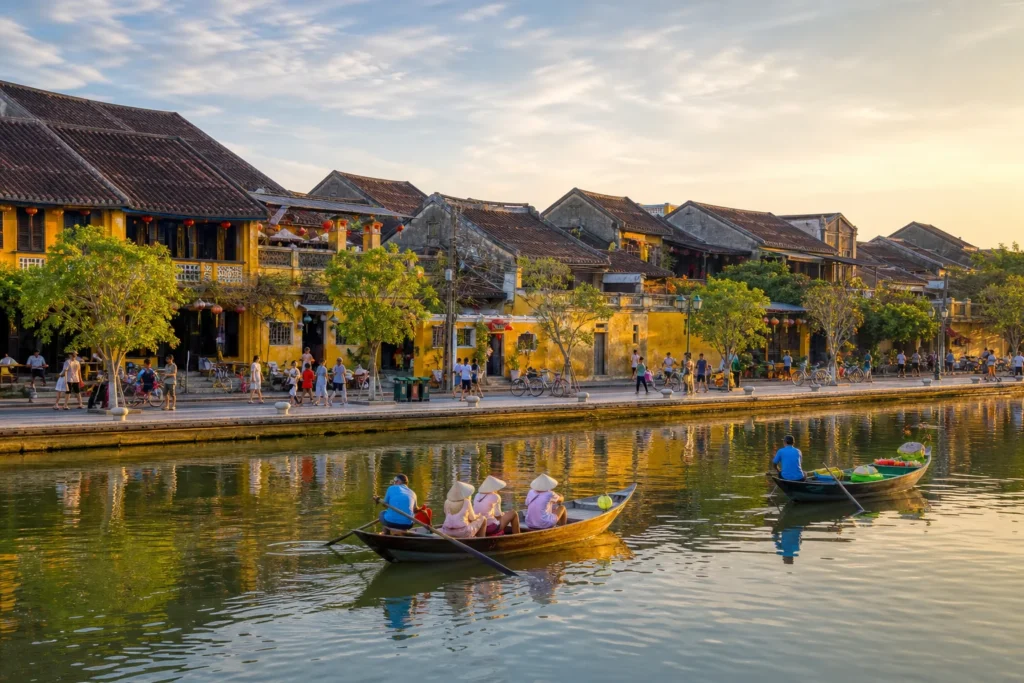
Why Visit Hoi An
Visitors come to Hoi An for its layered cultural heritage and compact scale. The Ancient Town’s photogenic streets, traditional crafts (tailoring, pottery, lantern-making) and riverside dining are wrapped in a pedestrian-friendly core that preserves centuries of Vietnamese, Chinese, Japanese and European influences.
Nearby rural experiences. Hands-on cooking and Tra Que farming, Thanh Ha pottery workshops, and Cam Thanh’s coconut-forest boat rides.
Offer living-tradition encounters, while short excursions reach An Bang beach, the marine reserve at Cu Lao Cham, and the Champa ruins of My Son for archaeological contrast.

Top Things to Do in Hoi An, Vietnam
From lantern-lit streets to nearby beaches and craft villages, Hoi An’s compact layout makes it straightforward to mix heritage, hands-on craft experiences, countryside cycling and short boat trips into a short stay.
Hoi An Ancient Town (UNESCO World Heritage)
Hoi An Ancient Town is an exceptionally well-preserved small-scale trading port that developed between the 15th and 19th centuries. The compact grid of narrow, pedestrian-friendly streets is lined with low wooden shop-houses, communal assembly halls, temples and riverside quays.
Visitors can study carved woodwork, latticework, tiled roofs and timber frames that reflect Chinese clan houses, Japanese merchant architecture and later European commercial influences.
The experience mixes architectural observation with living heritage: markets, riverside life, craft workshops and traditional cuisine operate within the historic fabric. Conservation rules and staged restorations shape what is visible today, so check official heritage sources for current visitor guidance before planning your visit.
Japanese Covered Bridge (Chùa Cầu)
The Japanese Covered Bridge (Chùa Cầu) is an iconic timber-and-stone bridge at the heart of Hoi An’s old town.
Built by the Japanese merchant community in the 17th–18th centuries, the bridge links narrow streets across a canal and features an enclosed passage, a sloping tiled roof and a small pagoda-like shrine that traditionally houses a guardian deity associated with protection and good fortune.
Architecturally the bridge blends Japanese carpentry with Vietnamese and Chinese decorative details; carved beams, small guardian statues and stone approaches reward close inspection. As a protected cultural monument, the bridge is mainly a pedestrian viewpoint and may occasionally be affected by conservation work, so check local heritage advisories before visiting.
My Son Sanctuary (Champa Temple Complex)
My Son Sanctuary is a dispersed valley of Hindu tower-temples that served as a ritual and political centre for the Champa kingdom. Built in fired brick and sandstone across many centuries, the ruins illustrate an indigenous architectural language adapted from Indian Hindu cosmology.
Groups of towers sit in a wooded valley ringed by karst hills, offering a mix of outdoor archaeology and close observation of brick-masonry techniques.
Many towers are partly ruined; others retain carved decorative panels and structural elements such as the central sanctuary (kalan). The valley setting makes weather and light important to the visit, and management or conservation programs may change visitor facilities—consult official sources for current guidance before you go.
Tra Que Vegetable Village
Tra Que Vegetable Village is a small agricultural community just outside Hoi An known for compact plots of aromatic vegetables and traditional farming practices. The village’s intensive, small-plot gardening produces herbs and salad greens with pronounced local flavours, managed through long-practised soil-care rituals and tidal irrigation patterns.
Visitors usually take part in guided walks, hands-on planting or weeding demonstrations, and short cooking experiences that show how produce moves from garden to plate. Tra Que preserves living agricultural knowledge and communal farming practices; seasonal conditions affect field access, so wear shoes suitable for muddy paths and check local schedules when planning a visit.
An Bang Beach
An Bang Beach is a long, gently shelving sandy strand just east of Hoi An’s old town, framed by coconut and palm fringe rather than high-rise development. The beach’s scale and low built profile make it easy to find a quiet spot for swimming, sunbathing or simple seaside relaxation away from larger resort clusters.
Small restaurants and modest beach cafés cluster near access points, and visitors often combine An Bang with a short bicycle ride through rice fields or a sunrise paddle.
Amenities are concentrated at certain access points and may change over time, so bring shade, water and sun protection for a long stay and check local guidance for facilities.
Cam Thanh Coconut Forest & Basket-boat Experience (Bay Mau)
Cam Thanh’s Bay Mau coconut forest is a tidal, water-dominated grove threaded by narrow canals and shaded by water coconut palms. The setting—distinctive for its watery channels and dense coconut canopy—offers a close-up view of how local people historically managed tidal water, fishing and small-scale transport.
The signature activity is a basket-boat (thúng chai) ride guided by a single oarsman; these round woven boats can be paddled or spun through narrow courses for an immersive experience.
Visits often include craft demonstrations and community-led tours; because formats and safety procedures can change, verify current offerings with local cooperatives or official tourism sources before booking.
Thanh Ha Pottery Village
Thanh Ha Pottery Village sits on the left bank of the Thu Bồn River and is a living craft landscape where families shape and fire clay using locally sourced deposits.
Visitors see low workshops, open shaping tables and traditional kilns, and can watch potters throw on the wheel, press clay in moulds, and apply natural glazes and painted motifs.
Visits are mainly hands-on and observational, with opportunities to try basic forming under guidance and to buy terracotta souvenirs. The village supplied architectural ceramics regionally, and many present artisans descend from multi-generational craft families.
Group programs and demonstrations may vary, so check the village’s official visitor information beforehand.
Cu Lao Cham (Cham Islands)
Cu Lao Cham (the Cham Islands) is an archipelago and UNESCO-recognized biosphere reserve off Hoi An’s Cua Dai coast. The islands combine steep forested terrain with shallow marine habitats—coral reefs, seagrass beds and mangroves—and host a small fishing community on Hon Lao.
Activities typically include short hikes to temples and viewpoints, visits to the island village, and shallow-water snorkeling over nearshore reefs.
Access is by licensed boat from Hoi An or nearby piers, and landing services are seasonal. Facilities on the islands are modest; bring water, sun protection and reef-safe sunscreen, and confirm ferry arrangements and permitted activities with the official reserve or local tourism office before traveling.
Hoi An Night Market
Hoi An Night Market unfolds along Nguyen Hoang Street across from the Ancient Town and becomes a lantern-lined pedestrian corridor after dusk. Rows of stalls display paper and silk lanterns, embroidered textiles, carved woodwork and ceramics while food vendors serve regional street dishes.
The market is ideal for souvenir shopping, photography and sampling local snacks amid a lively evening scene.
Bargaining is common but works best when respectful and low-pressure. Because vendor offerings and event programming change, check official local tourism sources for current guidance if you plan group visits or specialized purchases.
Best Time to Visit Hoi An
The most comfortable months are the dry season and shoulder periods. Generally February through April and September through early November.
When rainfall is lower and temperatures are warm but not extreme.
Avoid the peak monsoon months (typically October. December), when heavier rains and occasional flooding can disrupt travel, and the hottest, most humid period in late spring and summer.
Monthly lantern evenings and festival dates add cultural value but are variable, so check local calendars if you plan visits around events.
Getting Around Hoi An
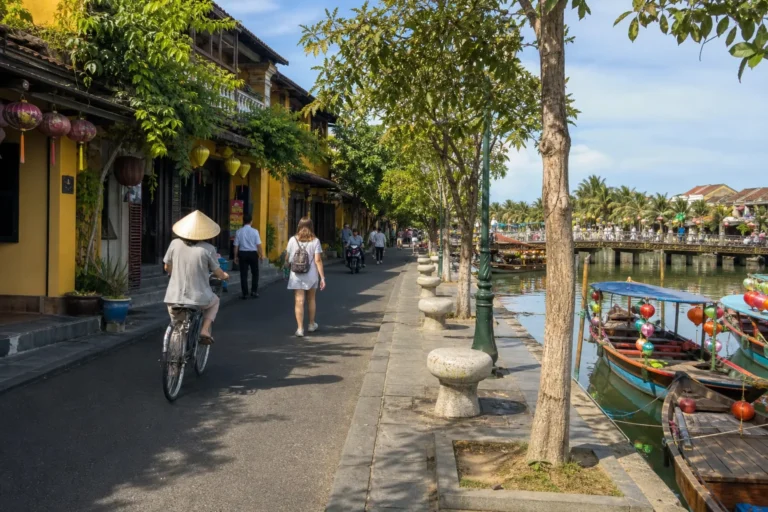
Hoi An Ancient Town is best explored on foot; its narrow, historic streets restrict motor traffic and favor walking. Short local trips—to An Bang, Tra Que, Thanh Ha and Cam Thanh—are commonly done by bicycle, motorbike taxi, or short private car/van rides, and many guesthouses offer bicycle rental.
Boat services operate on the Thu Bon River and to Cu Lao Cham (seasonal ferry schedules). Day trips to My Son and regional transfers to Da Nang airport rely on car or organized shuttle; public intercity buses serve the broader region with advance planning.
Location
Map of Hoi An, Vietnam
The interactive map loads only when you choose to view it.
Plan Your Visit to Hoi An
Base yourself in the Old Town or nearby An Bang/Cua Dai for short transfers to key sites. Hoi An Ancient Town is pedestrianised and best seen on foot or by bike; Japanese Covered Bridge and riverside markets sit inside the protected heritage core.
My Son and the Cham Islands require road and boat travel—book through licensed operators or management boards. Use Da Nang International Airport for regional access (about 30–45 minutes by road).
Pack light, allow extra time for rural roads and heritage-site queues, and check official sources for current visitor guidance or conservation rules.
Local Tips for Hoi An
Respect living heritage: many attractions are active cultural sites and family shrines—dress modestly, remove hats in temples, and follow photography rules at religious monuments. For village visits (Tra Que, Thanh Ha, Cam Thanh) arrange visits through local cooperatives or community tourism groups to support authentic demonstrations.
At beaches and islands follow marine-park guidelines: take only pictures, avoid anchoring on corals, and use reef-safe sunscreen. Carry Vietnamese Dong for small vendors, learn a few basic phrases, and plan early-morning or late-afternoon visits for cooler light and smaller crowds.
Live conditions
Current Weather

Updated 2026-09-21 04:15
- Feels like
- 29°C / 84°F
- Today’s high / low
- 27°C / 80°F · 25°C / 77°F
- Humidity
- 88%
- Wind
- ↖ 8 km/h
- Precipitation
- 0.61 mm
- Chance of rain
- 89%
- Local time
- 2026-09-21 04:25
Safety in Hoi An
Hoi An is relatively low-risk for violent crime, but standard travel precautions apply: secure valuables, avoid isolated streets at night, and use licensed taxis or verified ride-hail services. Traffic can be busy—watch for motorbikes when cycling or crossing roads and wear a helmet on rented bikes or scooters.
For water activities (Cham Islands, basket-boat trips) choose operators that provide lifejackets and check tide and boat conditions. Carry travel insurance that covers medical needs and register long excursions with your accommodation or tour operator.