
Travel Guide
Plan your visit around Karnak Temple Complex, Luxor Temple, and more of Luxor, Egypt.
Discover the best things to do in Luxor, Egypt, from signature sights to memorable local experiences.
And the royal necropolis. Valley of the Kings and Deir el‑Bahari.
Across the Nile on the west bank.
The city blends living civic life with monumental ruins and museums, making it easy to combine slow riverside moments with focused temple and tomb visits.
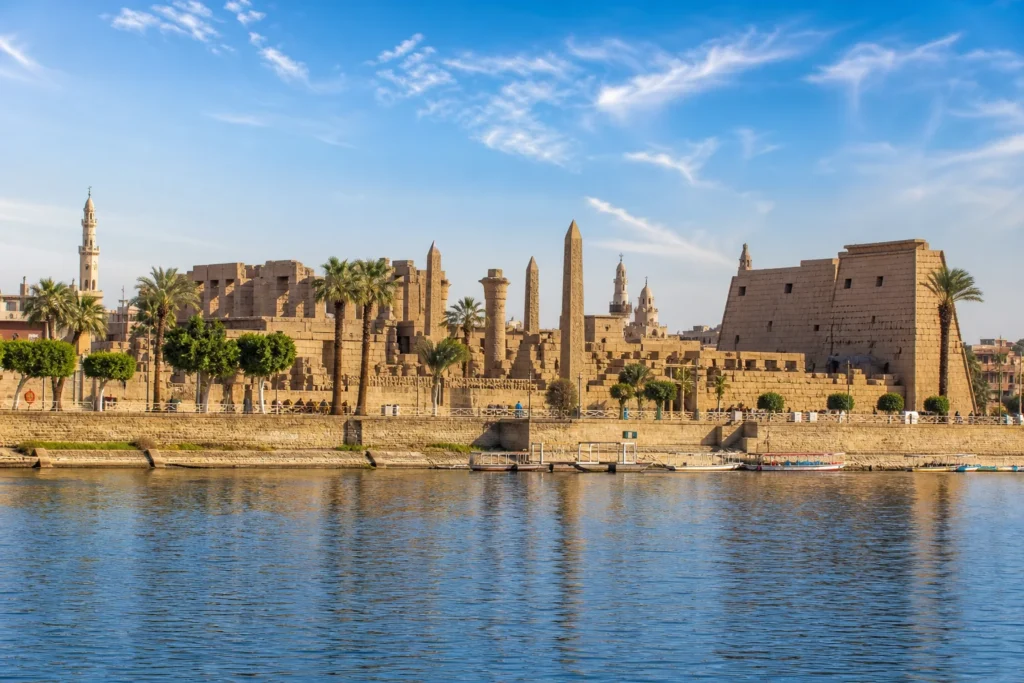
Why Visit Luxor
Visitors come to Luxor to experience exceptionally concentrated ancient monuments preserved in their archaeological landscape: monumental temple complexes, richly decorated royal tombs, funerary temples like Hatshepsut’s at Deir el‑Bahari, and iconic statuary such as the Colossi of Memnon.
The city’s museums and interpreted sites let travelers follow cohesive narratives about pharaonic religion, royal funerary practices, and New Kingdom statecraft. Beyond archaeology, the Nile corniche, traditional souks, and river‑cruise culture provide accessible ways to combine slow‑paced local life with focused cultural sightseeing.
Top Things to Do in Luxor, Egypt
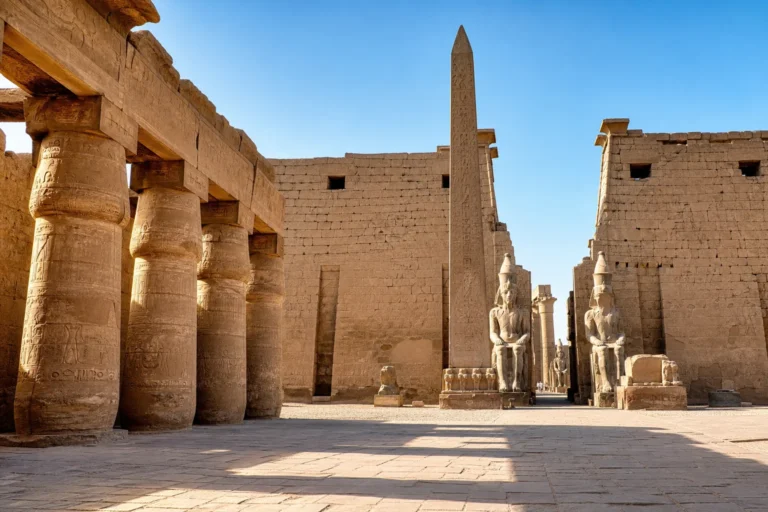
Luxor packs an extraordinary range of pharaonic monuments into a compact riverside city. Below are the city’s essential temples, tombs, museums and a signature sunrise balloon experience that together tell the story of ancient Thebes.
Karnak Temple Complex
Karnak is a sprawling religious city rather than a single monument, centered on the great Precinct of Amun and built in successive pharaonic phases. The complex contains monumental pylons, obelisks, colossal statues and one of the world’s largest hypostyle halls—the forest of 134 massive columns that dominates the main sanctuary.
Visiting means moving between open courtyards, long processional ways and intimate chapels. The Sacred Lake and colonnaded avenues help explain ritual routines and festival processions.
Allow time for walking, shade breaks and photographic stops; carry sun protection and a map or audio guide to orient yourself within the vast plan.
Luxor Temple
Luxor Temple occupies a compact, walkable footprint in the heart of modern Luxor and was the focus of the annual Opet Festival, when cult statues processed from Karnak. Key building phases belong to Amenhotep III and Ramesses II, and visitors encounter ceremonial colonnades, courtyards, reliefs and the single remaining obelisk that once faced a twin.
Continuous use through Roman, Christian and Islamic periods left layered features that make the temple useful for reading long-term sacred reuse. Many travellers prefer late afternoon or sunset light for photography and to study relief details; check official sources for any conservation closures before you go.
Valley of the Kings (Theban Necropolis)
The Valley of the Kings is the New Kingdom royal burial ground cut into the west-bank limestone, where pharaohs and high nobles carved complex subterranean tombs decorated with painted funerary texts and scenes intended to guide the deceased into the afterlife.
Visitors move between low cliff entrances and narrow descending corridors that open into decorated chambers.
Only a selection of tombs is open at any time for conservation reasons; tomb decoration and architecture vary widely, with cosmological ceilings, funerary-book scenes and portrait reliefs. Verify which tombs are available before visiting and consider a guide to bring the symbolic programs and archaeological context to life.
Temple of Hatshepsut (Deir el-Bahari)
The Temple of Hatshepsut at Deir el‑Bahari is a terraced mortuary temple of the mid‑18th Dynasty, notable for its three broad colonnaded terraces stepped into the cliff and linked by ramps. Its design integrates built porticoes with the sheer rock face, producing a dramatic axial composition that celebrates Hatshepsut’s divine birth and expedition to Punt.
Relief cycles show ritual scenes, maritime processions and royal portraiture across multiple chapels dedicated to deities such as Amun, Hathor and Anubis. Move slowly up the terraces to appreciate scale and narrative reliefs, and check official information for any access restrictions due to conservation work.
Colossi of Memnon
The Colossi of Memnon are two monumental seated quartzite statues that once flanked Amenhotep III’s mortuary temple on the west bank. Each figure depicts the pharaoh seated on a throne with smaller figures at the feet; the statues stand in an open plain with the Nile floodplain nearby and the Theban cliffs behind.
The northern statue’s ancient reputation for ‘singing’ after earthquake damage is part of its Greco‑Roman fame, but today visitors primarily encounter the colossi as evocative scale markers of a much larger, mostly vanished precinct.
Interpretation on site is limited, so a guide or guidebook helps explain inscriptions, restoration history and their place in Amenhotep III’s funerary landscape.
Luxor Museum
Luxor Museum is a compact, well‑curated museum on the Nile corniche that concentrates on high‑quality objects from the Theban area. Galleries present sculptural works, funerary objects and relief fragments found locally, arranged for clarity and context rather than crowded displays.
Highlights often include finely carved statues, reconstructed displays from royal statue caches, and funerary material that links portable art with Luxor’s major monuments. Plan one to two hours for a focused visit and check museum notices for temporary rotations or conservation closures before you go.
Avenue of Sphinxes (between Karnak and Luxor Temples)
The Avenue of Sphinxes is the ancient processional road that linked Karnak Temple with Luxor Temple, originally lined with hundreds of sphinx sculptures and stretching roughly 2.7 kilometres.
Excavation and restoration led by Egyptian authorities have removed modern intrusions and reassembled many sculpted elements, allowing visitors to walk the original ceremonial axis once used for the Opet Festival.
The avenue provides a sequence of experiences from Karnak’s monumental pylons down to Luxor Temple and helps explain how sightlines and movement structured ritual life in ancient Thebes. Because conservation work continues, parts of the walk may change; pair the avenue with visits to both temples or a local guide for full context.
Official Avenue of Sphinxes (between Karnak and Luxor Temples) website →
Hot-air balloon sunrise over Luxor
A sunrise hot‑air balloon flight over Luxor lifts passengers above a concentrated archaeological landscape, with launch fields on the West Bank before dawn. From the basket you typically see the Valley of the Kings, Hatshepsut’s terraces, the Colossi of Memnon and temple rooftops as light reveals the Nile ribbon and cultivated strips.
Flights include early pickup, a safety briefing, inflation and roughly forty to sixty minutes aloft depending on conditions, followed by a field landing and retrieval transfer. Ballooning is regulated and run by licensed operators; book with established firms that publish safety information and allow a full early‑morning window for the experience.
Best Time to Visit Luxor
The best season for sightseeing is during the cooler months from late October through March, when daytime temperatures are mild for walking archaeological sites and evenings along the Nile are pleasant. This period also aligns with calmer work schedules for many conservation projects, enhancing the likelihood that key areas will be accessible to visitors.
Summers are extremely hot and make lengthy outdoor visits uncomfortable. If visiting between April and September, plan short early‑morning and late‑afternoon site sessions and expect stronger reliance on shade, vehicle transfers, and river‑based activities.
SPECIAL EVENTS IN Luxor
Luxor African Film Festival (LAFF)
The Luxor African Film Festival (LAFF) is an annual celebration of African cinema based in Luxor that programs feature-length and short competitions, a Diaspora section, an Upper Egypt competition, tributes, workshops, and industry panels. The festival attracts filmmakers, critics, and international audiences with premieres, retrospectives, and learning programmes. Travelers may combine screenings and panels with Luxor’s archaeological attractions, discover new African and Arab voices on screen, attend workshops, and network with filmmakers and cultural institutions.
- Dates
- March 28, 2027 - April 3, 2027
Getting Around Luxor
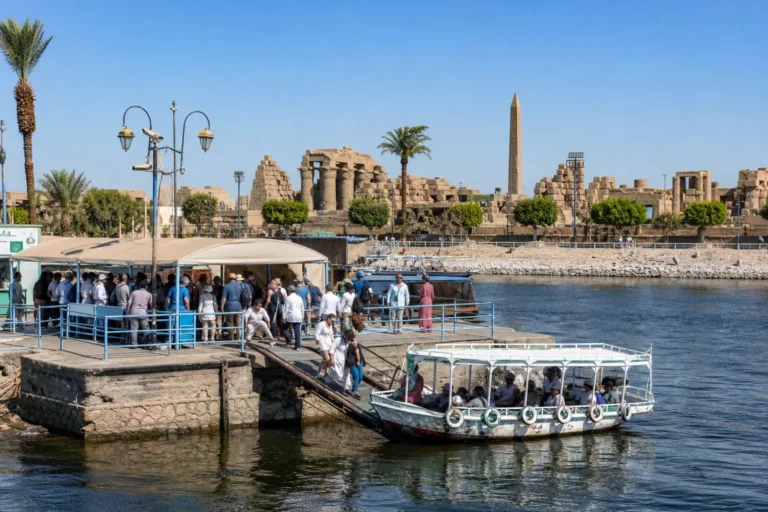
Luxor’s main archaeological attractions are clustered on both riverbanks within short driving distances. East-bank sites (Karnak, Luxor Temple, Avenue of Sphinxes) are walkable from the central corniche and city accommodation; west-bank attractions (Valley of the Kings, Hatshepsut’s temple, Colossi of Memnon) require a short car or organized-site transfer by licensed vehicle or river ferry.
Local taxi services, ride apps where available, and licensed tourist minibuses are common; many visitors use guided tours or hotel arrange transfers to streamline permits and access. River cruises and feluccas provide scenic cross‑river options but do not substitute for road transfers between scattered sites.
Location
Map of Luxor, Egypt
The interactive map loads only when you choose to view it.
Plan Your Visit to Luxor
Luxor is compact but packed with archaeological zones on both Nile banks. Plan to split time between the East Bank (Karnak, Luxor Temple, Avenue of Sphinxes, city museums) and the West Bank (Valley of the Kings, Hatshepsut’s temple, Colossi of Memnon).
Allow full mornings for the major temples and the cooler early-hour window for the Valley of the Kings. Consider booking licensed local guides through the Luxor Tourism Authority for tomb context and to navigate ticketing.
Use river ferries or licensed taxis to cross the Nile; carry photocopies of travel documents, cash for small purchases, and a refillable water bottle.
Local Tips for Luxor
Beat the heat by visiting outdoor sites at first light and save museum or temple‑light shows for late afternoon. Dress respectfully—shoulders and knees covered—when entering temples, and wear sturdy shoes for uneven stone and desert paths.
Bargaining is common in bazaars; start about 40–60% below the opening price and be friendly. If you want a balloon flight, book with established operators and confirm ECAA oversight and pilot licensing.
Use official ticket windows at archaeological sites and keep a small supply of Egyptian pounds for tips, entry supplements, and small vendors.
Live conditions
Current Weather

Updated 2026-09-21 00:00
- Feels like
- 24°C / 75°F
- Today’s high / low
- 38°C / 99°F · 24°C / 75°F
- Humidity
- 27%
- Wind
- ← 11 km/h
- Precipitation
- 0 mm
- Chance of rain
- 0%
- Local time
- 2026-09-21 00:18
Safety
Luxor is a major regulated tourism centre with World Heritage protections at many sites. Follow on‑site signage and staff instructions to avoid restricted or fragile areas.
For adventure activities—hot‑air balloons or felucca rides—choose operators that show licensing and provide safety briefings; the Egyptian Civil Aviation Authority regulates balloon pilots. Protect yourself from strong sun and dehydration by carrying water, sunscreen and a hat.
After dark, prefer registered taxis or hotel-arranged transfers and avoid isolated streets; keep digital and physical copies of passports and emergency contacts.