
Travel Guide
Plan your visit around Old Town, House of the Blackheads, and more of Riga, Latvia.
Discover the best things to do in Riga, Latvia, from signature sights to memorable local experiences.
Latvia’s compact capital centers on a UNESCO‑listed Old Town and a dense belt of 19th.
Early 20th‑century boulevards where church spires, grand civic monuments and one of the world’s richest concentrations of Art Nouveau architecture sit within easy walking distance.
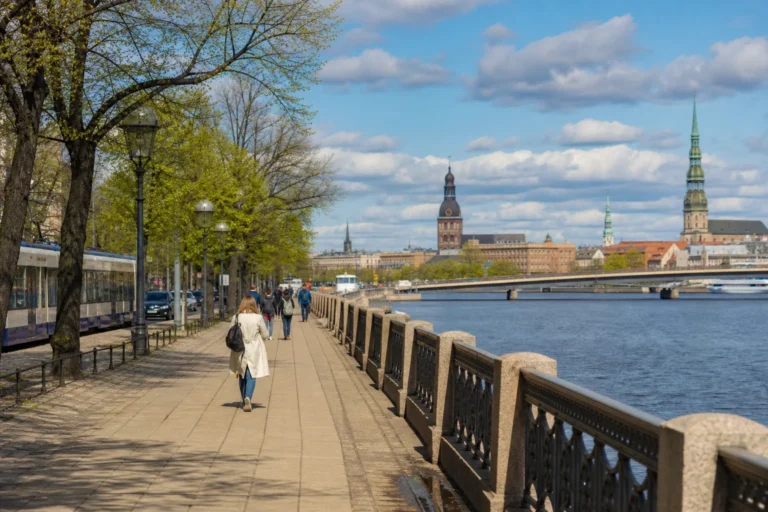
The Daugava riverfront, Riga Central Market and several major museums and performance venues let visitors combine short walks, tram hops and single-day itineraries to see much of the city.

Why Visit Riga
Riga rewards both short stays and deeper cultural exploration. Visit the UNESCO‑listed Old Town for its medieval street plan and landmark churches, stroll Alberta Street to see an extraordinary run of Art Nouveau façades, and wander the century‑old Riga Central Market to experience Latvian food culture.
The Latvian National Opera and Ballet stages a full season of music and dance, while the Latvian Ethnographic Open‑Air Museum preserves rural buildings and crafts. Together these sites offer architecture, performing arts, market life and living heritage in a compact, walkable city.
Top Things to Do in Riga, Latvia
Riga’s best sights cluster close together: cobbled lanes and church towers in Vecrīga, decorative boulevards and Alberta Street’s Art Nouveau façades, and the working market pavilions beside the river. Below are the city’s core experiences and where to find them.
Old Town (Vecrīga)
Vecrīga is the medieval heart of Riga on the right bank of the Daugava, inscribed on UNESCO’s World Heritage List for its exceptional urban fabric and skyline. The area presents winding cobbled streets, intimate public squares and a layered sequence of architectural periods from Hanseatic merchant houses to 19th‑century additions.
Key landmarks, including St. Peter’s Church and Riga Cathedral, punctuate walking routes and offer distinct viewpoints and historical layers.
The canal marks the former city walls and frames common circuits through the quarter. Preservation rules guide changes within the historic centre, so check official city or museum sources for tower access, seasonal events and special exhibits before you go.
House of the Blackheads
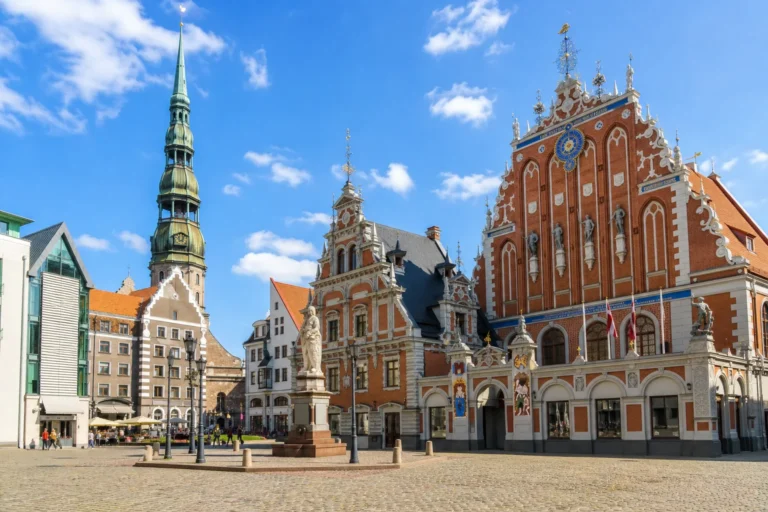
The House of the Blackheads dominates Town Hall Square with a richly decorated Dutch Renaissance façade and worked gables. Originally the guildhall and ceremonial meeting place for the Brotherhood of Blackheads—unmarried merchants—the building’s ornament and emblematic motifs recall Riga’s mercantile past.
Interior restoration recreates 19th‑century cabinets and a Festive Hall that hosts exhibitions, concerts and displays about the city’s civic and maritime history.
The medieval original was destroyed in World War II and reconstructed from archaeological research and archival evidence in the late 1990s. Today the site functions as a museum and event venue; consult the house’s visitor pages for guided tours and accessibility details.
Riga Dome Cathedral
Riga Dome Cathedral (Rīgas Doms) dates back to the early 13th century and displays Romanesque, Gothic and later Baroque and historicist layers. Visitors notice its broad, hall‑like interior and the organ façade, whose oldest parts are centuries old.
The cathedral’s Walcker organ, enlarged and restored several times, is a defining feature and draws organ enthusiasts and concertgoers to frequent recitals and services.
Historically the cathedral complex included chapter buildings and a cloister, tying it to Riga’s medieval governance as well as liturgical life. The building remains the seat of the Latvian Lutheran archbishop and combines religious services with cultural programming; verify concert schedules and tour information on the cathedral’s official pages before visiting.
St. Peter’s Church
St. Peter’s Church is one of Old Riga’s most recognisable landmarks, with medieval origins transformed by Gothic brick construction and later restorations. The church grew as a merchant parish, a civic focus reflected in its tall tower and generous interior.
The tower has a dramatic history of damage and rebuilding; the modern reconstruction includes a staged lift to a viewing platform that provides a 360‑degree panorama of the Old Town and the Daugava river.
Visitors commonly combine an interior visit with the tower ascent for photographs and orientation. Because access arrangements can change, check the church’s official visitor information for tower opening times and guided tours before you go.
Art Nouveau District (Alberta Street)
Alberta Street sits at the heart of Riga’s celebrated Art Nouveau quarter and reads like an open‑air gallery of early 20th‑century ornament.
Located in the Quiet Centre a short walk from the Old Town, the avenue is lined with sculpted façades, stylised balconies and symbolic motifs by leading architects such as Mikhail Eisenstein and Konstantīns Pēkšēns.
Most buildings date from the building boom of the early 1900s and showcase the variety within the Art Nouveau movement in Riga.
The Riga Art Nouveau Museum occupies a period apartment on Alberta Street and interprets interiors, furnishings and everyday life from the era. Walk slowly, compare façades and respect residential privacy; check museum and city sources for special tours and access.
Riga Central Market
Riga Central Market occupies five long pavilion halls adapted from First World War airship hangars beside the Old Town. Planners combined industrial‑scale arched roofs with brick and concrete bases and built an extensive system of cellars and loading passages beneath to support cold storage and wholesale distribution.
The result is a distinctive market ensemble sheltering stalls for seasonal vegetables, cured fish, dairy and regional specialties.
The market remains a working place for locals as well as a visitor attraction: expect narrow aisles, busy stalls and a lively, multi‑sensory environment. Bring suitable bags, be prepared for crowds, and consult official visitor information for guided tours or access notes.
Latvian National Opera and Ballet
The Latvian National Opera and Ballet occupies a stately neoclassical building on Riga’s ring of boulevards beside the City Canal. The house dates to the 19th century and today hosts opera, ballet and orchestral seasons presented by a resident company with orchestra, chorus and ballet corps.
The interior preserves a richly finished auditorium and ceremonial foyers that frame performances and state events.
Visitors combine performances with guided tours to see interior architecture and learn about the company’s repertoire and history. Seasonal schedules, matinees and special events change regularly—check the company’s official visitor pages to book tickets and tours.
Latvian Ethnographic Open-Air Museum
Founded in 1924 on the shore of Lake Jugla, the Latvian Ethnographic Open‑Air Museum recreates rural Latvia with over one hundred relocated historic buildings from all regions of the country. The lakeside site arranges farmsteads, windmills, churches and fishermen’s homesteads into a composed cultural landscape.
Interior rooms and outbuildings show period furnishings and traditional tools, while staff run occasional demonstrations of crafts, cooking and seasonal rituals.
Curatorial interpretation traces rural life from the late 17th century through the early 20th century. The museum’s scale rewards at least a half‑day visit—bring comfortable footwear and check the museum’s official pages for transport, guided tours and seasonal events.
Freedom Monument
The Freedom Monument stands at the symbolic heart of central Riga where Brīvības bulvāris meets Raiņa bulvāris. Sculptor Kārlis Zāle and architect Ernests Štālbergs designed the composition, unveiled on November 18, 1935, with the carved dedication “Tēvzemei un Brīvībai” (For Fatherland and Freedom).
Rising to about 42.7 metres, the monument is crowned by a nine‑metre bronze figure of Liberty holding three gilded stars that represent Latvia’s historic regions.
The monument’s base contains sculptural groups and bas‑reliefs narrating themes such as defence, work and song. It functions as a focal meeting point and a site for public commemoration—respect ceremonial areas and check municipal sources for information on formal events.
Best Time to Visit Riga
Aim for late spring through early autumn when public spaces, parks and the open‑air museum are at their most pleasant and long daylight supports walking and riverfront activity. Shoulder seasons (May–June and September) balance milder weather, fewer crowds and frequent cultural programming.
Winters are cold with short days but suit visitors focused on museums, concerts and lower rates; check seasonal festival schedules before planning.
SPECIAL EVENTS IN Riga
Riga International Film Festival (RIGA IFF)
Riga International Film Festival (RIGA IFF) is Latvia’s largest annual cinema celebration, presenting a curated programme of contemporary international and regional films alongside competitions, industry panels, and masterclasses. The festival attracts filmmakers, critics, and travelers seeking art-house premieres, Baltic cinema highlights, and filmmaker Q&As. Screenings and events take place across central Riga venues, offering visitors both cultural depth and the chance to explore the city between sessions. Cinephiles and curious travelers value RIGA IFF for its strong regional focus and discovery-driven programming.
- Dates
- October 15, 2026 - October 25, 2026
- Venue
- Splendid Palace; Forum Cinemas; National Library of Latvia
Staro Rīga (Staro Riga)
Staro Rīga is Riga’s international light art festival that transforms the city’s public spaces into an open-air gallery of light installations and large-scale projections. The festival draws local and international light artists, offering free evening routes across the Old Town and central districts that appeal to families, photographers, and culture-minded travelers. Visitors can expect multimedia projections, building illuminations and interactive pieces, with organizer-published maps and site information to guide walking tours of the installations.
- Dates
- November 15, 2026 - November 18, 2026
- Venue
- Various public spaces across central Riga and the Old Town (multiple outdoor installations)
Riga International Short Film Festival 2ANNAS
2ANNAS is Riga’s long-running international short-film festival, known for bold programming, industry forums, and a strong focus on Baltic and experimental cinema. It attracts filmmakers, critics, and curious travelers seeking provocative shorts, mid-length works, and thematic showcases, alongside talks, screenings, and touring programs across Latvia. The festival is a useful entry point for discovering regional cinema, meeting creators, and experiencing Riga’s cultural scene outside mainstream film circuits.
- Dates
- April 2, 2027 - April 8, 2027
- Venue
- Diagonāle (primary festival centre; multiple venues used across the city)
Rimi Rīgas maratons (Rimi Riga Marathon)
Rimi Rīgas maratons is Riga’s flagship running festival, attracting elite athletes and mass-participation runners across multiple distances. The event combines competitive road races with family-friendly races and children’s activities, producing a lively citywide atmosphere that appeals to both participants and spectators. Visitors can pair race travel with sightseeing through Riga’s Art Nouveau districts, UNESCO-listed Old Town, and riverside promenades. The marathon is internationally recognised and often used by road-race tourists as a seasonal highlight of the Baltic sports calendar.
- Dates
- May 15, 2027 - May 16, 2027
Getting Around Riga
Riga’s historic core is compact and highly walkable; most approved attractions are within a 20–40 minute walk of one another. The municipal network of buses, trams and trolleybuses links neighbourhoods and larger sites like the Ethnographic Open‑Air Museum.
Paid single‑ride and multi‑ride tickets are available through official city apps and vendors. Taxis, app‑based ride services, bicycle rental and e‑scooters supplement short trips.
Riga International Airport is served by regular airport bus and coach links.
Location
Map of Riga, Latvia
The interactive map loads only when you choose to view it.
Plan Your Visit to Riga
Plan to walk the Old Town and nearby boulevards, and use Rīgas Satiksme trams, buses and trolleybuses for longer hops. Buy time‑based or mobile code tickets via the official Rīgas Satiksme app or accepted third‑party apps to avoid onboard queues.
Consider a single‑ticket option when combining short suburban train trips with city transit. Major cultural institutions require advance booking for popular performances and exhibitions; check official sites for seasonal closures and visitor rules before you go.
Local Tips for Riga
Visit the Old Town early morning or late afternoon to avoid cruise‑ship and coach crowds; side streets reveal quieter cafés and additional façades. Riga Central Market is best explored with cash for small stalls, though many vendors accept cards.
At the Ethnographic Open‑Air Museum expect gravel paths and outdoor displays—bring comfortable shoes and a light waterproof layer. For opera or ballet, reserve tickets from the Latvian National Opera site; evening performances often start around 19:00.
Respect designated memorial areas around the Freedom Monument during national holidays.
Live conditions
Current Weather

Updated 2026-09-20 21:45
- Feels like
- 11°C / 51°F
- Today’s high / low
- 17°C / 63°F · 13°C / 55°F
- Humidity
- 85%
- Wind
- ↓ 16 km/h
- Precipitation
- 0.01 mm
- Chance of rain
- 83%
- Local time
- 2026-09-20 21:50
Safety
Riga is generally safe, but standard city precautions apply. Watch bags in crowded areas such as the Old Town, Central Market and public transport since pickpocketing is the most common tourist‑targeted crime.
In emergencies dial 112; municipal police publish tourist info numbers and patrol major visitor sites. Public‑alcohol rules and anti‑hooligan laws are enforced—avoid public drinking and demonstrations.
Keep ID on you, register valuables where advised, and follow instructions from police or transport staff.