
Travel Guide
Plan your visit around Tallinn Old Town, Toompea Hill and Toompea Castle, and more of Tallinn, Estonia.
Discover the best things to do in Tallinn, Estonia, from signature sights to memorable local experiences.
The city fits a UNESCO‑inscribed medieval Old Town, panoramic Toompea, Kadriorg’s palace and park, Kumu, the Seaplane Harbour, Telliskivi and the Estonian Open Air Museum into a compact, highly walkable centre. Short visits reward focused walks and a mix of museums, viewpoints and neighbourhood cafés.
Why Visit Tallinn
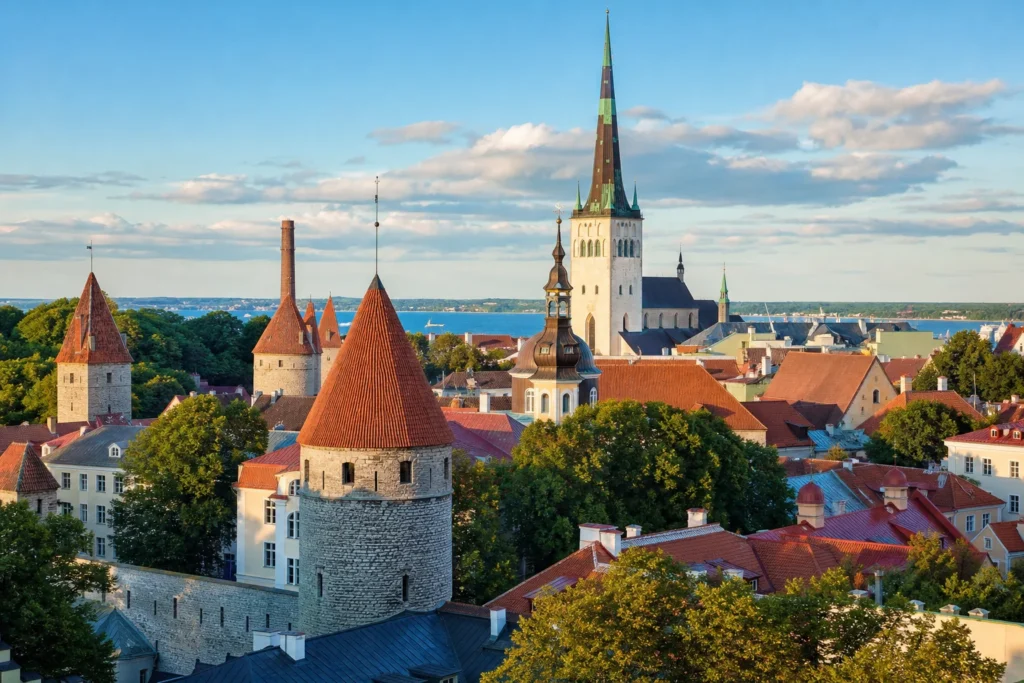
Tallinn’s appeal lies in the layering of intact medieval streets, planned Baroque gardens, major national museums and a lively contemporary creative scene. The Old Town’s cobbled lanes and towers give a vivid sense of Hanseatic history, while Kadriorg and Kumu present Estonia’s art and imperial-era architecture.
Maritime history is on show at the Seaplane Harbour, the Estonian Open Air Museum preserves rural life in an evocative outdoor setting, and Telliskivi Creative City provides a modern counterpoint of galleries, studios and markets. Town Hall Square remains a social focus for markets and seasonal programming.

Top Things to Do in Tallinn, Estonia
Tallinn’s compact centre concentrates major attractions within short walks or quick tram rides. Below are the essential places to plan into a short visit, with practical context for each site.
Tallinn Old Town (UNESCO World Heritage)
Tallinn Old Town is an exceptionally complete medieval port city laid out around narrow streets and small squares. Visitors walk a largely intact 13th–16th century street network ringed by defensive walls, towers and red‑tiled roofs, with merchant houses, guild halls and public buildings that reveal the city’s Hanseatic trading past.
Key landmarks include the Gothic Town Hall, the long‑running Town Hall Pharmacy and surviving merchant houses now used as museums and cafés. Climbing a tower or standing on a city wall clarifies how the settlement functioned as a trading hub.
Expect cobbles, slopes and tight passages; walking, small museums and guided tours give the most layered understanding of the site.
Toompea Hill and Toompea Castle
Toompea is the limestone plateau that dominates Tallinn’s skyline and the city’s long‑standing seat of power. From the hilltop, visitors see the high ceremonial upper town contrasted with the trading lower town below.
The castle complex evolved from a medieval stronghold into administrative architecture and today houses the Riigikogu (Estonian parliament).
Prominent elements include Tall Hermann tower, which flies the national flag, plus viewpoints and terraces that offer panoramic cityscapes. Religious monuments nearby — the Alexander Nevsky Cathedral and Toomkirik — add architectural layers.
Access involves stairs and terraces; guided tours of the Riigikogu and castle grounds run seasonally through official parliamentary channels.
Kadriorg Park and Kadriorg Palace (Kadriorg Art Museum)
Kadriorg Park is an expansive early‑18th‑century palace park created for Peter the Great, combining Italian terraces, French parterres and wooded promenades across roughly seventy hectares. The Baroque Kadriorg Palace, designed by Nicola Michetti, sits within formal gardens and houses the Kadriorg Art Museum, which focuses on foreign European and Russian collections.
The park contains rose and flower gardens, the House of Peter the Great, a Japanese Garden by Masao Sone and ponds with sculptures. Facilities such as cafés and a museum shop operate seasonally.
Expect varied terrain and longer walking routes; check official museum and park pages for accessibility, special exhibitions and guided‑tour availability before visiting.
Kumu Art Museum (Art Museum of Estonia)
Kumu is the principal building of the Art Museum of Estonia, opened in 2006 to a design by Pekka Vapaavuori and sited into the Lasnamäe limestone slope. The museum’s low‑profile, curving volumes use limestone, patinated copper and glass to integrate contemporary architecture into the Kadriorg setting.
Kumu presents a multi‑level permanent display tracing Estonian art from the 18th century to contemporary practice, alongside rotating temporary exhibitions and international loans. The building houses conservation studios, an education centre and an auditorium; the dramatic atrium and accessible ramps reveal sightlines across Kadriorg.
Check current exhibitions and visitor rules on official channels before your visit.
Estonian Maritime Museum at the Seaplane Harbour (Lennusadam)
The Seaplane Harbour occupies monumental World War I–era seaplane hangars on Tallinn’s Kalamaja waterfront, noted for early thin‑shell reinforced‑concrete domes. Inside the cavernous volumes, the museum organises element‑themed displays that bring together sea, surface and submerged craft.
Central objects include the British‑built submarine Lembit, a full‑size Short seaplane replica and the Maasilinn wreck. Exhibits use hands‑on simulators and elevated walkways to reveal hulls and ship layouts.
The site suits families and maritime enthusiasts and rewards at least two hours; check the museum’s official visitor information for accessibility and temporary exhibitions.
Official Estonian Maritime Museum at the Seaplane Harbour (Lennusadam) website →
Telliskivi Creative City (creative quarter)
Telliskivi Creative City occupies a former industrial complex at the edge of Kalamaja and Balti Jaam station and has grown into a multi‑building creative campus. The quarter retains visible industrial bones while layering studios, independent design shops, small galleries and public courtyards over the old factory grid.
A lively cluster of cafés, restaurants, markets and event venues gives Telliskivi a social heart; street art animates exterior walls and regular markets and pop‑ups highlight local makers and musicians. Combine Telliskivi with Balti Jaam Market and nearby walking routes through Kalamaja, and consult the Creative City’s event calendar for festival and gallery schedules.
Official Telliskivi Creative City (creative quarter) website →
Estonian Open Air Museum (Rocca al Mare)
The Estonian Open Air Museum sits in the Rocca al Mare pinewoods at Tallinn’s western edge and preserves traditional rural and coastal architecture by relocating dozens of wooden buildings from across Estonia.
The site is arranged like a historic village and fishing settlement with farmyards, a post mill, fishing sheds, a chapel, a schoolhouse and a village tavern.
Staffed demonstrations, costumed interpreters and living‑history programmes recreate traditional crafts and seasonal rituals, while conservation workshops and a nature trail add context. The open‑air layout spans forested, undulating terrain beside Kopli Bay; allow time for walking and check official visitor pages for special events and accessibility details.
Town Hall Square (Raekoja plats)
Town Hall Square (Raekoja plats) is the historic market heart of Tallinn’s medieval lower town, framed by merchant houses and guild halls with the Gothic Town Hall defining the space. The Town Hall Museum interprets municipal life and the square’s civic rituals, while the Town Hall Pharmacy (Raeapteek) remains a notable historic business.
Visitors climb the Town Hall tower for panoramic views of the city’s roofscape and towers. The square fills with cafés and open‑air events in summer and hosts a traditional Christmas market in winter.
Expect cobbles and busy pedestrian flows at peak times; verify special‑event schedules on official Old Town information channels.
Best Time to Visit Tallinn
Tallinn is worthwhile year‑round. Late spring and summer (May.
September) offer long daylight, outdoor festivals, gardens and ferry links across the Baltic. Ideal for strolling Old Town, parks and seaside promenades.
Shoulder seasons (April–early May, September–October) bring fewer crowds and crisp light for photography while museums remain fully accessible. Winter delivers festive markets and a snow‑accented Old Town, but shorter daylight means planning more indoor museum time and warm layers.
Getting Around Tallinn
The city centre is compact and highly walkable; many approved attractions lie within short pedestrian distances. Tallinn operates a unified public transport system with smartcards and multi‑day passes; the Tallinn Card can include museum admission and local transit.
Key hubs — ferry terminal, railway station and airport shuttle — link by regular transit. Cycling is common in summer and bike lanes exist on major routes.
For short trips and late hours, taxis and ride‑hailing services are widely available; Rocca al Mare and some parks are best reached by bus or organised tour.

Location
Map of Tallinn, Estonia
The interactive map loads only when you choose to view it.
Plan Your Visit to Tallinn
Walking will get you to the core sights. Old Town, Toompea and Town Hall Square.
While trams and buses serve Kadriorg, the Seaplane Harbour and the Open Air Museum. Allow 30–45 minutes by tram or bus between the centre and Kadriorg; plan half‑day visits for major museums.
Check official museum pages for current exhibitions, opening hours and visitor rules. Bring sturdy shoes for cobbles and slopes, and allow extra time for stairs and viewpoints.
Local Tips for Tallinn
Old Town and Toompea are UNESCO‑protected areas with many viewpoints and uneven cobblestone streets — wear sturdy footwear and allow time for stairs and slopes. Kadriorg Park is ideal for picnics and a relaxed museum circuit that includes Kadriorg Palace and Kumu.
Telliskivi Creative City spans courtyards and converted industrial buildings; combine it with Balti Jaam Market and nearby Kalamaja walking routes. Check official attraction sites for current exhibitions, accessibility details and guided‑tour offerings.
Tourist information desks in the city centre can print maps and help with transport passes.
Live conditions
Current Weather

Updated 2026-09-20 22:15
- Feels like
- 8°C / 47°F
- Today’s high / low
- 16°C / 60°F · 11°C / 52°F
- Humidity
- 89%
- Wind
- ↓ 19 km/h
- Precipitation
- 0 mm
- Chance of rain
- 83%
- Local time
- 2026-09-20 22:16
Safety
Tallinn is generally low‑crime, but ordinary precautions are wise: keep valuables secure in crowded Old Town squares and during festivals. Cobblestones, tram tracks and Toompea slopes are slip‑and‑trip hazards — watch your step in wet or icy conditions.
Cyclists and trams share some streets, so use marked crossings and look both ways before crossing tracks. For emergencies dial 112 and follow official museum and municipal advisories for accessibility and temporary closures.