
Kelionių gidas
Raskite pagrindines lankytinas vietas, vietines erdves, žemėlapius, orą ir paprastus kelionės patarimus dėl Limos.
Ieškote ką veikti Limoje, Peru? Naudokitės šiuo vadovu, kad palygintumėte pagrindines lankytinas vietas, gautumėte vietinių patarimų, žemėlapių ir orų informaciją.
Jei ieškote ką veikti Limoje, miestas pateikia kompaktišką kolonijinių aikščių, pajūrio promenadų, svarbių muziejų ir prieinamų archeologinių vietų mišinį, kurį galima derinti trumpiems pėsčiųjų maršrutams ar ilgesnėms dienoms pagal rajonus.
Kodėl verta vykti į Limą
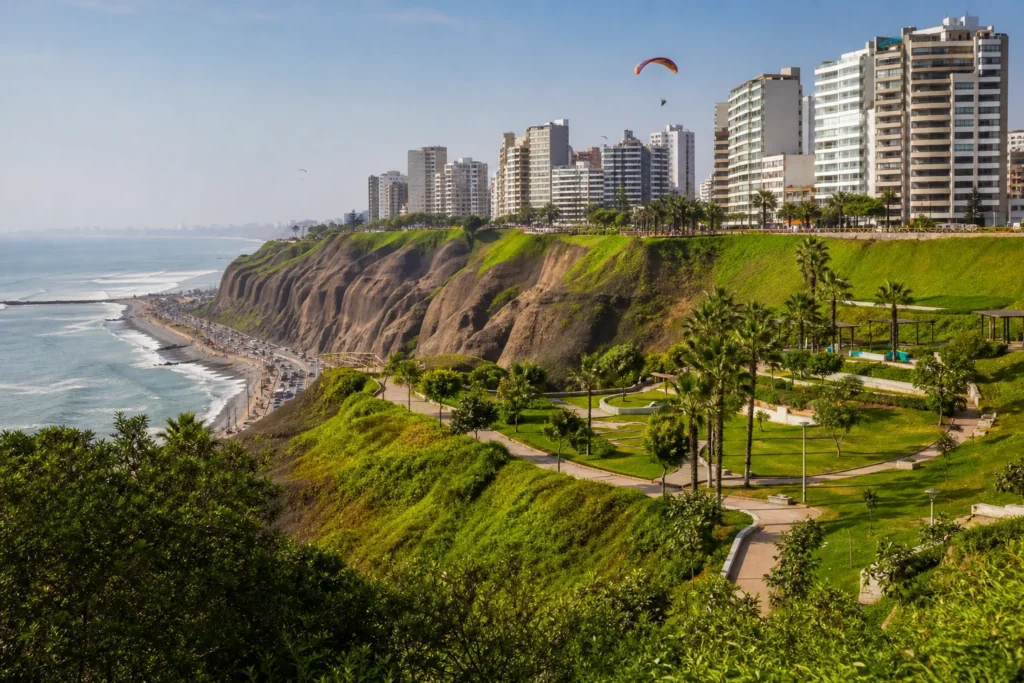
Lima sujungia Peru sluoksniuotą istoriją, pirmykštes kolekcijas ir Ramiojo vandenyno pakrantę viename metropoliteniniame rajone.
Istorinis centras aplink Plaza Mayor išlaiko ispanų kolonijinę miesto struktūrą. Museo Larco ir MALI kaupia svarbias prieškolumbines kolekcijas.
Huaca Pucllana ir Parque de las Leyendas leidžia pamatyti pakrantės prieškolumbinę architektūrą miesto erdvėse. Be to, Barranco ir Miraflores siūlo promenadas, galerijas ir gyvą gastronominę sceną, todėl Lima dažnai minima kaip kulinarinis vartai į Peru regioninę virtuvę.
Ką veikti Limoje, Peru
Lima sutelkia kolonijinius paminklus, muziejus, pajūrio promenadas ir prieškolumbinius miestelius kompaktiškame miesto audinyje. Toliau pateiktos vietos tinka trumpoms pusdienio išvykoms arba visai dienai Miraflores, Barranco ir Istoriniame centre.
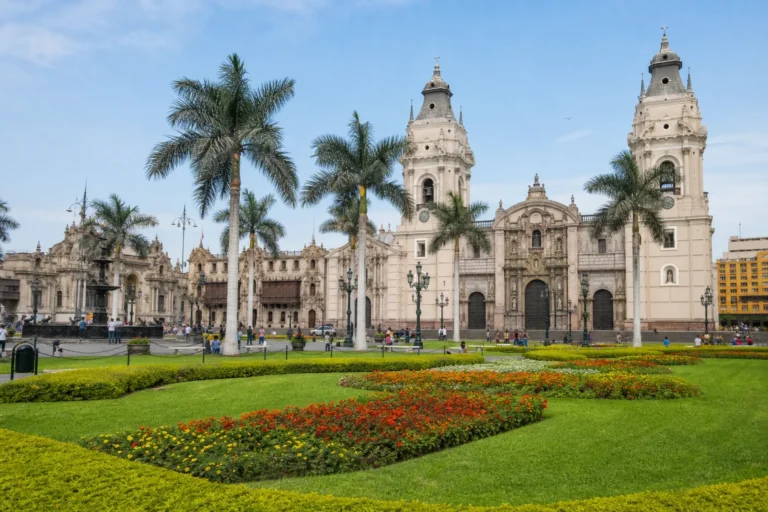
Historic Centre of Lima (Plaza Mayor)
The Historic Centre of Lima centers on the Plaza Mayor, the city’s foundational public square laid out by Francisco Pizarro in 1535.
The square remains surrounded by institutional buildings—the Government Palace, the Cathedral, the Archbishop’s Palace and the municipal hall—so a short walk here reads like a concentrated lesson in Lima’s colonial urban grid and civic history. Architectural styles around the plaza mix colonial, neoclassical and later restorations shaped by centuries of earthquakes and reconstructions.
Visitors should allow time to step into adjacent arcades and portals to appreciate carved doorways, courtyards and galleries.
Basilica Cathedral of Lima
The Basilica Cathedral of Lima dominates the Plaza Mayor and encapsulates the city’s religious and artistic history. Founded at the site where Francisco Pizarro placed the first stone in 1535, the cathedral’s fabric reflects successive reconstructions after major earthquakes, combining Renaissance proportions with Baroque, Rococo and Neoclassical elements.
Inside, the cathedral functions as both an active church and a museum: visitors encounter carved altarpieces, colonial paintings, ornate chapels, funerary chapels and crypts containing remains of prominent colonial figures.
Because it remains an active liturgical center, respect worship schedules and dress codes, and check the cathedral’s official visitor information for current access and exhibition details.
Museo Larco (Larco Museum)
Museo Larco occupies an 18th‑century vice‑royal mansion in Pueblo Libre and presents a private collection that interprets more than three millennia of Andean visual culture. Galleries group ceramics, textiles, metallurgy and ceremonial objects to illustrate social life, ritual practice and funerary custom across coastal and highland cultures.
A distinctive sequence of themed ceramics — including a contextual gallery of erotic pottery — helps visitors compare form and function through time.
The museum’s colonial courtyards, landscaped gardens and on‑site café add to the visit. As Museo Larco functions as both research center and public museum, check the museum’s official channels for guided tours, special programs and temporary exhibitions before you go.
Huaca Pucllana Site Museum
Huaca Pucllana is a pre‑Inca adobe pyramid and ceremonial complex set within modern Miraflores, where stepped earthen architecture rises amid urban streets.
Excavations have revealed plazas, canals and funerary areas; the site museum displays artifacts and interpretive panels that explain construction techniques, ritual architecture and the Lima culture’s use of the site between roughly the first and seventh centuries CE.
The visitor experience combines open‑air ruins with measured reconstructions and displays about excavation and conservation. Because Huaca Pucllana is managed as an active conservation project, guided tours and special activities change periodically—consult the site museum’s official information before visiting and consider pairing the stop with nearby Malecón walks.
Parque del Amor (Miraflores Malecón)
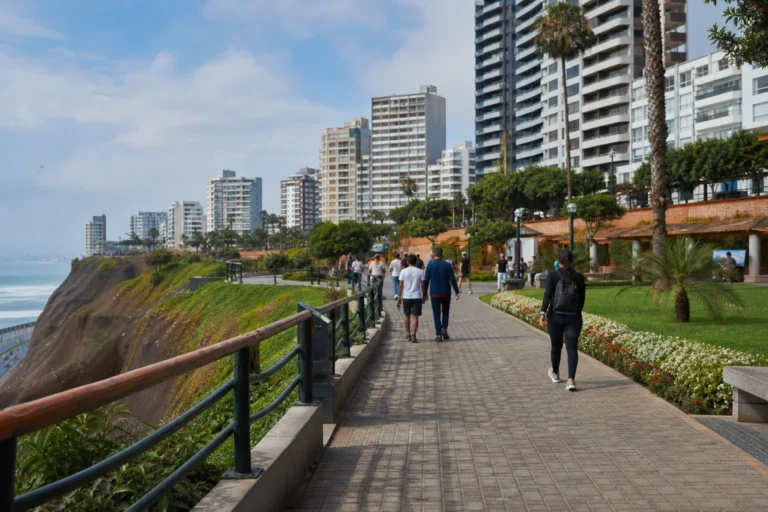
Perched on the cliff‑edge Malecón Cisneros, Parque del Amor is a small seaside park famed for Víctor Delfín’s large bronze‑and‑resin sculpture commonly called “El Beso,” and for its curved mosaic benches framing Pacific views. The park is a compact, highly photogenic viewpoint popular at sunset and a convenient stop on longer Malecón promenades.
The site functions as a modern civic composition linking public art, urban design and local identity. Expect wind and sun exposure on the bluff and no fixed museum services; combine Parque del Amor with adjacent Malecón paths for a fuller sense of Lima’s coastal promenade.
Barranco district and Puente de los Suspiros
Barranco is Lima’s compact bohemian quarter, known for atmospheric streets, murals, galleries and cafés clustered around a small valley that opens to the sea. The district’s human scale and pedestrian focus reward wandering: late‑19th and early‑20th houses, small plazas and an active arts scene give frequent discoveries on short detours.
At the neighborhood heart, the Puente de los Suspiros is a wooden pedestrian bridge that has been romanticized in local memory and music. It links higher streets with the valley and serves as a focal point for photographs, quiet reflection and nearby cultural venues.
Verify local programming and maintenance schedules before visiting and linger in cafés to absorb the district’s creative atmosphere.
Circuito Mágico del Agua (Parque de la Reserva)
Circuito Mágico del Agua is a choreographed fountain complex within Parque de la Reserva that stages illuminated water shows set to music. The circuit arranges multiple plazas and pools with distinct effects: walk‑through tunnels of falling water, arched jets, synchronized musical sequences and high vertical columns that create dramatic photographic moments, especially after dark.
The ensemble serves as a family‑oriented public attraction and reclaimed urban space, often busy on evenings and weekends. Expect splash zones and coastal breezes—bring a light jacket—and check official channels for ticketing, special events or temporary restrictions before you go.
Parque Kennedy (Miraflores)
Parque Kennedy is Miraflores’ lively central park and a convenient starting point for exploring nearby museums, restaurants and the Malecón. The park’s shaded paths, small lawns and rotonda attract artisans, street vendors and frequent performers, producing a dense hub of everyday commerce and social life.
Architecturally edged by cafés and shops, Kennedy hosts handicraft markets and seasonal municipal activities. Expect crowds at midday and in the evening; the park pairs well with short walks to Huaca Pucllana and coastal promenades for a quick, local slice of Miraflores life.
Parque de las Leyendas (zoological and archaeological park)
Parque de las Leyendas is Lima’s largest combined zoo and archaeological reserve, set in San Miguel and organized around themed zoological sectors, formal gardens and a recreational lagoon. The park showcases animals from Peru’s coast, highlands and Amazon alongside international species, and supports conservation and captive‑breeding programs.
Its distinctive feature is the overlay of ancient architecture: the Maranga archaeological complex within the grounds contains dozens of huacas (earthen monuments) and visible adobe walls. A small site museum displays finds and explains regional sequences, so visitors can combine wildlife viewing with an appreciation of Lima’s long human history.
Check municipal channels for current guided tours and access to archaeological trenches.
Geriausias metas vykti
Limos klimatas yra švelnus ir sausas, su mažai kritulių. Saulėčiausias laikotarpis paprastai trunka nuo maždaug lapkričio iki balandžio, kai pakrantės dangus aiškesnis ir geresnės lauko sąlygos.
Žiema (gegužė–spalis) atneša vėsesnius vėjus ir pastovią pajūrio rūką (garúa), tačiau vis tiek retai lyja.
Planuokite apsilankymus pajūrio parkuose ir archeologinėse vietose saulėtesniais mėnesiais aiškesniems vaizdams; muziejai ir kulinariniai užsiėmimai visada tinkami ištisus metus.
Kaip judėti po Limą
Limos centriniai turistiniai rajonai yra kompaktiški ir patogūs vaikščioti, ypač Miraflores, Barranco ir Istorinis centras. Ilgesniems pervežimams naudokite taksi ar programėlių paslaugas, 1-ąją metro liniją pietinėms zonoms arba Metropolitano BRT magistralę greitiems šiaurės–pietų perėjimams.
Viešieji autobusai ir 'combi' yra dažni, bet gali būti perpildyti ir ne tokie patikimi turistams. Naktį naudokite licencijuotus radijo taksi ar programėles, saugokite vertybes ir planuokite papildomą laiką piko metu.
Vieta
Lima, Peru žemėlapis
Interaktyvus žemėlapis įkeliamas tik pasirinkus jį peržiūrėti.
Planavimas ir praktika
Lima yra tankus pakrantės didmiestis; planuokite vizitus pagal rajonus (Historic Centre/Cercado, Miraflores, Barranco, San Isidro), kad sumažintumėte kelionės laiką.
Ilgesniems pervažiavimams naudokite 1-ąją metropoliteno liniją, Metropolitano BRT, licencijuotus miesto autobusus arba programėlių taksi; ryto ir vakaro piko metu palikite papildomo laiko dėl eismo.
Turėkite paso kopiją, vietinę SIM kortelę arba tarptinklinio ryšio paketą ir šiek tiek grynųjų (Peru soliais) smulkiems pirkiniams; daugelyje restoranų ir muziejų priimamos kortelės.
Jei įmanoma, rezervuokite ekskursijas į archeologines vietas kaip Huaca Pucllana ir Parque de las Leyendas bei pasitikrinkite oficialius puslapius dėl darbo laiko ar specialių renginių.
Vietiniai patarimai
Rajonai skiriasi: Miraflores siūlo Malecón pakrantės takus, parkus ir vidutinės klasės restoranus; Barranco — meno rajonas aplink Puente de los Suspiros; Cercado talpina Plaza Mayor ir pagrindines istorines vietas.
Muziejams, tokiems kaip Museo Larco, ir vietos muziejams rekomenduojama rezervuoti bilietus internetu arba pasitikrinti miesto svetaines dėl gido paslaugų. Valgykite gerai įvertintuose ir užimtose vietose, kad sumažintumėte maisto saugos riziką — ceviche yra specialitetas, kurį verta rinktis patikimuose restoranuose.
Pajūryje naudokite saulės kremą ir kepurę; saulė gali būti stipri net esant vėsiems vėjams. Išmokite pagrindinių ispaniškų frazių ir patvirtinkite taksi kainą arba prašykite įjungti taksometrą.
Dabartinės sąlygos
Dabartinis oras

Atnaujinta 2026-09-20 14:00
- Jaučiasi kaip
- 19°C / 66°F
- Šiandienos aukščiausia / žemiausia
- 21°C / 69°F · 17°C / 62°F
- Drėgmė
- 66%
- Vėjas
- ↙ 16 km/h
- Krituliai
- 0 mm
- Lietaus tikimybė
- 15%
- Vietos laikas
- 2026-09-20 14:13
Saugumas
Limoje dažniausiai pasitaiko smulkios vagystės (kišenvagystės, krepšių išplėšimai) tankiose turistų vietose ir viešajame transporte; saugokitės laikydami vertybes uždarytas, naudokite seifsą viešbučiuose ir nevilkite didelių pinigų sumų ar brangios technikos viešai. Laikykitės vietinių serenazgo ir Policía Nacional patarimų ir praneškite apie incidentus.
Pajūrio paplūdimiuose pagrindiniu sezonu yra gelbėtojai — maudykitės tik saugomose zonose ir laikykitės įspėjimų. Lima yra seisminei veiklai jautri zona: susipažinkite su evakuacijos maršrutais, ieškokite atvirų erdvių žemės drebėjimo metu ir turėkite pirmosios pagalbos priemonių rinkinį.