
Travel Guide
Plan your visit around Historic Centre of Lima, Basilica Cathedral of Lima, and more of Lima, Peru.
Discover the best things to do in Lima, Peru, from signature sights to memorable local experiences.
The city delivers a compact mix of colonial plazas, seaside promenades, major museums and accessible archaeological sites that can be combined into short walking loops or longer district‑based days.
Why Visit Lima
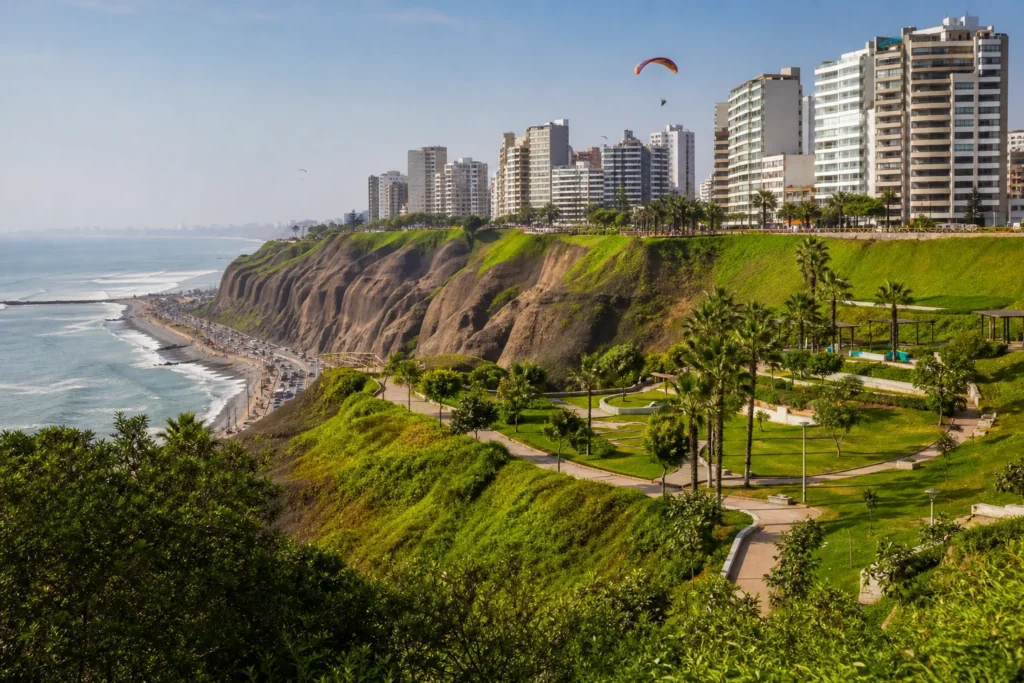
Lima concentrates Peru’s layered history, world‑class pre‑Hispanic collections and Pacific coastline within a single metropolitan area.
The Historic Centre around Plaza Mayor preserves Spanish colonial urban form. Museo Larco and MALI present deep archaeological and artistic holdings.
Huaca Pucllana and Parque de las Leyendas display coastal pre‑Hispanic architecture within city neighborhoods. And Barranco and Miraflores combine seaside promenades, galleries and a lively dining scene that has made Lima a culinary gateway to regional Peruvian cuisines.
Top Things to Do in Lima, Peru
Lima concentrates colonial monuments, museums, seaside promenades and pre‑Hispanic sites within a compact city footprint. The following highlights make easy half‑day or full‑day loops from central districts such as Miraflores, Barranco and the Historic Centre.
Historic Centre of Lima (Plaza Mayor)
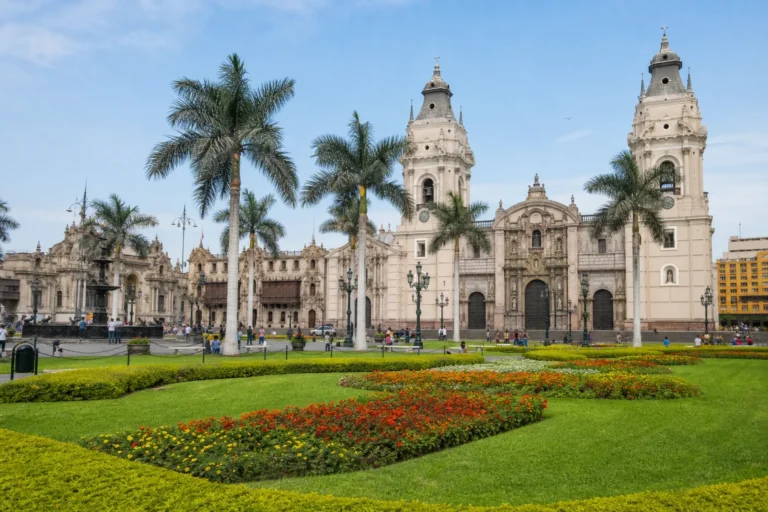
The Historic Centre of Lima centers on the Plaza Mayor, the city’s foundational public square laid out by Francisco Pizarro in 1535.
The square remains surrounded by institutional buildings—the Government Palace, the Cathedral, the Archbishop’s Palace and the municipal hall—so a short walk here reads like a concentrated lesson in Lima’s colonial urban grid and civic history. Architectural styles around the plaza mix colonial, neoclassical and later restorations shaped by centuries of earthquakes and reconstructions.
Visitors should allow time to step into adjacent arcades and portals to appreciate carved doorways, courtyards and galleries.
Basilica Cathedral of Lima
The Basilica Cathedral of Lima dominates the Plaza Mayor and encapsulates the city’s religious and artistic history. Founded at the site where Francisco Pizarro placed the first stone in 1535, the cathedral’s fabric reflects successive reconstructions after major earthquakes, combining Renaissance proportions with Baroque, Rococo and Neoclassical elements.
Inside, the cathedral functions as both an active church and a museum: visitors encounter carved altarpieces, colonial paintings, ornate chapels, funerary chapels and crypts containing remains of prominent colonial figures.
Because it remains an active liturgical center, respect worship schedules and dress codes, and check the cathedral’s official visitor information for current access and exhibition details.
Museo Larco (Larco Museum)
Museo Larco occupies an 18th‑century vice‑royal mansion in Pueblo Libre and presents a private collection that interprets more than three millennia of Andean visual culture. Galleries group ceramics, textiles, metallurgy and ceremonial objects to illustrate social life, ritual practice and funerary custom across coastal and highland cultures.
A distinctive sequence of themed ceramics — including a contextual gallery of erotic pottery — helps visitors compare form and function through time.
The museum’s colonial courtyards, landscaped gardens and on‑site café add to the visit. As Museo Larco functions as both research center and public museum, check the museum’s official channels for guided tours, special programs and temporary exhibitions before you go.
Huaca Pucllana Site Museum
Huaca Pucllana is a pre‑Inca adobe pyramid and ceremonial complex set within modern Miraflores, where stepped earthen architecture rises amid urban streets.
Excavations have revealed plazas, canals and funerary areas; the site museum displays artifacts and interpretive panels that explain construction techniques, ritual architecture and the Lima culture’s use of the site between roughly the first and seventh centuries CE.
The visitor experience combines open‑air ruins with measured reconstructions and displays about excavation and conservation. Because Huaca Pucllana is managed as an active conservation project, guided tours and special activities change periodically—consult the site museum’s official information before visiting and consider pairing the stop with nearby Malecón walks.
Parque del Amor (Miraflores Malecón)
Perched on the cliff‑edge Malecón Cisneros, Parque del Amor is a small seaside park famed for Víctor Delfín’s large bronze‑and‑resin sculpture commonly called “El Beso,” and for its curved mosaic benches framing Pacific views. The park is a compact, highly photogenic viewpoint popular at sunset and a convenient stop on longer Malecón promenades.
The site functions as a modern civic composition linking public art, urban design and local identity. Expect wind and sun exposure on the bluff and no fixed museum services; combine Parque del Amor with adjacent Malecón paths for a fuller sense of Lima’s coastal promenade.
Barranco district and Puente de los Suspiros
Barranco is Lima’s compact bohemian quarter, known for atmospheric streets, murals, galleries and cafés clustered around a small valley that opens to the sea. The district’s human scale and pedestrian focus reward wandering: late‑19th and early‑20th houses, small plazas and an active arts scene give frequent discoveries on short detours.
At the neighborhood heart, the Puente de los Suspiros is a wooden pedestrian bridge that has been romanticized in local memory and music. It links higher streets with the valley and serves as a focal point for photographs, quiet reflection and nearby cultural venues.
Verify local programming and maintenance schedules before visiting and linger in cafés to absorb the district’s creative atmosphere.
Circuito Mágico del Agua (Parque de la Reserva)
Circuito Mágico del Agua is a choreographed fountain complex within Parque de la Reserva that stages illuminated water shows set to music. The circuit arranges multiple plazas and pools with distinct effects: walk‑through tunnels of falling water, arched jets, synchronized musical sequences and high vertical columns that create dramatic photographic moments, especially after dark.
The ensemble serves as a family‑oriented public attraction and reclaimed urban space, often busy on evenings and weekends. Expect splash zones and coastal breezes—bring a light jacket—and check official channels for ticketing, special events or temporary restrictions before you go.
Parque Kennedy (Miraflores)
Parque Kennedy is Miraflores’ lively central park and a convenient starting point for exploring nearby museums, restaurants and the Malecón. The park’s shaded paths, small lawns and rotonda attract artisans, street vendors and frequent performers, producing a dense hub of everyday commerce and social life.
Architecturally edged by cafés and shops, Kennedy hosts handicraft markets and seasonal municipal activities. Expect crowds at midday and in the evening; the park pairs well with short walks to Huaca Pucllana and coastal promenades for a quick, local slice of Miraflores life.
Parque de las Leyendas (zoological and archaeological park)
Parque de las Leyendas is Lima’s largest combined zoo and archaeological reserve, set in San Miguel and organized around themed zoological sectors, formal gardens and a recreational lagoon. The park showcases animals from Peru’s coast, highlands and Amazon alongside international species, and supports conservation and captive‑breeding programs.
Its distinctive feature is the overlay of ancient architecture: the Maranga archaeological complex within the grounds contains dozens of huacas (earthen monuments) and visible adobe walls. A small site museum displays finds and explains regional sequences, so visitors can combine wildlife viewing with an appreciation of Lima’s long human history.
Check municipal channels for current guided tours and access to archaeological trenches.
Best Time to Visit Lima
Lima’s climate is mild and arid with little rainfall. The sunniest stretch runs roughly November to April, when coastal skies clear and outdoor views are best.
Winter (May. October) brings cooler breezes and persistent coastal haze (garúa) but still few rainy days.
Plan seaside-park and archaeological visits for the sunnier months for clearer views, while museums and culinary activities remain comfortable year‑round.
Getting Around Lima
Central Lima’s main visitor districts are compact and walkable, especially Miraflores, Barranco and the Historic Centre. For longer transfers use taxis or ride‑hailing apps, the Line 1 metro to southern neighborhoods, or the Metropolitano BRT corridor for fast north–south trips.
Public buses and combis run frequently but can be crowded and less predictable for visitors. Use official radio or app‑based taxis at night, keep valuables secure, and expect delays during peak traffic hours.
Location
Map of Lima, Peru
The interactive map loads only when you choose to view it.
Plan Your Visit to Lima
Plan visits by district (Cercado/Historic Centre, Miraflores, Barranco, San Isidro) to limit travel time. Use Line 1 metro, the Metropolitano BRT, licensed city buses, or app‑based taxis for longer trips; allow extra time for rush‑hour traffic.
Carry a copy of your passport, a local SIM or roaming data, and small cash (Peruvian sol) for markets and vendors. Cards are widely accepted in restaurants and museums.
Book guided visits for archaeological sites such as Huaca Pucllana and for Parque de las Leyendas when possible, and check official sites for changing opening times or special programs.
Local Tips for Lima
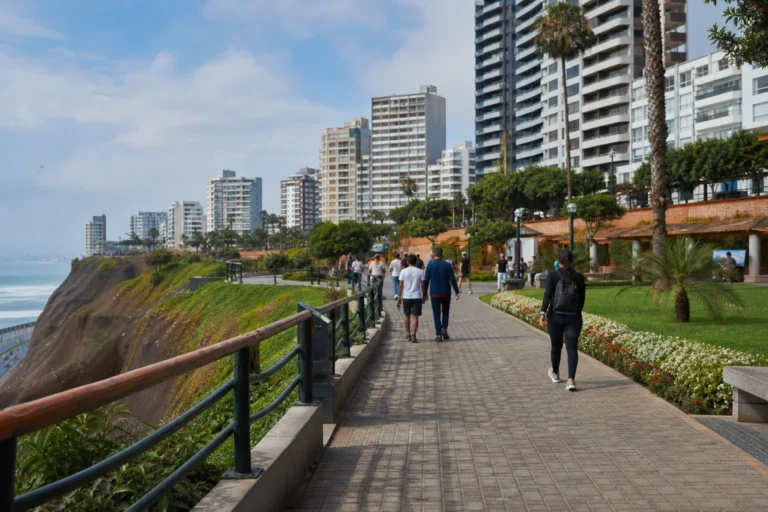
Neighborhoods vary: Miraflores has coastal walking paths (Malecón), parks and mid‑range dining. Barranco is the arts district centered on the Puente de los Suspiros.
And Cercado contains Plaza Mayor and major historic sites. For museums such as Museo Larco and site museums, reserve online or check municipal visitor pages for guided‑tour options.
Eat at busy, well‑reviewed restaurants to reduce food‑safety risk—ceviche is a specialty best ordered at reputable establishments. Use sunscreen and a hat along the coast; learn basic Spanish phrases and confirm taxi fares or request meter use.
Live conditions
Current Weather

Updated 2026-09-21 07:00
- Feels like
- 17°C / 63°F
- Today’s high / low
- 22°C / 71°F · 16°C / 61°F
- Humidity
- 81%
- Wind
- ↙ 5 km/h
- Precipitation
- 0.01 mm
- Chance of rain
- 17%
- Local time
- 2026-09-21 07:14
Safety in Lima
Petty theft such as pickpocketing and bag snatches occurs in crowded tourist areas and on public transit; mitigate risk by keeping valuables concealed, using hotel safes, and avoiding displaying large sums of cash or cameras. Follow guidance from municipal serenazgo and the Policía Nacional and report incidents promptly.
Coastal beaches have lifeguard coverage in peak season—swim in guarded zones and heed posted warnings. Lima lies in a seismic zone: learn evacuation routes for buildings, move to open areas during tremors, and carry a basic first‑aid kit.