
سفر گائیڈ
نمایاں مقامات، نقشے اور آسان سفر‑مشورے برائے Arequipa۔
Arequipa میں کرنے کی چیزیں تلاش کر رہے ہیں؟ یہ گائیڈ بہترین مقامات، مقامی مشورے، نقشے اور موسم کے معلومات فراہم کرتا ہے۔
شہر کے یونیسکو‑شاہکار تاریخی مرکز سے آغاز کریں، جو زیادہ تر آتش فشانی سِلر پتھر سے تعمیر ہے اور El Misti، Chachani اور Pichu Pichu آتش فشاں کے مناظروں سے گھرا ہوا ہے۔
Arequipa کو Colca Canyon اور قریبی آتش فشاں نقطہ نظر کے لیے بطور بیس استعمال کریں مگر بلندی ~2,300 میٹر کی وجہ سے پہلے دن آرام کو ترجیح دیں۔

کِی جائیں اور کیوں
Arequipa میں سفید سِلر باروک فنِ تعمیر، قریب کے ڈرامائی ہائی لینڈ مناظر اور Colca Canyon تک آسان رسائی ملتی ہے۔ شہر مصروف بازاروں، کریییولو اور اینڈین کھانوں کے ساتھ ثقافتی مرکز اور علاقائی سیر کے لیے عملی بنیاد فراہم کرتا ہے۔
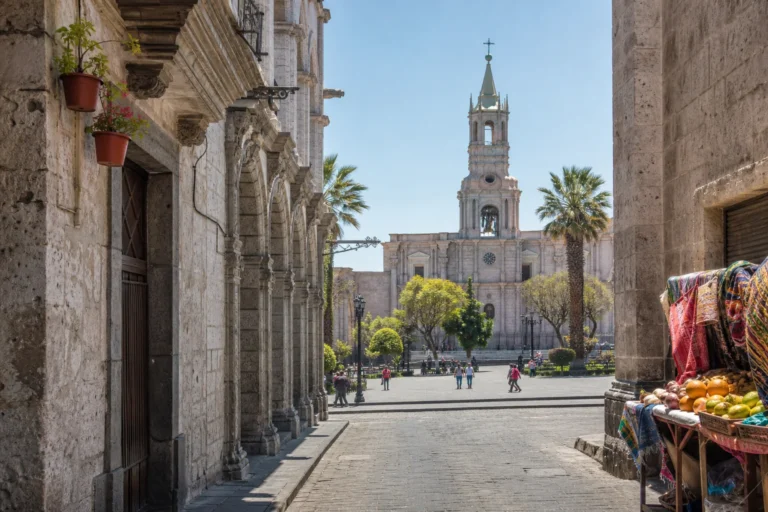
Arequipa میں کرنے کی چیزیں
Arequipa کا مختصر یونیسکو مرکز اور آس پاس کے ہائی لینڈ مناظر بہترین تجربات یکجا کرتے ہیں: سفید سِلر فنِ تعمیر، منظرنامہ مرشد، مصروف بازار اور Colca Canyon اور El Misti کے گیٹ ویز۔
Plaza de Armas (Arequipa)
The Plaza de Armas is the historic main square and social heart of Arequipa’s UNESCO‑declared historic centre.
Visitors experience a broad, open square paved and centred on a three‑tier bronze fountain topped by the Tuturutu figure, and framed on all sides by white sillar (volcanic stone) buildings, arched portales (Portals of Flores, San Agustín and the Municipalidad) and important churches — the plaza provides a compact introduction to the city’s colonial architecture and volcanic‑stone craftsmanship.
Its value lies in the ensemble: visual views of the cathedral and surrounding porticos, frequent street life, cafés and photo opportunities toward the volcanoes that form the skyline.
Practical visit notes: the Plaza is a public outdoor space (no entrance fee) but municipal events, demonstrations, markets or conservation works sometimes restrict parts of it; confirm large‑event closures or temporary works with Arequipa municipal or official tourism sources before planning a timed visit.
Basilica Cathedral of Arequipa
The Basílica Catedral de Arequipa sits on the north side of the Plaza de Armas and is one of the city’s principal religious and historic monuments, built largely in local white sillar and rebuilt in neoclassical form after earlier damage.
Visitors can appreciate the cathedral’s façade, interior altar and rich ecclesiastical furnishings (notable historic pulpit and a large Belgian organ) and, where available, the Cathedral Museum and access to the towers/campanile for panoramic views.
Practical visit notes: the cathedral complex is an active church and museum administration may require guided‑visit admission or limit access to certain areas (for example campaniles, museum rooms or services) and the building may be subject to conservation, event or liturgical closures; check the cathedral’s official communications or the cathedral museum contact before visiting to confirm access, tour requirements and any temporary restrictions.
Monasterio de Santa Catalina (Santa Catalina Monastery)
Identity and why it matters: A large, walled colonial convent complex in Arequipa’s historic centre often described as a “city within a city,” the Monasterio de Santa Catalina preserves streets, plazas, painted walls and domestic spaces that illustrate female monastic life and colonial urban design.
Distinctive visitor experience: Walkable cloisters, colorful alleys and courtyards, cloistered cells and chapels give a strong sense of scale and texture; interpretive panels, an audio‑guide app (multiple languages) and optional theatrical or school programs add context.
Practical visit implications (verified‑source points): The monastery operates as a museum with paid admission and offers online and on‑site ticketing; guided tours are available but optional; visitor services include a café, lockers and a souvenir shop.
Because it is a historic monument and an active cultural site, access can be limited by conservation work, special events or religious activities—confirm current closure notices, ticketing rules and any photographer/filming restrictions on the monastery’s official site or contact before planning a timed visit.
سرکاری Monasterio de Santa Catalina (Santa Catalina Monastery) ویب سائٹ →
Museo Santuarios Andinos (Juanita mummy)
Identity and why it matters: The Museo Santuarios Andinos (University of Santa María) houses high‑value archaeological material from Andean high‑altitude sacrifice sites, most famously the frozen/mummified Inca child known as Juanita (the “Dama del Ampato”), together with her funerary offerings and interpretive displays about capacocha ritual, archaeology and conservation.
Distinctive visitor experience: The museum’s exhibition presents the mummy and associated objects in controlled display conditions with contextual panels that explain the discovery, scientific study and cultural significance; the collection gives rare, close‑up insight into Inca ritual practice and Andean sacred landscapes.
Practical visit implications (verified‑source points): The museum is managed by the Universidad Católica de Santa María and public access, including whether Juanita is on display, can be seasonal or subject to conservation, research or loan arrangements—some sources note the mummy is exhibited part of the year—so visitors should confirm exhibit status and any special entry requirements with the museum’s official communications before travel.
The museum’s central location in Arequipa means a visit is compact and typically paired with other historic‑centre sites, but access to the mummy can change for preservation or scientific reasons; check the university museum’s official channels for the latest visitor notices.
Mirador de Yanahuara
Identity and distinctive value: A nineteenth‑century white sillar (volcanic ashlar) arcaded lookout on the hill above the Yanahuara district, the Mirador de Yanahuara is one of Arequipa’s most iconic viewpoints — each carved arch frames photographic views of the city and the three volcanoes (Misti, Chachani, Pichu Pichu) and many arches bear engraved quotations by local writers.
What visitors experience: A short, walkable plaza and arcades that function as a panoramic terrace over the historic centre; informal artisan stalls and nearby cafés make this a compact stop for photos, city‑scape orientation and short neighborhood walks that include the adjacent Iglesia de San Juan Bautista.
Practical visit implications and verified‑source points: The mirador is a public, primarily outdoor municipal viewpoint administered by the Yanahuara district (no museum building or required ticketing for normal visits), but local authorities manage activities there — filming or professional photo shoots typically require a municipal permit and larger events or municipal works can temporarily restrict access.
Because the site is open to the elements and accessed on foot from narrow streets, visitors should verify any current municipal notices (for closures, conservation work or scheduled events) with Yanahuara municipal tourism information before planning a timed visit.
Mercado San Camilo
Identity and distinctive value: The Mercado San Camilo is Arequipa’s historic central market and principal public abastos (wholesale/retail) complex, long established as the city’s main food, produce and specialist‑goods marketplace.
What visitors experience: A large, active indoor market with tightly packed stalls selling fresh Andean produce, meats, dairy, local snacks and prepared foods, along with vendors of textiles, souvenirs and regional ingredients; the market is a strong place for local street‑food sampling, observing daily commerce and sourcing regional products used in Arequipa cuisine.
Practical visit implications and verified‑source points: San Camilo is a functioning market under municipal oversight and not a static museum — it can be busy, with delivery traffic and areas limited to traders; health, safety or municipal sanitation measures, temporary renovations or market‑management rules may restrict access to some sections or require following posted hygiene rules.
Visitors should treat it as an active local marketplace (carry small change, expect crowding, respect vendor space) and confirm any large‑scale closures, renovation projects or special‑access rules with municipal market authorities or official tourism sources before planning a focused visit.
Iglesia de la Compañía (La Compañía)
Identity and visitor value: A principal seventeenth‑century Jesuit church in Arequipa’s historic centre, the Iglesia de la Compañía (commonly called La Compañía) is notable for its white sillar (volcanic ashlar) construction, richly carved baroque‑mestizo façade and interior retablos and murals that mix European and pre‑Hispanic motifs.
What visitors experience: A compact, walkable church and cloister complex adjacent to the Plaza de Armas where visitors can appreciate sculpted portals, vaulted sillar galleries, gilded altarpieces and a polychrome sacristy, all offering strong close‑range examples of Arequipa stonework and colonial religious art.
Setting and significance: The complex is part of Arequipa’s UNESCO‑declared historic centre and represents the Jesuit presence and baroque mestizo craftsmanship that shape much of the city’s architectural identity.
Practical visit implications: The site functions as an active church and cultural monument — general entry to the church is normally open to the public but specific spaces (such as the sacristy, chapels or guided‑visit areas) may require a ticket or be limited during liturgies, conservation work or special events.
The complex is managed by church and diocesan authorities and maintains an official visitor/ticketing channel; visitors should verify current exhibit/access status, any required ticketing or guided‑visit rules, and temporary closures with the church’s official contact before planning a timed indoor visit.
Accessibility and safety notes: access involves short paved approaches from the Plaza de Armas; parts of the building may have steps or narrow passages typical of historic churches, and photographic or professional filming permissions are sometimes managed by municipal or ecclesiastical authorities.
Valle del Colca / Colca Canyon (regional day trips)
Identity and visitor value: The Colca Valley (Valle del Colca) contains one of the world’s deepest canyon systems and a living Andean cultural landscape of high‑altitude villages, terraced agriculture and volcanic backdrops; the canyon is especially famous for the Cruz del Cóndor viewpoint where Andean condors are commonly observed in the morning thermals.
What visitors experience: Typical day‑trip itineraries from Arequipa include early‑morning departures across high altiplano, scenic stops at viewpoints and villages, a visit to Cruz del Cóndor for condor viewing and short walks around village and rim viewpoints; longer options add an overnight in Chivay, multi‑day treks to the canyon floor or guided walks between rim villages.
Practical access and booking implications: The canyon is reached by multi‑hour road travel from Arequipa and most visitors travel with organised operators or private transfers — for safety and convenience guided day tours or multi‑day packages are recommended because of long driving times, variable road and weather conditions, and the logistical needs of remote highland services.
There is no unique national‑park style permit that replaces local entry and service arrangements, but visitor management at popular viewpoints (for example Cruz del Cóndor), use of established trails, and parking/entrance procedures are controlled locally; some sites and thermal pools are managed at the district level and may charge entrance or facility fees, so confirm those details with your chosen operator or official tourism sources before travel.
Health and seasonal considerations: The route climbs to high elevations where altitude‑related illness is possible — allow acclimatization time in Arequipa, plan for early starts and cold mornings, and carry water, sun protection and layered clothing.
Operational cautions: Road, weather and seasonal maintenance can alter schedules and access (unsealed mountain roads, landslips or heavy rain can affect transfers), and professional operators monitor early‑morning condor flight windows that concentrate visits; check current road conditions, operator cancellation policies and whether advance booking is required for your preferred viewpoint, lodge or trek segment before committing an itinerary.
سرکاری Valle del Colca / Colca Canyon (regional day trips) ویب سائٹ →
Volcán El Misti (viewpoints and approaches)
Identity and why it matters: El Misti (Misti) is the near‑perfect stratovolcano that defines Arequipa’s skyline and a regional landmark — a highly visible volcanic cone rising above the city whose profile frames many of Arequipa’s best photographic views and which also supports high‑altitude trekking and mountaineering programs.
Distinctive visitor experiences: For non‑climbers the most rewarding experiences are short, low‑risk viewpoint visits and road/plateau approaches that show the volcano’s full profile (for example the Mirador de Yanahuara within the city, high roadside lookouts on the Arequipa–Colca/Patapampa route, and viewpoints around the El Aguada/Agua Blanca approach).
For walkers and mountaineers, the common visitor experience is a guided 2‑day trek: 4WD access to the El Aguada trailhead, a first day to high camp on the volcano’s upper slopes, and a pre‑dawn summit push to the crater rim (summit ~5,822 m).
The route is largely non‑technical in normal dry‑season conditions but is physically demanding and dominated by altitude and steep scree.
Practical access, safety and booking implications (verified‑style guidance): – Summit attempts are a high‑altitude objective that require sensible acclimatization (spend days in Arequipa at ~2,335 m first) and appropriate clothing, sleeping systems and food; altitude illness is the primary hazard. – Most local operator guidance and mountaineering information note that a registered guide and organised service are required or strongly enforced for safety, route finding and rescue logistics; guided 2‑day itineraries with gear rental, camp support and rescue plans are the normal visitor option. – Technical gear (crampons, ice‑axe) is not usually necessary in the dry season but may be required after snow or in unusual conditions; guides and operators supply or advise on equipment. – There are multiple non‑climbing viewpoint options inside Arequipa (Yanahuara arches, rooftop cafés, nearby miradores and roadside high points) that permit excellent volcano photography and require no special permits for ordinary visitors; professional filming or large shoots may require municipal permits. – Because El Misti is a volcano and part of larger public lands, access rules, trail status, and organised‑tour requirements can change for reasons including safety, conservation, volcanic monitoring or local regulation.
Before planning a climb or an organised approach, verify whether there are active access restrictions, mandatory permits, or temporarily suspended ascents with official Peruvian authorities (regional tourism offices, municipal tourism departments) or directly with certified local guiding agencies; do not assume access is open without confirmation.
Why this matters for planning: a short viewpoint stop in the city gives the classic Misti experience with minimal risk; a summit attempt is a serious, altitude‑driven expedition that is normally undertaken with a registered guide over two days and must be planned around acclimatisation, seasonal weather (driest May–October), and up‑to‑date safety/closure notices.
سرکاری Volcán El Misti (viewpoints and approaches) ویب سائٹ →
کب جانا بہتر ہے
سب سے خشک اور قابلِ بھروسہ موسم اپریل سے نومبر تک ہوتا ہے، جب آسمان صاف اور آتش فشاں کے مناظر اچھے ہوتے ہیں۔
مارچ اور دسمبر عبوری مہینے ہیں جن میں کبھی کبھار بارش ہو سکتی ہے۔ جنوری تا مارچ برفانی/بارانی موسمیات کا موسم ہے اور نان پکی ہائی لینڈ سڑکیں متاثر ہو سکتی ہیں؛ ٹریک بک کرنے سے پہلے مقامی موسمی پیشگوئیاں اور سڑک نوٹس چیک کریں۔
شہر میں گھومنا
یونیسکو تاریخی مرکز پیدل گھومنے کے لیے بہت موزوں ہے؛ Plaza de Armas، Santa Catalina اور La Compañía آسان پیدل حلقے میں ہیں۔
طویل فاصلوں کے لیے رجسٹرڈ ٹیکسی، کوレットوس یا ٹور وین استعمال کریں۔ بیشتر Colca ٹور ذاتی وین یا ٹورسٹ بس سے روانہ ہوتے ہیں؛ نقد چھوٹے نوٹ رکھیں اور کرایہ پہلے طے کریں۔

مقام
Arequipa, Peru کا نقشہ
انٹرایکٹو نقشہ صرف آپ کے اسے دیکھنے کا انتخاب کرنے پر لوڈ ہوتا ہے۔
دورہ منصوبہ بندی کریں
Arequipa کا بلندی تقریباً 2,300 میٹر ہے؛ پہلے دن آرام کریں، پانی زیادہ پئیں اور زیادہ جسمانی مشقت سے پرہیز کریں۔
مُقدّس عمارتوں، میوزیم اور خانقاہوں کی کھُلن یا ٹکٹ کی شرائط جانچنے کے لیے متعلقہ اداروں یا اپنے ہوٹل سے رابطہ کریں۔ Colca یا آتش فشاں کے دوروں کے لیے ایسے آپریٹرز منتخب کریں جو آکسیجن اور ریسکیو پلان فراہم کرتے ہیں۔
مقامی مشورے
یونیسکو تاریخی مرکز کو اپنا بیس رکھیں — زیادہ تر دیدنی جگہیں، ٹور ایجنسیاں اور خدمات یہاں مرتکز ہیں۔ سِلر پتھروں والی سڑکوں کے لیے مضبوط فلیٹ جوتے پہنیں اور سورج سے بچاؤ کے لیے چشمہ، سن اسکرین اور ٹوپی ساتھ لیں۔
Colca اور Misti کے ٹور پہلے سے بک کریں اور دیر رات واپسی کے لیے لائسنس یافتہ ٹیکسی یا رائیڈ ایپس استعمال کریں۔ تپائی اور گائیڈز کو چِھوٹ دینے کے لیے تھوڑی نقد رقم رکھیں۔
موجودہ حالات
موجودہ موسم

تازہ کاری 2026-09-20 19:00
- محسوس درجہ حرارت
- 12°C / 54°F
- آج زیادہ / کم
- 23°C / 73°F · 10°C / 50°F
- نمی
- 37%
- ہوا
- ↖ 4 km/h
- بارش
- 0 mm
- بارش کا امکان
- 0%
- مقامی وقت
- 2026-09-20 19:12
حفاظت
عمومی طور پر Arequipa سیاحوں کے لیے محفوظ ہے مگر بازاروں اور بس ٹرمینلز جیسے رش والے مقامات میں چوری کا خیال رکھیں۔ قیمتی اشیاء محفوظ رکھیں، دستاویزات کی نقول ساتھ رکھیں اور رات میں باضابطہ ٹرانسپورٹ ترجیح دیں۔
اونچائی اور آتش فشانی/زلزلہ خیزی کے پہلوؤں کو دھیان میں رکھیں؛ بلند مقام کے سفر کے لیے لائسنس یافتہ گائیڈز استعمال کریں اور یاد رکھیں کہ مذہبی و ثقافتی عمارتوں تک رسائی ادارتی فیصلوں سے متاثر ہو سکتی ہے۔