
Travel Guide
Plan your visit around Plaza de Armas, Basilica Cathedral of Arequipa, and more of Arequipa, Peru.
Discover the best things to do in Arequipa, Peru, from signature sights to memorable local experiences.
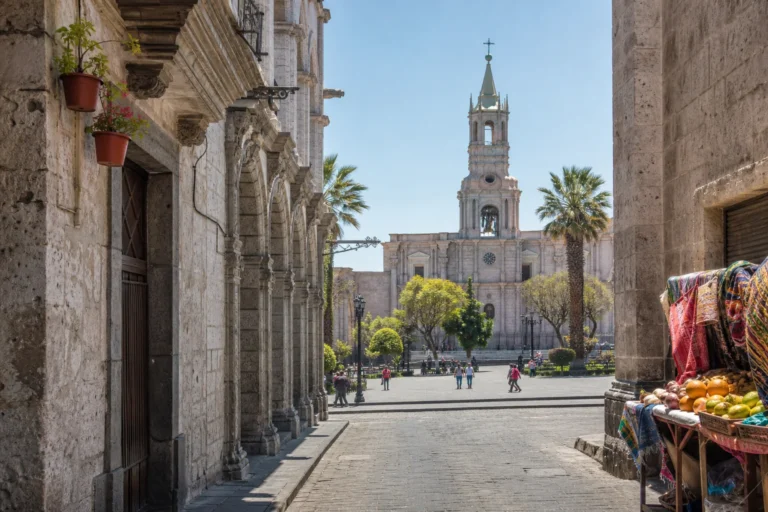
Start in the UNESCO‑listed historic centre of the ‘White City,’ built largely from volcanic sillar stone and framed by the snow‑capped volcanoes El Misti, Chachani and Pichu Pichu. The compact downtown is ideal for walking between the Plaza de Armas, cloistered convents and museums.
Use Arequipa as a base for guided day trips to Colca Canyon and nearby volcano viewpoints while allowing time to acclimatize to the ~2,300 m elevation.

Why Visit Arequipa
Arequipa blends exceptional colonial sillar architecture concentrated in a compact UNESCO centre with immediate access to dramatic highland landscapes and Colca Canyon. The city offers authentic urban life — bustling markets, criollo and Andean cuisine — and acts as a practical hub for one‑ to multi‑day regional excursions.
Top Things to Do in Arequipa, Peru
Arequipa’s compact UNESCO historic centre and nearby highland landscapes concentrate the city’s best experiences: colonial sillar architecture, viewpoint promenades, lively markets and gateways to Colca Canyon and El Misti.
Plaza de Armas (Arequipa)
The Plaza de Armas is Arequipa’s historic main square and the social heart of the UNESCO historic centre. Paved around a central bronze fountain, it is framed by white sillar buildings, arched porticos and key churches.
The plaza offers strong photo views of the cathedral and the volcano skyline. It is public and free, though municipal events or conservation works can restrict parts of it.
Basilica Cathedral of Arequipa
The Basílica Catedral de Arequipa sits on the north side of the Plaza de Armas and is a principal religious and historic monument. Built in local white sillar and rebuilt in neoclassical form, it houses notable altars, a historic pulpit and a cathedral museum.
Access to towers or museum rooms can be limited during liturgies or conservation work, so confirm opening and guided‑visit requirements before visiting.
Monasterio de Santa Catalina (Santa Catalina Monastery)
The Monasterio de Santa Catalina is a large, walled colonial convent often described as a “city within a city.” Walkable cloisters, colorful alleys, chapels and domestic spaces illustrate female monastic life and colonial urban design. The site operates as a museum with paid admission, online and on‑site ticketing, optional guided tours and visitor services.
Check the monastery’s official site for current notices and ticket rules.
Official Monasterio de Santa Catalina (Santa Catalina Monastery) website →
Museo Santuarios Andinos (Juanita mummy)
The Museo Santuarios Andinos (Universidad Católica de Santa María) houses high‑altitude archaeological material, most famously the frozen Inca child known as Juanita. The museum presents the mummy and associated objects in controlled display conditions with contextual interpretation of capacocha ritual.
Public display can be seasonal or subject to conservation, research or loans; confirm exhibit status with the museum before visiting.
Mirador de Yanahuara
The Mirador de Yanahuara is a nineteenth‑century white sillar arcaded viewpoint above the Yanahuara district. Each carved arch frames views of the city and the volcanoes Misti, Chachani and Pichu Pichu.
The small plaza and arcades are ideal for photos and short neighborhood walks. Municipal rules govern filming and large events, so check Yanahuara district notices for restrictions.
Mercado San Camilo
Mercado San Camilo is Arequipa’s historic central market and the main food and goods hub. Tightly packed stalls sell fresh Andean produce, meats, dairy, snacks, regional ingredients and crafts.
It’s an excellent place for street‑food sampling and to observe daily commerce. Treat it as an active market: carry small change, expect crowding and check municipal notices for renovations or sanitation rules.
Iglesia de la Compañía (La Compañía)
The Iglesia de la Compañía (La Compañía) is a seventeenth‑century Jesuit church notable for its carved white sillar façade and baroque‑mestizo interior altarpieces and murals. Located near the Plaza de Armas, it offers close examples of Arequipa stonework and colonial religious art.
The site functions as an active church and historic monument; some spaces may require tickets or be limited during services.
Valle del Colca / Colca Canyon (regional day trips)
The Colca Valley and Colca Canyon are major regional day‑trip destinations from Arequipa, famed for deep canyon scenery, terraced agriculture and the Cruz del Cóndor condor viewpoint.
Typical day trips include early departures, scenic stops and short rim walks; many visitors choose guided day tours or multi‑day packages because of long road times and variable conditions. Allow acclimatization time in Arequipa and confirm operator details and current road conditions before travel.
Official Valle del Colca / Colca Canyon (regional day trips) website →
Volcán El Misti (viewpoints and approaches)
Volcán El Misti is the near‑perfect stratovolcano that defines Arequipa’s skyline. Non‑climbers can enjoy city viewpoints and roadside lookouts for dramatic photos.
Mountaineers typically undertake guided 2‑day treks with a high camp and pre‑dawn summit push to about 5,822 m. Summit attempts are altitude‑driven expeditions requiring acclimatization, registered guides and clear rescue plans—verify access rules, permits and operator arrangements before planning a climb.
Official Volcán El Misti (viewpoints and approaches) website →
Best Time to Visit Arequipa
The driest, most reliable travel conditions run from April through November, with clear skies and strong volcano views. March and December are transitional months with occasional rain.
January–March is Peru’s wetter season and can disrupt unpaved highland roads and rural excursions. Check local forecasts and road notices before booking highland treks.
Getting Around Arequipa
The UNESCO historic centre is highly walkable; Plaza de Armas, Santa Catalina and La Compañía form an easy pedestrian loop. For longer journeys, use registered taxis, colectivos or tour vans.
Most Colca Canyon trips depart by private van or tourist bus. Carry small change, confirm fares up front and allow extra time for rough highland transfers.

Location
Map of Arequipa, Peru
The interactive map loads only when you choose to view it.
Plan Your Visit to Arequipa
Arequipa sits at roughly 2,300 m above sea level. Plan a light first day to acclimatize, drink water and avoid heavy exertion.
Confirm monastery and museum opening times with official sites or your hotel. For Colca Canyon and volcano outings, choose operators that provide oxygen and clear rescue plans.
Local Tips for Arequipa
Base yourself in the historic centre where most sights and tour agencies cluster. Wear sturdy flat shoes for sillar pavements and bring sun protection; sunlight is strong at ~2,300 m.
Book Colca Canyon and volcano operators in advance. Prefer licensed taxis or ride‑apps for late returns and carry small cash for markets and tipping guides.
Live conditions
Current Weather

Updated 2026-09-20 09:45
- Feels like
- 15°C / 58°F
- Today’s high / low
- 23°C / 73°F · 10°C / 50°F
- Humidity
- 4%
- Wind
- ← 8 km/h
- Precipitation
- 0 mm
- Chance of rain
- 0%
- Local time
- 2026-09-20 09:49
Safety
Arequipa is generally safe for visitors, but use routine precautions in crowded places like markets and bus terminals where pickpocketing can occur. Keep valuables secure, carry photocopies of documents, and prefer licensed transport at night.
Use licensed guides for high‑altitude volcano or canyon trips and check monument access before planning indoor visits.