
Travel Guide
Plan your visit around Millennium Park, Art Institute of Chicago, and more of Chicago, Illinois.
Things to do in Chicago, Illinois center on a compact downtown, a dramatic river and lakefront, and a ring of distinct neighborhoods. The Loop and Museum Campus concentrate landmark skyscrapers and major cultural institutions, while the lakefront trails, parks, and neighborhood corridors deliver food, music, and public life.
Reliable transit links O’Hare and Midway to downtown, making Chicago an accessible base for multi-day exploration.
Why Visit Chicago
Visitors come for a concentrated mix of world-class museums, iconic architecture, and vibrant public life. Major institutions like the Art Institute, Field Museum, Shedd Aquarium, Adler Planetarium, and Museum of Science and Industry host internationally notable collections.
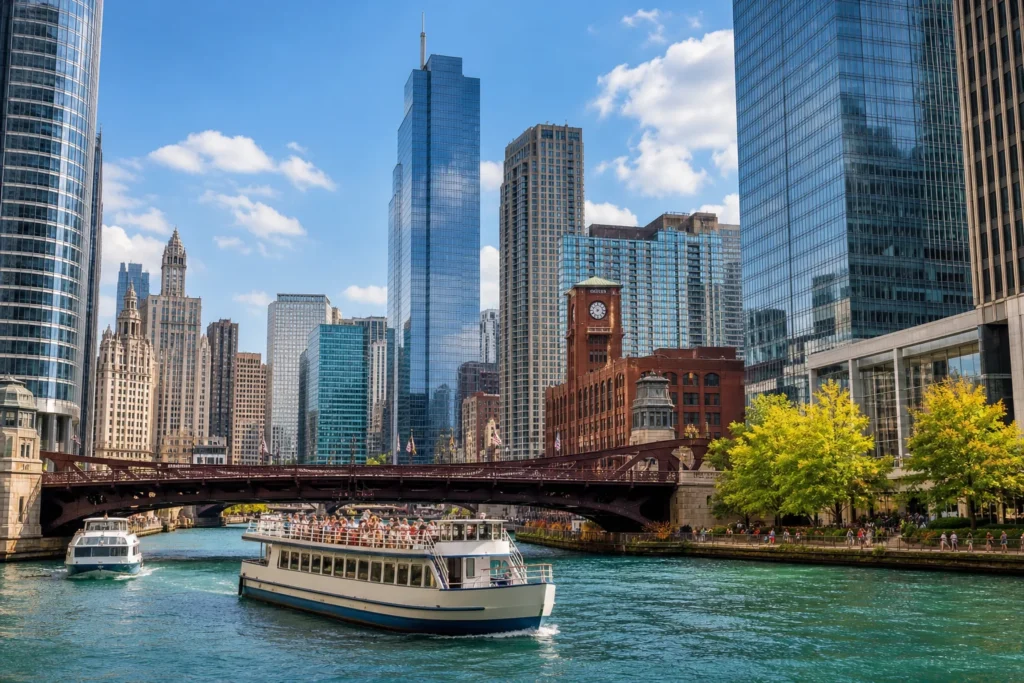
Millennium Park, the Riverwalk, and Navy Pier provide high-value public spaces for art, concerts, and waterfront walks.
The city’s culinary scenes span landmark fine dining to neighborhood markets, and architectural boat tours and observation decks offer memorable perspectives of the skyline and lake.
Top Things to Do in Chicago, Illinois
From a lakeside civic plaza and free neighborhood zoo to encyclopedic museums and high-rise views, Chicago’s attractions cluster for efficient sightseeing. Below are the city’s major draws and what to expect at each.
Millennium Park
Millennium Park sits in Chicago’s Loop along the lakefront as a contemporary civic plaza that combines public art, landscape design, and large cultural programs in a compact, pedestrian-friendly campus.
Iconic highlights include Cloud Gate (the reflective stainless-steel sculpture), the Jay Pritzker Pavilion with its engineered sound system for concerts, Crown Fountain’s interactive projected faces and seasonal water features, and the Lurie Garden, which recalls prairie ecology through naturalistic planting.
The park occupies land reclaimed above former rail yards and functions as both informal public space and a curated outdoor museum. Accessible paths, open plazas, and regular public programming mean the park changes by season—check official maps and calendars before visiting.
Art Institute of Chicago
The Art Institute of Chicago is an encyclopedic museum adjacent to Millennium Park, housed in a Beaux‑Arts building with later modern additions. Its collections span millennia and global regions, with particular strengths in Impressionist painting and American art; landmark works include masterpieces by Seurat, Hopper, Matisse, Picasso, and Monet.
The Modern Wing, designed by Renzo Piano, showcases twentieth- and twenty-first-century painting, sculpture, design, and photography.
Galleries are organized by curatorial departments, supported by conservation labs, a research library, and education programs. Plan for several hours and check current exhibitions and visitor policies on the museum’s official channels.
Willis Tower Skydeck
Skydeck Chicago on the 103rd floor of Willis Tower centers a visitor experience on panoramic city and lake views and exhibits about Chicago’s architecture and civic history. Guests travel by high-speed elevator to an observation floor arranged for wide viewing directions, orientation graphics, and photo opportunities that identify major landmarks across the grid.
The defining attraction is the Ledge—glass balconies that project roughly 4.3 feet beyond the facade and place visitors more than a thousand feet above the street for dramatic downward and outward perspectives. The site offers accessible routes, and the Ledge can close for weather or maintenance—check the Skydeck’s official information before you go.
Navy Pier
Navy Pier is a long lakefront pier that combines promenades, parks, theaters, museums, seasonal amusements, and docks for sightseeing cruises. Stretching into Lake Michigan, the pier offers skyline and shoreline sightlines and a variety of experiences from quiet gardens to festival plazas.
Notable features include the Centennial Wheel with enclosed gondolas, the Chicago Shakespeare Theater, and family venues such as the Chicago Children’s Museum.
There is no admission fee to walk the pier, though many individual attractions charge separately. The pier includes parking, bus service, and shared-mobility options; events and seasonal installations change often, so consult the pier’s calendar when planning a visit.
Field Museum
The Field Museum on the Museum Campus presents natural history and human cultures through large, object-rich halls and immersive dioramas.
Housed in a Beaux‑Arts building, the museum’s permanent highlights include SUE, the most complete Tyrannosaurus rex skeleton on public display, the Griffin Halls of Evolving Planet, and galleries focused on gems, jades, and Native North American histories.
Beyond dramatic public spaces like Stanley Field Hall, the Field supports active research, conservation, and field programs and stewards nearly forty million specimens used by international researchers. Allow several hours for exploration and check the museum’s official resources for current exhibitions and access.
Shedd Aquarium
Shedd Aquarium occupies a Beaux‑Arts building on the Museum Campus and combines historic architecture with modern immersive habitats.
Exhibits range from warm shallow reefs to cold coastal ocean systems and tropical rivers; signature spaces include the multi‑story Abbott Oceanarium for marine mammals, Wild Reef with sharks and rays, and Amazon Rising, which recreates flooded tropical forest environments.
Shedd is also an animal‑care, conservation, and research institution that cares for tens of thousands of animals and runs veterinary and aquatic‑science facilities. Exhibits and interactive experiences rotate over time, so consult the aquarium’s official planning resources before visiting.
Adler Planetarium
Perched on the lakefront within the Museum Campus, Adler Planetarium interprets the sky through domed theaters, historic instruments, and interactive galleries. Opened in 1930 as the first modern planetarium in the Western Hemisphere, Adler mixes Zeiss projection heritage with contemporary digital fulldome presentations that visualize planets, galaxies, and space navigation.
Visitors can choose sky shows, explore hands-on public science labs, and view collections of historic astronomical instruments. The Doane Observatory and telescope programs put real sky observation in public hands.
Adler’s schedules change periodically, so check show times and reservation requirements before you go.
Museum of Science and Industry
Housed in the rebuilt Palace of Fine Arts from the 1893 World’s Columbian Exposition, the Museum of Science and Industry presents interactive exhibits that invite visitor investigation.
The museum’s scale accommodates immersive installations and conserved artifacts—signature experiences include a preserved German U‑boat, hands-on phenomena galleries where guests can trigger simulated tornadoes and tsunamis, and transportation halls with historic locomotives.
The museum’s founding interactive vision remains central: many distinctive experiences require separate or timed access, so focus your itinerary and check official information before arrival. Its Hyde Park location pairs well with nearby cultural and campus attractions.
Lincoln Park Zoo
Lincoln Park Zoo occupies roughly forty-nine acres inside the Lincoln Park neighborhood near the lakefront and remains one of North America’s oldest public zoos. Admission is traditionally free, and the zoo pairs historic early‑twentieth‑century animal houses with contemporary, immersive habitats built to modern welfare standards.
Signature exhibits include Regenstein African Journey and the Pritzker Penguin Cove, alongside family spaces like the Pritzker Family Children’s Zoo.
The zoo supports research, veterinary care, and urban-conservation programs through its science staff and the Urban Wildlife Institute. Its compact routes reward slow walking and pair well with the adjacent conservatory and lakeshore paths.
Chicago Riverwalk
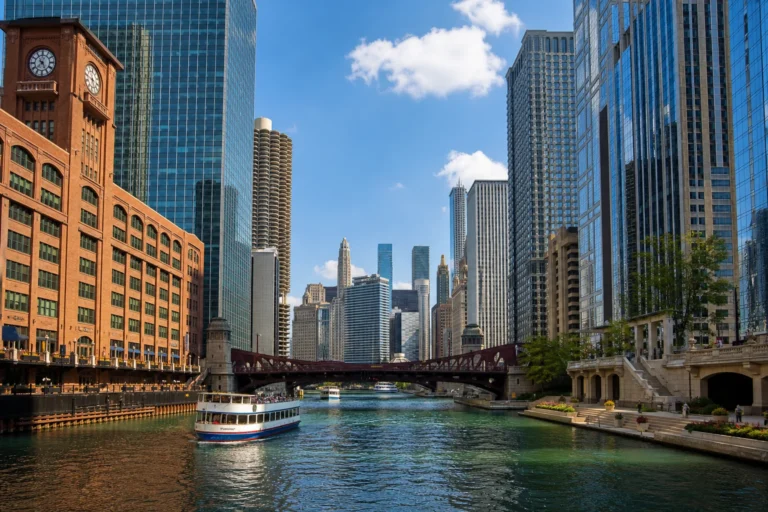
The Chicago Riverwalk is a roughly one-and-a-quarter-mile linear promenade along the south bank of the Chicago River, stitching terraces, stairs, and plazas into downtown.
Organized into six distinct coves, the Riverwalk offers varied moods: restaurants and marinas at the Marina, casual water access and kayak launches at the Cove, stepped seating at the River Theater, playful features at the Water Plaza, and quieter boardwalks and floating gardens at the Jetty and Boardwalk.
Interpretive stops like the McCormick Bridgehouse & Chicago River Museum sit along the route, and the Riverwalk connects to architecture cruises, water taxis, and kayak rentals. The path is free to use but many businesses operate seasonally—check operator and Riverwalk guidance before visiting.
Best Time to Visit Chicago
Late spring through early fall (late May–September) is the most comfortable and activity-rich period, with warm weather, outdoor festivals, lakefront swimming, and full programming. Shoulder seasons (April–mid-May and October) offer fewer crowds and lower costs but can be cool and changeable.
Winters are cold with possible snow and favor museum-focused stays and lower rates; pack warm layers year-round because lake-effect winds can chill the shoreline.
Getting Around Chicago
Chicago is best navigated by a mix of transit, walking, and cycling. The CTA ‘L’ rail network and buses cover the core city and link with Metra commuter rail for longer suburban trips; the Ventra system consolidates fare payment.
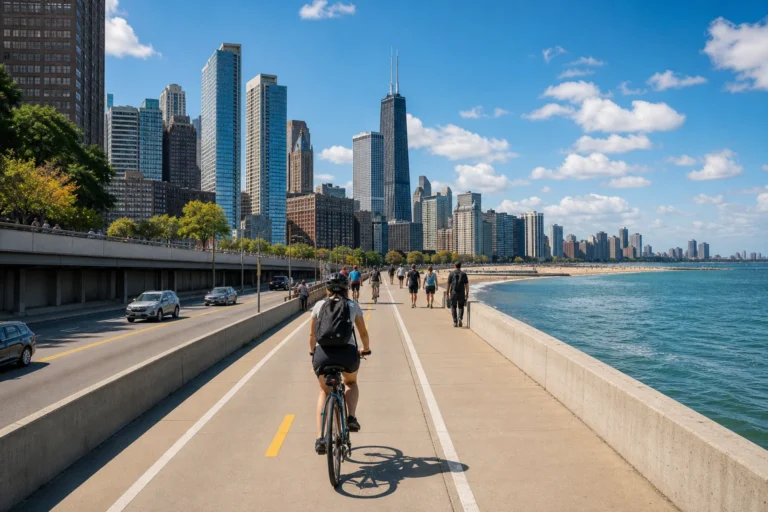
Downtown neighborhoods are highly walkable and served by frequent buses, bike-share, protected bike lanes, and an extensive lakefront trail. Rideshare and taxis fill service gaps, and allow extra travel time for airport transfers and rush-hour traffic.
Location
Map of Chicago, Illinois, United States
The interactive map loads only when you choose to view it.
Plan Your Visit to Chicago
Most visitors base themselves in the Loop, River North, Magnificent Mile, or Near North for easy access to museums and the lakefront. Chicago has two major airports (O’Hare to the northwest; Midway to the southwest); plan transfers via CTA rail, shuttles, or airport transit.
Buy a Ventra pass or use the Ventra app for tap-to-pay convenience on trains and buses. Pack layers for variable weather and allow additional time for rush hours and event days.
Local Tips for Chicago
Cluster Millennium Park, the Art Institute, the Riverwalk, and Navy Pier into a single day when possible to maximize walking time. Consider attraction bundles like the Chicago CityPASS only if you’ll visit multiple major museums.
Reserve ahead for popular restaurants and weekend brunches. For river and lake outings, bring comfortable walking shoes and sun protection—many waterfront paths have limited shade in summer.
Visitor centers in the Loop and Choose Chicago resources provide printed maps and transit guidance.
Live conditions
Current Weather

Updated 2026-10-24 20:00
- Feels like
- 58°F / 14°C
- Today’s high / low
- 67°F / 19°C · 54°F / 12°C
- Humidity
- 52%
- Wind
- ↘ 7 mph
- Precipitation
- 0 in
- Chance of rain
- 8%
- Local time
- 2026-10-24 20:10
Safety
Chicago is a major city with neighborhood-level differences in safety. Downtown tourist areas mainly face petty crimes like pickpocketing and opportunistic theft.
Use standard urban precautions: keep valuables secure and out of sight, use hotel safes, travel in groups at night, and remain on well-lit streets. Check official Chicago Police and CTA resources for current transit alerts and neighborhood notices before travel.