Travel Guide
Plan your visit around Las Vegas Strip, Fountains of Bellagio, and more of Las Vegas, Nevada.
Discover the best things to do in Las Vegas, Nevada, from signature sights to memorable local experiences.
You'll find a compact concentration of spectacle, museums, and nightlife centered on the Las Vegas Strip and historic downtown.
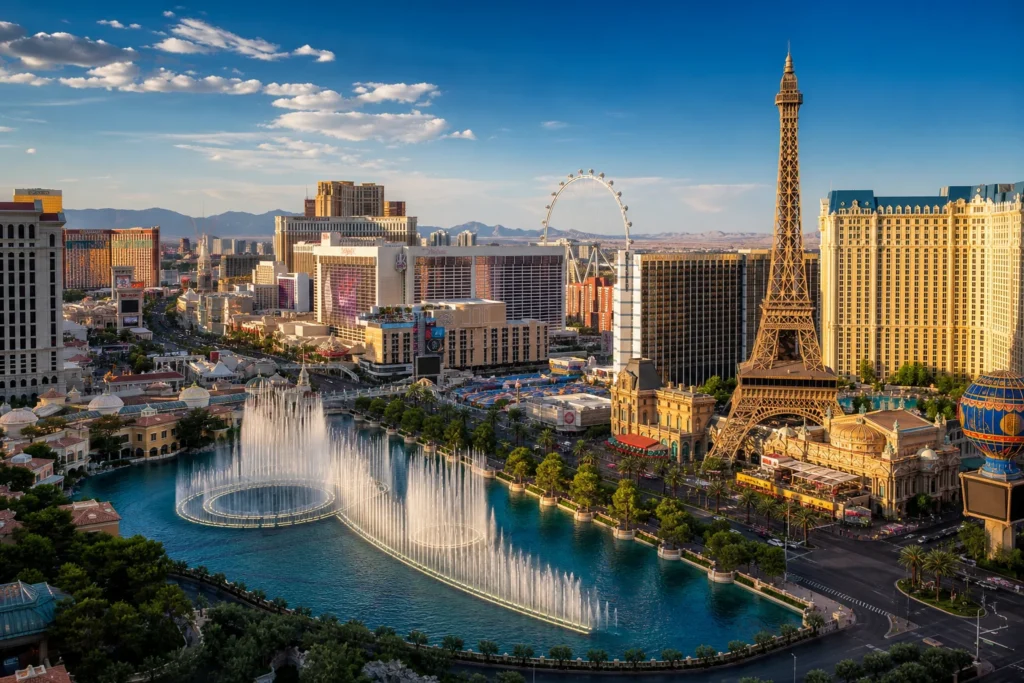
The city pairs major resort experiences. Like the Fountains of Bellagio and the Welcome to Fabulous Las Vegas sign.
With culturally focused institutions such as The Neon Museum, The Mob Museum, and performing arts at The Smith Center.
Beyond the urban corridor, Red Rock Canyon and Hoover Dam are accessible day trips that offer contrasting scenic and engineering experiences.
Why Visit Las Vegas
Visitors come to Las Vegas for concentrated spectacle and convenience: the Strip brings casinos, major shows, dining, and instantly recognizable landmarks close together, while downtown’s Fremont Street preserves restored neon signage and street-level entertainment.
Cultural institutions such as The Neon Museum, The Mob Museum, and The Smith Center offer historical context and live performance between shopping and nightlife. Nearby public lands and Hoover Dam provide options for scenic drives, hikes, and interpretive centers when you want to trade the city lights for outdoor scenery.
Top Things to Do in Las Vegas, Nevada
From the Strip’s illuminated façades to downtown’s Viva Vision canopy, Las Vegas concentrates a wide variety of short, walkable experiences. Below are the core attractions and nearby day trips that define most visits.
Las Vegas Strip
The Las Vegas Strip is the celebrated spine of resort life that runs along South Las Vegas Boulevard and hosts a concentrated sequence of large hotels, casinos, entertainment venues, and themed public spaces. Its atmosphere shifts from daylight shopping and pool decks to neon-lit promenades and showtime energy after dark.
Much of the Strip lies outside the official city limits in Clark County townships, a jurisdictional history that influenced resort expansion and planning.
Visiting the Strip is less about a single sight than a string of experiences—casino floors, fine dining, spectacle shows, public art, rooftop viewpoints, and immersive retail.
Fountains of Bellagio
The Fountains of Bellagio are a choreographed water, light, and music spectacle staged on the man‑made lake before the Bellagio resort. Created by WET Design, the installation uses more than a thousand programmed jets and lights to form synchronized arcs and bursts timed to recorded music ranging from classical vocals to contemporary pieces.
The basin covers several acres and was engineered to recirculate and reuse water as part of site systems.
Viewing is free from the Strip sidewalk, pedestrian bridges, or lakeside terraces; crowds and camera phones are part of the atmosphere. For quieter observation, choose off‑peak times or reserve a lakeside table.
Because showtimes and playlists change, confirm specific schedules on Bellagio’s official site before planning your visit.
Fremont Street Experience
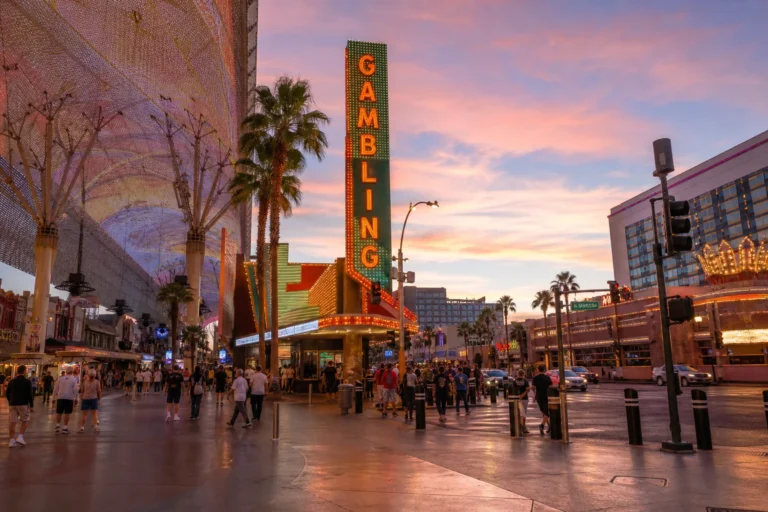
Fremont Street Experience is a pedestrianized entertainment district in historic downtown anchored by the Viva Vision vaulted LED canopy that runs above the promenade. Under the canopy, casinos, restaurants, street stages, and costumed performers form a compact, walkable destination that encourages short stops and roaming.
The corridor preserves Las Vegas’s original main drag, layering vintage neon façades with contemporary multimedia infrastructure installed to revitalize downtown.
Visitors encounter repeated short spectacles—canopy light-and-music programs at night, daytime neon visuals, and street performances. Practical planning matters: the outdoor space can be crowded and sensory-rich, so bring water, pick clear meeting points, and check the Fremont Street Experience site for current show programming and access rules.
Red Rock Canyon National Conservation Area
Red Rock Canyon National Conservation Area protects striking Mojave Desert sandstone formations just west of the Strip and is managed by the Bureau of Land Management.
The preserve features a visitor center, a one‑way 13‑mile Scenic Loop Drive with pullouts, day‑use picnic areas, backcountry trailheads, and a small campground—making it a concentrated outdoor resource for hiking, climbing, cycling, and scenic viewing close to the city.
The canyon’s cliffs, largely Aztec Sandstone, support distinct plant communities and wildlife; interpretive exhibits explain geology and cultural traces. Trails range from short, family-friendly boardwalks and discovery loops to longer hikes such as Calico Tanks and Turtlehead Ridge.
Official Red Rock Canyon National Conservation Area website →
Hoover Dam
Hoover Dam is a concrete arch‑gravity dam on the Colorado River at the Nevada–Arizona border and a landmark of federal engineering completed in the 1930s. The site created Lake Mead and remains important for hydropower generation, water management, and western infrastructure history.
Visitors access a museum‑style Visitor Center with interpretive exhibits and a short historical film, plus observation points that offer sweeping views of the crest, intake towers, reservoir, and downstream canyon.
Guided tours sometimes provide behind‑the‑scenes access to powerplant galleries and inspection tunnels; the Mike O’Callaghan–Pat Tillman Memorial Bridge offers an elevated photographic vantage.
The Neon Museum
The Neon Museum collects and interprets historic Las Vegas signage across a 2.27‑acre campus whose core outdoor collection is the Neon Boneyard.
The campus includes the La Concha Visitors’ Center, a midcentury shell‑shaped lobby preserved as part of the site, and the North Gallery, which presents immersive audiovisual experiences that reanimate unrestored signs through projection mapping.
Guided tours lead small groups through the boneyard with interpreters explaining each sign’s history; night tours showcase restored neon at its most vivid.
The museum cares for hundreds of sign elements and ephemera, supports restoration and loans for public installations, and frequently requires timed tickets—check the museum’s official site for schedules, ticketing rules, and photography policies before visiting.
The Mob Museum
The Mob Museum presents a hands-on narrative of organized crime and law enforcement inside the restored 1933 U.S. Post Office and federal courthouse in downtown Las Vegas. Exhibits span four floors and combine artifacts, oral histories, and interactive displays—expect forensic-style interactives, a Crime Lab experience, and simulators that focus on investigative methods.
The preserved historic courtroom and building fabric anchor the museum in the site’s own civic history, including the Kefauver Committee hearings.
The Underground, a basement speakeasy and working distillery, recreates Prohibition-era environments and offers tasting programs; some experiences require age verification. Plan a paced visit of one to three hours depending on participation, and confirm ticketing and program availability on the museum’s official pages.
The Smith Center
The Smith Center for the Performing Arts is Las Vegas’s principal non‑gaming cultural venue, located in Symphony Park near downtown. Designed with a classical-influenced civic presence, the center anchors an arts-focused precinct and programs touring Broadway, symphony and chamber concerts, dance, and family presentations while emphasizing education and community engagement.
Venue options range from the large Reynolds Hall—seating about 2,050 with a full orchestra pit—to intimate cabaret and studio spaces for smaller performances. The center supports box-office services, accessibility options, and related dining for performances; check the Smith Center’s official calendar and ticketing pages to confirm showtimes and audience services before visiting.
Welcome to Fabulous Las Vegas sign
The Welcome to Fabulous Las Vegas sign is a mid‑20th‑century roadside icon at the southern end of the Strip and a compact, photogenic landmark for visitors.
Designed in 1959 by Betty Willis in the Googie advertising style, the sign features a diamond-shaped panel, a starburst topper, and the familiar hand-lettered message—lit at night and visible from passing lanes of Las Vegas Boulevard.
Listed on the National Register of Historic Places in 2009, the sign functions as a quick photo stop rather than a long attraction; a designated pedestrian photo area and nearby parking serve visitors.
Expect crowds during evenings and weekends, use marked walkways for safety, and verify current access or event rules with official tourism pages before you go.
Best Time to Visit Las Vegas
Las Vegas lies in the Mojave Desert, so seasonal temperatures shape the visit. Spring (March.
May) and fall (September. November) offer the most temperate weather for walking the Strip, exploring downtown, and visiting Red Rock Canyon or Hoover Dam.
Shoulder-season rates and festival programming often make these months attractive.
Winter has milder days and cooler nights useful for outdoor sightseeing, while summer is extremely hot. Plan outdoor excursions for early morning or evening and favor air-conditioned indoor experiences during peak heat.
SPECIAL EVENTS IN Las Vegas
SEMA Show
The SEMA Show is the specialty automotive aftermarket’s largest annual trade exhibition, attracting manufacturers, customizers, buyers, and media from around the world. Travelers attend for product launches, vehicle reveals, networking, and industry education, as well as the show’s high-profile entertainment and special events. The event is trade-focused (industry professionals) and often coordinates block hotel and travel options, so visitors planning business or press trips should arrange credentials and lodging well in advance.
- Dates
- November 3, 2026 - November 6, 2026
- Venue
- Las Vegas Convention Center
FORMULA 1 HEINEKEN LAS VEGAS GRAND PRIX
The FORMULA 1 HEINEKEN LAS VEGAS GRAND PRIX is a high-profile, late‑season Formula 1 street race staged along the Las Vegas Strip that blends top-tier motorsport with large-scale entertainment, concerts, and premium hospitality. Spectators can watch from resort suites, grandstands and fan zones while enjoying Las Vegas nightlife, dining, and attractions. The race often influences the championship standings and offers travelers a unique combination of sport and spectacle, making it a major draw for international visitors and fans seeking an upscale race-week experience.
- Dates
- November 19, 2026 - November 21, 2026
- Venue
- Las Vegas Strip Circuit
CES (Consumer Electronics Show)
CES is the Consumer Technology Association’s flagship global trade show that gathers major brands, startups, investors and media to debut and demo consumer technology across categories. Travelers attend for press briefings, product launches, show-floor discovery, networking and off-site industry events that cluster around the host city. CES functions as a major business and tourism driver for Las Vegas, offering extensive exhibit campuses, conference programs and visitor services that make it a key annual destination for tech-focused professionals and curious travelers alike.
- Dates
- January 6, 2027 - January 9, 2027
- Venue
- Las Vegas Convention Center
NAB Show (National Association of Broadcasters)
NAB Show is the premier annual trade event for broadcasters, media, entertainment and content-technology professionals. Held in Las Vegas, it combines a large exhibit floor with conference programming, product launches, hands-on demos and continuing-education sessions that attract global vendors, studios, networks and creators. Travelers attend for industry networking, access to the latest production and distribution technology, press events, and citywide hospitality and partner activities. The show is centered at the Las Vegas Convention Center and is a major draw for professionals planning business and site visits to Las Vegas.
- Dates
- April 3, 2027 - April 7, 2027
- Venue
- Las Vegas Convention Center
CONEXPO-CON/AGG
CONEXPO-CON/AGG is North America’s largest construction and aggregates trade show, bringing heavy equipment manufacturers, materials suppliers, technology vendors, and industry educators together for expansive exhibit halls and outdoor equipment demonstrations. Travelers attend to see the latest machinery and jobsite technology, attend technical education and keynote sessions, build supplier and contractor contacts, and evaluate procurement and rental options. The event is especially valuable for construction professionals seeking hands-on product exposure, networking with industry decision-makers, and concentrated access to training and product launches.
- Dates
- March 13, 2029 - March 17, 2029
- Venue
- Las Vegas Convention Center
Getting Around Las Vegas
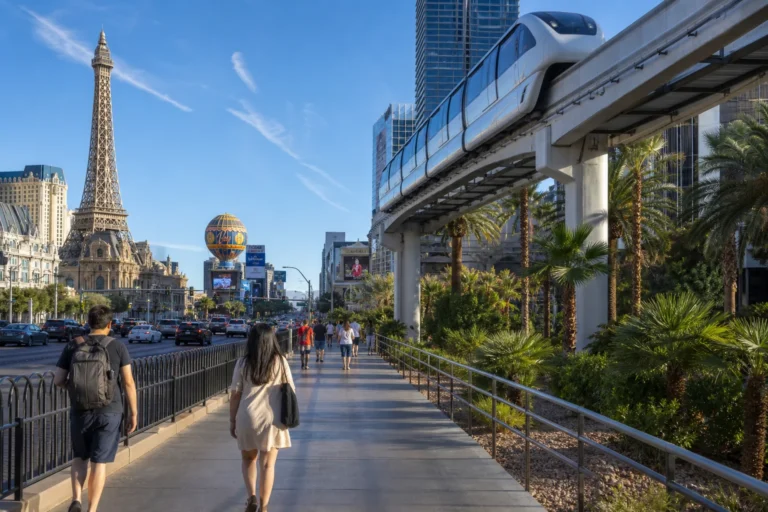
The core visitor corridors are transit- and pedestrian-friendly for short stays: you can walk clustered areas on the Strip and downtown, and the Las Vegas Monorail, RTC Deuce/Strip buses, and resort shuttles link many major hotels. Rideshare and taxis provide flexible point-to-point service across the urban area.
For Red Rock Canyon, Hoover Dam, and many trailheads, a private car, rental vehicle, or organized tour is the most practical option because public transit connections are limited and planning for parking or timed-entry may be required.
Location
Map of Las Vegas, Nevada, United States
The interactive map loads only when you choose to view it.
Plan Your Visit to Las Vegas
Expect heavy walking in the Strip and Downtown corridors; wear sturdy shoes and sun protection. Public transit options include RTC buses and the Las Vegas Monorail, while rideshare and taxis fill service gaps.
Red Rock Canyon is about 30 minutes west and may require timed-entry reservations in peak season. Hoover Dam is roughly thirty miles southeast, reached via US‑93 through Boulder City with visitor facilities on the Nevada approach.
Book timed-entry tickets or evening tours in advance and check official sites for current access and schedule details.
Local Tips for Las Vegas
Sightsee the Strip in early morning or late evening to avoid daytime heat; many major shows and The Neon Museum are evening-focused. Use pedestrian bridges and marked crosswalks on the Strip rather than mid-block crossings.
Carry a small amount of cash for tips even though most venues accept cards. For Red Rock, bring ample water, sun protection, and a map—services are limited along the scenic loop.
Downtown Fremont Street is liveliest after dark with performers and canopy shows, so plan meeting points and expect crowds.
Live conditions
Current Weather

Updated 2026-09-21 14:30
- Feels like
- 71°F / 22°C
- Today’s high / low
- 85°F / 29°C · 75°F / 24°C
- Humidity
- 18%
- Wind
- ↘ 13 mph
- Precipitation
- 0 in
- Chance of rain
- 57%
- Local time
- 2026-09-21 14:46
Safety in Las Vegas
Las Vegas is generally safe for visitors but requires routine urban caution. Heat and sun exposure are the leading hazards—temperatures commonly exceed 100°F/38°C in summer, so hydrate, seek shade, and avoid strenuous hikes at midday.
Crowded areas such as the Strip and Fremont Street attract opportunistic theft; keep valuables secure and monitor bags. Use marked crosswalks and pedestrian bridges because roadways can be busy.
For wilderness visits to Red Rock or other public lands, bring water, a charged phone, maps, and follow park guidance; call 911 or local authorities in an emergency.