
Travel Guide
Plan your visit around Duomo di Milano, Galleria Vittorio Emanuele II, and more of Milan, Italy.
Discover the best things to do in Milan, Italy, from signature sights to memorable local experiences.
The city’s compact medieval core, grand 19th. 20th century boulevards, and dense public-transport network make it easy to pack many highlights into a short stay.
Milan blends high fashion and finance with centuries of art and architecture. From the Gothic Duomo and its terraces to Leonardo’s Last Supper and world-class civic museums.
Key ensembles such as the Duomo and Galleria, Castello Sforzesco and Parco Sempione, Brera’s art district and the Navigli canals lie close enough for multi-site walking days, while fast trains link Milan to Lake Como, Bergamo and the Alps for day trips.
Why Visit Milan
Visitors come to Milan for masterpieces and design as much as for city life. Important works include Leonardo’s Last Supper and the Pinacoteca di Brera’s paintings, while the Duomo terraces offer sweeping skyline views.
Teatro alla Scala stages influential performances, and the Galleria Vittorio Emanuele II and nearby shopping streets show Milan’s global fashion reputation.
Evenings and relaxation occur along the Navigli canals and in Parco Sempione, and the city’s compact layout and transport links make Milan an efficient base for cultural itineraries and day trips into Lombardy.
Top Things to Do in Milan, Italy
Milan’s principal attractions cluster in a compact area, so you can visit a cathedral, a gallery, a castle and a park in a single day. Below are the city’s standout sites and what makes them worth your time.
Duomo di Milano
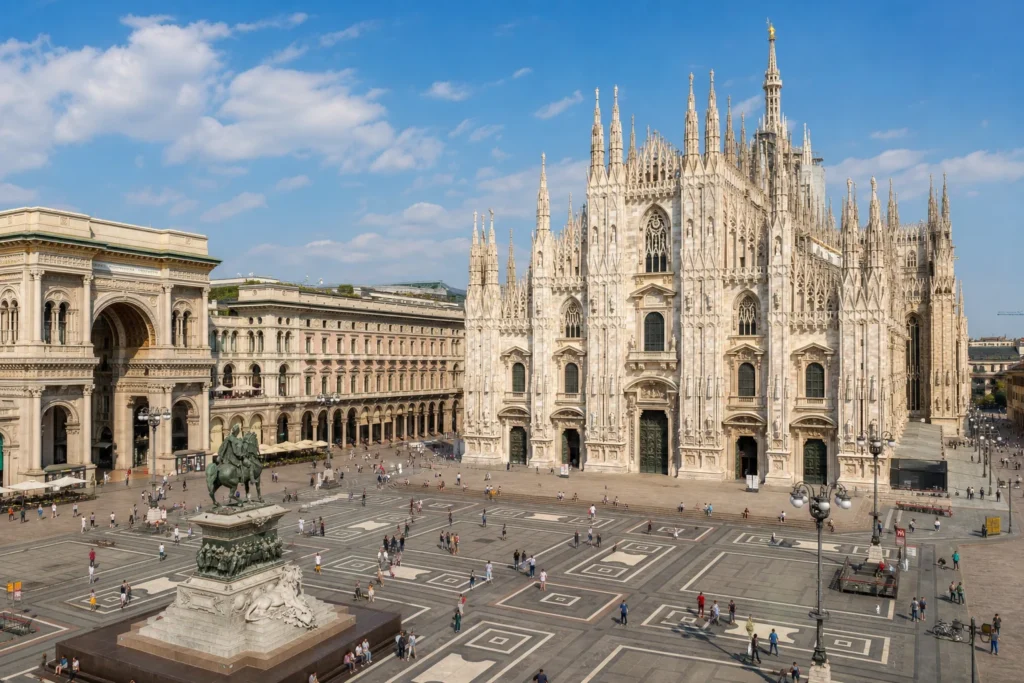
Approaching the Duomo begins in Piazza del Duomo, a civic space framed by Milanese life. The cathedral’s Gothic façade, pinnacles and vast marble interior reward slow exploration: inside, slender columns, stained glass and chapels invite close looking.
The Duomo Museum preserves fragments, models, and works removed for conservation that explain the visible stonework and restoration choices.
Many visitors value the rooftop terraces as much as the nave. The rooftop walk threads among roughly 135 spires and thousands of carved figures, and the gilded Madonnina crowns the highest spire.
Access is organised—stairs or lift take you to the terraces—and ticketing and access rules change, so check official sources before you go.
Galleria Vittorio Emanuele II
The Galleria links Piazza del Duomo with Piazza della Scala as a grand 19th‑century covered promenade. Walking beneath the iron-and-glass barrel vaults and the central octagon highlights polychrome marble floors and mosaic roundels, while natural light through the glass roof illuminates decorative details.
Giuseppe Mengoni designed the arcade in the 1860s as a monumental covered street that became a prototype for European shopping arcades. Historic cafés, boutiques and the central octagon remain the Galleria’s visual heart; a calm, off-peak visit helps you study the pavements and cast-iron ornament without the busiest crowds.
Castello Sforzesco
Castello Sforzesco stands as a layered record of Milan’s dynastic power and civic reinvention. Visitors encounter brick façades, towers and an open Cortile delle Armi before moving into museum rooms that display the Ducal complex’s material culture.
Highlights include the Museum of Ancient Art, musical instruments collections, and Michelangelo’s Pietà Rondanini.
The castle backs onto Parco Sempione and faces the Arco della Pace, creating a continuous public landscape. Much of the visible fabric reflects wartime damage and twentieth‑century restorations, so the site blends reconstruction with original elements; exhibits and courtyards reward combining interior visits with a park walk.
Santa Maria delle Grazie (The Last Supper)
Santa Maria delle Grazie is a Dominican church and convent best known for Leonardo da Vinci’s Last Supper on the refectory’s north wall. The complex also includes Bramante‑era architecture, so the visit combines high Renaissance building with a monumental painting of central importance to art history.
Viewing the Cenacolo is a short, controlled experience: conservators limit numbers and time because Leonardo used experimental wall techniques and the mural is fragile. Timed-entry and respectful behaviour are essential; many visitors pair the refectory viewing with a brief visit to the church and cloister.
Official Santa Maria delle Grazie (The Last Supper) website →
Pinacoteca di Brera
The Pinacoteca di Brera occupies grand rooms in Palazzo Brera and presents a core of Italian painting from medieval to Baroque and beyond. Highlights include works by Raphael, Piero della Francesca, Mantegna, Caravaggio and Francesco Hayez, arranged to show technique and historical development within a civic museum context.
The galleries vary in scale and daylighting, which affects how paintings appear across the day. Recent reorganisations and a modern wing broaden the museum’s narrative; allow at least an hour and a half to absorb principal works and combine a visit with a walk through the Brera neighbourhood.
Teatro alla Scala
Teatro alla Scala is one of the world’s leading opera houses, famed for its gilded auditorium, layered boxes and long tradition of premieres. The Theatre Museum displays costumes, set models, manuscripts and instruments that trace the material culture of staged performance and Milan’s role in European opera.
Guided tours often include backstage corridors, third‑order box viewpoints and workshops where costumes and scenery are made, showing aspects of production unseen during performances. A museum visit and a guided theatre tour are complementary; check official booking details before visiting.
Parco Sempione
Parco Sempione sits directly behind Castello Sforzesco as Milan’s principal central green, laid out on the former Piazza d’Armi. Broad tree‑lined promenades, ponds, lawns and specimen trees create a relaxed public landscape connecting the castle with the Arco della Pace and nearby cultural institutions.
The park contains durable monuments and institutions—the Arena Civica, Palazzo dell’Arte (home to the Triennale), and scattered modern sculptures—that enrich a walk. Didactic trails, small rises such as Monte Tordo, and open lawns make the park suited to short reflective walks and family recreation.
Navigli district
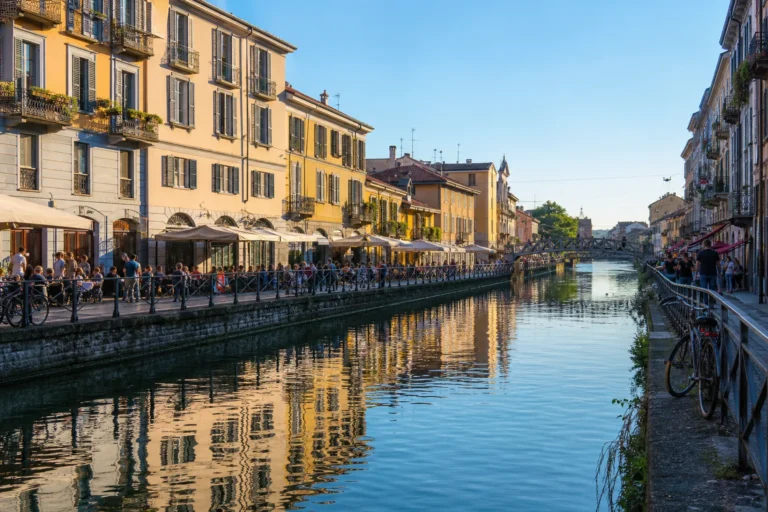
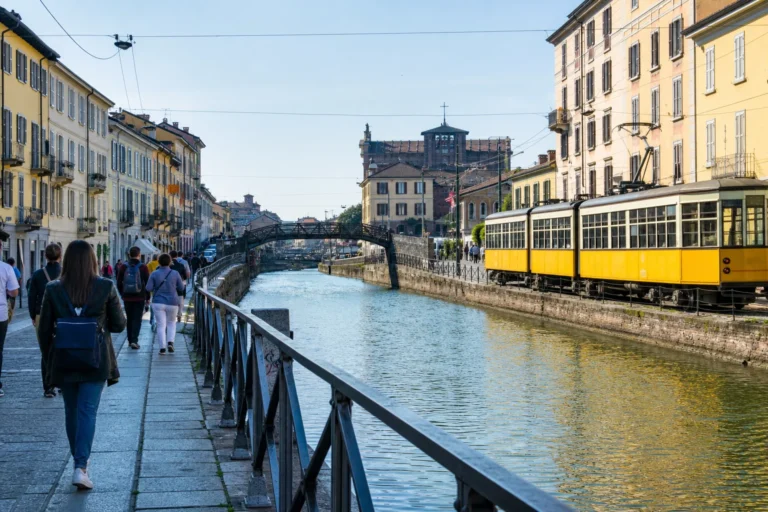
The Navigli district centres on the Darsena basin and the twin canals, Naviglio Grande and Naviglio Pavese, which shaped Milan’s early transport network. Walking the towpaths reveals surviving bridges, lock works and compact alleys where historic service and craft activity once clustered alongside later cultural reinvention.
Begin at the Darsena and follow the shaded banks toward bridges and small squares; the area mixes studios, galleries and artisan shops with a lively canal‑side social scene. The Navigli rewards slow exploration on foot or by cycle, and night‑time activity focuses on food and drink—verify current access and events before planning.
Museo Nazionale della Scienza e della Tecnologia Leonardo da Vinci
Housed in a large former monastery, the Museo Nazionale della Scienza e della Tecnologia traces technological innovation with extensive displays of Leonardo models, transport pavilions and industrial collections. The museum’s collection is broad—thousands of objects, including working-size reconstructions from Leonardo’s notebooks, full-size locomotives and a distinctive Cold War submarine in the courtyard.
Galleries mix archival material, didactic panels and interactive laboratories for varied ages. Plan several hours to see the principal pavilions comfortably and check official channels for temporary closures or conservation work.
Official Museo Nazionale della Scienza e della Tecnologia Leonardo da Vinci website →
Best Time to Visit Milan
Late spring through early autumn (May–September) is when outdoor café life, canal-side evenings and park activities are at their peak. The shoulder seasons (April–May and September–October) offer milder weather, fewer crowds at major museums, and active cultural programming.
Winters are quieter and suit indoor attractions and theatre seasons, but plan museum visits and the Last Supper well in advance year-round because timed admissions are used to protect fragile works.
SPECIAL EVENTS IN Milan
Stramilano
Stramilano is Milan’s long‑running spring road‑running festival combining a World Athletics‑approved half marathon with mass-participation 10 km and 5 km events and family-friendly activities. It attracts tens of thousands and turns central Milan into an inclusive, community sports day with charity ties, fan zones and an athlete village near the Duomo. Travelers may plan visits around the event for a lively local atmosphere, easy public‑transport access, and opportunities to see the city on foot while joining or watching organized running festivities.
- Dates
- March 21, 2027
- Venue
- Centro Stramilano (Piazza del Duomo)
Fuorisalone (Milano Design Week)
Fuorisalone is Milan’s city-wide design festival that takes place each spring as Milano Design Week, running alongside the Salone del Mobile. It assembles showroom openings, temporary installations, exhibitions and public programs across multiple neighbourhoods (Tortona, Brera, Porta Venezia and others). The programme attracts industry professionals and curious travelers alike, offering talks, studio visits and emerging-brand showcases. For visitors it’s a walkable, design-led moment to experience Milan’s creative scene, urban installations and cultural nightlife beyond a single fair venue.
- Dates
- April 12, 2027 - April 18, 2027
Getting Around Milan
Milan’s metro, trams, buses and suburban rail provide frequent, affordable coverage across the city; many central attractions are walkable from each other. Main stations—Milano Centrale and Milano Cadorna—connect high-speed and regional trains, and links to airports include the Malpensa Express and Linate connections.
Short-term bike sharing, e-scooters and taxis are available, but car use is unnecessary in the historic core and discouraged by limited-traffic zones. For day trips, reserve seats on high-speed trains during busy periods.
Location
Map of Milan, Italy
The interactive map loads only when you choose to view it.
Plan Your Visit to Milan
Plan most sightseeing on foot and use validated STIBM/ATM tickets for metro, tram and bus travel (digital tickets via the official ATM app are widely accepted). Book timed-entry tickets in advance for high-demand sites such as the Duomo rooftop and the Last Supper to avoid long queues and account for security checks.
Allow extra time for airport transfers and possible Sunday closures at religious sites. Check official sites for current accessibility and ticketing arrangements before travel.
Local Tips for Milan
Carry a reusable water bottle—many central fountains supply potable water—and wear comfortable shoes for cobbled streets and Duomo rooftop stairs. Dress modestly when entering churches; the Duomo enforces a strict dress code and bag checks.
Use the ATM Milano app for real-time service notices and ticket purchases. Evenings are particularly pleasant in Navigli; book weekend tables.
For pharmacies and groceries, look near main stations and for farmacia signs.
Live conditions
Current Weather

Updated 2026-09-22 01:15
- Feels like
- 19°C / 67°F
- Today’s high / low
- 24°C / 75°F · 18°C / 65°F
- Humidity
- 70%
- Wind
- → 13 km/h
- Precipitation
- 0 mm
- Chance of rain
- 4%
- Local time
- 2026-09-22 01:23
Safety
Milan is generally safe but pickpocketing can occur in crowded metro stations, tourist sites (Duomo, Galleria), and on trams—keep valuables secured and use front-facing bags. Nightlife areas such as the Navigli are lively; exercise usual late-night caution, avoid poorly lit side streets and use official taxis or rideshare apps.
In emergencies dial 112 for police or medical assistance. Follow posted rules at religious and cultural sites, including security checks and prohibited items, and consult local municipal channels for up-to-date advisories.