
Travel Guide
Plan your visit around Piazza Maggiore, Le Due Torri, and more of Bologna, Italy.
Discover the best things to do in Bologna, Italy, from signature sights to memorable local experiences.
Begin in the medieval heart around Piazza Maggiore.
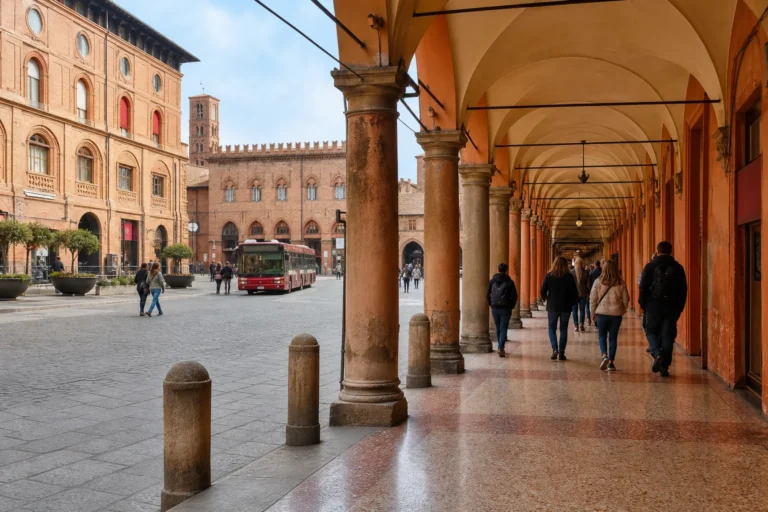
The city’s signature skyline—marked by the leaning Asinelli and Garisenda towers—sits amid a dense network of arcaded porticoes, narrow lanes and civic palaces.
Major cultural sites cluster close together: the vast Basilica di San Petronio, the Renaissance Archiginnasio with its Teatro Anatomico, the Pinacoteca Nazionale and civic museums. The Quadrilatero market quarter preserves centuries‑old food shops and botteghe, making Bologna as rewarding for food exploration as for architecture and museums.

Why Visit Bologna
Bologna pairs a compact medieval core with a world‑famous food culture and a long university tradition. Walk easily from Piazza Maggiore to the Archiginnasio to see carved coats of arms and frescoed interiors, then climb or view Le Due Torri for classic panoramas over red‑tiled roofs.
The Pinacoteca Nazionale traces local painting traditions while the Museo Civico Archeologico reveals the city’s ancient roots. In the Quadrilatero you’ll find historic delicatessens, pasta shops and butchers that illustrate regional culinary history, and the university’s student energy keeps cafés and bookshops lively year round.

Top Things to Do in Bologna, Italy
These highlights sit within a short walk of Piazza Maggiore. Together they show Bologna’s civic, religious, academic, and culinary identity.
Piazza Maggiore
Piazza Maggiore sits at Bologna’s historic heart, framed by medieval and Renaissance civic buildings. The open rectangular square hosts markets, concerts and public gatherings and presents a panorama that includes Basilica di San Petronio, Palazzo del Podestà, Palazzo dei Banchi and Palazzo d’Accursio.
A visit reads as a compact lesson in the city’s civic life: San Petronio’s vast Gothic interior and the ornate palaces recall communal power and patronage. From the square you can reach the Fontana del Nettuno, the Sala Borsa archaeological reading room, and narrow artisan streets that reveal centuries of craft.
Le Due Torri (Asinelli and Garisenda)
Le Due Torri—the Asinelli and the Garisenda—form Bologna’s most recognizable skyline marker. Torre degli Asinelli, built in the early twelfth century, rises steeply and offers panoramic views across red‑tiled roofs toward the Apennines after a narrow climb of nearly five hundred steps.
Torre della Garisenda leans noticeably; its height was reduced in the fourteenth century for safety, leaving the famous tilt visible today. Approach the towers from Piazza di Porta Ravegnana for the classic view and check official sources for access, ticketing and any restrictions before climbing.
Basilica di San Petronio
Basilica di San Petronio dominates Piazza Maggiore and functions as Bologna’s civic temple. Built between 1390 and 1663 on a city commission, the basilica contains twenty‑two lateral chapels that once belonged to civic families and house important artworks and funerary monuments.
A striking scientific feature is the 1655 meridian line by Gian Domenico Cassini: a 67‑metre line on the nave floor that tracks the sun’s projected image through a small aperture. Some chapels and subterranean routes require special access or reservations, so consult official pages before visiting.
Archiginnasio and the Teatro Anatomico
The Archiginnasio Palace was built in 1562–63 to concentrate university teaching under one roof. Its walls display thousands of carved student and teacher coats of arms, creating a visual register of Bologna’s academic life across centuries.
At the eastern end, the Teatro Anatomico (1637) is a wooden anatomy theatre with a coffered ceiling depicting Apollo and the zodiac. The carved benches, anatomical statues and painted ceiling survive as both craftsmanship and social history.
Access to the theatre and some rooms is by reservation; check visitor information for bookings.
Portico of San Luca and the Sanctuary of the Madonna di San Luca
The Portico of San Luca is a continuous covered route linking Porta Saragozza with the Sanctuary on Colle della Guardia. Built between the late seventeenth and early eighteenth centuries to protect devotional processions, the portico’s length is roughly three and a half kilometres and local tradition counts about six hundred sixty‑six arches.
Walking the portico is a civic and landscape experience: the route begins level through suburban streets then climbs in a series of arches and stair ramps, offering successive views back toward the city.
The Sanctuary houses a venerated icon and offers broad panoramas over Bologna and the Apennines; many visitors combine the walk with public transport.
Official Portico of San Luca and the Sanctuary of the Madonna di San Luca website →
Pinacoteca Nazionale di Bologna
The Pinacoteca Nazionale di Bologna presents Emilian painting from the thirteenth through the eighteenth centuries, concentrating Bolognese schools such as the Carracci circle and masters like Guido Reni and Domenichino. Holdings include important fifteenth‑ and sixteenth‑century works that trace stylistic shifts across central Italy.
Housed in historic palaces including Palazzo Pepoli Campogrande, the rooms are arranged to follow chronological and thematic developments. The museum also preserves a significant drawings and prints cabinet, useful for visitors who wish to study technique and workshop practice.
Check official channels for current access and temporary closures.
Museo Civico Archeologico
The Museo Civico Archeologico occupies a civic building near Piazza Maggiore and grew from nineteenth‑century university holdings and private collections. Its displays trace Bologna’s ancient formation from Etruscan‑Italic and Villanovan material through Greek, Roman and Gallic sections, and an especially rich Egyptian collection ranks among Italy’s notable provincial holdings.
Exhibitions include a lapidary courtyard, a gallery of plaster casts and a major numismatic cabinet. Allow time for the Etruscan funerary displays and lapidary epigraphy, and consult the museum’s official channels for current exhibitions and programmes.
Quadrilatero (historic market district)
The Quadrilatero sits immediately behind Piazza Maggiore as Bologna’s historic market quarter. Narrow medieval streets recall old trades—Via degli Orefici, Via Pescherie Vecchie, Via Drapperie and Via Clavature—and host historic botteghe alongside newer cafés and restaurants.
Mercato di Mezzo occupies a small covered block within the district, and salumerie counters, bakeries and fish shops animate the lanes. For a satisfying visit, wander without a rigid plan, sample small bites from specialist vendors, and speak with shopkeepers to learn the area’s culinary stories.
Best Time to Visit Bologna
Late spring and early autumn are the most pleasant times to explore Bologna: temperatures are moderate, outdoor cafés and markets feel lively, and crowds are lighter than in peak summer. Spring brings fresh greenery along the San Luca portico, while autumn highlights harvest‑season markets and seasonal food.
Winters are generally mild but can be damp and quieter; summer offers long daylight and many cultural events but may be hot and busy. Shoulder seasons give comfortable walking weather and easier museum access.
SPECIAL EVENTS IN Bologna
Bologna Estate
Bologna Estate is the city’s official summer culture programme that stitches hundreds of free and ticketed performances, film screenings, festivals, exhibitions and family activities across Bologna and its metropolitan area. It highlights local festivals, outdoor cinema, live music, and community-led neighbourhood events, offering visitors a lively way to experience historic squares, parks and museums outside peak museum hours. Travelers can use it to catch local culture, evening entertainment and special open-air events that animate Bologna’s streets and green spaces during the warmer months.
- Dates
- May 15, 2026 - September 27, 2026
Arte Fiera
Arte Fiera is Italy’s long-established international fair for modern and contemporary art, anchored in Bologna’s cultural calendar. It gathers national and international galleries, collectors, curators, and institutions, and is complemented by a city-wide program of museum shows and off-site events that draw visitors across Bologna. Travelers attend for high-quality gallery presentations, market activity, special exhibitions and performances, and the concurrent arts programming that turns the city into a concentrated period of openings, talks, and cultural nightlife.
- Dates
- February 5, 2027 - February 7, 2027
- Venue
- BolognaFiere
Bologna Children's Book Fair (BCBF)
Bologna Children's Book Fair is the world’s leading international trade fair for children’s publishing, attracting publishers, illustrators, agents and rights professionals. Travelers with an interest in publishing, illustration, literary prize events, or industry networking visit for market showcases, exhibitions (including the Illustrators Exhibition), awards, and industry-focused programmes. The fair also creates citywide cultural activity with exhibitions and events that appeal to book lovers and families. Visitors should plan around busy exhibition halls and book rights appointments while exploring Bologna’s cultural and culinary attractions.
- Dates
- April 5, 2027 - April 8, 2027
- Venue
- BolognaFiere (Bologna Exhibition Centre / quartiere fieristico)
Il Cinema Ritrovato (Cineteca di Bologna)
Il Cinema Ritrovato is the Cineteca di Bologna’s flagship festival celebrating film restoration, classic cinema and rediscovered works. It draws archivists, restorers and cinephiles worldwide for programmatic retrospectives, premieres of restored prints, and screenings across multiple historic city venues. Travelers interested in film history, rare prints, and lively open-air screenings will find unique cultural programming and opportunities to see prints not shown elsewhere. The festival also showcases the Cineteca’s restoration work and contributes to Bologna’s summer cultural scene.
- Dates
- June 19, 2027 - June 27, 2027
Getting Around Bologna
Bologna’s core is highly walkable and many major sights lie within short walking distances of Piazza Maggiore. The city’s covered porticoes make year‑round pedestrian circulation comfortable.
Local buses and regional trains serve suburbs and nearby towns, and the main train station links Bologna to Italy’s rail network for day trips. Taxis and bike‑share services cover last‑mile needs.
To reach the Sanctuary of the Madonna di San Luca you can walk the long portico route or take a local bus.
Location
Map of Bologna, Italy
The interactive map loads only when you choose to view it.
Plan Your Visit to Bologna
Bologna’s historic centre is compact: core visits (Piazza Maggiore, Le Due Torri, San Petronio, Archiginnasio and the Quadrilatero) can fit into a single full day if you move steadily, or two days if you prefer to linger in museums and markets.
The Portico of San Luca to the Sanctuary is roughly 4 km one‑way and is best scheduled for cooler parts of the day.
Buy museum tickets online in advance for Pinacoteca Nazionale and special Archiginnasio tours to secure entry and time slots.
Local Tips for Bologna
Start mornings in the Quadrilatero to sample cured meats, fresh pasta and regional produce at traditional botteghe; Mercato di Mezzo offers compact stalls for quick tastings. Visit Piazza Maggiore at dawn or late evening to avoid crowds and see the basilica façade in changing light.
If you plan to climb Torre degli Asinelli, be prepared for many narrow steps—the views reward the effort. Bring a reusable water bottle for the downtown nasoni and wear comfortable shoes for cobbled streets and long porticoes.
Live conditions
Current Weather

Updated 2026-09-21 20:45
- Feels like
- 23°C / 73°F
- Today’s high / low
- 28°C / 82°F · 19°C / 67°F
- Humidity
- 66%
- Wind
- → 11 km/h
- Precipitation
- 0 mm
- Chance of rain
- 13%
- Local time
- 2026-09-21 20:55
Safety
Bologna is generally safe for tourists, but standard urban precautions apply. Keep valuables secure in busy areas such as the Quadrilatero and near major sights, and be alert to pickpocketing on crowded buses and at markets.
The walk up to the Sanctuary of San Luca is physically demanding; assess fitness levels and avoid the ascent during extreme heat. For medical emergencies, use local emergency numbers and the city’s public hospitals; carry travel insurance and copies of important documents.