
Travel Guide
Plan your visit around Tivoli Gardens, Nyhavn, and more of Copenhagen, Denmark.
Discover the best things to do in Copenhagen, Denmark, from signature sights to memorable local experiences.
Start with the compact city centre where royal sites, museums and harbours sit within easy walking or cycling distance. The core blends historic highlights—Christiansborg Palace, Rosenborg Castle and the Round Tower—with lively waterfronts like Nyhavn and the Little Mermaid, plus Tivoli Gardens’ 19th‑century amusement‑park charm.
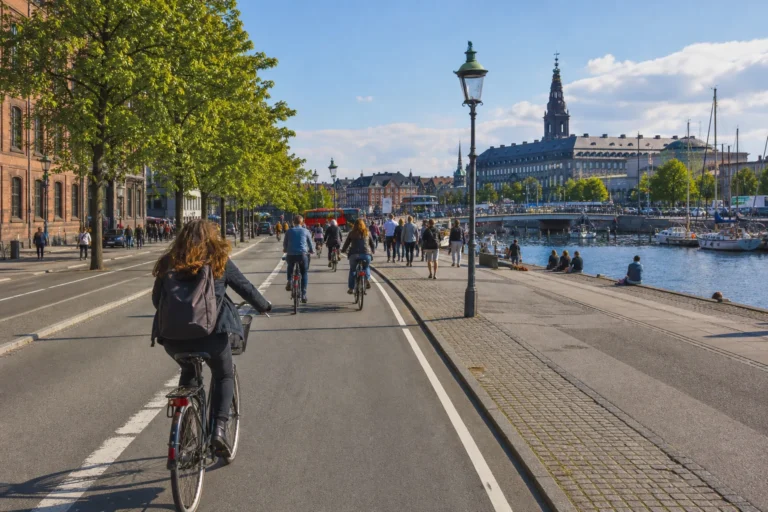
Copenhagen’s human scale and cycling culture make it simple to move between museums, cafés and canals, so plan a mix of indoor collections and outdoor promenades to get the fullest sense of the city.
Why Visit Copenhagen
Copenhagen pairs classical institutions—palaces, crown jewels and national museums—with contemporary Danish design, cuisine and active harbour life. Its compact layout and world‑class cycling infrastructure make sightseeing relaxed: you can hop between Rosenborg’s Renaissance rooms, the Glyptotek’s antiquities and Nyhavn’s canal cafés in a few short journeys.
Tivoli Gardens adds historic leisure and live performance, while Strøget and the Round Tower offer timeless people‑watching and panoramic viewpoints. The city suits travelers who value easy movement, thoughtful museums and waterfront character.
Top Things to Do in Copenhagen, Denmark
Central Copenhagen concentrates many of the city’s top experiences within a short walk or cycle. Below are the key attractions—historic parks, museums, viewpoints and harbourfronts—that form a practical core for a short visit.
Tivoli Gardens
Tivoli Gardens sits in central Copenhagen as one of the world’s oldest operating amusement parks, founded in 1843 as a pleasure garden combining rides, concerts, architecture and horticulture. Today it remains a compact, walkable park where historic buildings and modern attractions mingle, producing a distinct atmosphere of nostalgia and spectacle.
Inside the Gardens expect classic wooden roller coasters and modern thrill rides alongside intimate concert programming, family shows and theatrical marionette performances. Cultural venues such as the Pantomime Theatre and Tivoli Concert Hall complement gardens, planted borders and lakeside promenades.
The Moorish‑inspired Nimb façade and other historic structures give the park memorable architectural backdrops.
Nyhavn
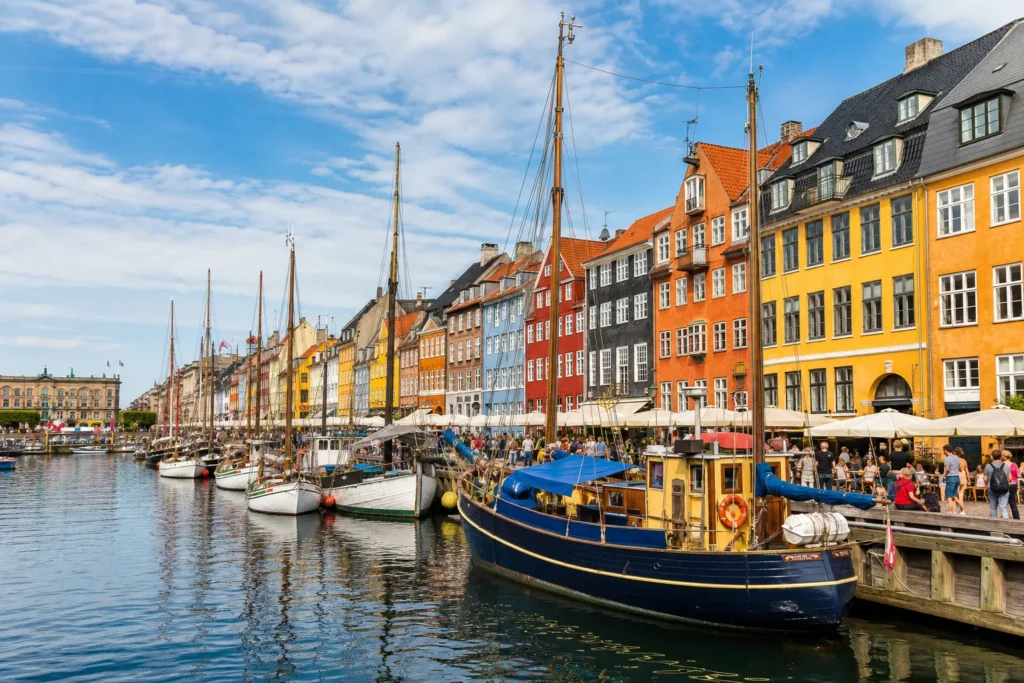
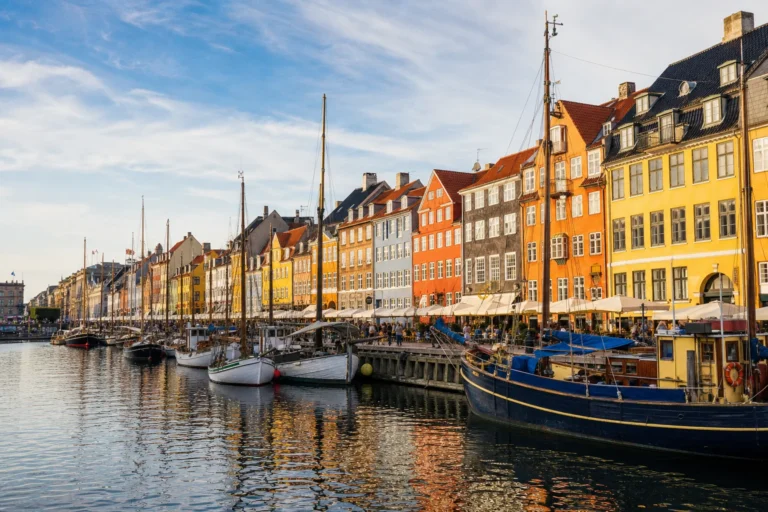
Nyhavn is Copenhagen’s iconic 17th‑century waterfront canal and quay, instantly recognizable for its row of brightly painted townhouses and moored wooden ships.
Dug in the 1670s to connect the inner harbour with the old city, the canal once handled commercial traffic and sailors’ inns; today it functions as a photogenic promenade where maritime memory meets everyday café life.
Visitors walk the compact quay from Kongens Nytorv toward the modern harbour to find outdoor terraces, classic cafés and departures for short canal tours. Preserved vessels and plaques noting Hans Christian Andersen’s addresses add literary and historic texture.
The Little Mermaid
The Little Mermaid sits low on a rock at the Langelinie promenade, quietly facing the harbour. Sculpted by Edvard Eriksen and unveiled on 23 August 1913 as a gift from brewer Carl Jacobsen, the small bronze figure draws visitors who view her from the shore or from passing boats to appreciate scale and setting.
The statue’s face was modelled on the ballerina Ellen Price while Eline Eriksen posed for the body. Over time the monument has endured acts of vandalism and careful restorations, adding civic memory to its literary inspiration from Hans Christian Andersen’s 1837 tale.
Rosenborg Castle
Rosenborg Castle stands inside the King’s Garden as a compact early 17th‑century royal residence built for King Christian IV. Now a museum of royal collections, it guides visitors through audience rooms, private chambers and richly furnished halls that illustrate court life and ceremonial display across centuries.
The castle’s basement Treasury displays the Danish crown jewels and royal regalia, while interior highlights include the Knight’s Hall and the Long Hall with thrones and silver lions. The setting in the King’s Garden makes for a relaxed visit before or after touring the rooms.
Note practical access limits—many stairs and narrow doorways—and consult the castle’s official visitor information for guided tours, temporary exhibitions and conservation projects.
Christiansborg Palace
Christiansborg Palace sits on Slotsholmen and combines working government institutions with museum spaces: it houses the Danish Parliament, parts of the Supreme Court and royal reception rooms. Visitors move between ceremonial halls, richly decorated Royal Reception Rooms and visible medieval ruins beneath the site, which together trace Copenhagen’s layered history.
The palace offers guided tours of staterooms and the Royal Stables, and the Christiansborg Tower provides a public viewpoint above the city.
Because Christiansborg remains a working seat of state, rooms and routes may close for official events or security reasons; allow time for guided tours and verify access on the palace’s official visitor pages before planning your visit.
National Museum of Denmark
The National Museum of Denmark (Nationalmuseet) occupies Prinsens Palæ and organises Denmark’s cultural history across connected galleries that span roughly nine thousand years. Exhibits run chronologically through prehistoric life, medieval society and modern Danish history, with standout objects that illuminate daily life and belief systems.
Highlights include the Bronze Age Egtved Girl and extensive Viking material; ethnographic collections from Greenland, the Faroe Islands and overseas place Danish history in a broader global context. The museum also offers hands‑on displays and a children’s museum area for families.
Because the National Museum runs rotating exhibitions and loans, check current listings and visitor information before your visit.
Ny Carlsberg Glyptotek
The Ny Carlsberg Glyptotek, founded by brewer Carl Jacobsen, combines ancient Mediterranean sculpture with 19th‑century Danish and French art across notable architectural phases. Visitors move from classical sculpture halls into intimate painted galleries and immediately notice the museum’s light‑filled Winter Garden with tall palms and a round fountain.
Collections include Greek, Roman and Egyptian objects alongside Danish Golden Age painting and a celebrated assembly of French works, including an important group of Rodin sculptures and Impressionist and Post‑Impressionist paintings. Galleries are arranged to encourage close looking; verify access and temporary exhibition closures on the museum’s official site before planning longer study visits.
The Round Tower (Rundetårn)
The Round Tower is a 17th‑century observatory built for King Christian IV as part of the Trinitatis complex, with a foundation stone laid in 1637 and completion in the early 1640s.
It is known for its wide, gently sloping helical ramp that allows visitors to walk up to the old astronomers’ study and the viewing platform without stairs.
The continuous ramp preserves a sense of historical engineering; at the summit the terrace gives a 360‑degree panorama over Copenhagen’s rooftops and spires. The tower contains the Library Hall, used for rotating exhibitions and concerts, and maintains a scientific lineage as an observatory.
As a listed historic building with no elevator, check accessibility guidance and temporary conservation work before visiting.
Strøget
Strøget is Copenhagen’s principal pedestrian shopping artery, running about 1.1 kilometres from Rådhuspladsen (City Hall Square) to Kongens Nytorv. The route comprises several named streets and plazas—Frederiksberggade, Nygade, Vimmelskaftet and Østergade plus Amagertorv, Gammeltorv and Nytorv—linking a mix of international flagships, high‑street shops and specialist stores.
Street performers often gather around Amagertorv, adding spontaneous atmosphere to window‑shopping. The mid‑century pedestrianisation of Strøget helped inspire wider car‑free planning in Copenhagen, and the street threads through parts of the medieval city with historic façades and civic buildings visible between shops.
It connects easily with transit and nearby sights such as Nyhavn, City Hall and Christiansborg.
Best Time to Visit Copenhagen
Copenhagen is enjoyable year‑round, but late May through September offers the most comfortable weather for canal outings, cycling and outdoor cafés, with long daylight and active street life. Shoulder seasons (April–May and September–October) bring fewer crowds and lower costs while still allowing outdoor exploration.
Winters are ideal for museums, holiday markets and indoor hygge; check attraction schedules for seasonal programs before you go.
SPECIAL EVENTS IN Copenhagen
Copenhagen Light Festival
Copenhagen Light Festival is a citywide winter light-art event that transforms streets, waterfronts and public buildings with projections, installations and interactive works by Danish and international artists. It draws locals and visitors into illuminated routes, guided tours and family-friendly experiences across Copenhagen, making the city feel new after dark. Travelers should care because the festival offers free, walkable public art, photo opportunities, and seasonal programming that highlights Copenhagen’s architecture and waterfront in a way typical city guides don’t capture.
- Dates
- January 29, 2027 - February 21, 2027
Copenhagen Fashion Week (CPHFW)
Copenhagen Fashion Week is Northern Europe’s leading biannual fashion platform, showcasing runway shows, presentations and industry programming that spotlight Nordic design and international guest brands. The event is important for travelers interested in contemporary fashion, sustainability-driven labels, industry talks, trade networking and vibrant street style culture. Visitors can pair show calendars with Copenhagen’s design museums, concept stores and dining scene to experience the city’s creative energy, discover emerging designers, and attend public exhibitions and fashion-related events run alongside the official schedule.
- Dates
- February 1, 2027 - February 5, 2027
CPH:DOX (Copenhagen International Documentary Film Festival)
CPH:DOX is Copenhagen’s internationally renowned documentary film festival presenting hundreds of nonfiction films, talks, and public events across multiple city venues each spring. The programme includes premieres, competitive and thematic strands, industry initiatives (CPH:FORUM, CPH:LAB) and a year‑round streaming platform (PARA:DOX), attracting filmmakers, industry delegates, and culturally curious travelers. Visitors should expect a dense programme of screenings and debates and opportunities for networking and discovery in Copenhagen’s cultural heart. ([cphdox.dk](https://cphdox.dk/submit/?utm_source=openai))
- Dates
- March 10, 2027 - March 21, 2027
- Venue
- Multiple venues (festival centre: Kunsthal Charlottenborg)
Copenhagen Marathon
An internationally attended, citywide marathon in Copenhagen that draws amateur and elite runners with a flat, fast course through the capital’s neighborhoods and waterfront. Spectators, music stages and a race expo create a festival atmosphere, and organizers offer associated events for families and youth. Travelers may care because it combines sightseeing with a well-supported race infrastructure, easy public‑transport access, and ample runner services—making Copenhagen a convenient destination for marathon tourism and city exploration outside typical tourist months.
- Dates
- May 9, 2027
Copenhagen Distortion
Copenhagen Distortion is a city-wide street and club festival that transforms neighbourhoods across Copenhagen with free street parties, ticketed club nights and a larger weekend rave. It showcases electronic, dance and urban culture while highlighting local bars, DJs and pop-up performance spaces — making it a major draw for visitors seeking immersive nightlife, spontaneous street atmosphere and a sense of local summer celebration. Travelers should expect high energy, neighbourhood-specific programming and a mix of free and ticketed events concentrated within Copenhagen’s central districts.
- Dates
- June 2, 2027 - June 6, 2027
COPENHELL
COPENHELL is Copenhagen’s large outdoor heavy-metal festival that draws international headliners and dedicated metal communities to an industrial waterfront site. Travelers attend for high-energy concerts across multiple stages, festival atmosphere with local food and beverage options, and easy access from central Copenhagen. It’s a culturally distinct summer event for music fans seeking big-name rock and metal lineups, unique festival merchandise, and a chance to experience the city’s alternative live-music scene.
- Dates
- June 23, 2027 - June 26, 2027
- Venue
- Refshaleøen
Copenhagen Pride
Copenhagen Pride is Denmark’s largest annual LGBTQIA+ human-rights festival, offering a week of cultural programming, debates, performances and community events that culminate in a public parade and a central Pride Square. Travelers come for lively street celebrations, concerts, human-rights programming and an accessible festival hub in central Copenhagen; the event attracts international visitors, offers family-friendly and accessible options, and serves as a focal moment for nightlife, food and city-centre attractions during the summer season.
- Dates
- August 14, 2027 - August 22, 2027
- Venue
- Pride Square (Rådhuspladsen) — main festival hub; parade traditionally starts at Frederiksberg City Hall
Getting Around Copenhagen
The city is compact and highly bike‑friendly; renting a bicycle or using city bike schemes is among the most efficient ways to see central Copenhagen. Many major attractions lie within a 20–30 minute cycle or a comfortable walk from the central station.
Copenhagen’s integrated transit network—metro, S‑trains, buses and regional trains—connects neighborhoods and the airport (metro runs 24/7). For short central trips walk or cycle; use the metro or regional trains for longer journeys or airport transfers.
Location
Map of Copenhagen, Denmark
The interactive map loads only when you choose to view it.
Plan Your Visit to Copenhagen
Most central attractions. Tivoli Gardens, Nyhavn, Rosenborg Castle, Christiansborg Palace, the Round Tower, the National Museum and the Ny Carlsberg Glyptotek.
Sit within a few kilometres of one another and are reachable by foot, bike or short metro rides.
The metro links the airport to the city; consider a multi‑day City Pass if you plan frequent travel across zones. Prioritise mornings for indoor museums and late afternoons for waterfront strolls to avoid peak bike flows and crowds.
Local Tips for Copenhagen
Embrace cycling but learn local etiquette: keep right, use cycle lanes, obey signals and avoid stopping in fast bike lanes. Walkers should avoid lingering in cycle lanes, especially near Strøget and Nyhavn.
Carry a lightweight rain layer year‑round and a small tote for market or canal‑front shopping. Contactless cards and mobile pay are widely accepted; cash is rarely needed.
For harbour sightseeing, consider a harbour bus for direct waterfront hops between Nyhavn, Christianshavn and the Opera.
Live conditions
Current Weather

Updated 2026-09-21 18:15
- Feels like
- 10°C / 50°F
- Today’s high / low
- 16°C / 60°F · 12°C / 54°F
- Humidity
- 61%
- Wind
- ↖ 22 km/h
- Precipitation
- 0 mm
- Chance of rain
- 19%
- Local time
- 2026-09-21 18:21
Safety
Copenhagen is generally safe, but take two predictable precautions. First, dense cycling traffic creates risk when pedestrians stray into cycle lanes or step off curbs without checking—always use marked crossings and look both ways for bikes.
Second, guard against opportunistic theft: secure valuables, avoid leaving bags unattended, and be cautious in crowded tourist spots such as Nyhavn and major transit hubs. In an emergency dial 112; for non‑urgent police help or lost property contact the municipal visitor service or local police stations.