
Travel Guide
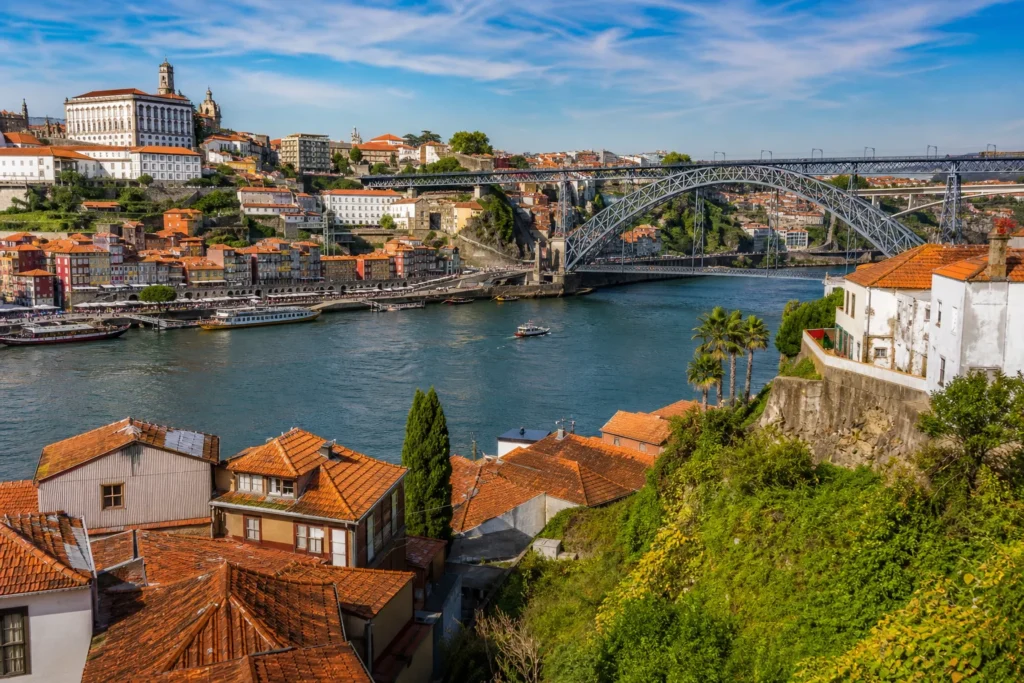
Plan your visit around Ribeira, Dom Luís I Bridge, and more of Porto, Portugal.
Discover the best things to do in Porto, Portugal, from signature sights to memorable local experiences.
Start with the riverside Ribeira and follow the city’s steep, terraced streets to panoramic viewpoints, Baroque churches, and contemporary museums.
Porto’s compact historic core concentrates landmarks. The Dom Luís I Bridge, Porto Cathedral and Clérigos Tower.
Alongside modern anchors such as Casa da Música and Fundação de Serralves, making the city easy to explore on foot with occasional short transit hops.
Why Visit Porto
Visitors come for Porto’s tightly knit mix of heritage and contemporary culture: explore the Ribeira waterfront and the vaulted Palácio da Bolsa, climb the Clérigos Tower for city panoramas, and visit the Gothic‑Baroque Igreja de São Francisco for its ornate interiors.
Book and architecture lovers seek Livraria Lello’s celebrated interior. Music and performance are anchored at Casa da Música.
Modern art, landscaped parkland and sculpture await at Fundação de Serralves.
The Jardins do Palácio de Cristal offer quiet walks and skyline views, and together these sites make short, walkable circuits showcasing Porto’s architecture, museums, river life and gastronomy.
Top Things to Do in Porto, Portugal
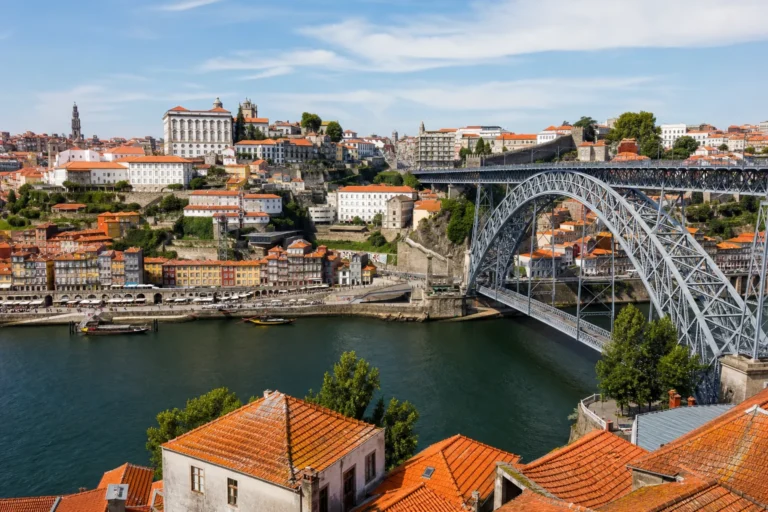
Porto’s principal attractions cluster into compact, walkable circuits along the Douro and in the historic centre. Below are the city’s signature places — riverside streets, major viewpoints, museums and performance venues — with practical notes to plan visits and combine nearby sites.
Ribeira (Cais da Ribeira riverside district)
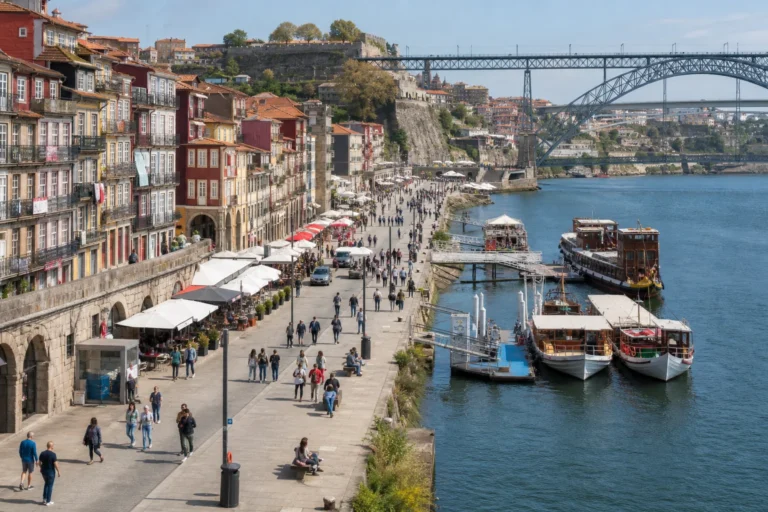
Ribeira is Porto’s historic riverside quarter, a compact neighbourhood that rises from the Douro’s edge onto narrow medieval streets. The area is characterised by tightly packed, colourful façades, centuries‑old granite buildings and a lively promenade beside the river where cafés and terraces sit next to boat moorings for Douro excursions.
Part of Porto’s UNESCO‑listed historic centre, Ribeira reads as a lived‑in mix of daily port activity and tourism. Visitors commonly combine a riverside stroll with a short river cruise or a crossing to Vila Nova de Gaia to visit port wine cellars; quieter side streets and early‑morning visits reveal different moods of the district.
Dom Luís I Bridge (Ponte Luís I)
Dom Luís I Bridge is a late‑19th‑century double‑deck iron arch engineered by Théophile Seyrig that links Porto and Vila Nova de Gaia. Its large single arch and twin decks have become one of Porto’s defining silhouettes, framing views of the Douro and the tile‑clad roofs on the opposite bank.
Pedestrians can cross either deck to experience different sightlines: the upper deck provides panoramic views of the city and river, while the lower deck offers a closer sense of quay life. Walking the bridge at different times of day shows how light animates the ironwork and the riverside facades.
Porto Cathedral (Sé do Porto)
Porto Cathedral (Sé do Porto) crowns one of the city’s oldest hills and reads as an architectural palimpsest with Romanesque origins and later Gothic and Baroque additions. Its fortress‑like massing, thick granite walls and twin towers reflect medieval civic and ecclesiastical power, while the cloister’s azulejo tiles and carved capitals reward close inspection.
Inside, a compact Gothic choir, Baroque chapels and a treasury of liturgical objects illustrate centuries of local devotion. The cathedral’s elevated position frames long views down to the Douro and makes it a convenient orientation point when walking Porto’s historic centre.
Clérigos Tower (Torre dos Clérigos)
Clérigos Tower (Torre dos Clérigos), designed by Nicolau Nasoni, is an eighteenth‑century baroque bell tower that dominates Porto’s skyline. The tower is part of a complex that includes the oval‑plan church and a small museum documenting the brotherhood’s history and the church’s architecture.
Visitors climb the tower’s internal stair to reach a high viewing gallery with near 360‑degree panoramas over Porto’s tile roofs, the Douro River and Vila Nova de Gaia. The climb itself reveals construction details and shifting views, while the museum and church provide context on the ensemble’s baroque artistry.
Palácio da Bolsa (Stock Exchange Palace)
Palácio da Bolsa is a nineteenth‑century neoclassical palace built for Porto’s Commercial Association on the site of a former Franciscan convent.
The building’s sequence of state rooms moves from restrained civic spaces to the theatrical Salão Árabe (Arab Room), a Moorish‑revival showpiece with polychrome stucco, carved ornament and a gilded dome designed to impress visiting dignitaries.
Guided tours explain the palace’s commercial history, the Nations’ Courtyard and decorative schemes that reflect Porto’s nineteenth‑century commercial reach. Allow time to read the layers of the building where institutional use continues alongside public visitor routes.
Igreja de São Francisco (Church of Saint Francis)
Igreja de São Francisco pairs a striking Gothic exterior with an interior almost completely covered in talha dourada (gilded woodcarving), making it one of Europe’s most spectacular Baroque interiors. Externally the church retains a plain, fortress‑like Gothic massing typical of mendicant Franciscan architecture; inside the nave and chapels shimmer with dense giltwood altarpieces and ornament.
The complex includes a treasury with silverwork and devotional objects, and darker crypt areas that add further layers of material history. Visiting here combines an appreciation of medieval fabric with the later Baroque decorative overlay.
Livraria Lello (Lello Bookshop)
Livraria Lello is an early‑twentieth‑century bookstore celebrated for its sweeping carved wooden staircase, stained‑glass skylight and neo‑Gothic/Art Nouveau interior created during a 1906 remodelling. The compact shoproom houses shelves of new and second‑hand books alongside decorative plasterwork and sculpted tributes to Portuguese writers, so a visit combines browsing with architectural appreciation.
Because the interior is compact and valued for preservation, visitors are encouraged to check official visitor resources and consider timed entry. The shop maintains cultural programming and occasional exhibitions that connect its publishing history to Porto’s literary life.
Casa da Música
Casa da Música is Porto’s purpose‑built concert hall, conceived for the city’s European Capital of Culture programme and realised from a design by Rem Koolhaas. The bold, faceted exterior marks the site as both civic object and acoustic instrument, while inside several auditoria and rehearsal spaces organise a sequence of public foyers and performance rooms.
The main hall is acoustically designed for symphonic work and staged productions; smaller venues host chamber, experimental and community projects. Guided tours explain the building’s structural logic and acoustic solutions.
Check official resources for current performances and educational programming.
Fundação de Serralves (Serralves Museum and Park)
Fundação de Serralves combines a contemporary art museum designed by Álvaro Siza Vieira with the Art Deco Casa de Serralves and extensive landscaped parkland. The museum’s galleries and light‑filled circulation negotiate with existing trees and terrain to present twentieth‑ and twenty‑first‑century art in a measured setting.
The park offers formal gardens, wooded glades, lawns and outdoor sculptures that link the museum to the villa and chapel. Paths and signposting guide a coherent circuit; the estate also hosts education programmes, archives and a research library focused on modern art and architecture.
Verify special exhibitions on official resources before visiting.
Official Fundação de Serralves (Serralves Museum and Park) website →
Jardins do Palácio de Cristal (Crystal Palace Gardens)
Jardins do Palácio de Cristal are nineteenth‑century public gardens perched above the Douro that mix formal promenades, tree‑lined avenues and wooded sections stepping down the hillside.
The layout provides multiple outlooks across the river to Vila Nova de Gaia, with avenues of lime and plane trees, a rose garden, terraces and belvederes that frame panoramic river views.
The gardens function as civic open space for recreation, concerts and seasonal events and sit near central institutions and hospitals. Visitors are rewarded by stopping at viewpoints, using shaded paths and exploring quieter lanes away from the busiest terraces; check city park resources for event schedules or access conditions before arrival.
Best Time to Visit Porto
Porto’s mild Atlantic climate makes it pleasant most of the year. For the most reliable outdoor comfort choose late spring (May.
June) or early autumn (September. October) when temperatures are moderate, daylight is long and crowds are smaller than in peak summer.
Shoulder seasons retain cultural programmes and museum openings while avoiding the busiest weeks in July and August. Winters are cooler and wetter but quieter for indoor attractions and wine lodges; coordinate travel with announced cultural seasons if you prefer festival activity.
SPECIAL EVENTS IN Porto
EDP Porto Marathon (Maratona do Porto)
The EDP Porto Marathon is Porto’s flagship long-distance road race, combining competitive marathon running with shorter 10 km and 6 km options and major city-wide festival atmosphere. It attracts international and local runners who enjoy a scenic course along the Douro River, lively crowd support, and race expo events that showcase Porto’s culture and hospitality. Travelers may plan around race weekend for closures and special transport arrangements and to enjoy the city’s food, riverside views, and post-race festivities.
- Dates
- November 8, 2026
Fantasporto — Porto International Film Festival
Fantasporto is Porto’s long-running international genre film festival focused on fantasy, horror, science fiction and boundary-pushing cinema. The festival programs international premieres, retrospectives, competitions and industry events, attracting filmmakers, critics and fans. Travelers come for late-night screenings, masterclasses and award nights, and for the chance to see both established auteurs and emerging talent in an intimate festival setting. Fantasporto’s central-city screenings and festival atmosphere make it a high-value cultural experience for cinephiles and visitors seeking distinctive film programming alongside Porto sightseeing.
- Dates
- February 26, 2027 - March 7, 2027
- Venue
- Batalha Centro de Cinema
Primavera Sound Porto
Primavera Sound Porto is the Porto edition of the internationally known Primavera Sound festival, staged in the city’s large urban park. The multi-day event brings a wide mix of international and Portuguese artists across multiple stages, drawing both local visitors and international travelers. It’s notable for combining high-profile indie, electronic and alternative acts with a relaxed park-and-ocean setting—making it an attractive cultural and travel occasion for music fans, weekend-break tourists, and those seeking vibrant city hospitality alongside live performances.
- Dates
- June 10, 2027 - June 13, 2027
- Venue
- Parque da Cidade (Parque da Cidade do Porto)
Getting Around Porto
Porto’s historic core is compact and best explored on foot—many approved attractions cluster within short walking distances along the riverside and central streets.
The city also has an integrated public transit network: metro lines link the airport and suburbs to the centre, while trams and an extensive bus network fill gaps; funiculars and escalators help bridge steep slopes. Taxis and ride‑hailing are widely available.
Expect cobbles and steps in older districts; allow extra time for uphill walks and use public transit for longer trips or luggage.
Location
Map of Porto, Portugal
The interactive map loads only when you choose to view it.
Plan Your Visit to Porto
Porto is compact and best explored on foot plus occasional public transport for longer hops. Buy an Andante card (rechargeable or tourist variants) for multimodal travel across metro, urban trains, funiculars and many buses.
Validate at trip start and when changing modes.
Purchase or top up at metro and main train stations or use the Andante app. For concentrated sightseeing consider the official Porto.CARD or Andante Tour tickets for short‑term unlimited travel.
Visit official tourist offices for maps, accessibility info and up‑to‑date transit guidance.
Local Tips for Porto
Many top attractions cluster into walkable neighborhoods but include steep streets and cobbles—wear comfortable shoes and expect steps. Time visits to popular indoor sites midweek or early morning to avoid crowds.
Buy or reserve tickets in advance for Livraria Lello and Casa da Música when possible. Rely on official tourist centres for guided‑walk options and recommendations for viewpoints, riverbank cafés and safe walking routes along the Douro.
Live conditions
Current Weather

Updated 2026-09-21 18:45
- Feels like
- 26°C / 78°F
- Today’s high / low
- 34°C / 94°F · 23°C / 73°F
- Humidity
- 23%
- Wind
- ↖ 13 km/h
- Precipitation
- 0 mm
- Chance of rain
- 1%
- Local time
- 2026-09-21 18:53
Safety in Porto
Porto is generally safe, with visible tourist‑focused policing and municipal services—seek assistance from the Tourism Police desk at Praça Pedro Nunes or official tourist offices if needed. Standard urban precautions apply: watch belongings in crowded areas and on public transport, keep copies of travel documents and register incidents with local police (PSP).
Use licensed taxis or official ride apps at night, avoid poorly lit alleys, and check health services or your insurer for emergency procedures before travel.