
Travel Guide
Plan your visit around Vieux Lyon, Basilica of Notre-Dame de Fourvière, and more of Lyon, France.
Discover the best things to do in Lyon, France, from signature sights to memorable local experiences.
Start with the city’s layered neighbourhoods: the Presqu’île’s grand squares and shopping streets, UNESCO‑listed Vieux Lyon and hilltop Fourvière, the market life of Croix‑Rousse and modern museums at Confluence.
Lyon’s compact centre makes it easy to combine food, history and parks in a few short walks. Confirm museum or venue pages for closures or booking rules before you travel.

Why Visit Lyon
Visitors come to Lyon for the convergence of history, food and accessible urban culture: world‑class bouchons and markets, the UNESCO‑listed Vieux Lyon and Fourvière’s archaeological ensemble, expansive Parc de la Tête d’Or, and innovative venues such as the Musée des Confluences.
The compact centre encourages walking between Presqu’île’s squares, Croix‑Rousse’s artisan streets and the Confluence waterfront, so you can combine gastronomy, historic exploration and contemporary culture in short outings.

Top Things to Do in Lyon, France
Lyon’s compact centre links distinctive neighbourhoods, rivers and parks—plan walking itineraries that mix Renaissance streets, hilltop views and contemporary museums. Below are the essential experiences to help structure a visit.
Vieux Lyon (Old Town)
Historic Renaissance quarter between the Saône and Fourvière hill that forms part of Lyon’s UNESCO World Heritage site. Wander narrow cobbled streets to see Saint‑Jean cathedral, inner courtyards and the famous traboules (covered passageways).
The area mixes traditional bouchons, artisan shops and nearby museums and is best explored on foot; many routes include steep slopes, steps and uneven paving, and some private traboules can be closed or restricted at times.
Basilica of Notre-Dame de Fourvière
Late‑19th‑century basilica perched on Fourvière hill, notable for its ornate interior mosaics and sweeping panoramic views over Lyon. The sanctuary is open to visitors with free entry, and the site includes a small museum and guided‑tour options by reservation.
Access routes include the Jardin du Rosaire, the Vieux‑Lyon funicular and local buses; security screening, occasional religious services and restricted areas can affect access—check the basilica’s visitor pages for current information.
Parc de la Tête d'Or
Lyon’s largest urban park (about 117 hectares) combining formal lawns, wooded promenades, a large lake with boating, an orangery and extensive horticultural displays. Highlights include a free botanical garden, rose collections and a small city‑run zoo, making it ideal for picnics, cycling and family outings.
Several facilities (greenhouses, indoor exhibits, zoo areas) operate under separate management and may have seasonal hours or maintenance closures—verify access rules on the city’s official park pages.
Presqu'île and Place Bellecour
The Presqu’île peninsula between the Rhône and Saône is Lyon’s commercial and ceremonial core, anchored by the broad, largely pedestrian Place Bellecour. Stroll 18th–19th‑century boulevards, pedestrian shopping streets and café terraces; Rue de la République and Rue Victor‑Hugo are key shopping spines.
The area often hosts festivals and markets that can change circulation or access—check municipal notices if arriving by car or organising group visits.
Musée des Confluences
A major museum of natural history, anthropology and science at the Rhône–Saône confluence, housed in a striking glass‑and‑steel building. The permanent parcours links natural specimens, ethnographic collections and thematic installations, while rotating temporary exhibitions and visible conservation work supplement the displays.
Temporary exhibitions and some activities commonly require advance tickets or reservations; check the museum’s official visitor pages for booking and access notices.
La Croix-Rousse (hill and historic district)
A 19th‑century neighbourhood centered on the Croix‑Rousse hill, historically tied to Lyon’s silk industry. Experience broad plateau boulevards, steep narrow streets, artisan ateliers, markets and panoramic viewpoints.
The area preserves textile heritage through places like Maison des Canuts and weaving demonstrations; many traboules and interior courtyards cross private property and can be closed or accessible only on guided tours—verify access and reservation rules in advance.
Official La Croix-Rousse (hill and historic district) website →
Théâtre antique de Fourvière / Roman sites on Fourvière
A large archaeological ensemble on Fourvière hill including a Roman theatre and odeon set among terraces and ruins. The exposed seating and stage remains frame panoramic city views and are interpreted with panels and linked displays at the nearby Lugdunum museum.
The theatre doubles as a cultural stage for summer festivals and performances; scheduled events, archaeological work or conservation projects can affect access, so check Lugdunum and festival pages before visiting.
Official Théâtre antique de Fourvière / Roman sites on Fourvière website →
Opéra de Lyon / cultural institutions on the Presqu'île
The Opéra national de Lyon occupies a restored 19th‑century house updated by Jean Nouvel and hosts opera, ballet and orchestral productions. Guided tours cover foyers, the auditorium and backstage areas, offering insight into the building’s architecture and production machinery.
Tours and visits are organised on specific days and usually require advance reservation; performance schedules, safety or technical requirements can restrict access on show days.
Official Opéra de Lyon / cultural institutions on the Presqu'île website →
Best Time to Visit Lyon
Late spring through early autumn (May–September) is best for terraces, riverfront promenades and park life. Spring and early summer bring mild walking weather; autumn has cooler, clear days and festival programming with fewer peak‑summer crowds.
Winters are quieter and focus on indoor attractions—prioritise May–September for outdoor terraces and gardens. Always check official attraction pages for seasonal maintenance or booking requirements.
Getting Around Lyon
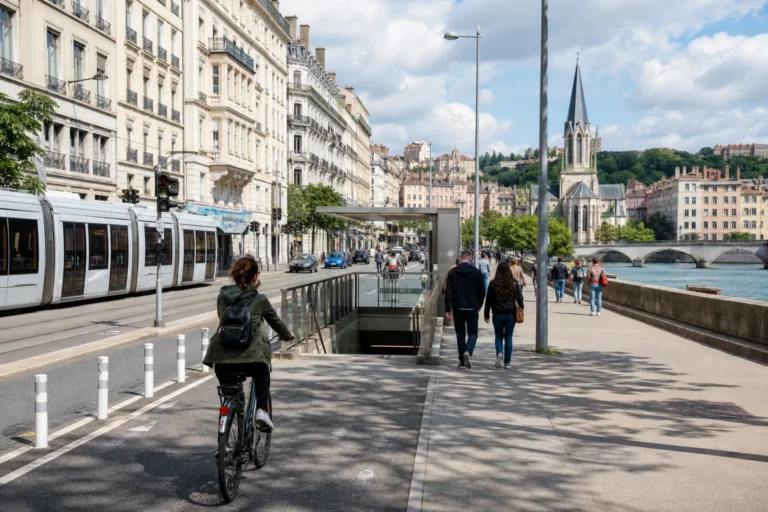
Central Lyon’s main districts are compact and walkable, with extensive metro, tram and bus coverage linking Presqu’île, Vieux Lyon, Croix‑Rousse and Confluence. Major rail hubs are Part‑Dieu and Perrache; Lyon–Saint‑Exupéry handles flights.
Vélo’v bike stations, e‑scooters and taxis are widely available—buy a TCL carnet or day pass for multiple short trips and check transport notices for strikes or works.
Location
Map of Lyon, France
The interactive map loads only when you choose to view it.
Plan Your Visit to Lyon
Check official municipal and attraction pages before visiting: museums, greenhouses and some indoor exhibits commonly post seasonal hours, maintenance closures or timed‑entry rules. Parc de la Tête d’Or facilities and the zoo may have separate schedules; the basilica of Fourvière operates security screening and may restrict baggage.
Reserve timed tickets for popular temporary exhibitions, Fourvière guided options or specialised museum programs.
Local Tips for Lyon
The core neighbourhoods—Presqu’île, Vieux Lyon, Croix‑Rousse and Fourvière—connect easily by foot, funicular and metro. Buy a TCL carnet or day pass for multiple short journeys; Vélo’v stations and e‑scooters are useful for short hops.
Museums and sites commonly publish timed‑entry recommendations—reserve ahead for popular temporary exhibitions, guided Fourvière visits and Musée des Confluences programs. Expect larger crowds and extra transit service during weekends and festival evenings.
Live conditions
Current Weather

Updated 2026-09-22 00:45
- Feels like
- 11°C / 52°F
- Today’s high / low
- 24°C / 76°F · 11°C / 52°F
- Humidity
- 31%
- Wind
- ↖ 9 km/h
- Precipitation
- 0 mm
- Chance of rain
- 1%
- Local time
- 2026-09-22 00:57
Safety
Central Lyon is generally safe, but pickpocketing occurs in crowded tourist zones, transit and markets—carry only essentials and use zipped bags. Respect riverfront barriers and official notices near the Rhône and Saône; avoid unauthorised swimming.
During heat waves the city issues measures that affect park and greenhouse access. Large events increase security and can involve bag checks or restricted access—check official notices before you go.