
Travel Guide
Plan your visit around Goldenes Dachl, Innsbruck Altstadt, and more of Innsbruck, Austria.
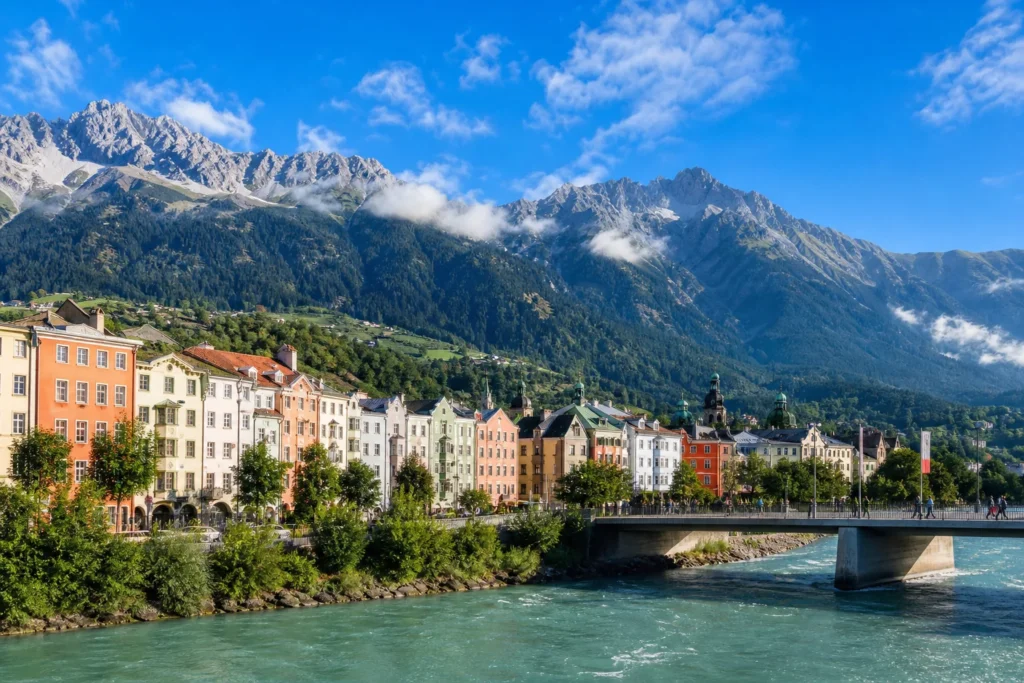
If you’re searching for things to do in Innsbruck you’ll find a unique blend of baroque and medieval city culture tucked beneath dramatic Alpine ridgelines.
The compact Altstadt centers on the gilded Goldenes Dachl and Habsburg sites such as the Hofburg and Hofkirche, while the Nordkette cable‑car network delivers direct access to high‑alpine views, hikes and winter sports just above the city.
Why Visit Innsbruck
Innsbruck pairs a compact imperial and medieval core with immediate access to high mountains. You can explore concentrated Habsburg history.
Goldenes Dachl, Hofburg, Hofkirche and Schloss Ambras. Then, within minutes, take the Nordkette lifts to alpine ridges for panoramic views, hiking or winter sports.
Bergisel adds modern sporting architecture and sweeping city vistas. The city’s size, regional rail links and integrated mountain transport make it efficient for short cultural breaks or active alpine itineraries.

Top Things to Do in Innsbruck, Austria
From medieval streets to summit viewpoints, Innsbruck packs cultural highlights and direct mountain access into a compact city center. The list below organizes the essential sites and experiences to help you plan a short city break or an active alpine day trip.
Goldenes Dachl (The Golden Roof)
The Goldenes Dachl is Innsbruck’s most photographed late‑medieval landmark and a central emblem of Habsburg prestige. Commissioned by Emperor Maximilian I around 1497–1500, the ornamented balcony projects over Herzog‑Friedrich‑Straße and is roofed with thousands of gilded copper tiles.
The façade’s reliefs and painted surfaces advertise imperial iconography and courtly pageantry designed to impress passing dignitaries.
Today a compact museum within the building interprets the monument’s construction, Maximilian’s ambitions and the Goldenes Dachl’s changing role over centuries. For best appreciation stand back to view the gilding and carved details from street level, then examine panels and models in the museum that explain lost decorations and the building’s ceremonial function.
Innsbruck Altstadt (Old Town)
Innsbruck’s Altstadt is the medieval core where narrow streets, painted façades and civic towers reflect the city’s role at a historic trade crossroads.
Herzog‑Friedrich‑Straße forms the spine of the district, lined with arcades, distinctive houses such as the Helblinghaus and the City Tower; the street links the Goldenes Dachl, Imperial Palace cluster and several churches within a compact, walkable area.
The area rewards slow walking: alleyways reveal hidden courtyards, sculpted plaques and surviving medieval shopfronts, while mountain views frame the urban fabric. The Altstadt is both historically layered and unusually scenic, so pause at viewpoints, church interiors and small museums to place architectural details in context.
Nordkette / Top of Innsbruck (Nordkette cable car and mountain views)
The Nordkette—reached via the Hungerburg funicular and two cable‑car stages—provides one of the most direct urban‑to‑alpine experiences in Europe. The lift sequence rises to Seegrube and on to the Hafelekar summit, gaining nearly two vertical kilometres while framed cabins and modern stations progressively open panoramic views of the Inn valley and the Karwendel limestone ridges.
Seegrube offers viewing platforms, the Path of Perspectives and mountain restaurants; Hafelekar, the “Top of Innsbruck,” gives a high vantage point above surrounding peaks with marked trails and dramatic ridgelines. Visitors combine short walks, ridge hikes or winter sports here.
The ascent is weather‑dependent and can be windy, so bring layers and sturdy footwear and check lift operations before you go.
Schloss Ambras (Ambras Castle)
Schloss Ambras occupies a wooded hill south of Innsbruck and is celebrated as one of Europe’s earliest collection‑museums. Remodeled in the Renaissance under Archduke Ferdinand II, the castle presents curated spaces—the Spanish Hall, the Armoury and the Kunst‑ und Wunderkammer—that once staged princely ceremony and collecting.
The Spanish Hall’s painted ceiling and portrait sequence recall formal receptions, while the armoury and chamber of curiosities reflect martial display and Renaissance collecting practices.
Outside, terraced Renaissance gardens frame views over Innsbruck and the surrounding mountains, giving the site both defensive origins and later leisure character. Visitor information and seasonal exhibitions change, so consult the castle’s official guidance before planning a visit.
Hofkirche (Court Church, tomb of Emperor Maximilian I)
The Hofkirche houses a monumental cenotaph to Emperor Maximilian I surrounded by a procession of 28 life‑size bronze figures—locally dubbed the “Schwarzmander.” This visually dense ensemble mixes portraiture, heraldry and sculptural theatre to express Habsburg memory and legitimacy; the tomb itself functions as an ‘eternal remembrance’ rather than a burial site.
The interior preserves carved marble reliefs and a historically important organ, and the church’s proximity to the Hofburg makes it easy to combine both sites in one visit. The atmosphere is intimate and contemplative; for seasonal closures, special services or conservation work check official sources before you go.
Hofburg Innsbruck (Imperial Palace)
Hofburg Innsbruck is the former imperial palace whose fabric records medieval fortifications, Habsburg remodelling and later Baroque and Rococo updates. The complex groups courtyards, representative rooms and residential wings that once served administration and ceremonial purposes for the regional court.
Key experiences focus on the Imperial Apartments and richly furnished state rooms that illustrate princely taste and ritual. The palace also contains ecclesiastical fittings such as the Silver Chapel and preserved façades and staircases that trace shifts in architectural fashion.
It sits on the historic spine of the city and forms a compact cultural precinct with nearby monuments.
Bergisel Ski Jump (Bergisel Tower and viewing platform)
Perched on Bergisel hill, the Bergisel Ski Jump blends sporting infrastructure with contemporary architecture—its reconstruction in the early 2000s added a stadium, inclined lift, restaurant and an elevated viewing platform.
The tower functions as both operational sports engineering and a sculptural landmark visible from the valley, and it offers panoramic terraces overlooking Innsbruck, the Inn valley and the Nordkette.
Visitors can reach the site on foot or by inclined lift, then use the tower lift to access the panoramic terrace. Interpretive panels and guided tours explain the hill’s sporting technology and its role in regional history.
Expect wind and rapid weather changes at tower level, so dress in layers and check access arrangements before visiting.
Tyrolean State Museum Ferdinandeum
The Tyrolean State Museum Ferdinandeum is Innsbruck’s principal regional museum for art, archaeology and cultural history. Its collections span prehistory to contemporary art and combine archaeological finds, medieval and Renaissance painting, Baroque and 19th‑century local art, and notable Northern European works that place Tyrolean culture in a broader context.
Galleries are arranged thematically—an archaeological basement that traces early settlement, period painting rooms and displays of applied arts—so a slow, room‑by‑room visit rewards attention to labels and provenance. The museum supports conservation and scholarly work and collaborates with other regional sites; check the museum’s official information for current exhibitions and access arrangements.
Best Time to Visit Innsbruck
Late spring through early autumn (mid‑May to late September) is the most reliable period for combining city sightseeing with alpine activities: lifts and most trails are open, daylight is long, and mountain views are clear.
Summer (June–August) is warmest and busiest; late spring and early autumn (May–early June, September) offer fewer crowds and lower accommodation costs. Winter (December–March) suits visitors focused on skiing, Bergisel ski‑jump views and a festive Altstadt atmosphere, but expect cold, shorter days and winter‑sport crowds.
SPECIAL EVENTS IN Innsbruck
Innsbrucker Bergweihnacht (Innsbruck Christmas Markets / Christkindlmarkt)
The Innsbrucker Bergweihnacht bundles seven distinct Christkindlmarkt sites across the city, offering a mix of traditional stalls, family programming and panoramic mountain settings. Visitors come for regional handicrafts and seasonal food, atmospheric lighting installations and unique local traditions—plus a compact walking route that links the markets. This program is a major winter attraction for travelers seeking a compact, high‑alpine Christmas experience with easy public-transport access and choices ranging from lively old‑town markets to quiet, scenic hilltop markets.
- Dates
- November 13, 2026 - December 23, 2026
- Venue
- Herzog-Friedrich-Straße (Old Town / Golden Roof)
Bergsilvester (Mountain New Year’s Eve) — Seegrube / Nordkette & Innsbruck city celebrations
Bergsilvester is Innsbruck’s signature New Year’s Eve program that pairs a lively city celebration in the historic centre with a dramatic mountain fireworks show from the Seegrube on the Nordkette. Visitors come for the rare combination of alpine panorama and urban party — daytime family programming and runs in the Altstadt give way to open‑air music, DJs and a cable‑car experience up to the mountain viewpoint. Travelers should plan transport (tickets often required for the cable car) and expect large crowds.
- Dates
- December 31, 2026
- Venue
- Seegrube (Nordkette) / Nordkette cable car summit area
Four Hills Tournament (Vierschanzentournee) — Bergisel (Innsbruck)
The Four Hills Tournament’s Bergisel stop in Innsbruck is a highlight of the international ski-jumping circuit, staged at the iconic Bergiselschanze overlooking the city. Part of the historic Vierschanzentournee/Four Hills series, the Innsbruck event attracts top jumpers and thousands of spectators for a lively stadium atmosphere, dramatic hill architecture and panoramic alpine views. Travelers come for the sporting spectacle, winter festival energy and easy access to Innsbruck’s hotels, dining and transport connections—making it a signature winter-sports cultural experience.
- Dates
- January 2, 2027 - January 3, 2027
- Venue
- Bergiselschanze (Bergisel Ski Jump)
Adidas TERREX Innsbruck Alpine Trailrun Festival
The adidas TERREX Innsbruck Alpine Trailrun Festival is a multi-day trailrunning festival in Innsbruck that combines urban starts, high-alpine trails, a broad race program (from short city-friendly routes to multi-distance ultras), an industry expo, and side‑events. Organized by Laufwerkstatt, it draws thousands of international runners and outdoor brands and offers strong spectator options such as cheering buses. Travelers value the festival for active mountain experiences, testing gear, lively alpine culture, and the chance to combine racing or spectating with sightseeing and seasonal outdoor activities in Tyrol.
- Dates
- May 5, 2027 - May 8, 2027
Getting Around Innsbruck
Innsbruck’s core is compact and very walkable—most Altstadt sights sit within a short stroll. Trams and buses connect neighbourhoods and the railway station, while regional ÖBB trains link Tyrol.
The Hungerburgbahn and Nordkettenbahnen carry visitors from the city up to Seegrube and Hafelekar. Buses serve Bergisel and Schloss Ambras; cycling is popular along the Inn river.
Consider the Innsbruck Card or regional Welcome Card if you plan multiple museum entries and public-transport trips.

Location
Map of Innsbruck, Tyrol, Austria
The interactive map loads only when you choose to view it.
Plan Your Visit to Innsbruck
Allow 60. 90 minutes for major museums such as the Tyrolean State Museum Ferdinandeum, Hofkirche and Schloss Ambras.
Longer if you want to read labels or join guided tours. If you plan to ride the Nordkette cable car to Seegrube and Hafelekar, budget 3–4 hours for ascent, short hikes and return.
Use the public-transport network to reach Bergisel and Schloss Ambras; central tram and bus stops link to the Nordkettenbahnen. Book tower access, special guided tours and peak-season services in advance.
Local Tips for Innsbruck
Walk the Altstadt to see the Goldenes Dachl, Hofkirche and Hofburg—sturdy shoes help on cobbles and narrow lanes. The Innsbruck Card often bundles public transport and attraction entries, and is useful if you plan several museum visits or a Nordkette ascent.
For Nordkette lifts, choose mid-morning or late-afternoon departures to avoid peak crowds and to catch clearer mountain views. Approach Schloss Ambras from Schlossstraße and allow time for the terraced gardens.
Carry a small layered jacket: mountain weather can change quickly even in summer.
Live conditions
Current Weather

Updated 2026-11-04 21:00
- Feels like
- -5°C / 23°F
- Today’s high / low
- 8°C / 47°F · -2°C / 29°F
- Humidity
- 94%
- Wind
- ↓ 8 km/h
- Precipitation
- 0 mm
- Chance of rain
- 18%
- Local time
- 2026-11-04 21:15
Safety in Innsbruck
Innsbruck is generally safe, but standard alpine and urban precautions apply. On mountain routes check weather and lift status before setting out; trails can be steep and exposed—use proper footwear, water and a layered jacket.
In winter, follow lift-operator and local authority advisories because avalanche and rapid weather changes affect higher-altitude access. In busy tourist areas secure valuables to reduce pickpocket risk.
For medical emergencies dial the Austrian emergency numbers (112/144) and contact local tourism offices for healthcare directions if needed.