
Travel Guide
Plan your visit around Sea Organ, Greeting to the Sun, and more of Zadar, Croatia.
Discover the best things to do in Zadar, Croatia, from signature sights to memorable local experiences.
Zadar is a compact Dalmatian port city where a walled Old Town and Roman remains sit beside inventive seaside art and lively waterfront promenades.
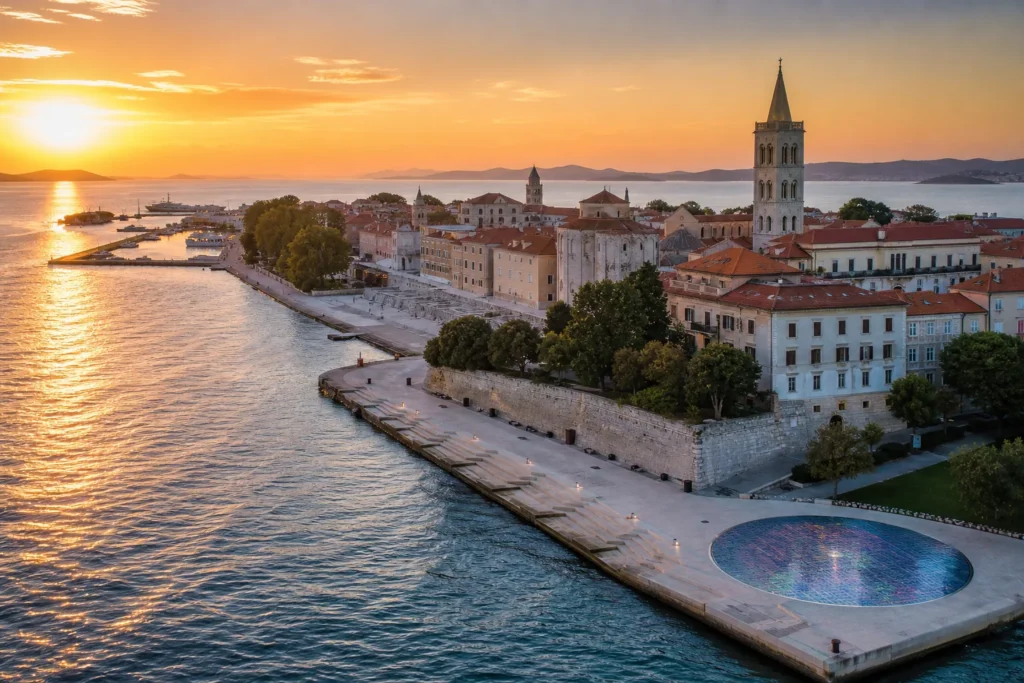
For travelers seeking things to do in Zadar, the peninsula concentrates major monuments within short walks while modern installations such as the Sea Organ and the solar-powered Greeting to the Sun create a memorable seaside atmosphere.
Why Visit Zadar
Zadar pairs visible classical archaeology with inventive public art: sit by the Sea Organ for wave‑driven music and watch the Greeting to the Sun light up at dusk. The compact Old Town concentrates major monuments within short walks, and the region offers day trips to Kornati National Park, Krka and nearby islands.
Travelers who want an intimate coastal city with historic depth and convenient access to marine excursions will find Zadar well suited to those aims.
Top Things to Do in Zadar, Croatia
The best of Zadar is concentrated on its rocky peninsula and waterfront: modern installations, Roman remains and compact squares make for easy walking and memorable sunsets.
Sea Organ (Morske orgulje)
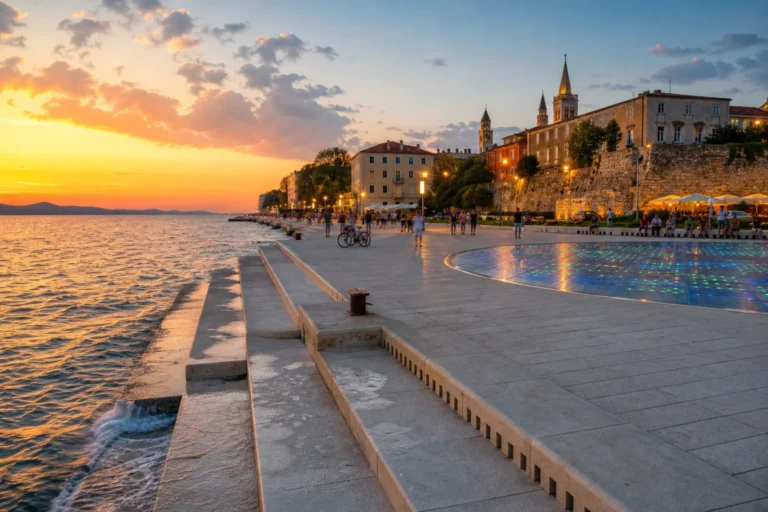
An experimental musical installation set into the seaward steps of Zadar’s western waterfront. Designed by Nikola Bašić and opened in 2005, the Sea Organ converts wave motion into tones via submerged resonant chambers and pipes; visitors listen from the marble terraces as the sound changes with sea state and weather.
It’s an outdoor public work with no ticket required, best experienced by pausing at the water’s edge—check municipal sources for any temporary maintenance or access changes.
Greeting to the Sun (Pozdrav Suncu)
A 22‑metre circular, ground‑level light installation next to the Sea Organ that stores solar energy in daytime and runs a programmed LED light sequence after dark. Also designed by Nikola Bašić, the installation invites daytime exploration of its glass panels and planet markers and produces multicoloured evening displays best viewed after dusk.
It is an outdoor public artwork with no admission; verify operation if you need confirmation of the light show during maintenance or outages.
Zadar Old Town (historic peninsula)
The compact stone peninsula (Poluotok) forms Zadar’s historic core, where Roman street grids, medieval churches and Venetian ramparts coexist. Wandering narrow, stone‑paved lanes, pausing in small piazzas, and viewing layered monuments is the primary experience; the area concentrates museums, cafés and local shops and is largely pedestrian.
Some interiors and museum spaces require separate admission and may be affected by conservation work or events, so check official sources for closures before planning indoor visits.
Roman Forum
Zadar’s principal ancient public square dating from the 1st century BC through the 3rd century AD. The forum survives as visible archaeological fragments—colonnade bases, paved surfaces and a standing column—and sits adjacent to later landmarks like St. Donatus and the cathedral.
It’s primarily an outdoor archaeological area; some displays or protected zones may be managed by local museums and could require tickets or have temporary restrictions.
Church of St. Donatus
A monumental 9th‑century circular pre‑Romanesque rotunda built atop the Roman Forum, St. Donatus is Zadar’s iconic early medieval monument. The church reuses Roman material and offers a powerful interior volume prized for its acoustics; it’s often used for concerts and museum displays rather than regular parish functions.
Programming, conservation or festival use can affect public access, so confirm opening details with official museum or city sources.
Cathedral of St. Anastasia (Zadar Cathedral)
Zadar’s principal medieval basilica and archdiocesan seat, the Cathedral of St. Anastasia combines Romanesque and Gothic elements and houses important relics. The adjacent campanile (bell tower) is often open to visitors for panoramic views, though access and interior visitation can be limited by liturgical schedules, conservation work or diocesan rules.
Confirm tickets or timed access for the tower and any interior restrictions with official cathedral or tourist authorities.
Official Cathedral of St. Anastasia (Zadar Cathedral) website →
Archaeological Museum Zadar
One of Croatia’s oldest regional museums, the Archaeological Museum Zadar houses collections from prehistory through the medieval period, linking the Old Town’s visible remains with archaeological context. Exhibits include pottery, inscriptions and sculpture that explain local excavations; some displays and satellite units may require separate admission.
Check the museum’s official site for current opening status, temporary exhibitions or gallery closures before visiting.
Land Gate (Kopnena vrata)
The monumental 1543 Renaissance Land Gate (Kopnena vrata) is Zadar’s principal Venetian-era city entrance, notable for its richly carved stone façade and winged lion motif. Experienced as an outdoor architectural threshold into the Old Town, it sits within the surviving fortifications and ramparts.
The gate and adjoining walls are public monuments, but parts of the ramparts or approaches may be subject to conservation work or temporary closures—check municipal heritage notices if you plan to explore the walls.
Five Wells Square (Trg Pet Bunara)
A late 16th‑century raised Renaissance square notable for its five historic well‑heads that once supplied the city’s freshwater. Framed by medieval walls and the Captain’s Tower, Five Wells Square is a photogenic public plaza used for strolling, markets and terraces rather than indoor exhibits.
Access is free from the pedestrian network, though adjacent events or conservation work can alter sight lines or temporary access.
Kornati National Park (excursion from Zadar)
An archipelago of largely uninhabited limestone islands prized for dramatic cliffs, clear water and remote marine scenery—Kornati National Park is best visited by boat from Zadar. Day trips focus on swimming, snorkelling and viewing sheer limestone cliffs and sheltered bays; there are minimal services ashore, so excursions concentrate on marine stops rather than built attractions.
The park requires entry permits and enforces mooring and landing rules to protect habitats, so verify current permit procedures, buoying arrangements and seasonal restrictions on the official park site before booking.
Official Kornati National Park (excursion from Zadar) website →
Best Time to Visit Zadar
The most pleasant months are late spring (May. June) and early autumn (September.
Early October), when sea temperatures remain warm, daylight is long and crowds are smaller than in July. August.
These shoulder seasons offer comfortable walking weather and easier access to national parks and island excursions.
Winter is quieter with lower rates but reduced tourist services; travelers who want festivals and full marine access should prioritize late spring through early autumn.
SPECIAL EVENTS IN Zadar
Zadar Organ Festival
Zadar Organ Festival is a specialized annual music festival in Zadar that pairs organ concerts with interdisciplinary performances and educational workshops. Presented across the city’s historic settings, the festival highlights both local and international organists while exploring contemporary programming and transcriptions. Travelers who enjoy classical and liturgical music, historic architecture, or intimate cultural events will find distinctive concert settings and community-focused workshops. The festival also supports youth education and aims to broaden public appreciation for organ repertoire and living musical heritage.
- Dates
- September 10, 2026 - September 24, 2026
- Venue
- Multiple venues in Zadar (e.g., Captain's Tower, St. Anastasia's Cathedral and other historic sites)
Getting Around Zadar
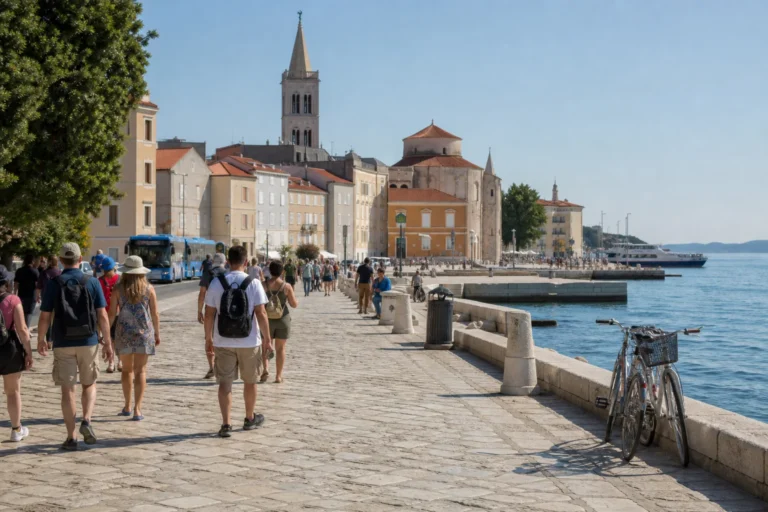
Zadar’s historic peninsula is highly walkable, and most main sights are reached on foot. For travel beyond the Old Town use the city bus network or airport shuttle; ferries and catamarans operate from Gaženica for island connections and Kornati excursions.
Cars help for inland exploration but parking in the Old Town is limited; cycling is popular for short coastal routes.
Location
Map of Zadar, Croatia
The interactive map loads only when you choose to view it.
Plan Your Visit to Zadar
Book boat trips to Kornati or Telašćica in advance because the park requires visitor permits and operators often manage entry. Many full‑day excursions depart early (around 08:00) and return late afternoon; expect limited shade on some boats and a risk of sea sickness on longer crossings.
Zadar Airport offers a short bus or taxi transfer to the city; regional buses and ferries connect the area seasonally, so verify timetables before travel. Check official sites for museum or church closures, conservation work, or temporary access changes.
Local Tips for Zadar
Plan most daylight hours on foot around the low stone peninsula. The Sea Organ and Greeting to the Sun sit on the waterfront promenade (Riva); surfaces are uneven stone and can be slippery when wet.
Morning and late‑evening visits reduce crowds and are best for sunset views. Many Kornati and island departures use Liburnska obala and nearby piers—confirm meeting points, luggage limits and schedules with operators before arrival.
Live conditions
Current Weather

Updated 2026-09-21 17:30
- Feels like
- 25°C / 77°F
- Today’s high / low
- 27°C / 80°F · 20°C / 68°F
- Humidity
- 55%
- Wind
- ↑ 18 km/h
- Precipitation
- 0 mm
- Chance of rain
- 14%
- Local time
- 2026-09-21 17:38
Safety
Zadar is generally safe. Take normal precautions with belongings in crowded areas, at the Riva and on busy boats.
The waterfront steps and natural bathing spots have uneven rock and sudden drops—use marked swim areas and follow crew safety briefings. Protect yourself from strong sun and carry water; in emergencies call 112.
For up‑to‑date pier relocations, closures or park limits, consult official sources before booking.