
Travel Guide
Find top sights, local places, maps, weather, and simple trip tips for Barcelona, Spain.
Looking for Things to Do in Barcelona, Spain? Use this guide to compare top sights, local tips, maps, weather, and nearby places.
Barcelona is a compact Mediterranean metropolis where world-class Modernist architecture, concentrated cultural institutions, and a lively waterfront meet broad public parks.
If you’re searching for things to do in Barcelona, begin with Antoni Gaudí’s signature works. The Sagrada Família, Park Güell, Casa Batlló and La Pedrera.
Then weave through the medieval Barri Gòtic, stroll La Rambla to the harbour, and reserve time for Montjuïc’s museums and viewpoints.
The city’s dense transport network and walkable neighbourhoods make it practical to pack major highlights into a short stay while leaving room for relaxed seaside or museum days.
Why Visit Barcelona
Visitors come for an exceptional mix of architecture, art, and seaside city life. Gaudí’s concentrated ensembles are uniquely accessible, the Barri Gòtic preserves narrow medieval streets and plazas, and La Rambla links central squares to the waterfront at Barceloneta and Port Vell.
Montjuïc adds museums and panoramic parkland. Barcelona’s compact layout encourages walking between major sites, and a year‑round cultural calendar—museums, performing arts and food markets—keeps the city lively across seasons.
Top Things to Do in Barcelona, Spain
Barcelona’s highlights cluster by neighbourhood and theme: Gaudí’s modernist landmarks, the medieval Gothic Quarter, waterfront beaches and Montjuïc’s museums and gardens. Below are the principal sites and what to expect at each.
Sagrada Família
Visiting the Sagrada Família feels like entering a forest of stone and light. Antoni Gaudí’s design uses soaring columns that branch like trees, drawing the eye upward toward carved ceilings and richly colored stained glass.
The interior’s interplay of structural daring and chromatic glazing changes with the daylight, creating shifting moods throughout the day.
The project began in the late nineteenth century and became Gaudí’s life work; some façades and early elements were finished under his supervision while other parts have continued to evolve from his models and notes.
Focus on the façades, the nave and the small on-site museum, and allow for timed-entry tickets and possible conservation work when planning your visit.
Park Güell
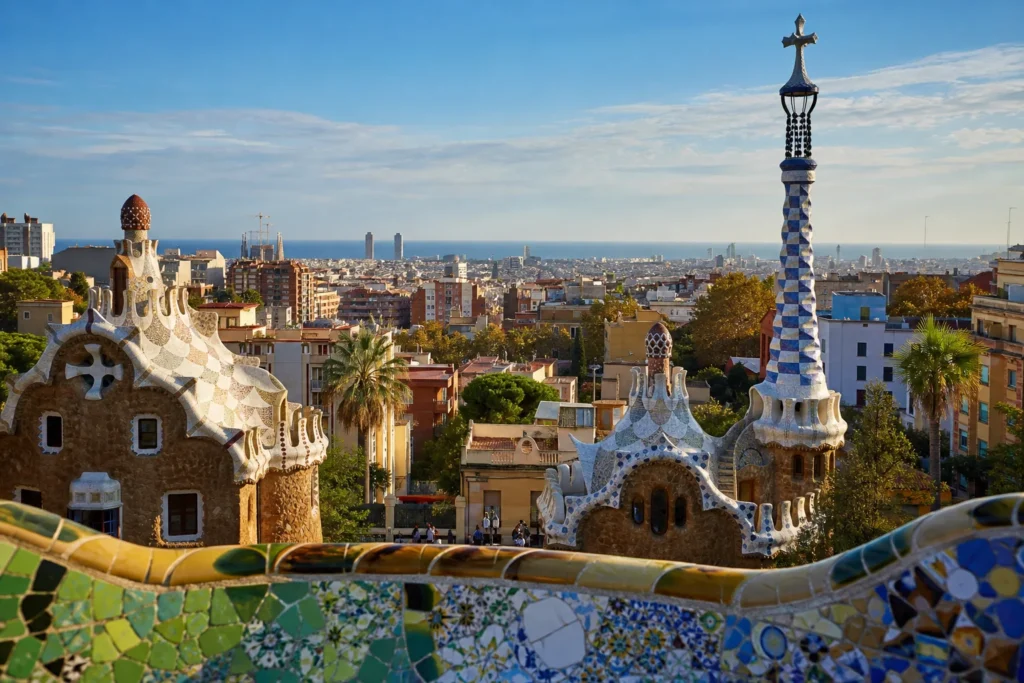
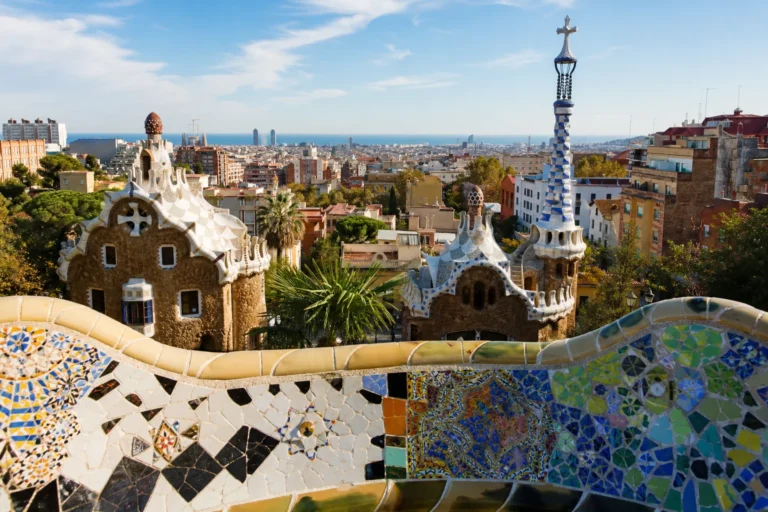
Park Güell spreads Gaudí’s imagination across terraces, viaducts and planted slopes, blending architecture and landscape on the Carmel hillside. The monumental terrace with its serpentine bench offers panoramic city views, while the Hypostyle Room of columns and the colorful sculpted salamander at the main entrance are among the site’s most visited features.
Eusebi Güell commissioned Gaudí as part of a garden-city plan; Gaudí adapted the steep terrain with sinuous benches, covered colonnades and elevated walkways using trencadís mosaic and local materials.
Park Güell is both a municipal green space and a protected monumental zone, so check timed-entry rules for the monumental area and allow time to explore the surrounding gardens.
Casa Batlló
Casa Batlló reads as a sculpted, sunlit interior world. Gaudí remodelled an 1877 building with near-total creative freedom, creating an undulating façade of ceramic and stone and a sequence of light-filled rooms that curve without obvious corners.
The house’s decorative program evokes the sea, bones and natural forms, resulting in one of Catalonia’s key Modernisme works.
Plan to visit the Noble Floor, the attic with its catenary arches, and the rooftop with scaled tiles and sculptural chimneys that form the structure’s signature profile. The building now functions principally as a cultural visit with interpretive displays and controlled access for conservation, so verify access arrangements before your visit.
La Pedrera (Casa Milà)
La Pedrera, or Casa Milà, stands like a carved cliff on Passeig de Gràcia with a rippling limestone façade and wrought-iron balconies. Gaudí’s iron-and-stone frame allowed flowing interior layouts and a hung façade, freeing the building from load-bearing walls and enabling continuous, undulating surfaces that suggest movement.
Highlights include the brick catenary-arch attic that reveals Gaudí’s engineering logic, the sculptural rooftop with helmeted chimneys and ventilation towers, and restored apartment displays that explain original domestic life.
La Pedrera is a World Heritage site and cultural facility; allow time for the rooftop and attic and consult official visitor information for routes and conservation notices.
Barri Gòtic (Gothic Quarter)
The Barri Gòtic condenses Barcelona’s historical heart into a dense network of narrow streets, small squares and layered building faces. Beneath its medieval surface lie Roman Barcino remains and fragments of the old city wall.
Civic squares such as Plaça Sant Jaume and the Plaça del Rei frame important palaces and museum displays tied to the city’s civic and medieval past.
Architecturally the quarter blends authentic medieval fabric with nineteenth-century restorations and Gothic revival façades; landmark churches include Barcelona Cathedral and Santa Maria del Pi. The area is compact but uneven underfoot, often crowded, and rewards slow wandering down side lanes to find quieter corners, local shops and intimate courtyards.
La Rambla
La Rambla is Barcelona’s famous central promenade stretching from Plaça de Catalunya to the waterfront. It reads as a long shaded pedestrian mall with a wide central walkway flanked by cafés, kiosks, trees and historic institutions such as the Gran Teatre del Liceu and the Mercat de la Boqueria.
The avenue is lively with street performers, flower stalls and newsstands and often very crowded, which creates energy but also practical issues like noise and pickpocketing risks.
Use La Rambla as an axis to explore adjacent neighbourhoods—Plaça Reial and side streets offer calmer squares and historic passages—and check for municipal projects or temporary works that may affect the promenade.
Montjuïc (including MNAC and hill attractions)
Montjuïc is a layered public place where sweeping urban views meet museums, gardens and twentieth-century architecture. The Palau Nacional sits on the 1929 exhibition axis and houses the Museu Nacional d'Art de Catalunya (MNAC), whose collection ranges from Romanesque mural painting to Catalan modern art.
The building and its entrance sequence provide courtyard spaces and vistas that help explain the hill’s cultural role.
Nearby anchors include the Joan Miró Foundation, Poble Espanyol and the 1992 Olympic Ring. The hill also holds a nineteenth-century fortress, themed gardens and a mix of terraces and ramps.
Movement across Montjuïc mixes stairways, funicular and cable‑car links; plan time to move between sites and use transport where helpful.
Barceloneta Beach & Port Vell
Barceloneta and Port Vell show how Barcelona meets the sea, combining a dense historic neighbourhood with an active old harbour and an urban beach. Barceloneta began as an eighteenth‑century maritime quarter and still preserves narrow streets, seafood restaurants and traces of seafaring life beside a long sandy shore used by locals and visitors alike.
Port Vell is the city’s old harbour, now stitched to promenades, marinas and cultural buildings such as the aquarium and the Palau de Mar. Walkways connect the marina to the Rambla del Mar and the waterfront; the beach’s wide promenade and line of cafés serve day use but can be very busy in summer.
Best Time to Visit Barcelona
Spring (late March. June) and autumn (September.
October) offer the most pleasant conditions: sea breezes moderate temperature and humidity, and outdoor terraces and attractions are comfortable without peak summer crowds. Winter is mild and relatively dry with lower prices, good for museum-focused trips and festivals.
Midsummer draws the largest tourist volumes, higher accommodation costs and hotter days—still appealing for beachgoers but expect busier monuments and longer lines. Check attraction schedules and avoid relying on single-day weather trends.
Special events
Upcoming Events
La Mercè (Festa Major de Barcelona)
La Mercè is Barcelona’s largest annual city-wide festa major celebrating the city’s patron saint. It transforms public squares and streets with parades, correfocs (fire runs), castellers (human towers), large free concerts, traditional Catalan performances, family activities and a major pyromusical fireworks show. Travelers will find a dense, lively program spread across neighborhoods—an opportunity to sample local music, food and communal traditions—but should plan for crowds, street closures and evening events that run late into the night.
- Dates
- September 23, 2026 - September 27, 2026
Primavera Sound Barcelona
Primavera Sound Barcelona is a major international music festival centred at the Parc del Fòrum that draws diverse headliners across indie, pop, hip‑hop, electronic and experimental music. Travellers come for late‑night sets, the festival’s wide discovery programme, and the citywide ‘Primavera a la Ciutat’ events that turn Barcelona into a live‑music week. The festival is well suited to visitors who want large‑scale concerts plus easy access to beaches, neighbourhood restaurants and public transit rather than a camping experience.
- Dates
- June 3, 2027 - June 5, 2027
- Venue
- Parc del Fòrum
Festival Cruïlla Barcelona
Festival Cruïlla is Barcelona’s multi-genre summer music and culture festival, blending international and local artists with comedy, visual arts and food offerings. Travelers appreciate its relaxed, open-air atmosphere, strong public-transport links, and programming that mixes headline acts with emerging talent across diverse styles. The event is suitable for day and evening visits, offers options for families and groups, and is a good way to experience contemporary Catalan culture alongside global music trends in a seaside urban setting.
- Dates
- July 7, 2027 - July 10, 2027
- Venue
- Parc del Fòrum
Getting Around Barcelona
Barcelona’s compact centre is served by a dense multimodal network: an extensive metro and tram system plus local and regional trains link neighbourhoods and the airport. Buses fill surface gaps; many central attractions are walkable—Passeig de Gràcia, the Gothic Quarter, Montjuïc slopes and the waterfront are best explored on foot.
Bike lanes and public bike/e‑scooter services suit short trips, while taxis and ride-hailing cover off‑hour needs. For Catalonia day trips, use regional Rodalies/Media Distancia trains or coach services from Barcelona-Sants and Estació de França.
Location
Map of Barcelona, Spain
The interactive map loads only when you choose to view it.
Plan Your Visit to Barcelona
Plan neighbourhood-focused days—Eixample for Gaudí, Barri Gòtic for medieval streets, Barceloneta for the beach. The city uses a unified ticket system for metro, buses and trams; buy multi-day travel cards or single tickets at stations.
The L9 Sud metro, Aerobús shuttle and RENFE R2 connect El Prat airport with the city. Major attractions are busiest late morning–afternoon; reserve timed-entry tickets where offered and allow transit time between dispersed sites.
Local Tips for Barcelona
Carry a small reusable water bottle and comfortable walking shoes—many streets are cobbled. Eat and shop where locals do: market halls such as La Boqueria and neighbourhood tapas bars offer better atmosphere and prices than the main tourist strips.
Use side streets in the Gothic Quarter for quieter cafés and photos. For beaches, bring sunscreen and a light cover; city beaches prohibit smoking.
Learn a few Catalan or Spanish phrases and consult official visitor centres and transport hubs for maps and schedules.
Live conditions
Current Weather

Updated 2026-08-24 03:45
- Feels like
- 28°C / 82°F
- Today’s high / low
- 27°C / 80°F · 25°C / 76°F
- Humidity
- 71%
- Wind
- ↙ 9 km/h
- Precipitation
- 0 mm
- Chance of rain
- 57%
- Local time
- 2026-08-24 04:01
Places to Visit Near Barcelona
Passeig de Gràcia hosts Casa Batlló and La Pedrera and is well served by metro stops and taxis, making it a practical base for Eixample walking routes.
Plaça de Catalunya is a central transport hub for Aerobús, metro and regional trains and a convenient starting point for La Rambla and local connections.
The Sagrada Família neighbourhood has its own metro stop and tourist services, with bike rentals and visitor-oriented shops nearby.
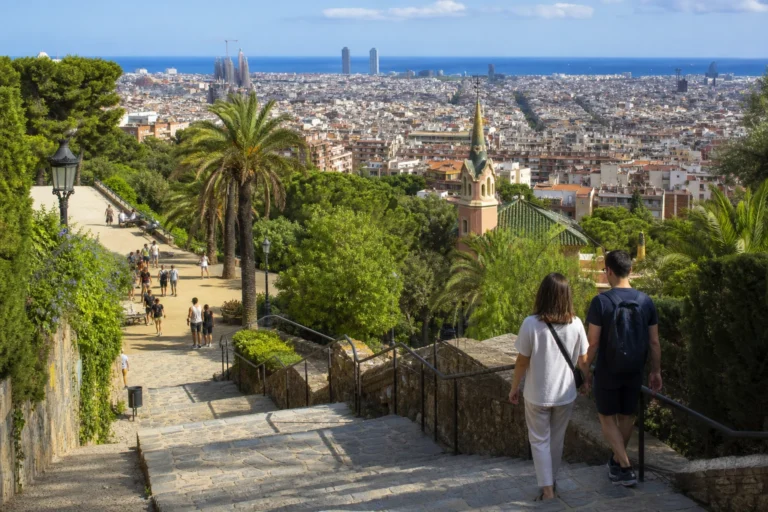
Park Güell is reachable by bus and a short uphill walk from Vallcarca and Lesseps metro stations. Plan for the climb and timed-entry zones.
Montjuïc links to Poble-sec and Paral·lel metro; cable car, funicular and bus services help move visitors between the hill’s dispersed attractions.
Safety in Barcelona
Barcelona is generally safe for visitors but pickpocketing and tourist-targeted theft are the most common problems in crowded areas (La Rambla, metro, markets, beaches). Use zipped front bags, keep phones out of back pockets, and be extra vigilant on public transport and at major attractions.
Emergency services and local police (Guàrdia Urbana, Mossos d’Esquadra) can assist; report thefts promptly to obtain a police report for insurers. Follow posted guidance at beaches and viewpoints and observe crowd-management instructions.