
Travel Guide
Find top sights, local places, maps, weather, and simple trip tips for Istanbul, Türkiye.
Looking for Things to Do in Istanbul, Türkiye? Use this guide to compare top sights, local tips, maps, weather, and nearby places.
If you’re searching for things to do in Istanbul, start where Europe and Asia meet: the city’s historic peninsula concentrates Hagia Sophia, Topkapı Palace and the Sultanahmet ensemble, while Beyoğlu, Galata and Kadıköy offer cafés, galleries and lively streets.
Narrow lanes, waterfront ferries and elevated viewpoints reveal different layers of history, making the city rich in compact walking itineraries and scenic crossings.
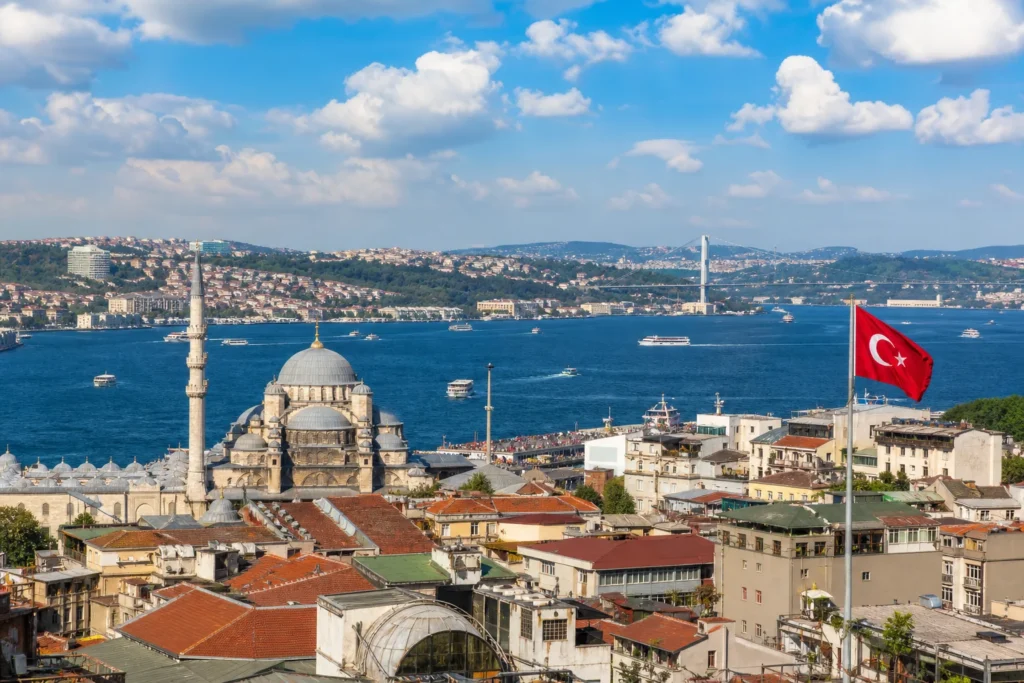
Why Visit Istanbul
Visitors come for an unmatched convergence of history, architecture and everyday urban life. Byzantine and Ottoman monuments such as Hagia Sophia, the Blue Mosque and Topkapı Palace display layered craftsmanship, while bazaars, street food and teahouses showcase living cultural traditions.
Neighborhoods from Galata to Balat reveal boutique galleries and restored houses, and short Bosphorus ferry rides add scenic variety. Short stays can sample major highlights; longer visits reward deeper exploration of markets, museums and neighborhood rhythms.
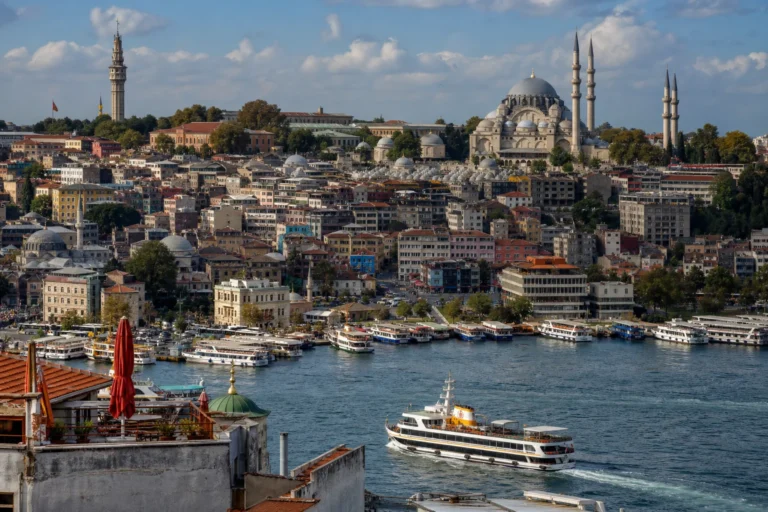
Top Things to Do in Istanbul, Türkiye
Istanbul’s major attractions cluster into compact routes that work well on foot or by short tram and ferry rides. Below are the city’s signature sites and what makes each one distinctive.
Hagia Sophia (Ayasofya)
Built between 532 and 537 as a Byzantine imperial basilica, Hagia Sophia’s enormous central dome rests on pendentives—an engineering solution that influenced churches and mosques across centuries.
The single, soaring interior volume contains Byzantine mosaics alongside later Ottoman additions: large roundels with Arabic calligraphy, a mihrab and minbar coexist with mosaic images of Christ and the Virgin. Across fourteen centuries the building alternated as cathedral and mosque, later becoming a museum and experiencing functional changes in 2020.
Expect active worship at certain times and check official sources for access and guided‑tour arrangements before visiting.
Topkapı Palace
Topkapı Palace began soon after 1460 as the Ottoman sultan’s principal residence and expanded into a sequence of courtyards, pavilions, libraries and administrative buildings. The palace layout separates public, administrative and private functions into distinct courts; visitors move along a clear route through successive spaces that shift in tone from ceremonial to intimate.
Highlights include the Third Court’s treasury collections and the clustered Harem with hundreds of rooms revealing everyday palace life. The terraces and gardens frame views across the Bosphorus; because conservation and access rules change, verify official guidance before you go and allow time to move slowly between courts and galleries.
Sultanahmet (Blue) Mosque
Commissioned by Sultan Ahmed I in the early seventeenth century, the Sultanahmet Mosque—known as the Blue Mosque—unites a central dome and cascading semi‑domes into a unified crown. Inside, extensive İznik tilework and painted calligraphy shape a contemplative interior with numerous clerestory windows that admit diffuse daylight.
The qibla wall contains a carved mihrab and minbar, and expansive carpets mark the prayer area. The mosque remains an active place of worship; visitors should dress respectfully, avoid disrupting prayers, and consult custodial sources for conservation and guided‑visit arrangements.
Grand Bazaar (Kapalıçarşı)
The Grand Bazaar is one of the world’s oldest and most extensive covered market complexes, originating in the fifteenth century around two bedestens. Over centuries it expanded into a dense network of vaulted streets, hans, shops and fountains that created a self‑contained commercial quarter.
Trades historically clustered by street and guild—goldsmiths, carpet dealers and leatherworkers—shaping specialist lanes that visitors can still sense today. Expect a labyrinth of narrow alleys, dense visual displays and a lively bargaining culture; because the bazaar remains a working market, check the managing authority for route planning and visitor guidance.
Spice Bazaar (Egyptian Bazaar)
Located on the Eminönü waterfront beside the New Mosque, the Spice Bazaar is a compact, L‑shaped Ottoman‑era market known in Turkish as Mısır Çarşısı. Built in the mid‑seventeenth century as part of the Yeni Cami külliyesi, the bazaar historically functioned as a trading terminus for imported goods.
Inside, stalls present piled spices, loose teas, dried fruit, nuts and lokum, mixing long‑established family businesses with newer specialty producers. The atmosphere blends daily trade with tourist browsing; bring small cash or card options and allow time to move slowly through the scented aisles.
Basilica Cistern (Yerebatan Sarnıcı)
The Basilica Cistern, or Yerebatan Sarnıcı, is a large subterranean reservoir constructed in the sixth century under Emperor Justinian to supply the Great Palace and nearby buildings. Entering the cistern reveals a vaulted forest of 336 marble columns—many with Ionic and Corinthian capitals—arranged in a regular grid above still water and reflected light.
Two carved Medusa heads serve as striking visual anchors, placed as column bases at one corner. Raised walkways let visitors circulate while preserving the water; check official site information for lighting, access routes and conservation notices before visiting.
Galata Tower
Galata Tower rises above the Galata quarter as a stout cylindrical stone drum with a conical cap and an upper terrace that offers wide panoramas of the Golden Horn, the Bosphorus and the historic peninsula.
The standing stone tower dates to the Genoese rebuilding of 1348 and has served varied civic roles—from defensive watchtower to Ottoman fire‑observation post and, more recently, an interpretation site with exhibition floors.
Approaching through Beyoğlu’s steep, dense streets enhances the tower’s theatrical setting; plan time for the neighborhood walk and verify current visitor access and conservation information.
Dolmabahçe Palace
Dolmabahçe Palace, built between 1843 and 1856 on the European Bosphorus shore, announces itself with a formal waterfront façade and imperial gardens. The palace replaced earlier waterfront residences and concentrated late‑Ottoman ceremonial life into 285 rooms, 46 reception halls and lavish state settings such as the Ceremonial Hall with its giant Bohemian crystal chandelier.
Interiors combine European decorative vocabularies with nineteenth‑century technology, and the complex preserves Selamlık and Harem sequences that reveal court protocol. Visitor circulation is normally managed to protect fragile interiors, so consult official sources for guided‑route details and closures.
Chora Museum (Kariye)
Chora (Kariye) offers one of Istanbul’s richest ensembles of late Byzantine mosaics and frescoes concentrated within a compact church plan. Funded in part by Theodore Metochites in the early fourteenth century, the decorative program represents the Palaiologan revival in Byzantine art with complex narrative cycles about the Virgin and Christ.
Light on gilded tesserae and painted scenes creates an intimate, jewel‑like effect distinct from large basilicas. The building sits near the ancient land walls; because the site’s use and access arrangements have changed to active worship at times, verify official guidance before visiting.
İstiklal Avenue (İstiklal Caddesi)
İstiklal Avenue is a long pedestrian boulevard linking Taksim to the Tünel area, offering a compact survey of the nineteenth‑ and early twentieth‑century Pera district. Walking its length takes you past late Ottoman façades, Art Nouveau details, shops, cafés, cinemas and cultural venues, with a small historic nostalgic tram running along the central track.
Side streets and arcades off the main axis hide quieter restaurants, independent galleries and long‑running public cinemas. Because the avenue stays lively day and night, crowds and occasional event closures can affect circulation—leave time to explore side streets for more intimate discoveries.
Best Time to Visit Istanbul
Istanbul is temperate: spring (April–June) and autumn (September–October) offer mild weather, longer daylight and fewer summer crowds. Spring brings flowering parks and pleasant walking; autumn has clear skies and seasonal markets.
Winter is wetter and occasionally snowy but quieter for museums and lower hotel rates, while summer is lively and festival-rich but can be hot and crowded. Plan ahead if visiting then.
Special events
Upcoming Events
Istanbul Theatre Festival (İstanbul Tiyatro Festivali)
The Istanbul Theatre Festival (İstanbul Tiyatro Festivali) is İKSV’s annual international theatre and performing-arts festival showcasing contemporary Turkish and international stage works across multiple Istanbul venues. It attracts touring companies, local premieres, talks, and outreach programmes, making it a key cultural draw for travellers who want live performance, evening cultural life, and curated festival programming. Visitors should consult the official festival site for programme details, accessibility information, tickets, and specific venue listings within Istanbul.
- Dates
- October 22, 2026 - December 3, 2026
Istanbul Marathon (İstanbul Maratonu)
The Istanbul Marathon is a major annual road race that uniquely runs between two continents, drawing thousands of elite and recreational runners. The course weaves past iconic Bosphorus views and historic neighborhoods, offering visitors dramatic spectator vantage points and citywide atmosphere. Travelers often plan around road closures and transport changes, and many combine race-day spectating with sightseeing. The event is organized by Istanbul Metropolitan Municipality and is a high-profile sporting and cultural moment for the city that attracts international participants and visitors.
- Dates
- November 1, 2026
- Venue
- Start: 15 July Martyrs Bridge Metrobus Station; Finish: Blue Mosque (At Meydanı / Sultanahmet Square)
Istanbul Biennial (İstanbul Bienali)
The Istanbul Biennial is a major contemporary-art exhibition organised by the Istanbul Foundation for Culture and Arts (İKSV) since 1987. It stages large, citywide exhibitions and public programmes across multiple venues, spotlighting international and regional artists and curatorial experiments. Travellers value it for concentrated access to contemporary Turkish and global art, temporary public installations, guided tours, and related talks and events that activate neighbourhoods across Istanbul—making it a culturally rich reason to time a visit around the biennial cycle.
- Dates
- September 18, 2027 - November 14, 2027
Getting Around Istanbul
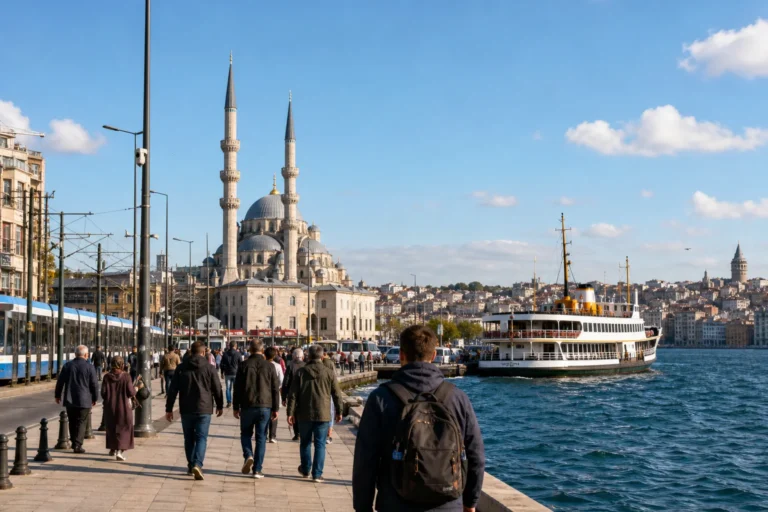
Istanbul’s transport mix includes metro, tram, suburban rail (Marmaray), ferries and buses. Central tourist sites link well by tram and metro, and Bosphorus ferries provide scenic, practical transfers between shores.
The city uses an integrated fare card across modes; short walking loops serve dense districts like Sultanahmet and Beyoğlu. Taxis and ride apps are common but surface traffic can be heavy at peak times, so prefer rail or ferries for cross‑Bosphorus trips when possible.
Location
Map of Istanbul, Türkiye
The interactive map loads only when you choose to view it.
Plan Your Visit to Istanbul
Use an Istanbulkart for integrated fares across metro, tram, Marmaray, buses and city ferries and load it before travel. Expect heavy road traffic during weekday rush hours—use municipal navigation and live cameras to time surface travel or prefer rail and ferries for cross‑Bosphorus transfers.
Carry an offline map and note major transfer hubs (Sirkeci, Yenikapı, Taksim, Kadıköy). For visa and entry rules consult the Republic of Türkiye Ministry of Foreign Affairs e‑visa guidance before arrival.
Local Tips for Istanbul
Group visits geographically—Sultanahmet, Galata and Karaköy concentrate many sights—to avoid repeated long commutes. Dress respectfully for mosque visits and carry a lightweight scarf; mosques remain active places of worship.
Use reputable taxi apps or official yellow taxis (agree fare or use meter) and prefer card payments at reputable cafés and museums, though some small vendors may accept only cash.
Buy a local SIM or eSIM at the airport or carrier shops (passport required for registration) and keep important addresses in both Latin script and Turkish for drivers.
Live conditions
Current Weather

Updated 2026-08-24 04:45
- Feels like
- 23°C / 74°F
- Today’s high / low
- 30°C / 87°F · 23°C / 73°F
- Humidity
- 75%
- Wind
- ↗ 14 km/h
- Precipitation
- 0 mm
- Chance of rain
- 4%
- Local time
- 2026-08-24 05:01
Places to Visit Near Istanbul
Sultanahmet is ideal for Hagia Sophia, the Blue Mosque and the Basilica Cistern. Eminönü puts you beside ferry piers and the Spice Bazaar.
Karaköy and Galata suit access to Galata Tower and İstiklal via Tünel. Taksim–Beyoğlu centers İstiklal Avenue, nightlife and tram connections.
Beşiktaş gives quick access to Dolmabahçe Palace and Bosphorus ferries, while Kadıköy on the Asian shore offers markets and regular ferries to European piers. For panoramic views consider İBB viewpoints such as Büyük Çamlıca maintained by the metropolitan municipality.
Safety and common risks
Istanbul is generally safe for visitors, but petty theft—particularly pickpocketing in crowded hubs, trams, ferries and markets—is the most common risk. Keep valuables secure in front pockets or zipped bags and follow embassy guidance and local emergency numbers.
Avoid unsolicited escorts from strangers and choose well‑reviewed venues for late‑night plans. Standard precautions—travel insurance, copies of documents, and awareness of nighttime routes—are recommended.