
Travel Guide
Find top sights, local places, maps, weather, and simple trip tips for Amsterdam, Netherlands.
Looking for Things to Do in Amsterdam, Netherlands? Use this guide to compare top sights, local tips, maps, weather, and nearby places.
Things to do in Amsterdam range from wandering the 17th‑century Canal Belt to visiting the concentrated museums on Museumplein and exploring intimate neighbourhoods like the Jordaan.
The city’s human scale, protected bike lanes and frequent public transport make it straightforward to combine a few major sites. Rijksmuseum, Van Gogh Museum and the Anne Frank House.
With park time in Vondelpark or a family visit to ARTIS and NEMO.
Why Visit Amsterdam
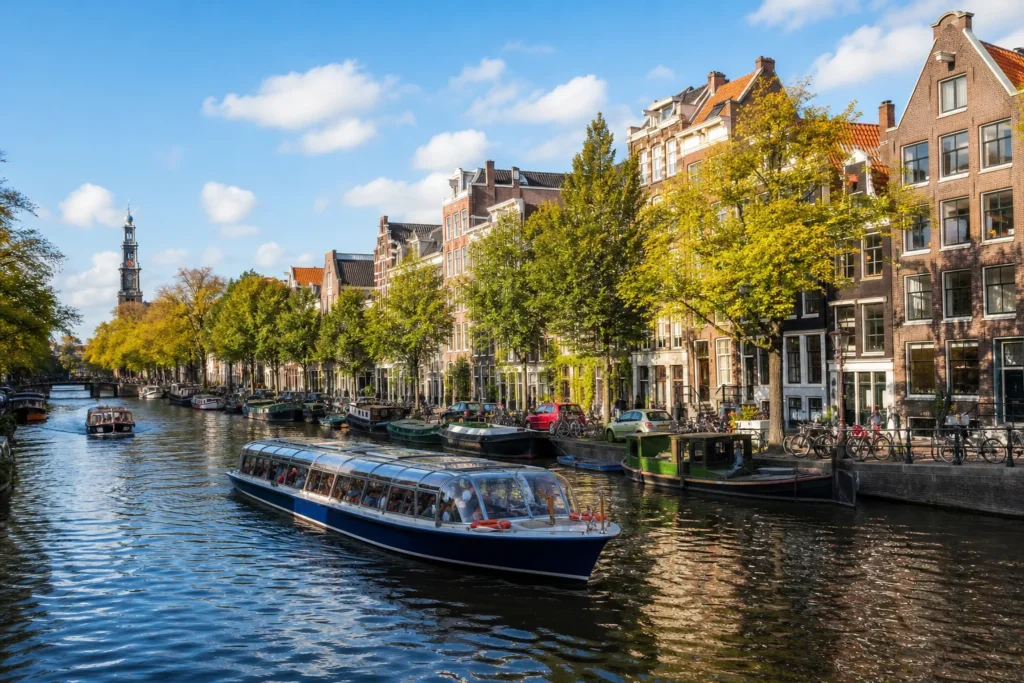
Amsterdam draws visitors for its unique mix of Golden Age canals, dense museum offerings and neighbourhood-scale urban life. Art lovers come for the Rijksmuseum and Van Gogh Museum; history and human‑rights visitors make time for the Anne Frank House.
The Canal Belt and preserved gabled houses create a highly walkable setting where street markets, cafés and independent shops amplify the city’s everyday character, making Amsterdam well suited to short cultural breaks or longer stays that combine museums, cycling and canal experiences.
Top Things to Do in Amsterdam, Netherlands
These core experiences cluster close together and can be combined into short walks, cycle rides or a few public‑transport hops. Reserve timed tickets for popular museums and allow several hours for major collections.
Rijksmuseum
The Rijksmuseum is the Netherlands’ national museum for art and history, with permanent displays that trace roughly 800 years of Dutch creative life. The collection holds about 8,000 objects—paintings, decorative arts and historical artifacts—arranged chronologically so visitors can follow cultural and artistic development across centuries.
The Gallery of Honour and Rembrandt’s Night Watch are focal points and occupy specially designed galleries with interpretive displays.
Housed in a landmark building by Pierre Cuypers (opened 1885) that underwent a major 2003–2013 restoration, the museum combines restored historic details with modern conservation facilities. Visitors typically spend several hours; free floorplans, audio guides and accessibility options help plan a visit.
The museum garden, café and shop are accessible without a ticket.
Van Gogh Museum
The Van Gogh Museum preserves the world’s largest collection of Vincent van Gogh material, including more than 200 paintings, some 500 drawings and about 700 letters that illuminate his technique, motives and relationship with his brother Theo.
The permanent route presents Vincent’s development chronologically, from early Dutch works through Paris studies, Arles paintings and his final pieces, with highlights such as Sunflowers, The Bedroom and The Potato Eaters.
The main building by Gerrit Rietveld (opened 1973) and the later Kurokawa wing house the permanent displays and rotating temporary exhibitions. The museum runs conservation and research programmes and typically requires timed tickets, so book ahead and check guidance on photography, cloakrooms and accessibility.
Anne Frank House
The Anne Frank House preserves the actual hiding place behind a movable bookcase on the Prinsengracht where Anne Frank and others lived in hiding during the German occupation.
The Annex is deliberately kept largely empty to respect its atmosphere, while adjacent interpreted galleries place Anne’s diary in the wider context of persecution, resistance and human‑rights education. The museum also houses archival items and classroom resources used in its teaching programmes.
Conservation is an active part of the site’s work: the bookcase, wallpaper and paper artifacts are stabilized and climate‑controlled to balance access with preservation.
Amsterdam Canal Belt (Grachtengordel)
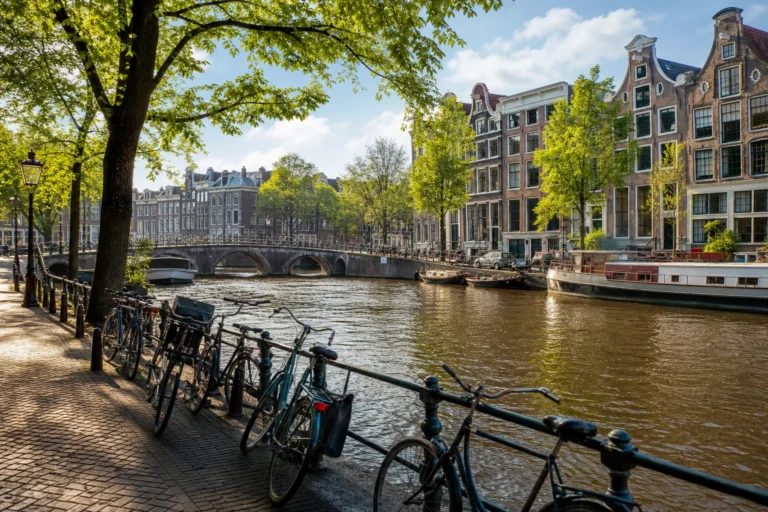
The Amsterdam Canal Belt, or Grachtengordel, is the semicircular 17th‑century ring of canals—Herengracht, Keizersgracht and Prinsengracht—that encircle the medieval centre. Built during the city’s Golden Age, the canal ring illustrates Dutch approaches to land reclamation and planned urban design and was inscribed as a UNESCO World Heritage property for its historic urban integrity.
Architectural highlights include narrow gabled facades, hoisting beams and merchant‑style entrances. The canal belt remains an active residential and commercial district with houseboats, hofjes and small bridges.
Best experienced by mixing short walks, cycling and a licensed canal cruise, the area rewards attention to façade details, hidden courtyards and how water shapes street rhythm.
Vondelpark
Vondelpark is Amsterdam’s best‑known public green space, designed in an English‑landscape idiom with winding paths, lawns, ponds and specimen trees. Originally begun as a private rij‑ en wandelpark in the mid‑nineteenth century, it was named after the poet Joost van den Vondel and was developed by the Zocher father‑and‑son landscape team.
Today the park functions as a green lung for residents and visitors, offering wide lawns for picnics, play areas and sheltered pavilions. The Openluchttheater hosts free and low‑cost summer performances, and historic buildings at the park’s edges frame visits.
Approach Vondelpark on foot or by bike, follow signed routes, and treat its habitats and fittings with respect.
Jordaan neighbourhood
The Jordaan sits immediately west of the seventeenth‑century canal ring and developed as an artisans’ and labourers’ quarter. Its narrow lanes, short streets named after trees and flowers, and hidden hofjes create a village‑like atmosphere that endures today.
Architecturally it mixes modest 17th‑ and 18th‑century merchant houses, 19th‑century workers’ housing and preserved courtyards.
Public life revolves around markets and small squares—Noordermarkt and Westerkerk provide useful orientation—and the neighbourhood rewards slow walking. Expect independent shops, small galleries and intimate cafés; look for hofjes and traces of past trades when exploring the area’s quieter corners.
Dam Square (Royal Palace)
Dam Square anchors Amsterdam’s historic centre and is dominated by the 17th‑century Royal Palace, originally built as the city hall by Jacob van Campen. The palace’s Burgerzaal (Citizens’ Hall) features inlaid maps, allegorical sculptures and a richly decorated interior that once housed municipal offices and now presents principal state rooms when not in ceremonial use.
Although still used for royal receptions, many state rooms are open to the public and tours emphasise architecture, civic ritual and the building’s imperial history. The square sits opposite the Nieuwe Kerk and near the National Monument, making it a convenient starting point for short walks through medieval streets.
ARTIS Royal Zoo
ARTIS Royal Zoo (Natura Artis Magistra) is a compact, historic city zoo in the Plantage quarter that combines living animals, botanical collections and museum‑style interpretation.
Founded in 1838, ARTIS blends nineteenth‑century listed buildings with contemporary enclosures, and visitors move through plazas, ponds and tree‑lined paths to see primates, big cats, a historic aquarium and a modern planetarium.
Micropia and the Groote Museum extend the zoo’s educational remit—Micropia showcases microbial life while the Groote Museum traces natural history collections. Conservation, research and public education are central to the park’s programming; check ARTIS’s visitor information for planetarium shows and temporary exhibitions.
NEMO Science Museum
NEMO is a hands‑on, family‑centred science museum housed in a distinctive copper‑green building by Renzo Piano, sited above the Oosterdok. Galleries invite tactile participation with experiment stations, live demonstrations and drop‑in workshops that explore energy, materials and human biology.
The rooftop piazza doubles as an urban viewpoint with long views over the IJ.
The museum emphasizes active learning and public experiments, with school programmes and staff‑led activities. Some workshops or lab sessions may require separate booking, and busy periods use timed admissions.
Verify accessibility options, group provisions and current visitor arrangements on the museum’s official site before you plan a visit.
Best Time to Visit Amsterdam
Late spring through early autumn is the most comfortable period for outdoor activities. Late April–June brings spring blooms and longer daylight; July–August is warmest and busiest with festivals and full outdoor café life.
September–early October often offers pleasant weather with fewer crowds. Winters are mild but wetter and darker, better suited to indoor museum visits and restaurant‑focused itineraries.
Special events
Upcoming Events
Amsterdam Fashion Week (AFW)
Amsterdam Fashion Week is the Netherlands’ leading fashion showcase, bringing runway shows, presentations, exhibitions and public activations across the city. It attracts established designers, emerging Dutch and international talent, buyers, and style-minded travelers seeking designer presentations, pop-up shops and cultural programming. Visitors can combine shows with museum talks, concept-store pop-ups and citywide installations that spotlight Amsterdam’s creative neighborhoods. Travelers should note ticketed shows coexist with many open-to-public exhibitions and markets, making AFW accessible whether you want insider industry events or wider fashion-focused experiences.
- Dates
- September 1, 2026 - September 5, 2026
- Venue
- Multiple venues across Amsterdam
Amsterdam Dance Event (ADE)
Amsterdam Dance Event (ADE) is a major international electronic music conference and city-wide club festival that attracts artists, industry professionals, and travelers. Visitors come for evening clubbing across Amsterdam’s venues, daytime industry programming (ADE Pro, ADE Lab), artist showcases, talks, and networking opportunities that shape electronic music trends. Travelers should note ADE’s widespread venue footprint across the host city, intense night programming, and strong demand for accommodation and advance tickets—making early planning essential for those wanting to experience both club events and conference sessions.
- Dates
- October 21, 2026 - October 25, 2026
International Documentary Film Festival Amsterdam (IDFA)
IDFA is the world’s leading annual documentary film festival based in Amsterdam, showcasing a wide range of nonfiction work alongside industry markets, talent programs, and new-media exhibitions. Travelers may care because the festival attracts international filmmakers, buyers, and large public audiences, creating opportunities for screenings, talks, and networking, plus a lively cultural program across the city. Its scale and industry presence make it a key event for visitors interested in documentary cinema, professional development, and timely cultural programming.
- Dates
- November 12, 2026 - November 22, 2026
- Venue
- Various venues across Amsterdam (including IDFA House / Het Documentaire Paviljoen and major city cinemas such as DeLaMar Theatre)
Holland Festival
Holland Festival is the Netherlands’ leading international performing-arts festival based in Amsterdam, presenting adventurous theatre, music and dance across multiple city venues. Travellers value it for high-profile international premieres, contemporary commissions and collaborations with major institutions, plus varied daytime city events that give cultural context to Amsterdam’s museums and neighbourhoods. The festival attracts art-minded visitors, offers ticketed performances and free public projects, and often coordinates with local venues and tourist services—making it a compelling cultural highlight for visitors seeking cutting-edge live performance.
- Dates
- June 3, 2027 - June 27, 2027
Getting Around Amsterdam
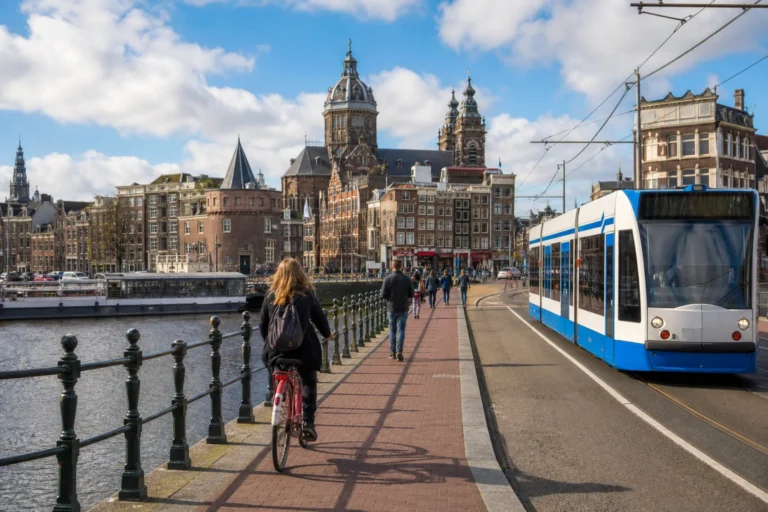
Amsterdam’s compact centre is highly walkable and ideal for short cycling trips. The city’s signed bike lanes and dense parking make cycling a fast local option; many visitors combine a rented bike with tram, metro and bus hops operated by GVB.
Regional and international connections run through Amsterdam Centraal (NS). Use OVpay/contactless, the OV‑chipkaart or the GVB app for seamless fares, and choose official ferries and licensed taxis when needed.
Location
Map of Amsterdam, Netherlands
The interactive map loads only when you choose to view it.
Plan Your Visit to Amsterdam
Plan visits by combining walking, short cycle rides and public transport. Book timed‑entry tickets well in advance for the Rijksmuseum, Van Gogh Museum and Anne Frank House, and bring ID.
Use museum cloakrooms or nearby lockers—many central sites restrict large backpacks. For airport transfers, take NS trains or official coaches and avoid unlicensed taxis.
Expect crowds in the Canal Belt and at major squares during peak season, and leave extra time for moving between nearby attractions.
Local Tips for Amsterdam
English is widely spoken; a few Dutch phrases are appreciated. Always respect bicycle lanes—cyclists often travel fast and have priority.
For canal outings, use licensed operators; private rentals usually require proof of competence. Carry an OV‑chipcard or use contactless payment for trams and metros, and keep digital photos of reservations and tickets for quick check‑in.
In parks like Vondelpark, follow signed paths and use public bins. Check museum opening patterns for Sundays and public holidays before you go.
Live conditions
Current Weather

Updated 2026-08-24 03:45
- Feels like
- 11°C / 51°F
- Today’s high / low
- 23°C / 73°F · 11°C / 51°F
- Humidity
- 87%
- Wind
- ↗ 4 km/h
- Precipitation
- 0 mm
- Chance of rain
- 4%
- Local time
- 2026-08-24 04:01
Places to Visit Near Amsterdam
Museumplein cluster: Rijksmuseum, Van Gogh Museum and Stedelijk Museum form the city’s main museum quarter and are best planned in sequence.
Vondelpark: West of Museumplein, the park offers lawns, paths and an open‑air theatre for relaxed breaks between museum visits.
Jordaan neighbourhood: West of the central canals, the Jordaan rewards slow walking through narrow streets, hofjes, markets and intimate cafés.
Dam Square and Royal Palace: The historic heart near major shopping streets and civic monuments, often paired with short walks through medieval lanes.
ARTIS Royal Zoo and NEMO Science Museum: East of the centre, both are family‑friendly and reachable by tram from central hubs.
Safety
Amsterdam is generally safe, but use normal urban caution. Pickpocketing and bag‑snatching occur in crowded areas—secure valuables and stay alert around Canal Belt hotspots, trams and tourist squares.
Follow municipal rules, avoid cycling in pedestrian lanes, and respect local regulations on cannabis and public behaviour. On the water, follow safety briefings and lifejacket guidance for rentals.
In emergencies dial the Dutch emergency number and choose official transport options to reduce risk.