
Travel Guide
Find top sights, local places, maps, weather, and simple trip tips for Lisbon, Portugal.
Looking for Things to Do in Lisbon, Portugal? Use this guide to compare top sights, local tips, maps, weather, and nearby places.
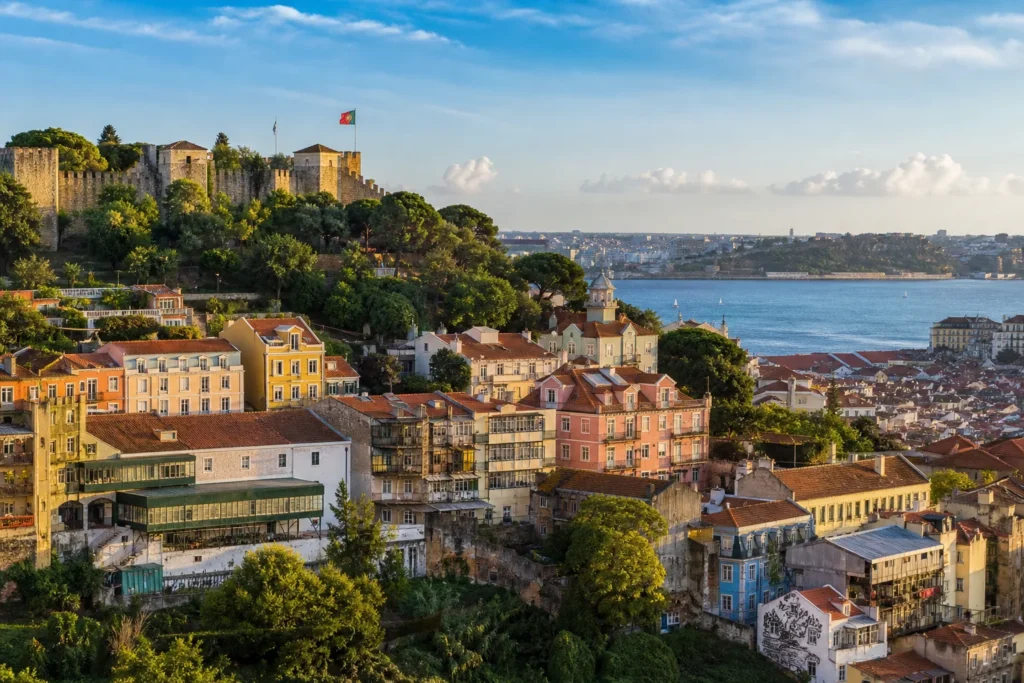
If you’re searching for things to do in Lisbon, start with the city’s layered contrasts: medieval Alfama and hilltop São Jorge Castle, the grand plazas of Baixa and Praça do Comércio, Belém’s Age of Discovery monuments, and the modern waterfront at Parque das Nações.
Lisbon’s compact, walkable centre, tram lines, viewpoints and creative clusters like LX Factory make it easy to mix museums, riverside promenades and neighbourhood wandering in a short urban stay.
Why Visit Lisbon
Lisbon pairs maritime‑Age monuments and UNESCO heritage in Belém with intimate medieval streets and fado tradition in Alfama. Panoramic viewpoints from São Jorge Castle, the lively plazas of Baixa and Chiado, and cultural institutions such as the Oceanário and the National Tile Museum showcase Portugal’s maritime history, decorative arts and marine science.
Add pastelarias, fresh seafood and creative neighbourhoods like LX Factory, and you have a compact city that’s well suited for walking, museums and nearby day trips to Sintra and the Lisbon coast.
Top Things to Do in Lisbon, Portugal
These are the neighbourhoods, monuments and cultural institutions that define Lisbon for first‑time and returning visitors. Each entry below links the site’s main appeal with practical context drawn from its history and visitor experience.
Belém Tower (Torre de Belém)
Belém Tower stands at the edge of the Tagus estuary where river and city meet. Built in the early sixteenth century under King Manuel I and designed by Francisco de Arruda, the compact tower combined military and ceremonial roles during the Age of Discoveries and is a richly ornamented example of the Manueline style.
Its carved stonework includes maritime motifs, armillary spheres and the crosses of the Order of Christ, while corner bartizans with ribbed cupolas show North African and Mudéjar influences.
Visitors approach from the Jerónimos complex along the riverside promenade and can climb narrow stairs to a top terrace with views across the Tagus.
Jerónimos Monastery (Mosteiro dos Jerónimos)
Jerónimos Monastery occupies a commanding riverside site in Belém and was commissioned by King Manuel I in the early sixteenth century. Financed largely by overseas trade revenues, the monastery is Portugal’s preeminent example of the Manueline style, conceived as a royal church and a house for Hieronymite monks.
Its long façade, ornate southern portal and two‑level cloister display ropes, shells and maritime emblems worked in rich sculptural detail.
The interior and cloisters reward slow study, and the church contains tombs of major historical figures linked to Portugal’s Age of Discoveries. As a protected national monument and UNESCO property, visitor routing and ticketing can change—consult the monastery’s official pages before visiting.
Official Jerónimos Monastery (Mosteiro dos Jerónimos) website →
São Jorge Castle (Castelo de São Jorge)
Perched on Lisbon’s highest hill, São Jorge Castle presents layers of occupation from pre‑Roman settlements through a Moorish alcáçova to medieval royal courts. The site combines excavated streets and domestic remains with ramparts, towers and shaded courtyards; a small museum and interpretive panels help explain daily life and complex construction phases across eras.
Walking the battlements offers panoramic views across Alfama and the Tagus that clarify the site’s strategic role. Allow time for steep approaches, uneven paving and steps, and check official visitor information for current access, guided tours and any conservation‑related routing changes.
Alfama district
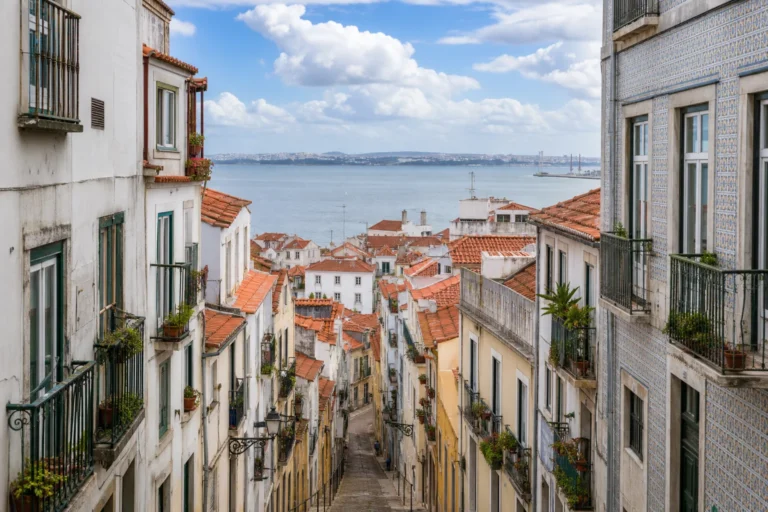
Alfama is Lisbon’s oldest quarter, where narrow, steep lanes wind between terracotta roofs, shaded courtyards and laundry‑draped balconies. Its dense, irregular street plan stems from Moorish urban patterns and resists modern gridmaking, so exploring on foot is the only way to absorb the neighbourhood’s intimate scale and everyday rhythms.
Key landmarks cluster naturally—Lisbon Cathedral (Sé), small archaeological remnants and the Castelo de São Jorge crowning the hill.
Miradouros such as Santa Luzia and Portas do Sol provide classic rooftop views down to the Tagus. Alfama remains residential and musical in character, with fado houses, traditional shops and a long‑running flea market near Campo de Santa Clara.
Wear firm shoes and move slowly through cobbled, steep streets.
Praça do Comércio (Terreiro do Paço)
Praça do Comércio, commonly Terreiro do Paço, is Lisbon’s principal riverside plaza where the city opens onto the Tagus.
Rebuilt after the 1755 earthquake as part of the Pombaline plan, the square is defined by long arcaded buildings on three sides and an open face to the river, with a triumphal arch marking the Rua Augusta axis to downtown and an equestrian statue of King José I at its centre.
The plaza offers people‑watching, photography and riverside promenades, and its arcades house cafés, government offices and museums. It also serves as a common arrival point for ferries and river walks—check municipal guidance for event‑related access changes before visiting.
Oceanário de Lisboa
Oceanário de Lisboa in Parque das Nações opened for Expo ’98 as a public centre for marine awareness and conservation.
The visit centers on a single large central tank that reads as one continuous ocean, while four surrounding habitats evoke distinct ocean regions and currents so visitors can compare temperate, tropical and cold‑water communities in one route. Exhibits house diverse fish, rays, sharks and seabirds arranged for visible species relationships from multiple viewing levels.
The route alternates surface and underwater perspectives across two levels, supported by panels, audiovisual elements and educational programmes. Timed entries, live programmes and accessibility services may vary—consult the aquarium’s official information before you go.
National Tile Museum (Museu Nacional do Azulejo)
The National Tile Museum occupies the former Madre de Deus convent and uses the convent’s church, cloisters and galleries to display the azulejo tradition from the 15th century to contemporary practice.
The collection includes long narrative panels, devotional cycles, altar fronts and decorative friezes that record Lisbon’s urban life, religious rituals and Atlantic trade connections, while restoration workshops and conservation displays explain materials and repair techniques.
Because the museum sits within a protected monument, the visit combines art history with building heritage; exhibitions often pair historic panels with modern commissions. Visitor routing and temporary displays can change for preservation work—check the museum’s official pages before visiting.
Official National Tile Museum (Museu Nacional do Azulejo) website →
LX Factory
LX Factory is a regenerated red‑brick industrial complex on Rua Rodrigues de Faria beneath the 25 de Abril bridge in Alcântara. The converted factory halls now host studios, independent shops, cafés, a large bookstore and regular creative markets.
Street art and painted façades transform the industrial fabric into an ever‑changing public canvas, while pop‑up exhibitions, concerts and evening cultural programmes animate outdoor courtyards and event spaces.
The site mixes specialist retail and local business clusters—architecture and fashion ateliers alongside restaurants—creating a distinct bustle from central Lisbon. Surfaces can be uneven in older sections; check LX Factory listings for current events and access details before you go.
Best Time to Visit Lisbon
Lisbon’s coastal Mediterranean climate means warm, dry summers and mild, wetter winters. The best balance of pleasant weather and fewer crowds is late spring (May–June) and early autumn (September–October).
Winter suits museum‑ and food‑focused visits when attractions are quieter; summer offers the warmest sea temperatures and the fullest festival calendar but also peak visitor numbers.
Special events
Upcoming Events
Lisboa Fashion Week (ModaLisboa)
Lisboa Fashion Week (ModaLisboa) is Portugal’s primary fashion platform, spotlighting emerging and established Portuguese designers through runway shows, exhibitions, talks and city-wide activations. The program often centers on a historic Lisbon venue while activating public spaces with pop-ups, industry panels and cultural partnerships, making it attractive to travelers who want to experience contemporary Portuguese design, behind-the-scenes creativity and seasonal retail activations. The festival blends professional trade events with public programming, offering visitors opportunities to attend shows, shop local designers and explore Lisbon’s cultural scene.
- Dates
- October 7, 2026 - October 11, 2026
- Venue
- Pátio da Galé (Praça do Comércio) and other city venues
DocLisboa – International Documentary Film Festival
DocLisboa is Portugal’s principal international festival dedicated to documentary cinema, showcasing contemporary non-fiction work alongside retrospectives, industry programs and special projects. It attracts filmmakers, critics and culturally-minded travelers seeking curated premieres, filmmaker Q&As, and immersive cinema experiences. The festival is an excellent entry point for visitors who want to engage with Lisbon’s film scene, discover emerging international and Portuguese directors, and attend conversations and events that illuminate current documentary practices and cultural debates.
- Dates
- October 15, 2026 - October 25, 2026
- Venue
- Culturgest; Cinema São Jorge; Cinemateca Portuguesa – Museu do Cinema; Cinema Ideal; Casa do Comum; A Barraca Bar
Web Summit
Web Summit is Europe’s largest technology conference, bringing startups, investors, corporate leaders and media together for multi-track talks, product showcases, and heavy networking. Travelers attend for high-profile keynote speakers, extensive exhibition floors, startup pitch stages, and the vibrant after-hours program that spreads across the host city. The event is useful for founders seeking investment, recruiters, and tech-savvy visitors who want to combine business meetings with Lisbon’s cultural attractions. Official site lists the Lisbon edition and venue details. ([websummit.com](https://websummit.com/web-summit-2026/?utm_source=openai))
- Dates
- November 9, 2026 - November 12, 2026
- Venue
- MEO Arena (Lisbon Exhibition & Congress Centre - FIL)
Getting Around Lisbon
Lisbon’s network of metro, buses, trams, funiculars and river ferries makes central neighbourhoods reachable without a car. Historic districts are compact but very hilly—expect steep streets and many steps in Alfama.
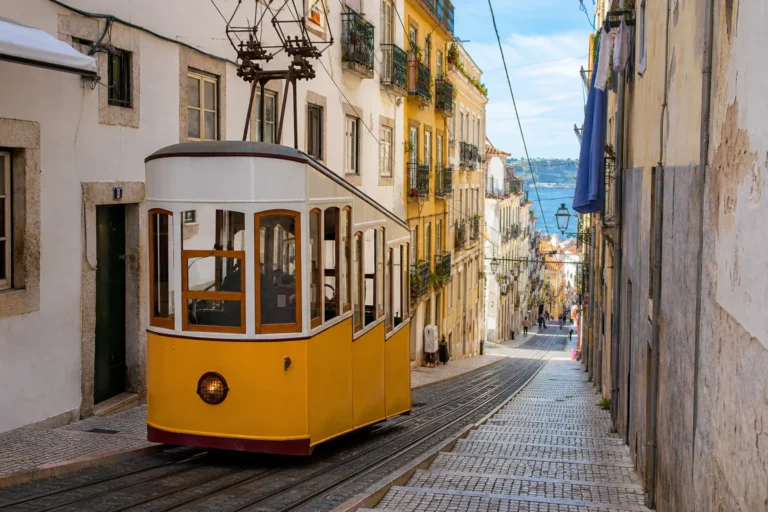
Trams and funiculars help with slopes; metro and suburban trains link to the airport and coastal towns. Taxis and ride‑hailing fill gaps.
For multimodal travel, buy a reusable VIVA Viagem/Lisboa Viva card and consider day‑trip trains to Sintra or Cascais from Rossio and Cais do Sodré.
Location
Map of Lisbon, Portugal
The interactive map loads only when you choose to view it.
Plan Your Visit to Lisbon
Plan walks by neighbourhood clusters—Baixa–Chiado, Alfama, Belém—and allow extra time for steep approaches and viewpoints. Use the VIVA Viagem/Lisboa Viva card for single journeys, 24‑hour options or zapping credit; the Lisboa Card can combine transport and museum access.
Trams and funiculars are scenic but can be slow; trains from Cais do Sodré and Rossio serve coastal and Sintra connections. Bring comfortable shoes and a light rain layer outside summer months.
Local Tips for Lisbon
Visit Belém Tower and Jerónimos Monastery early in the day, and reserve late afternoon for Alfama and São Jorge Castle to avoid midday crowds. Use tram 15 or a riverside walk to reach Belém; be selective with tram 28 as it is often crowded.
Book ahead for popular museums in peak season. LX Factory is lively on weekends and Saturday mornings.
Carry a small daypack, refillable water bottle and an offline map for narrow alleys where mobile signal can be spotty.
Live conditions
Current Weather

Updated 2026-08-24 08:15
- Feels like
- 18°C / 64°F
- Today’s high / low
- 24°C / 75°F · 19°C / 66°F
- Humidity
- 87%
- Wind
- ↙ 23 km/h
- Precipitation
- 0.83 mm
- Chance of rain
- 85%
- Local time
- 2026-08-24 08:22
Places to Visit Near Lisbon
The principal riverside district and transit hub where the city meets the Tagus; combine riverside promenades with the Rua Augusta viewpoint and arcaded streets of downtown.
Central rail links from Rossio provide straightforward service to Sintra for palace visits and hilltop gardens.
Cais do Sodré is the ferry and commuter‑rail hub for coastal trains to Cascais and the riverfront promenades between central Lisbon and Belém.
Belém contains Belém Tower, Jerónimos Monastery, Praça do Império and MAAT—an area of concentrated monuments and museums along the Tagus.
The hilltop maze of Alfama, its miradouros and São Jorge Castle form a contiguous walking area with classic views and fado houses.
Parque das Nações hosts the Oceanário de Lisboa and Oriente Station, a modern waterfront district originally developed for Expo ’98.
The National Tile Museum sits near Ajuda/Alcântara. LX Factory in Alcântara is a repurposed industrial complex of shops, cafés and markets under the 25 de Abril bridge.
Safety
Lisbon is generally safe for visitors, but petty theft and pickpocketing occur in crowded trams, tourist sites and nightlife areas. Keep valuables secure, be cautious on tram 28 and at busy viewpoints, and use licensed taxis, official apps or public transport at night rather than isolated walking routes.
For mobility‑limited travellers, check official accessibility pages for stations and museums before visiting. Keep copies of passport and emergency contacts accessible and follow municipal guidance on protests or transport disruptions.