
Travel Guide
Plan your visit around Dashashwamedh Ghat, Kashi Vishwanath Temple, and more of Varanasi, India.
Discover the best things to do in Varanasi, India, from signature sights to memorable local experiences.
Start along the ghats of the Ganges: ritual life, centuries‑old temples and nearby Sarnath shape the city’s unique appeal. Expect dense crowds at key sites, confirm access rules with official sources, and allow time to absorb both riverside spectacle and quieter campus and museum sites.

Why Visit Varanasi
Travelers come to Varanasi for its intense living heritage: ritual life on the Ganges, centuries‑old temples, classical music and literary traditions, and the layered experience of old‑city lanes and bazaars. The ghats offer distinctive dawn and dusk experiences—sunrise boat rides, the Dashashwamedh aarti at dusk, and encounters with daily rituals and crafts.
Nearby Sarnath adds an important Buddhist pilgrimage and archaeological dimension. Beyond sightseeing, the city rewards immersive cultural learning at institutions such as Banaras Hindu University, traditional music schools, and artisanal workshops.
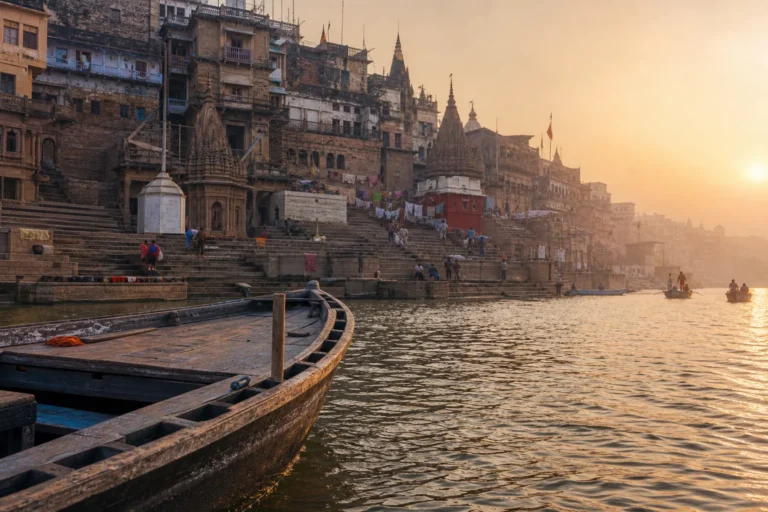
Top Things to Do in Varanasi, India
Varanasi’s appeal centres on riverfront rituals, historic temples and nearby Sarnath—each site offers a distinct way to experience the city’s living spiritual and cultural traditions.
Dashashwamedh Ghat (Ganga Aarti)
Dashashwamedh is the principal ceremonial ghat on the Ganges in Varanasi, famed for the evening Ganga Aarti — a choreographed fire‑and‑chant ritual performed by priests that creates an iconic sensory experience. Visitors view synchronized lamp offerings, conch and bell sounds, and devotional song from the ghat steps, boats on the river, or nearby terraces.
Expect heavy crowds, restricted movement on the steps and police‑managed access points; boats are private commercial services and subject to local safety rules, so verify current boat operations and crowd procedures before planning.
Kashi Vishwanath Temple (Shri Kashi Vishwanath)
Shri Kashi Vishwanath is Varanasi’s principal Shiva shrine and houses one of the twelve jyotirlingas. The temple complex connects to the river via the Kashi Vishwanath Corridor, which provides a paved approach, helpdesks and locker facilities.
Pilgrims come for darshan, offerings and aartis; some special darshan services (Sugam/fast‑track, Mangala aarti access) are ticketed. Expect security screening and regulated crowd management—confirm ticketing, queue rules and any festival‑season restrictions on the temple’s official darshan portal before visiting.
Official Kashi Vishwanath Temple (Shri Kashi Vishwanath) website →
Assi Ghat
Assi Ghat, at the southern end of the ghat chain, is prized for a calmer riverside atmosphere and its proximity to Banaras Hindu University. It’s popular for sunrise Subah‑e‑Banaras programs (Vedic chanting, classical music, yoga), smaller evening aartis and as an embarkation point for private boats.
The ghat is lined with cafés, small temples and guesthouses; schedules for events and boat services can change, so verify current operations with official Varanasi/Kashi sources before planning.
Sarnath (Dhamek Stupa & Sarnath Archaeological Museum)
Sarnath is the nearby Buddhist pilgrimage and archaeological complex where the Buddha is traditionally said to have given his first sermon. The site features the large cylindrical Dhamek Stupa and the Sarnath Archaeological Museum, which houses carved Buddha images and important sculptural finds.
Visitors walk among ruins and view curated galleries; as ASI‑managed sites, portions may be ticketed or temporarily closed for conservation—check ASI or museum contacts for current visiting conditions.
Official Sarnath (Dhamek Stupa & Sarnath Archaeological Museum) website →
Ramnagar Fort
Ramnagar Fort is an 18th–19th‑century riverside palace‑fort on the eastern bank of the Ganges, traditionally associated with the Kashi Naresh. The complex contains a royal museum with palanquins, vintage vehicles, textiles and a notable 19th‑century astronomical clock.
Visits combine architecture, museum galleries and riverside views; museum access and some internal galleries are subject to local management and conservation rules, so check official local or tourism pages for current opening status and guided‑visit options.
Banaras Hindu University / New Vishwanath (BHU Vishwanath) Temple
The New Vishwanath Temple on the Banaras Hindu University campus is a modern marble shikhara temple set in a landscaped academic environment. It offers a quieter, more spacious darshan experience than the crowded old‑city shrine and is commonly paired with a campus walk and visits to nearby university museums.
Campus access rules or security checks may apply, and the BHU temple follows university procedures rather than the Shri Kashi Vishwanath Trust’s darshan system—verify access with university contacts before visiting.
Official Banaras Hindu University / New Vishwanath (BHU Vishwanath) Temple website →
Manikarnika Ghat
Manikarnika Ghat is Varanasi’s principal cremation ghat and an active, working funerary landscape of high religious significance. Cremations continue at all hours and the site is raw and intense rather than a staged attraction.
Visitors witness real‑life ritual practices and should behave respectfully: dress modestly, remain quiet, follow local guidance, avoid intrusive photography and use designated public vantage points. Because access can be constrained by ongoing rituals and family needs, consider a reputable local guide for sensitive interpretation and appropriate viewing arrangements.
Tulsi Manas Temple
Tulsi Manas Mandir is a 20th‑century white‑marble temple commemorating Tulsidas and his Ramcharitmanas. Notable for marble panels inscribed with verses from the Ramayana and a calm landscaped compound near Durga Kund, it serves devotional visitors and those interested in literary‑religious heritage.
The temple is generally open to visitors and often hosts recitations and festival observances; verify any special programming or temporary closures on official Kashi/Varanasi listings before visiting.
Best Time to Visit Varanasi
Winters (late October–February) are widely regarded as the best time to visit: cooler, dry weather makes riverfront activities, walking the old‑city lanes and outdoor ceremonies comfortable. Early mornings and evenings are most atmospheric for ghats and aarti rituals.
Monsoon months (June–September) can raise Ganga water levels and make some riverbank areas slippery or restricted; summers (April–June) are hot and humid. Check official local sources for seasonal advisories before travel.
Getting Around Varanasi
Varanasi’s core attractions cluster along the Ganges and in the compact old city, so walking is the most practical way to explore the ghats, narrow lanes and markets. Short rides by cycle‑rickshaw, auto‑rickshaw or app taxis connect the railway and newer districts; negotiate fares or use meters where available.
Ferries and motorboats operate from major ghats for short crossings or sunrise cruises—confirm boat licensing and safety rules before boarding. For trips to Sarnath and Ramnagar Fort, hire a taxi or use local buses and check municipal pages for seasonal river advisories.

Location
Map of Varanasi, Uttar Pradesh, India
The interactive map loads only when you choose to view it.
Plan Your Visit to Varanasi
Plan visits around seasonality and local access rules: October. March has the most comfortable weather for walking and river activities, while summers are hot and the monsoon can raise the Ganga and restrict ghat access.
Varanasi’s main gateways are Lal Bahadur Shastri International Airport (VNS) and Varanasi Junction railway station.
Allow extra time to move inside the old city’s narrow lanes. Hire a trusted local guide or experienced rickshaw driver for efficient exploration and to navigate darshan/ticketing procedures at major temples.
Always verify darshan rules, museum openings, and any conservation or festival-related closures on official temple, ASI or district tourism pages before travel.
Local Tips for Varanasi
Travel light and wear modest clothing that covers shoulders and knees, especially when visiting temples or attending aarti. Mornings at Assi and Dashashwamedh ghats are best for quieter boat rides and sunrise views.
Dashashwamedh’s evening aarti draws large crowds. Arrive early to secure a vantage point.
Use official Kashi Darshan or Varanasi Smart City channels for river cruise bookings and managed parking; hotels and licensed guides can arrange reliable boat operators. Carry small‑value cash for offerings, tips and purchases in the old city where card acceptance may be limited.
Live conditions
Current Weather

Updated 2026-09-20 22:15
- Feels like
- 34°C / 93°F
- Today’s high / low
- 34°C / 94°F · 27°C / 80°F
- Humidity
- 65%
- Wind
- ↗ 4 km/h
- Precipitation
- 0 mm
- Chance of rain
- 10%
- Local time
- 2026-09-20 22:22
Safety in Varanasi
Varanasi is generally safe for visitors but use normal urban caution: keep valuables secure in crowded ghats and markets, and be mindful during the evening aarti. Respect the religious nature of cremation ghats (Manikarnika/Harishchandra): approach from public viewpoints, follow signage and priests’ requests, and ask permission before photographing people.
Watch footing on wet stone steps by the river and avoid swimming; river currents are strong and water quality variable. Prefer bottled or boiled water and eat at busy, well-reviewed vendors.
Check official alerts for flood, traffic or festival-related access changes before travel.