
Travel Guide
Plan your visit around Sultan Qaboos Grand Mosque, Royal Opera House Muscat, and more of Muscat, Oman.
Discover the best things to do in Muscat, Oman, from signature sights to memorable local experiences.
Muscat is Oman’s coastal capital. Modern government institutions and contemporary cultural venues sit beside centuries‑old forts, a busy harbour, and waterfront souqs.
Treat Muscat as a spread‑out city of distinct neighbourhoods: Mutrah, Old Muscat, and Qurum. It is not a single compact downtown when arranging visits.

Why Visit Muscat
Visitors come to Muscat for a concentrated mix of Oman’s signature experiences. These include monumental religious architecture (notably the Sultan Qaboos Grand Mosque), waterfront history and markets at Mutrah, seaside promenades near Qurum, and high-quality cultural programming at the Royal Opera House.
The city is also a gateway for coastal drives, nearby wadis, and for sampling Omani cuisine and souq culture.
Top Things to Do in Muscat, Oman
Muscat concentrates Oman’s signature experiences across distinct neighbourhoods: grand mosques, waterfront souqs, forts and modern cultural venues. Below are the city’s standout sites and practical visit notes to plan your time.
Sultan Qaboos Grand Mosque
A modern landmark and working place of worship opened in 2001 near Bawshar. The Sultan Qaboos Grand Mosque is notable for its large central dome, five minarets, an enormous hand‑woven Persian carpet in the main prayer hall, and extensive decorative stone and mosaic work.
Non‑Muslim visitors are welcomed during specified morning visiting hours on most days; modest dress is required and the mosque is closed to tourist visits during Friday congregational prayers. Verify current visitor hours and any restricted areas on the mosque’s official visitor information before you go.
Royal Opera House Muscat
Oman’s principal national performing‑arts venue and cultural complex. The Royal Opera House Muscat combines an ornate auditorium, gardens, a music library, exhibition spaces and an artisan galleria.
Visitors can attend opera, ballet, orchestral and regional performances or join short guided house tours. Tours and events require tickets or advance booking; expect security screening and a formal dress code for performances.
Check the Opera House box office or website for the latest season programme and tour availability.
Mutrah Corniche and Mutrah Souq
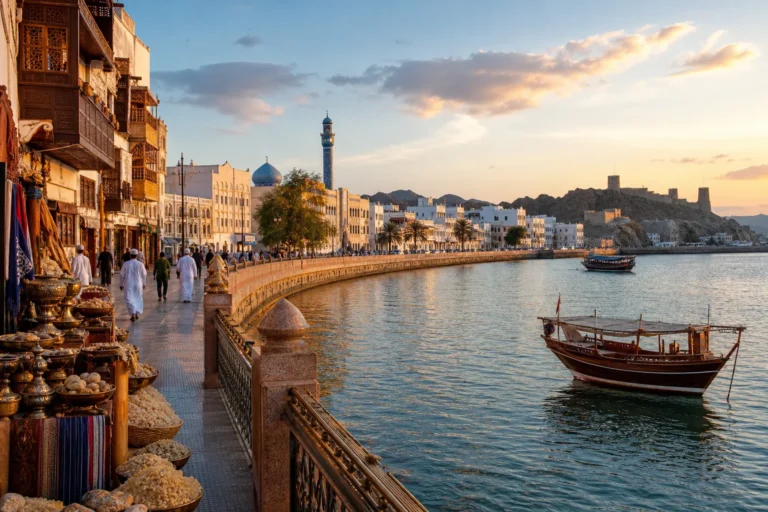
Mutrah Corniche is Muscat’s classic waterfront promenade with sea‑and‑mountain views and photo vantage points of dhows in the old harbour. Adjacent Mutrah Souq is a traditional covered market of narrow alleys selling frankincense, spices, silverware, textiles and sweets.
The area is best explored on foot around late afternoon and evening; bargaining is common and shop opening times vary. Expect uneven paving and narrow lanes; check municipal or tourism notices for any events that might affect access.
Al Jalali and Al Mirani (Old Muscat) forts
Al Jalali and Al Mirani are the twin coastal forts that flank Muscat harbour and Al Alam Palace. Their crenellated walls and towers dominate the waterfront skyline and offer commanding harbour views.
Interior access is government‑managed and can be limited or offered only as organized tours; many visitors rely on external viewpoints from the corniche and nearby museum overlooks for photos and historical context. Verify current public‑access status and any guided‑tour arrangements before planning an interior visit.
Official Al Jalali and Al Mirani (Old Muscat) forts website →
Al Alam (Royal) Palace
Al Alam Palace is the ceremonial palace of Oman’s monarch, set on a coastal esplanade between historic forts. Its gold‑and‑blue façade and formal gardens make it a frequent photographic focal point.
The palace is an active royal site and not open for general interior tours; visitors typically view and photograph the façade from public vantage points. Check official tourism or heritage notices for any unusual public openings.
Bait Al Zubair Museum
Bait Al Zubair is a privately founded museum complex that presents extensive collections of Omani material culture—traditional jewellery, khanjar daggers, costumes, household objects and model dhows. The site is arranged as a group of restored traditional houses around a garden, with gallery spaces, a café and a museum shop.
Plan 1–2 hours to view core exhibits and temporary displays and check the museum’s visitor pages for ticketing and guided‑visit arrangements.
National Museum of Oman (Muscat)
The National Museum of Oman is the Sultanate’s flagship cultural institution, housed in a modern museum complex in Old Muscat. It presents archaeology, maritime heritage and ethnographic collections across themed galleries, and runs a Learning Centre and temporary exhibitions.
The museum operates with a ticket desk and visitor services; verify current booking, group‑visit and exhibition details on the museum’s official visitor pages before you go.
Qurum Beach / Qurum Natural Park
Qurum Beach and Al Qurum Natural Park form Muscat’s principal beachfront and urban park ensemble: a sandy crescent with promenades, cafés and hotels and an inland park with lawns, a boating lake and walkways. The area is ideal for sunset strolls, seaside dining and family recreation.
The park and beach are municipal amenities and can host seasonal events or maintenance closures, so confirm event schedules for organised large‑group plans.
Best Time to Visit Muscat
Muscat’s climate is hot and arid year‑round. The most comfortable months for sightseeing run from late October through early April when daytime temperatures and humidity are lower.
This period is ideal for walking the Mutrah Corniche, visiting outdoor forts and parks, and taking coastal drives. Summer (May–September) brings intense heat and higher humidity, so plan late‑afternoon and evening activities then.
SPECIAL EVENTS IN Muscat
Muscat Eat
Muscat Eat is Oman's largest public food and culture festival, bringing together local chefs, international vendors, live music, family entertainment, and hands-on culinary displays. It’s designed to showcase Omani culinary traditions alongside global flavours while supporting small and medium food businesses. Travelers will find it a lively way to sample regional dishes, experience traditional hospitality, enjoy performances, and discover local food entrepreneurs — making it a practical addition to a Muscat itinerary for food-focused cultural exploration.
- Dates
- December 3, 2026 - December 12, 2026
- Venue
- Sultan Qaboos Sports Complex
Experience Oman Muscat Marathon
The Experience Oman Muscat Marathon is Muscat’s flagship road-racing festival, offering marathon, half-marathon, 10 km and community races that attract local and international runners. Organized under the Experience Oman brand with local partners, the event blends competitive road racing with community activities and tourism-friendly routes along Muscat’s coastal and urban areas. Travelers who enjoy active experiences, accessible race distances, and cultural sightseeing often plan visits around the race to combine running with exploring Oman’s architecture, markets, and nearby natural scenery.
- Dates
- January 29, 2027 - January 30, 2027
- Venue
- Al Khuwair Square
Getting Around Muscat
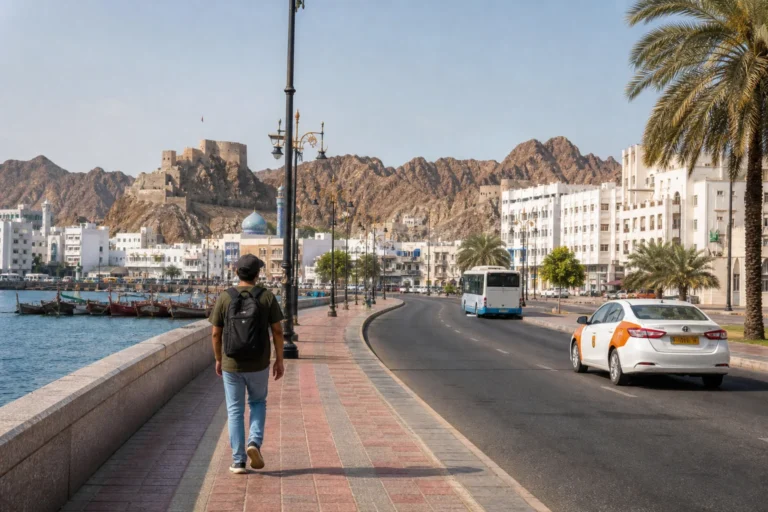
Muscat is best navigated by car or taxi. The urban area is spread across coastal and hillside districts rather than a compact walkable core.
Rented cars and app‑based taxis provide the most convenient access to sites like the Grand Mosque, Royal Opera House, Qurum and Mutrah.
There is no extensive metro; limited bus services connect parts of the city but coverage and schedules are variable, so confirm options on municipal or attraction websites.
Location
Map of Muscat, Oman
The interactive map loads only when you choose to view it.
Plan Your Visit to Muscat
Most visitors need a passport valid for six months and should check Oman’s eVisa rules before travel. Some nationalities can obtain visas on arrival while others must preapply via the Royal Oman Police eVisa.
Muscat International Airport has an arrivals visa desk and official tourist information, and many hotels arrange transfers and tours. Public transport is improving but taxis and ride‑hailing remain the most convenient way to reach dispersed attractions.
Buy travel health insurance and consult Ministry of Health travel advice before departure.
Local Tips for Muscat
Muscat is spread across distinct districts (Old Muscat, Mutrah, Ruwi, Qurum). Dress conservatively in public—lightweight, modest clothing is customary, and women should carry a scarf to cover shoulders or hair at religious sites.
Currency is the Omani rial (OMR); ATMs are common in central districts but carry cash for souks and small vendors. Use licensed ride‑hailing apps or metered taxis, agree fares for non‑app taxis, and carry bottled water and sun protection.
Live conditions
Current Weather

Updated 2026-09-21 20:15
- Feels like
- 30°C / 87°F
- Today’s high / low
- 37°C / 98°F · 25°C / 77°F
- Humidity
- 60%
- Wind
- ← 4 km/h
- Precipitation
- 0 mm
- Chance of rain
- 2%
- Local time
- 2026-09-21 20:30
Safety
Oman and Muscat have relatively low rates of violent crime, but petty theft and opportunistic scams can occur in crowded markets. Keep valuables secure and exercise normal urban caution after dark.
Avoid poorly lit or deserted streets and follow official travel advisories. In emergencies use official health and emergency hotlines and contact your embassy if needed.