
Travel Guide
Find top sights, local places, maps, weather, and simple trip tips for New York City.
Looking for Things to Do in New York City? Use this guide to compare top sights, local tips, maps, weather, and nearby places.
If you’re searching for things to do in New York City, you’ll find concentrated cultural power: world-class museums, landmark architecture, expansive parks, and a dense transit network that makes seeing many highlights possible in a short trip.
This guide pulls together the city’s signature experiences. From skyline views and elevated parks to theater and memorials.
So you can plan neighborhoods, timed entries, and walking loops to match your schedule and interests.
Why Visit New York City
New York City compresses major cultural institutions, emblematic landmarks, and diverse neighborhoods into a compact, walkable metropolis. Visitors come for blockbuster museums and theater seasons, iconic civic monuments and waterfronts, and a constantly renewing restaurant and arts scene.
The city suits both short, icon-focused itineraries and repeat visits where neighborhoods, rotating exhibitions, and seasonal programming reward deeper exploration.
Top Things to Do in New York City
These are the city’s essential visitor experiences—statues and bridges, major museums, parks, and performance districts that define many first-time and repeat itineraries.
Statue of Liberty National Monument
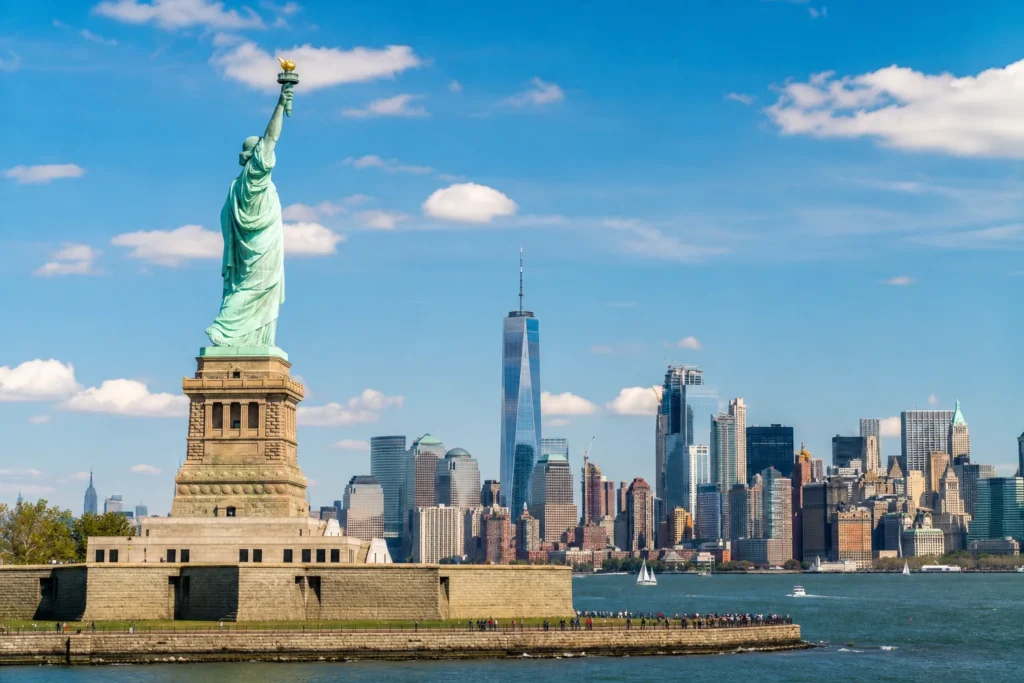
The Statue of Liberty National Monument rises from Liberty Island in New York Harbor as a long-standing symbol of freedom and welcome. Designed by Frédéric‑Auguste Bartholdi with engineering input from firms associated with Gustave Eiffel, it was dedicated in 1886 and interprets immigration and civic history through its iconography.
Visitors reach the island by scheduled ferry and pass through security screening. The site includes the Statue of Liberty Museum, which displays the original 1886 torch and explains construction and meaning.
Authorized access ranges from the island grounds to the pedestal and, by limited reservation, crown access reached via a 377-step climb; check official park guidance for reservations and capacity rules.
Central Park
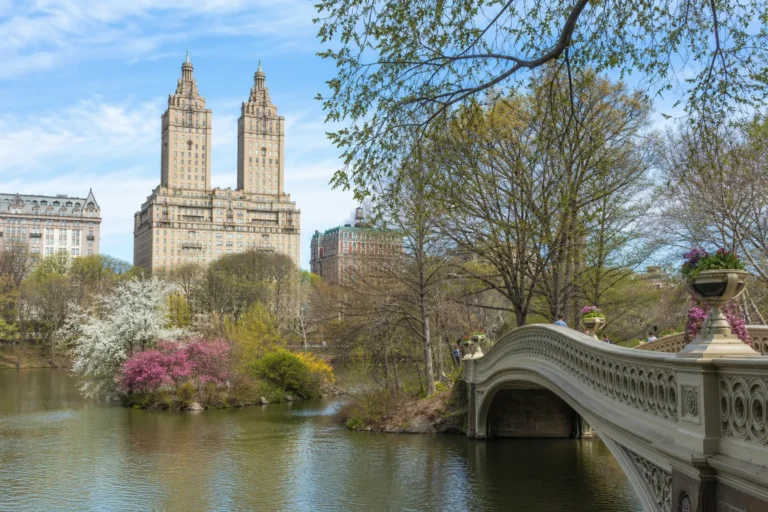
Central Park is an 843-acre designed landscape running roughly from 59th to 110th Street, conceived in the 1850s by Frederick Law Olmsted and Calvert Vaux as an urban refuge. The park layers formal plazas, pastoral meadows, woodlands, engineered vistas, and water features to simulate countryside experiences inside the city.
Notable features include Bethesda Terrace and Fountain, Bow Bridge, Belvedere Castle, the Ramble, the Great Lawn, Sheep Meadow, and the Jacqueline Kennedy Onassis Reservoir. The Central Park Conservancy partners with the city to restore and maintain these historic elements; use visitor centers and official resources for maps, seasonal programming, and temporary restrictions.
The Metropolitan Museum of Art
The Metropolitan Museum of Art on Fifth Avenue is one of the world’s largest encyclopedic museums, with a permanent collection that spans roughly five thousand years and more than one million objects.
Departments cover European paintings, Ancient Near Eastern and Egyptian art, Asian and Islamic holdings, the American Wing, Arms and Armor, and the Sackler Wing with the Temple of Dendur.
The Met operates The Met Cloisters in Fort Tryon Park for medieval Europe and offers rotating exhibitions, educational programs, and research resources. The Great Hall is the main entry for visitor information; allow several hours for a substantive visit and check the museum’s site for photography and access policies.
Museum of Modern Art (MoMA)
The Museum of Modern Art (MoMA), founded in 1929 and located on West 53rd Street, specializes in modern and contemporary visual culture across painting, sculpture, design, photography, film, and media art. Its holdings include many iconic works and a sculpture garden—the Abby Aldrich Rockefeller Sculpture Garden—that complements indoor galleries.
MoMA’s galleries and program spaces include film theaters, education studios, and a research library; exhibitions range from single-artist surveys to thematic displays. Galleries can be compact and densely hung, so plan a path in advance and confirm current policies on photography and screenings on the museum’s official site.
Empire State Building
The Empire State Building is an Art Deco skyscraper completed in 1931 on Fifth Avenue between 33rd and 34th Streets. Its stepped massing and vertical emphasis exemplify early twentieth-century skyscraper design and urban planning responses to light and air standards.
Visitors experience the city from purpose-built observatories: an open-air deck on the 86th floor and an enclosed viewing room on the 102nd floor, with exhibits interpreting the building’s construction and cultural presence. Expect airport-style security screening and timed entry; check the building’s visitor resources for ticketing, access, and accessibility details.
Broadway Theatre District
The Broadway Theatre District concentrates professional, large-scale theatres in Midtown Manhattan around Times Square and the surrounding 40s and 50s. The area’s marquees, historic lobbies, and theatrical façades create a uniquely theatrical streetscape that hosts long-running musicals, limited plays, and special events.
Core visitor experiences include attending live performances and using local resources like the TKTS discount booth for last-minute tickets. Theatres vary in capacity, sightlines, and accessibility, so check specific house guidance and buy through authorized sellers or official box offices to manage expectations and ensure valid tickets.
Times Square
Times Square is a dense commercial and entertainment crossroads at the junction of Broadway and Seventh Avenue, defined by giant signs, theatrical marquees, and constant motion. Recent civic work reconfigured portions of Broadway to prioritize pedestrians, creating seating areas and plazas that improved circulation and invited curated public art and programming.
The neighborhood is tightly linked to the Broadway industry, TKTS discount steps, and frequent public events. Expect crowds, street performers, and layered activity; use clear meeting points and consult Times Square Arts and official resources for scheduled events or special installations before you go.
9/11 Memorial & Museum
The National September 11 Memorial & Museum occupies the World Trade Center site as a place of remembrance, documentation, and education. The outdoor Memorial features two reflecting pools set in the footprints of the Twin Towers with victims’ names inscribed on bronze parapets to preserve meaningful adjacencies.
The Museum’s galleries and preserved archaeological features sit below grade and include the Survivors’ Stairs and parts of the original slurry wall. Exhibits combine monumental artifacts with intimate testimony and educational programs; timed-entry and visitor guidelines are managed by the institution, so verify access policies on the official site before visiting.
Brooklyn Bridge
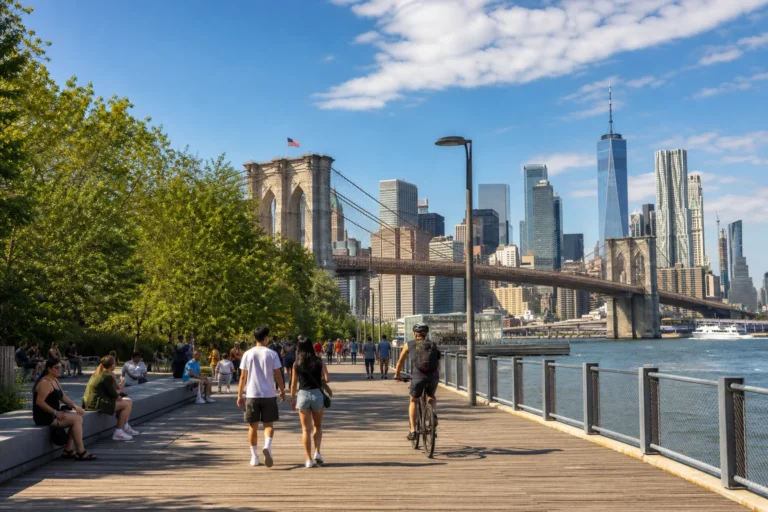
The Brooklyn Bridge, completed in 1883 and conceived by John A. Roebling, links Lower Manhattan with Brooklyn across the East River and is celebrated for its masonry towers and Gothic arches.
Its raised wooden promenade runs above vehicle lanes and offers continuous skyline and harbor views, connecting Manhattan’s civic precinct near City Hall with Brooklyn’s waterfront parks and the Brooklyn Heights Promenade.
The crossing reveals nineteenth-century suspension‑bridge engineering through a gradual, walkable ascent. The promenade is shared with cyclists and pedestrians; maintenance, events, or repairs can affect access, so check city transportation advisories before you go.
The High Line
The High Line is a 1.45-mile elevated park on Manhattan’s West Side that repurposes a former freight rail viaduct into planted promenades and public space through Chelsea and Hudson Yards.
Designed by teams including James Corner Field Operations and Diller Scofidio + Renfro with planting by Piet Oudolf, it emphasizes perennial and grass plantings that change with the seasons.
The park alternates wide seating plazas, narrow promenades, and viewpoints that frame architecture and the river, and it programs temporary public art and performances. Multiple access points include stairs and elevators; expect crowds at peak times and consult official High Line resources for events, accessibility, and temporary closures.
Best Time to Visit New York City
New York has four distinct seasons. Late spring (May–June) and early fall (September–October) offer mild temperatures, active cultural calendars, and comfortable walking conditions.
Summers bring outdoor festivals and long daylight but also heat and larger crowds; winters are colder with holiday programming and quieter museum visits. Shoulder seasons often mean lower hotel rates and fewer lines; check seasonal schedules for parks and performances before you go.
Getting Around New York City
Getting around centers on an extensive subway and bus network, supplemented by commuter rails, ferries, and dense pedestrian links. Walkable neighborhoods and multiple river crossings make subway trips, short ferries, and walking the most efficient way to link nearby attractions.
Taxis and rideshares are widely available but can be slower in peak traffic. Pair transit with walking, bike-share, or ferries to experience waterfronts and bridges, and consult official transit pages for maps and service advisories.
Location
Map of New York City, New York, United States
The interactive map loads only when you choose to view it.
Plan Your Visit to New York City
Plan a transit-first visit: use the subway, buses, and OMNY contactless fares rather than driving. Reserve timed-entry or tickets in advance for the Statue of Liberty ferry, major museums, and Broadway where available.
Choose a primary neighborhood base. Midtown, Upper East/West, Lower Manhattan, or Brooklyn neighborhoods like DUMBO or Williamsburg.
To minimize long daily travel and group nearby attractions into single-day loops. Check official attraction sites for closures, accessibility services, and event alerts before you go.
Local Tips for New York City
Bring comfortable walking shoes and layerable clothing—summer can be hot and humid, winter cold and windy. Expect security screening and bag checks at large museums, the 9/11 Memorial & Museum, and some performance venues.
Carry a small bag and plan photos outside before entering.
Learn tipping customs for restaurants and rides, and use park rules for Central Park and The High Line. For accessibility or equipment loans, consult museum and park official pages to request accommodations in advance.
Live conditions
Current Weather

Updated 2026-08-23 20:15
- Feels like
- 73°F / 23°C
- Today’s high / low
- 84°F / 29°C · 67°F / 20°C
- Humidity
- 80%
- Wind
- ↙ 10 mph
- Precipitation
- 0 in
- Chance of rain
- 82%
- Local time
- 2026-08-23 20:35
Places to Visit Near New York City
Manhattan anchors most approved attractions: Times Square, the Broadway Theatre District, Empire State Building, The Metropolitan Museum of Art, MoMA, Central Park, The High Line, the 9/11 Memorial & Museum, and Brooklyn Bridge. Liberty and Ellis Island ferries depart from Battery Park in Lower Manhattan for the Statue of Liberty National Monument.
Major transit hubs—Penn Station, Grand Central, Fulton Center/World Trade Center PATH—and airports (JFK, LaGuardia, Newark) connect New York to regional and international travel. For dining and last-minute supplies use local retail corridors around each attraction (museum cafés, Midtown, DUMBO, Greenwich Village).
Safety
New York is heavily policed and busy areas are generally safe, but use normal urban precautions. Keep valuables out of sight, use zipped bags, and be aware of surroundings on crowded subways and at tourist sites.
In parks stay on marked paths, obey posted rules, and use staffed visitor centers if you need assistance. For emergencies call 911; use NYC official safety resources and local precinct contacts for non-emergencies or transit advisories.