
Travel Guide
Plan your visit around Göreme Open-Air Museum, Göreme National Park and the Rock Sites o, and more of Göreme, Turkey.
Discover the best things to do in Göreme, Turkey, from signature sights to memorable local experiences.
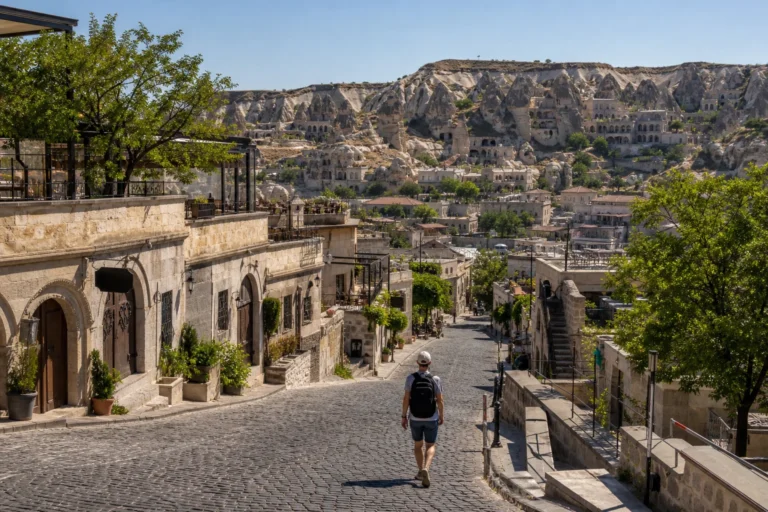
Göreme sits at the geographic heart of Cappadocia and is a compact, visitor-focused town for exploring a dramatic volcanic landscape of hoodoos, cave dwellings, and rock-cut churches.
The Göreme Open‑Air Museum and surrounding valleys form the core of Göreme National Park and the Rock Sites of Cappadocia, a UNESCO World Heritage property noted for Byzantine frescoes, monastic complexes, and troglodyte settlements.
For many travelers, things to do in Göreme concentrate the region’s best scenery and cultural highlights into short walks, viewpoints, and guided excursions.

Why Visit Göreme
Göreme offers a concentrated, accessible introduction to Cappadocia’s defining features. The Göreme Open‑Air Museum holds rock‑hewn churches with notable Byzantine frescoes, and valley rims and Uçhisar Castle provide sweeping panoramas.
Signature landscapes such as Paşabağ, Love Valley, and Rose Valley reward short hikes and sunset views. The town also serves as the launch point for sunrise hot‑air balloon flights that showcase the surreal topography and as a convenient base for excursions to Zelve and nearby open‑air museums.

Top Things to Do in Göreme, Turkey
Göreme’s compact layout makes it easy to combine cave churches, valley hikes, viewpoints, and a balloon flight into a short stay. Below are the must‑see sites and experiences that define a visit to Cappadocia.
Göreme Open-Air Museum
The Göreme Open-Air Museum sits a short walk from Göreme town center. It is a compact monastic complex carved directly into soft volcanic tuff.
Visitors encounter interconnected rock churches, refectories, cells and sheltered courtyards arranged on narrow rock ridges.
Inside the carved churches, richly painted Byzantine fresco cycles remain the main attraction. Notable monuments include the Dark Church (Karanlık Kilise) with well-preserved pigment, the Buckle or Tokalı Church with large narrative panels, and the Snake Church (Yılanlı Kilise) with striking saintly scenes.
Frescoes illustrate biblical scenes and saints, showing post-iconoclastic artistic trends and local devotional practice.
A visit moves between low tunnels, stepped paths and angled rock ledges.
Göreme National Park and the Rock Sites of Cappadocia (UNESCO)
Göreme National Park and the Rock Sites of Cappadocia form a broad volcanic landscape sculpted by wind and water. The park includes valleys, fairy chimneys, cone-shaped pinnacles and broad plateaus carved from ignimbrite and tuff.
This unusual topography underpins both the natural spectacle and long human reuse of the rock.
The World Heritage designation recognizes the close interaction between nature and culture. Over centuries people carved homes, churches, monasteries and entire underground towns into the soft rock.
The result is a dense landscape of troglodyte settlements and more than two hundred rock-hewn sanctuaries, many decorated with Byzantine frescoes that illustrate regional artistic developments.
Visitors explore panoramic viewpoints, valley trails, and small cave villages tucked into the slopes.
Official Göreme National Park and the Rock Sites of Cappadocia (UNESCO) website →
Hot air balloon flights over Göreme / Cappadocia
A hot air balloon flight over Göreme begins with a pre-dawn pickup from your lodging. Operators gather passengers for a short safety briefing and a hands-on view of inflation.
You board a wicker basket divided into compartments, stand side-by-side, and feel the first warm burner bursts that lift the rig smoothly above the valleys.
Once aloft the balloon drifts with the wind, offering a slow-moving, panoramic perspective of the region. You see fairy chimneys, carved cave houses, orchard terraces and narrow valley shoulders from eye level.
Pilots adjust altitude to show contrasting light, bringing you near rock formations and above broad plateaus for different photographic angles.
Flights are strictly weather dependent and run most often at dawn when conditions stabilize.
Uçhisar Castle (Uchisar) and its viewpoint
Uçhisar Castle crowns the highest natural rock formation in the immediate Cappadocia landscape. The outcrop is extensively carved, producing rooms, storage niches, stairways, and narrow corridors that form a complex vertical maze for visitors to explore.
The castle’s silhouette is visible across the region and often serves as a landmark for orienting yourself in Göreme and nearby villages.
Visitors ascend a series of carved steps and stepped paths to reach terraces and lookout platforms that offer sweeping 360-degree panoramas. From the summit you can see Göreme, Güvercinlik (Pigeon) Valley, Ortahisar, and the wider Cappadocia plateau; on clear days distant volcanic peaks such as Mount Erciyes appear on the horizon.
Official Uçhisar Castle (Uchisar) and its viewpoint website →
Paşabağ (Monks Valley)
Paşabağ, commonly called Monks Valley, concentrates some of Cappadocia’s most iconic multi‑capped fairy chimneys. The valley sits close to the Göreme–Avanos road and is easy to reach from Göreme town.
Visitors walk short, mostly flat paths that pass towering tuff pillars topped by harder rock caps, the erosional pairing that creates the mushroom shapes.
The place is best understood as both geological spectacle and monastic landscape. Early Christian hermits hollowed cells, stairways and tiny chapels directly into the chimneys.
A famous three‑headed formation contains a small hermitage traditionally associated with a stylite or pillar saint, and simple prayer niches and windows remain visible in carved chambers.
Love Valley (Aşk Vadisi)
Love Valley (Aşk Vadisi) lies between Göreme and Uçhisar and is famous for its tall, columnar fairy chimneys. The valley presents unusually slender spires, some reported to rise many tens of metres above the valley floor, shaped by differential erosion of soft tuff beneath harder caprock.
The contrast of vertical pillars and open sky gives the valley a dramatic sculptural quality.
A clearly defined trail threads through the valley, offering a moderate walk among the formations. Hikers encounter shifting light, occasional vineyard terraces, and viewpoints that frame the clustered chimneys.
The main panoramic lookout near the valley entrance gives a broad orientation for visitors who prefer a shorter visit or photo stop.
Rose Valley (Güllüdere) — hiking and sunset viewpoints
Rose Valley, known locally as Güllüdere, is a narrow canyon system on Göreme’s northern edge. The name references the rose‑pink tones the tuff shows in low sun.
The valley sits inside the broader Göreme National Park landscape, where geological sculpting and human reuse meet in close view.
On the ground you follow a network of marked and informal footpaths that link Rose Valley with Red Valley, Love Valley and the old village of Çavuşin. Scattered along these routes are small carved chapels, niches and vestigial fresco sites, reminders of medieval monastic and rural life.
Hikers can choose short loops or a longer 3–4 kilometre through‑hike between villages.
Zelve Open-Air Museum
Zelve Open‑Air Museum occupies three closely linked valleys a short drive from Göreme and Paşabağ. It was a living troglodyte village until the early 1950s, when progressive erosion and rock instability prompted an organized relocation.
Today the abandoned settlement reads like a cross‑section of daily life carved into soft volcanic tuff.
Unlike the strictly monastic complexes nearby, Zelve preserves domestic architecture alongside religious buildings. Visitors encounter dwellings stacked across multiple storeys, grain stores, kitchens with soot‑blackened ceilings, pigeonholes and a rare rock‑cut mosque.
These features show how families lived, worked and adapted the stone for storage and animal husbandry.
Walking through the three valleys exposes the vertical nature of occupation: rooms, stairways and openings climb cliff faces.
Best Time to Visit Göreme
Spring (April–June) and autumn (September–October) are the most reliable travel windows. Temperatures are moderate, daylight is generous for hiking, and wind conditions for ballooning are typically more stable than in high summer.
Summer brings heat and larger visitor numbers. Winter offers fewer crowds, frosty panoramas, and lower hotel rates, but mornings are colder and balloon flights may be cancelled more often.
Because balloon operations are weather dependent, plan at least one full morning in reserve for a flight attempt.
Getting Around Göreme
Göreme is compact and walkable for short trips between viewpoints, hotels, and local restaurants. Many valley trailheads and viewpoints lie within easy walking distance of the town center.
Local minibuses and seasonal shuttles link Göreme with Nevşehir, Ürgüp, Avanos, and regional airports. Guided tours and private transfers are common for reaching sites such as Zelve, Paşabağ, and Uçhisar.
For flights and airport transfers, coordinate with licensed operators and confirm pickup details in advance.
Location
Map of Göreme, Turkey
The interactive map loads only when you choose to view it.
Plan Your Visit to Göreme
Use Nevşehir (NAV) or Kayseri (ASR) airports for regional connections and pre‑book an airport transfer or shared shuttle rather than relying on irregular local buses. Many hotels arrange transfers and guided day tours that combine several attractions.
Reserve entry or guided visits to the Göreme Open‑Air Museum if you want curated interpretation. For hot‑air balloons, book with licensed operators, expect weather‑dependent cancellations, and allow buffer time in your itinerary for an attempted flight.
Local Tips for Göreme
Respect the protected landscape and fragile rock‑cut churches: keep to marked trails, don’t climb or lean on soft tuff, and follow signage at archaeological sites. Dress in layers—valleys can be cool in the morning and hot by afternoon—and wear sturdy shoes for uneven, rocky trails.
Carry water and sun protection. Download offline maps if hiking independently, and consider a local guide for narrow paths, sunrise viewpoints, or routes with confusing waymarks.
Live conditions
Current Weather

Updated 2026-09-21 18:15
- Feels like
- 21°C / 70°F
- Today’s high / low
- 25°C / 77°F · 16°C / 61°F
- Humidity
- 30%
- Wind
- ↖ 9 km/h
- Precipitation
- 0 mm
- Chance of rain
- 4%
- Local time
- 2026-09-21 18:16
Safety
Göreme lies within a UNESCO‑inscribed national park with active site management—follow park rules, stay on paths, and obey site closures to protect heritage and for your safety. Hot‑air balloon operations are regulated by Turkey’s civil aviation authority and run only in suitable weather with licensed companies.
Trail hazards include loose tuff, steep steps, and sudden drops from viewpoints. Supervise children and keep distance from cliff edges.
In emergencies, use local hotel contacts or municipal services and carry ID and insurance details.