
Travel Guide
Plan your visit around Waikīkī Beach, Diamond Head (Lēʻahi) State Monument, and more of Honolulu, Hawaii.
Discover the best things to do in Honolulu, Hawaii, from signature sights to memorable local experiences.
Honolulu is a compact city that combines surfable beaches and coastal hikes with museums, royal history, and World War II memorials. Waikīkī and Diamond Head sit within easy reach of downtown ʻIolani Palace and the Bishop Museum.
Hanauma Bay and Mānoa Falls offer accessible marine and rainforest experiences close to the urban core.
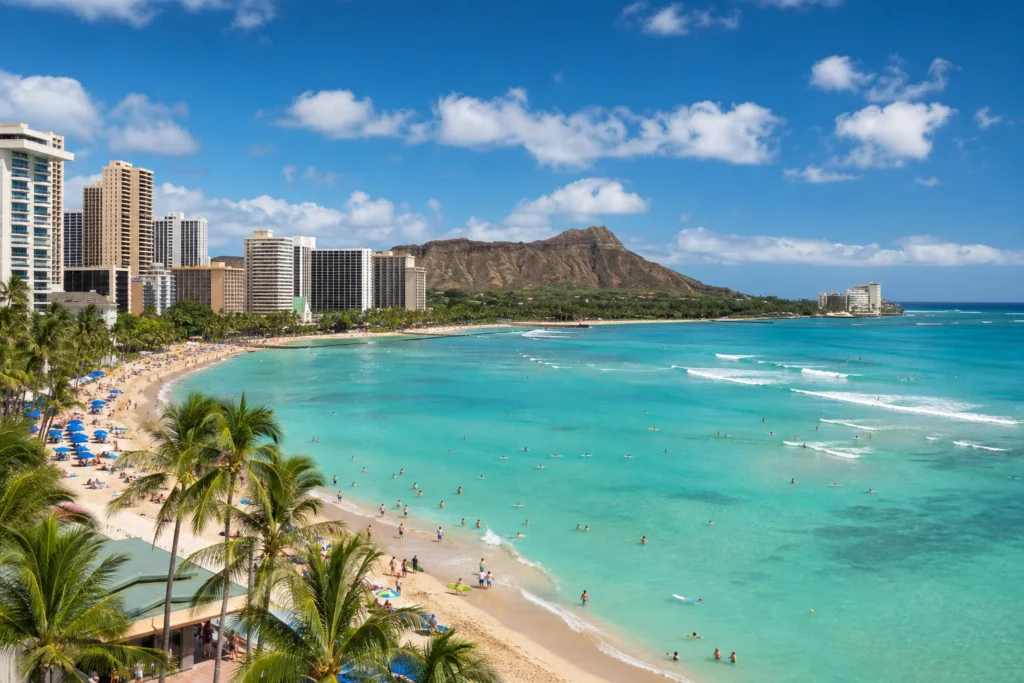
Why Visit Honolulu
Honolulu pairs a Pacific Rim metropolis with a strong Native Hawaiian cultural presence and protected natural areas. Visitors come for surf and beach access, short summit hikes with coastal views, and marine preserves where snorkelers see reef life.
The city’s museums and historic sites—from ʻIolani Palace to Pearl Harbor—offer interpretation and context for Hawaiian history. Combine living traditions, outdoor recreation, and regional food in a single, compact visit.
Top Things to Do in Honolulu, Hawaii
Honolulu’s highlights concentrate around Waikīkī, downtown, and windward valleys. Below are the city’s signature beaches, historic sites, museums, and accessible hikes to prioritize on a short visit.
Waikīkī Beach
Waikīkī Beach is a long crescent of sand fronting Honolulu’s high‑rise strip. Visitors arrive for warm water, easy surf breaks, and skyline views framed by Diamond Head.
The shoreline sits beside Kapiʻolani Park, the Waikīkī Aquarium, and the Honolulu Zoo, which makes it simple to combine beach time with short cultural visits. Today the beach supports surf schools, outrigger canoeing, evening hula, and a dense selection of shops and restaurants along Kalākaua Avenue.
Because the shoreline is urban and engineered, check local condition updates and practice reef‑safe behavior when entering the water.
Diamond Head (Lēʻahi) State Monument
Diamond Head, called Lēʻahi in Hawaiian, is a broad volcanic tuff cone rising above Waikīkī. The popular summit trail climbs a paved, switchbacked route that passes a lighted tunnel and old military fire‑control stations before reaching lookout points with sweeping coastal and city views.
Formed during a single explosive eruption roughly three hundred thousand years ago, the crater protects fragile geology and introduced vegetation. Stay on designated trails and check the Division of State Parks for reservation, access, and parking requirements before visiting.
Pearl Harbor National Memorial (USS Arizona Memorial)
The USS Arizona Memorial spans the sunken hull where many sailors remain entombed and honors the December 7, 1941 attack. At the Pearl Harbor Visitor Center visitors view a short film and exhibits before a National Park Service ranger validates reservations for Navy shuttle boats to the memorial platform above the submerged hull.
The memorial’s shrine room lists the names of those who died and provides a place for reflection about the wider Pacific War and its human cost. Practical visit details—timed‑entry reservations, check‑in procedures, and advisories—are managed by the National Park Service, so consult official Pearl Harbor information when planning your visit.
Official Pearl Harbor National Memorial (USS Arizona Memorial) website →
ʻIolani Palace
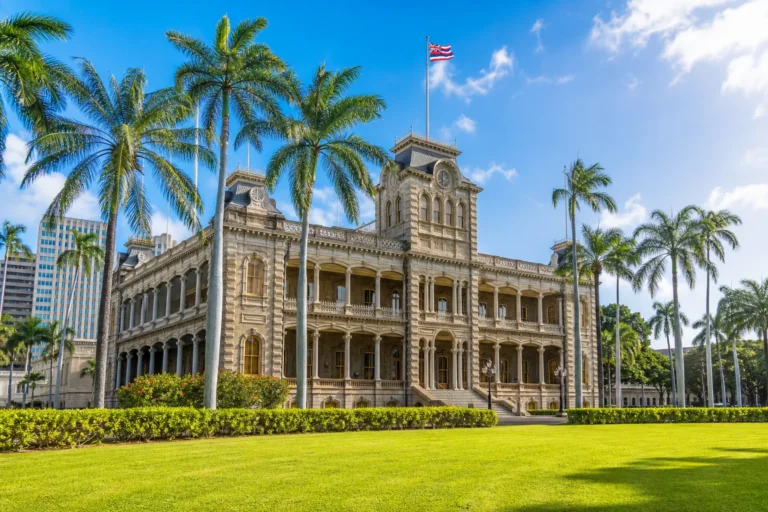
ʻIolani Palace sits on a prominent grassy block in downtown Honolulu as the restored 19th‑century residence of Hawaiʻi’s last reigning monarchs. The Friends of ʻIolani Palace operate interior guided and audio tours that pass through principal state rooms such as the Throne Room, Blue Room, and State Dining Room.
The palace symbolizes the Hawaiian Kingdom, its rulers, and the events that followed the 1893 overthrow. Built by King Kalākaua and completed in 1882, the palace originally featured modern technologies for its time.
Photography rules, tour reservations, and special events are controlled by the managing organizations—verify current visitor policies on official palace sources before you go.
Bishop Museum
The Bishop Museum is Hawaiʻi’s state museum of natural and cultural history, founded in 1889 to preserve Princess Bernice Pauahi Bishop’s family collections. Galleries emphasize Hawaiian Hall and broad Pacific collections, with kāhili, featherwork, voyaging objects, and displays that connect cultural stories to natural history.
The campus also hosts a planetarium, research library, and archives, and the museum runs educational and stewardship programs that support language, genealogy, and repatriation work. Plan several hours to see primary galleries and a planetarium show, and check the museum’s official information for ticketing and special exhibitions.
Honolulu Museum of Art
The Honolulu Museum of Art presents collections strong in Asian, Pacific, Hawaiian, and international works. Visitors move between formal galleries and gardened courtyards to see Japanese and Chinese painting and ceramics, South and Southeast Asian works, European decorative arts, and rotating exhibitions that introduce contemporary and historical themes.
The museum emphasizes teaching through films, performances, and public programs; guided tours and curator talks add context to collection highlights. Confirm current exhibitions, program schedules, and visitor services on the museum’s official site before your visit.
Hanauma Bay Nature Preserve
Hanauma Bay Nature Preserve occupies a breached volcanic crater on Oʻahu’s southeastern shore and protects a shallow fringing reef ideal for snorkeling among colorful reef fish and occasional turtle sightings. The curved sandy beach sits inside steep, rocky rim walls that frame the snorkel zone and outer reef flat.
The site is a Marine Life Conservation District with an on‑site education program and visitor orientation that explains reef ecology and responsible behavior before you enter the water. Regulations prohibit taking or disturbing marine life, and access can be limited by parking and visitor‑management rules—check the preserve’s official information for current advisories and reservation requirements.
Mānoa Falls Trail
Mānoa Falls Trail runs up a narrow valley behind Honolulu into a wet tropical rainforest. The trail follows a stream corridor through dense ferns, tall eucalyptus trees, and stands of bamboo before reaching Mānoa Falls, which plunges roughly one hundred fifty feet into a sheltered pool.
The hike is relatively short and accessible from nearby neighborhoods and the University of Hawaiʻi at Mānoa, with Lyon Arboretum close by. Trail stewardship has improved drainage and mitigated rockfall, but heavy rains make the path muddy and slippery and flash‑flood risk exists higher in the valley—stay on marked treadways and obey closure signs.
Authorities advise against descending to the pool beyond the rock‑wall viewing area for safety reasons.
Best Time to Visit Honolulu
Honolulu’s tropical climate is fairly stable year‑round, with drier conditions typically late spring through early fall. Peak crowds and higher hotel rates occur in winter and during major U.S. Holidays.
For fewer crowds and easier reservations, consider the shoulder seasons of spring and late summer. Always check local advisories for seasonal surf and marine conditions before planning water activities.
SPECIAL EVENTS IN Honolulu
Honolulu City Lights
Honolulu City Lights is the City & County of Honolulu’s long-running holiday illumination and community celebration centered at Honolulu Hale and the Frank F. Fasi Civic Center. Travelers come for the free tree-lighting ceremony, the Public Workers’ Electric Light Parade, seasonal displays and family-friendly programming, food booths, and photo opportunities. It’s a compact downtown event that’s easy to combine with Chinatown dining, local museums, or bus-accessible exploration of Honolulu, making it a convenient festive outing for visitors and residents alike.
- Dates
- December 5, 2026
- Venue
- Frank F. Fasi Civic Center / Honolulu Hale
JAL Honolulu Marathon
The JAL Honolulu Marathon is a major annual road race that draws large international fields and thousands of recreational runners. Known for a scenic oceanfront course that finishes near Kapiolani Park, the race is a bucket-list event for visitors combining tourism with sport. Travelers may be interested in race weekend expos, spectator areas, charity entry options, and heavy demand for accommodation and flights. The event is internationally popular—especially with Japanese runners—and commonly coordinated with local tourism and transport services.
- Dates
- December 13, 2026
- Venue
- Starts on Ala Moana Boulevard; finishes at Kapiolani Park
Sony Championship Hawaii (formerly Sony Open in Hawaii)
A long-running professional golf tournament at historic Waialae Country Club in Honolulu has been rebranded: the Sony Open in Hawaii will transition to the Sony Championship Hawaii and join the PGA TOUR Champions. The event continues the island’s tradition of world-class golf while shifting to a 78-player Champions field and a smaller purse. Travelers should note continued community impact, scenic course access, and Honolulu hospitality; spectators can expect pro-ams and televised rounds at a familiar, coastal Honolulu venue.
- Dates
- January 11, 2027 - January 16, 2027
- Venue
- Waialae Country Club
Honolulu Festival
The Honolulu Festival is an annual Pacific Rim cultural exchange celebrating Hawaiian and Asia‑Pacific traditions through performances, parades, exhibitions and fireworks. Travelers attend for vibrant street parades in Waikīkī, large-scale cultural stages and craft fairs at the Hawai‘i Convention Center, and the signature Nagaoka fireworks over Waikīkī Beach. It’s a good opportunity to see international ensembles, sample local and regional food, and experience community celebrations that highlight links between Honolulu and partner cities across the Pacific.
- Dates
- March 5, 2027 - March 7, 2027
- Venue
- Multiple venues in Waikīkī: Hawai‘i Convention Center (exhibits/stages); Kalākaua Avenue (Grand Parade); Waikīkī Beach (Nagaoka Fireworks); Ala Moana Center
Getting Around Honolulu
The city centers on Daniel K. Inouye International Airport and is served by TheBus, taxis, rideshare services, and private shuttles.
Car rentals are common for travel beyond central Honolulu.
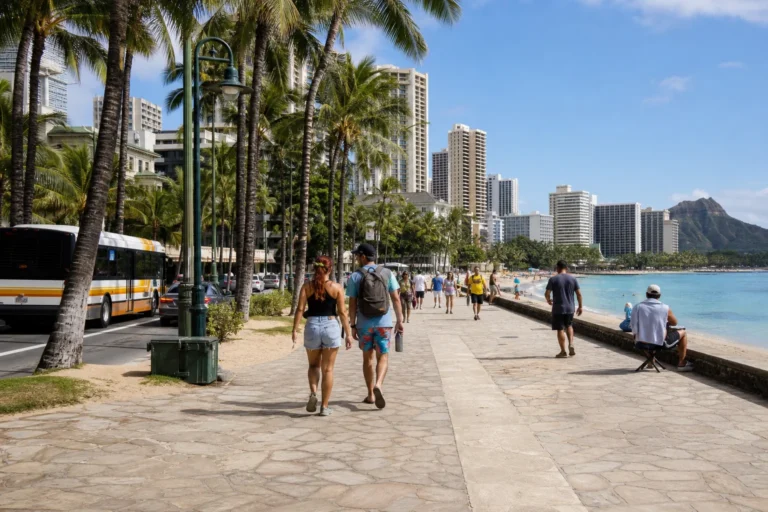
Waikīkī, downtown, and many attractions are walkable or reachable by frequent buses. Major sites such as Diamond Head, Hanauma Bay, and Pearl Harbor have specific access rules or reservation systems—check official operator guidance in advance.
Bicycle lanes and dedicated paths exist in parts of the city.
Location
Map of Honolulu, Hawaii, United States
The interactive map loads only when you choose to view it.
Plan Your Visit to Honolulu
Expect traffic between Waikīkī and other parts of Oʻahu and allow extra time for airport transfers and attractions. Many state‑managed sites require advance reservations or permits (Diamond Head, Hanauma Bay, and some state park parking), and Pearl Harbor uses a National Park Service timed‑entry system.
Book official slots early. Museums and ʻIolani Palace recommend advance tickets and have visitor rules; verify closures, cultural protocols, and reservation requirements on official sites before you go.
Local Tips for Honolulu
Use Hawaiian place names and follow cultural requests such as removing shoes when asked. Obey museum guidance on artifacts and photography.
For marine visits practice reef etiquette: don’t touch or stand on coral and use reef‑safe sunscreen. Visit popular outdoor sites early morning or late afternoon to avoid heat and crowds, and carry water, sun protection, modest trail footwear, and a light rain layer for brief showers in windward areas like Mānoa.
Live conditions
Current Weather

Updated 2026-09-21 10:00
- Feels like
- 81°F / 27°C
- Today’s high / low
- 80°F / 27°C · 77°F / 25°C
- Humidity
- 68%
- Wind
- ↗ 21 mph
- Precipitation
- 0 in
- Chance of rain
- 36%
- Local time
- 2026-09-21 10:10
Safety
Natural hazards include strong sun, unpredictable surf and rip currents, and slick, muddy trails in rainforest areas. Obey posted beach flags and lifeguards; if caught in a rip current, swim parallel to shore to escape.
Trails such as Mānoa Falls can have flash flooding, falling rocks, and degraded sections—stay on marked paths and avoid stream crossings after heavy rain. Respect restricted and memorial areas at Pearl Harbor and follow security screening.
For current closures and hazards, consult State of Hawaiʻi parks, DLNR, and the National Park Service before visiting.