
Travel Guide
Plan your visit around Banff National Park, Banff Gondola, and more of Banff, Canada.
Things to do in Banff range from scenic lakes, waterfalls and forest trails to hot springs, historic sites and wide-open Rocky Mountain views.
Set in the Bow Valley within Banff National Park, the compact town is easy to explore on foot and provides a practical base for discovering Canada’s first national park and the Canadian Rocky Mountain Parks UNESCO World Heritage Site.
Why Visit Banff
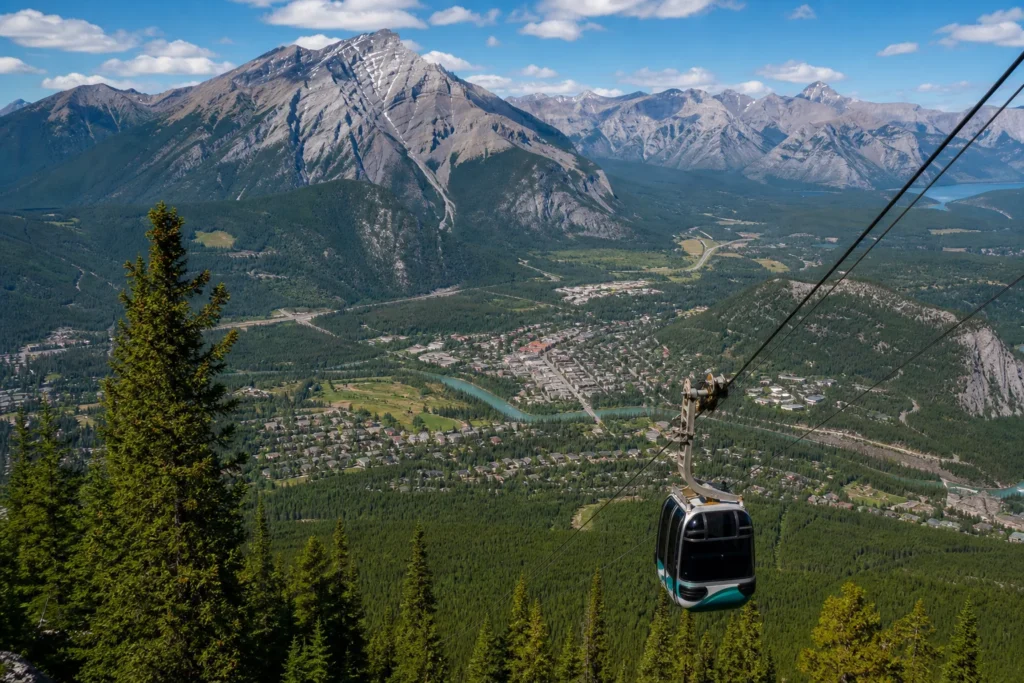
Banff brings an unusually broad range of mountain experiences together in a concentrated destination. From town, you can reach Lake Minnewanka, Vermilion Lakes, Johnston Canyon and Bow Falls, or take the Banff Gondola for elevated views across the Bow Valley.
The destination’s natural scenery is closely connected with Canadian history at Cave and Basin National Historic Site and Banff Park Museum National Historic Site. Banff Upper Hot Springs adds a relaxed bathing experience, while the surrounding national park offers hiking, sightseeing, cycling, wildlife observation, winter sports and scenic drives.
Shops, cafés, restaurants, visitor services and outdoor-equipment providers are clustered around the walkable centre.

Top Things to Do in Banff, Canada
Banff’s highlights combine glacial lakes, mountain viewpoints, waterfalls, historic places and protected landscapes. Plan each outing around current park information, transportation, conditions and regulations.
Banff National Park
Banff National Park is Canada’s first national park and part of the Canadian Rocky Mountain Parks UNESCO World Heritage Site. Its Rocky Mountain landscape includes glaciers, rivers, sharp peaks, broad valleys, turquoise lakes, thermal springs, forests, alpine meadows and important wildlife habitat.
Indigenous Peoples have used and cared for these lands and waters for millennia. Experiences range from short lakeside walks and scenic drives to multi-day backcountry trips, with popular areas including the Bow Valley, Lake Louise, Moraine Lake, the Icefields Parkway, Vermilion Lakes and Lake Minnewanka.
Check Parks Canada advisories, carry a valid park pass and follow wildlife-distance and trail regulations.
Banff Gondola
The Banff Gondola carries visitors 698 metres up Sulphur Mountain in about eight minutes, rising above the forest toward views of Banff, the Bow Valley and surrounding Rocky Mountain ranges. At the summit, observation areas, interpretive exhibits, dining and indoor spaces add context to the scenery.
The Above Banff Interpretive Centre covers local landscapes, wildlife, geology and park history, while a ridge boardwalk leads toward Sanson Peak, the 1903 weather observatory and the Sulphur Mountain Cosmic Ray Station National Historic Site. Summit weather can differ sharply from conditions in town, so warm layers, water and suitable footwear are useful.
Cave and Basin National Historic Site
Cave and Basin National Historic Site marks the birthplace of Canada’s national parks. Thermal springs on Sulphur Mountain helped lead to the creation of a protected Hot Springs Reserve in 1885, which developed into Banff National Park.
The site has older cultural importance too: Indigenous Peoples have visited and cared for these waters for more than 10,000 years. Exhibits and films in the 1914 Bathing Pavilion explore Indigenous connections, park history, conservation, architecture and thermal geology.
Visitors can enter the Cave and follow boardwalks toward the springs and marsh, where specialized habitat includes the endangered Banff Springs snail.
Banff Upper Hot Springs
Banff Upper Hot Springs offers a relaxing outdoor soak above the town of Banff, with views toward Mount Rundle and Cascade Mountain. At about 1,585 metres elevation, it is Canada’s highest hot-springs pool.
The springs have attracted visitors since 1886, and the present 1932 bathhouse is recognized as a federal heritage building. Interpretive displays explain the facility’s history and how natural hot springs form, while Indigenous Peoples’ long-standing connections with these waters are part of the site’s story.
The pool is generally maintained between 37 and 40 degrees Celsius. Check current operating conditions, access details and possible closures before visiting.
Lake Minnewanka
Lake Minnewanka is Banff National Park’s largest lake, stretching through a mountain valley northeast of Banff beneath Cascade Mountain and other rugged peaks. Its name reflects the Stoney people’s term for “Lake of the Spirits,” and Indigenous Peoples have used the area for more than 10,000 years.
Visitors come for shoreline views, walks toward Stewart Canyon, picnic areas, fishing and seasonal boating experiences. The lake also preserves the submerged history of a former resort community, flooded after successive dams raised the water.
Cold conditions and aquatic invasive-species protections make it important to check current water regulations, permits, road access and wildlife notices.
Vermilion Lakes
Vermilion Lakes is a chain of three shallow lakes and wetlands just west of Banff. The open water, marshes, forests and mountain views create a spacious landscape close to town, with Mount Rundle providing the signature backdrop and frequent reflections.
The Vermilion Wetlands support migratory birds, fish, aquatic species and mammals including elk, moose, wolves and black bears. Visitors can stop at shoreline viewpoints, walk or cycle along Vermilion Lakes Road, or connect with Fenland Trail near Banff.
Small docks suit photography and quiet nature observation. Check current access, wildlife advisories and aquatic invasive-species requirements before bringing watercraft.
Johnston Canyon
Johnston Canyon follows Johnston Creek through a narrow limestone gorge, combining forest, rushing water, deep pools, cliff walls and waterfalls. Suspended steel catwalks and bridges lead beside the creek to the Lower Falls, 1.1 kilometres one way, and the Upper Falls, 2.4 kilometres one way.
A further path reaches a viewpoint above the Upper Falls, while a longer route continues toward the Ink Pots. The canyon lies about 25 kilometres northwest of Banff on the Bow Valley Parkway.
Parking fills quickly and roadside parking is prohibited. Check current trail conditions, closures, wildlife notices and seasonal transportation before leaving.
Banff Park Museum National Historic Site
Banff Park Museum National Historic Site occupies a distinctive 1903 log building in downtown Banff. It is the oldest surviving federal building in a Canadian national park and one of Western Canada’s oldest natural history museums.
More than 5,000 botanical and zoological specimens include mammals, birds, fish, insects, plants and minerals associated with the Canadian Rockies. Original cases, labels, habitat arrangements and furnishings preserve an early twentieth-century approach to natural history, while the building’s cross-log construction and elaborate roofline reflect early national park architecture.
Allow time to study both the collection and the heritage building, and verify seasonal operations with Parks Canada.
Bow Falls
Bow Falls is a broad, powerful waterfall on the Bow River about one kilometre from downtown Banff. A trail from Central Park crosses a pedestrian bridge and follows the forested south shore for about 1.2 kilometres one way, passing rapids and viewpoints before reaching the falls.
Separate pedestrian and cycling routes offer changing views of the water, Cascade Mountain and surrounding forest, while Surprise Corner provides another perspective across the river. The waterfall’s cultural history includes timber transport and appearances in 1950s Hollywood films.
Stay behind barriers and on designated paths: the river has strong currents, hidden hazards and dangerously cold water.
Best Time to Visit Banff
Banff is a year-round destination, but the best season depends on your plans. Summer generally provides the broadest access to hiking trails, lakes, viewpoints, cycling routes and sightseeing services, although popular areas can be busy and parking demand is high.
Autumn brings cooler conditions, changing foliage and quieter periods. Spring is transitional, with some lower-elevation areas accessible before higher trails clear.
Winter suits snow-based activities, mountain scenery and hot-spring visits, but shorter daylight and snow or ice can affect roads and trails. Conditions vary by elevation, and access can change through planned or unplanned closures.
Check current Parks Canada information before travelling.
SPECIAL EVENTS IN Banff
Banff Pride Festival
Banff Pride Festival is an annual celebration of 2SLGBTQIA+ community, culture, and connection in the Canadian Rockies. The volunteer-led festival welcomes residents, visitors, families, allies, performers, artists, and community organizations for a lively mix of entertainment, social gatherings, outdoor experiences, dining activations, speakers, and inclusive community programming. Its mountain setting, welcoming atmosphere, and broad range of activities make it an appealing reason to visit Banff while supporting local queer communities and businesses.
- Dates
- October 2, 2026 - October 12, 2026
Banff Craft Beer Festival
Banff Craft Beer Festival is a celebration of Alberta’s independent brewing and beverage culture in the heart of Banff National Park. Travelers can sample locally produced beers, spirits, ciders, and other drinks while meeting makers, enjoying food from regional vendors, and taking in live entertainment. The festival combines a relaxed tasting experience with Banff’s mountain scenery, making it appealing for visitors seeking a social getaway, regional flavors, and an evening-oriented event within the national park.
- Dates
- October 22, 2026 - October 24, 2026
- Venue
- Cave and Basin National Historic Site
Taste for Adventure
Taste for Adventure is a seasonal culinary celebration highlighting Banff’s creative dining scene and the flavours of the Canadian Rockies. Participating chefs and restaurants present special menus, signature dishes, and limited-time dining experiences inspired by local ingredients and mountain culture. It is a strong choice for travellers who enjoy discovering regional food, pairing memorable meals with outdoor activities, and exploring Banff’s restaurants at a relaxed pace. The event offers flexible ways to experience the destination, from casual meals to more polished culinary occasions.
- Dates
- October 22, 2026 - November 5, 2026
- Venue
- Multiple participating restaurants
Banff Centre Mountain Film and Book Festival
A flagship celebration of mountain culture, the Banff Centre Mountain Film and Book Festival brings together films, books, photography, speakers, and live programming focused on adventure, exploration, climbing, environmental issues, wildlife, and mountain communities. Travelers can combine screenings and author events with Banff’s exceptional Rocky Mountain setting, while enjoying exhibitions, free talks, a festival marketplace, music, and opportunities to meet internationally recognized filmmakers, writers, athletes, and explorers. It is a strong choice for visitors seeking inspiring cultural programming alongside outdoor experiences.
- Dates
- October 31, 2026 - November 8, 2026
- Venue
- Banff Centre for Arts & Creativity
In Search of Christmas Spirit
In Search of Christmas Spirit is an immersive outdoor holiday experience in Banff’s Cascade of Time Garden. Visitors follow an illuminated trail through the gardens, where wildlife sculptures, festive storytelling, custom soundscapes, and seasonal light displays bring a Christmas story inspired by Banff National Park to life. The experience offers travelers a memorable evening activity for families, couples, and friends, combining Canadian Rocky Mountain scenery with Indigenous art, creative storytelling, and a relaxed self-guided walking format. Advance tickets are required, although admission is free.
- Dates
- November 12, 2026 - January 3, 2027
- Venue
- Cascade of Time Garden
Banff Christmas Market
Banff Christmas Market brings European-style holiday traditions to the Canadian Rockies, combining artisanal shopping with festive food, warm drinks, live music, family activities, Santa visits, and illuminated seasonal décor. Travelers may care because it offers a convenient way to experience Banff’s mountain setting in a lively holiday atmosphere, while discovering locally inspired gifts and seasonal treats. The market suits families, couples, and visitors planning a broader winter getaway centered on Banff’s scenery, hospitality, and Christmas programming.
- Dates
- November 19, 2026 - December 13, 2026
- Venue
- Banff Heritage Train Station
SnowDays Festival
SnowDays Festival celebrates winter in the Canadian Rockies with snow and ice artistry, family activities, live entertainment, outdoor experiences, and seasonal food and drink. Travelers can explore downtown Banff’s winter atmosphere while combining festival programming with skiing, skating, scenic walks, wildlife viewing, and other Banff National Park adventures. The festival is especially appealing to visitors seeking a lively cold-weather getaway that blends creative events, mountain culture, and accessible experiences for families, couples, and groups.
- Dates
- January 21, 2027 - February 7, 2027
- Venue
- Multiple locations
Getting Around Banff
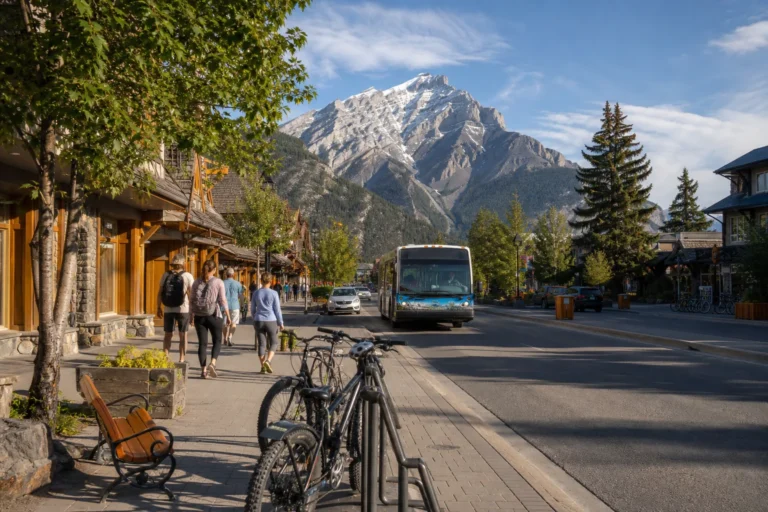
Banff town is compact, walkable and practical to explore by bicycle, with many central sights and services close together. Roam Public Transit connects Banff with destinations including the Banff Gondola, Lake Minnewanka, Johnston Canyon and Lake Louise; seasonal routes and shuttle services may provide additional access.
Driving is possible, but parking in town and at popular park locations can be limited, especially during busy periods. Designated lots followed by walking, cycling, transit or shuttle travel can be more convenient.
Calgary International Airport is the main air gateway, with commercial shuttle and transfer services linking the airport and Banff. Road access and transit availability vary by season.
Location
Map of Banff, Alberta, Canada
The interactive map loads only when you choose to view it.
Plan Your Visit to Banff
Banff has essential services including groceries, fuel, medical care, banks, rentals, restaurants, accommodation and visitor centres. A national park pass is required for travel within Banff National Park.
Plan attraction visits around transportation and parking: routes serve the Banff Gondola, Cave and Basin, Lake Minnewanka and Johnston Canyon, while many central locations are walkable or bike-accessible. Downtown parking is limited during busy periods; Banff Train Station Public Parking provides an alternative, followed by walking or Roam Transit.
Check current road, parking and transit information before setting out.
Local Tips for Banff
Roam Public Transit links Banff with Canmore, Lake Louise and several approved activities, including the Banff Gondola, Cave and Basin, Lake Minnewanka and Johnston Canyon. Leaving a vehicle at your accommodation or in peripheral parking can simplify sightseeing and reduce congestion.
Banff Avenue and the central commercial area are convenient bases for shops, restaurants, visitor services and nearby viewpoints such as Bow Falls and Vermilion Lakes access points. For longer excursions, confirm the route, seasonal service, reservation requirements and departure location in advance.
Bring layers, water and suitable footwear, as conditions can vary between town, lakeshores, canyons and mountain sites.
Live conditions
Current Weather

Updated 2026-09-20 13:00
- Feels like
- 15°C / 59°F
- Today’s high / low
- 19°C / 66°F · 6°C / 42°F
- Humidity
- 28%
- Wind
- ↙ 7 km/h
- Precipitation
- 0 mm
- Chance of rain
- 3%
- Local time
- 2026-09-20 13:13
Staying safe in Banff
Mountain conditions can change quickly, including snowfall at higher elevations during summer. Check Alberta road reports and park updates before driving, and allow extra time for congestion, restrictions and limited parking.
In the national park, keep food, garbage and scented items secured from wildlife, never feed animals and keep pets physically controlled. Camp only in designated campsites; roadside overnighting is prohibited.
Recreational drone use is prohibited in national parks and national historic sites. Stay on appropriate trails, follow posted closures and use visitor centres for current accessibility and safety guidance.