
Travel Guide
Plan your visit around Amber Fort, City Palace, Jaipur, and more of Jaipur, India.
Discover the best things to do in Jaipur, India, from signature sights to memorable local experiences.
Start with the Pink City’s compact mix of hilltop forts, palace complexes and dense walled bazaars.
Founded in the 18th century by Maharaja Sawai Jai Singh II, Jaipur pairs grand hilltop strongholds like Amber and Nahargarh with the painted façades, gardens and crowded markets of the historic core.
Why Visit Jaipur
Jaipur concentrates layered, walkable heritage: hilltop forts that frame panoramic views, richly ornamented palaces showing Rajput and Mughal patronage, and living craft quarters where gemstone cutting, miniature painting and block printing remain active trades.
Signature sites. Amber Fort, City Palace, Hawa Mahal, Jantar Mantar and Johari Bazaar.
Offer a compact cultural itinerary that touches military history, courtly material culture and hands‑on artisan economies.
Top Things to Do in Jaipur, India
These are Jaipur’s most visited attractions, clustered into the walled Pink City and the nearby hill forts. Each entry below explains what to expect and why it matters for your itinerary.
Amber Fort (Amer Fort)
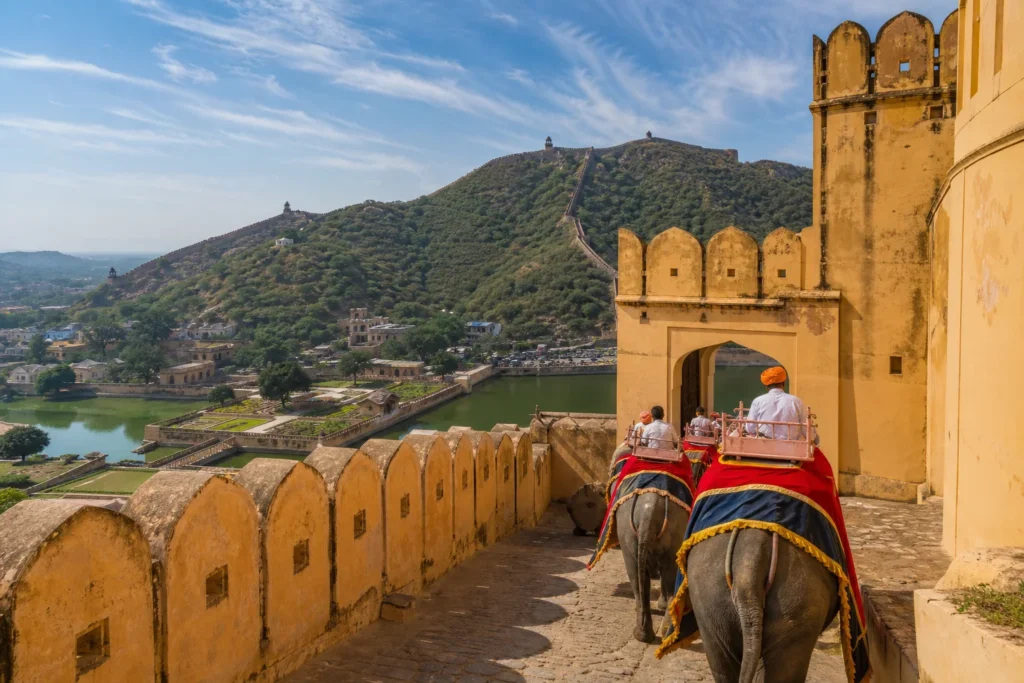
Amber Fort perches above Maota Lake and is approached through a layered defensive sequence of ramparts and gates that open into four principal sections of ascending courtyards.
Interiors combine pink and pale yellow sandstone with white marble insets; highlight spaces include the Diwan‑e‑Aam (hall of public audience), the ornate Diwan‑e‑Khas, the mirrored Sheesh Mahal and private royal apartments.
The fort’s plan and ornament reflect both Rajput and Mughal influences alongside water‑management features such as stepped tanks, and interpretive panels and museum rooms provide context for its military and ceremonial roles. Expect uphill walking and many stone steps; wear sturdy shoes and allow time to enjoy terraces and panoramic views.
City Palace, Jaipur
City Palace sits at the heart of Jaipur as a living royal complex built for Sawai Jai Singh II. The ensemble mixes Rajput, Mughal and European details across courtyards, gardens and connected buildings; Chandra Mahal and Mubarak Mahal anchor museum galleries that preserve royal textiles, arms, photographs and court regalia.
Visitors pass through grand gateways into service courts, ceremonial plazas and selective museum rooms while noticing painted ceilings, mirrorwork and painted facades that reflect the court’s patronage of local crafts.
The palace also anchors Jaipur’s planned ceremonial axis beside Jantar Mantar; check the palace trust’s notices for current exhibitions, permit rules for commercial photography, and guided‑tour options.
Hawa Mahal (Palace of Winds)
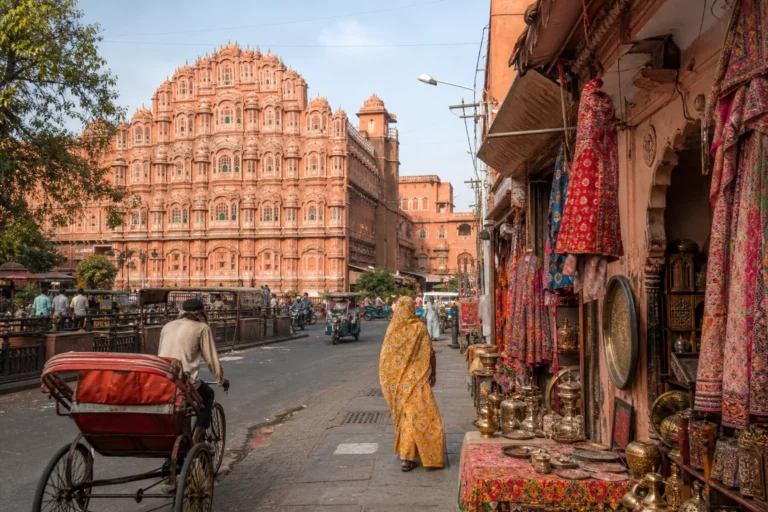
Hawa Mahal is Jaipur’s signature honeycombed façade: a five‑storey screen of pink sandstone pierced by hundreds of latticed jharokhas. Built as an elevated extension of the royal women’s chambers, it allowed discreet observation of processions and street life while promoting passive cooling through cross‑ventilation.
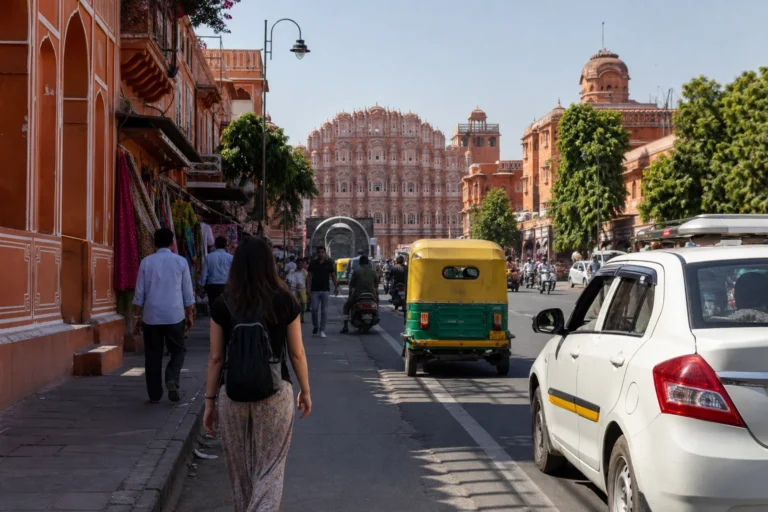
Visitors approach from the busy Badi Chaupar and can explore narrow internal corridors and small rooms; a small museum display near the top explains the palace’s decorative vocabulary. Photographers value morning light for the carved screens; consider a nearby rooftop view across the bazaar and wear comfortable shoes for narrow staircases.
Jantar Mantar, Jaipur
Jantar Mantar is an early‑18th‑century outdoor observatory composed of a compact ensemble of large masonry instruments.
Rather than single gadgets, the site arranges calibrated sundials and geometric devices—such as the giant Samrat Yantra, Jai Prakash and Ram Yantra—across open courtyards so that shadow lines and graduated stone scales make timekeeping and celestial coordinates legible at human scale.
The instruments embody a dialogue between Islamic, Persian and European astronomical practices and local innovation driven by Sawai Jai Singh II. Because the instruments are outdoors and tactile, plan for sun exposure and uneven stone surfaces, and read interpretive panels or use a guide to fully understand each device.
Nahargarh Fort
Nahargarh Fort crowns an Aravalli ridge and functions as Jaipur’s northern sentinel. The compound combines defensive ramparts with later royal refashioning: matching royal boudoirs in the Madhavendra Bhawan, small pavilions, terraces and painted chambers.
A modest temple and the shrine to Nahar Singh Bhomia contribute local mythic associations, while lookout points provide broad sweeping views over Jaipur’s grid. The fort emphasizes panorama, light and walking, with narrow arched passages recalling its military origins; a contemporary sculpture park and occasional cultural programming link historic fabric with modern art.
Visitors should plan for uphill roads, sun exposure and possible vehicle/parking restrictions on the ridge.
Jal Mahal (Water Palace)
Jal Mahal, the Water Palace, sits in the center of Man Sagar Lake and is best experienced as a reflective landscape object rather than an extensively visitable interior. The low‑lying Jaipur sandstone silhouette with chhatri domes and symmetrical façades reads as a designed leisure retreat and hunting lodge within a larger engineered lake landscape.
Visitors usually view the palace from lakeshore causeways and embankments where mirrored reflections provide strong photographic motifs; interior access has historically been limited, so plan to enjoy shoreline viewpoints, lake restoration landscaping and seasonal birdlife around the water.
Albert Hall Museum (Government Museum)
Albert Hall Museum—Jaipur’s Government Central Museum—occupies an Indo‑Saracenic landmark in Ram Niwas Garden. The late‑19th‑century building is part of the visit, its domes, carved stonework and stained glass framing galleries that group miniature paintings, textiles, jewellery, arms and ethnographic material.
Notable showpieces historically include a Persian carpet and unusual foreign objects collected in the 19th century; galleries mix object displays with muraled corridors to situate artifacts in aesthetic context.
The museum functions as a state repository and conservation center, so verify current displays and temporary closures before visiting and allow time to move through stair and corridor sequences.
Johari Bazaar (Pink City bazaars)
Johari Bazaar lies in Jaipur’s walled core as the city’s principal jewellery market, specialising in Kundan and Meenakari enamel work, jadau settings, polished gemstones and gold and silver pieces. Narrow lanes house small shops and on‑site workshops where craftsmen cut stones, apply enamel and set pieces—offering close views of traditional techniques.
The district’s trade concentration reflects Jaipur’s historic plan of specialised bazaars; normal retail practice includes bargaining, requesting gemstone certificates and comparing shops for higher‑value purchases. Expect crowded, narrow lanes and plentiful photographic moments—ask shopkeepers before shooting inside workshops and verify hallmarking for valuables.
Best Time to Visit Jaipur
The most comfortable months are October through March, when mornings and evenings are cool and daytime heat is moderate. Ideal for climbing forts, walking bazaars and photographing façades.
Winter brings festivals and lively markets.
Summers are hot and require midday planning; the monsoon (July–September) can green the hills and reduce crowds but may restrict hilltop access during heavy rains.
SPECIAL EVENTS IN Jaipur
Jaipur International Film Festival (JIFF)
The Jaipur International Film Festival (JIFF) is a major annual film festival showcasing international and Indian independent cinema, industry markets, screenings and awards. It draws filmmakers, distributors, critics and industry professionals for premieres, networking, a film market and co‑production meetups. Travelers may attend high-profile screenings, red-carpet events, industry panels (including AI and digital cinema strands), and experience Jaipur’s cultural attractions and hospitality alongside the festival atmosphere. The event is oriented to both public programming and professional delegates, offering discovery and industry access.
- Dates
- January 8, 2027 - January 12, 2027
Jaipur Literature Festival (JLF)
Jaipur Literature Festival is a large, public literary and ideas festival that brings international and Indian writers, translators, publishers, and audiences together in Jaipur. Known for its open‑door ethos and multilingual programming, the festival mixes author talks, debates, poetry, music and publishing industry forums, making it a major cultural draw and an important moment for literary tourism in Rajasthan. Travelers may plan visits around its programme, expect heavy local demand for accommodation, and find rich opportunities for book launches, signings and cultural events.
- Dates
- January 14, 2027 - January 18, 2027
- Venue
- Hotel Clarks Amer
Makar Sankranti — The Kite Festival (Jaipur)
Jaipur’s Makar Sankranti Kite Festival is a vivid, family-friendly celebration when the city’s skies fill with colourful kites and competitive patang flying. Organized by the Rajasthan tourism authorities, the programme draws local communities and visiting kite-makers with demonstrations, cultural performances and food stalls. Travelers interested in photography, local traditions, and seasonal festivals will find this a memorable cultural spectacle and an accessible way to experience Jaipur’s winter festivities.
- Dates
- January 14, 2027
- Venue
- Polo Ground & across the city
Getting Around Jaipur
Jaipur’s core is compact and walkable between closely spaced attractions and bazaars. For short hops use auto‑rickshaws, metered taxis or app‑based rides; these are useful for first/last‑mile trips and direct transfers to hill forts.
Amber, Nahargarh and Jaigarh sit above the city and are easiest reached by car or taxi—roads are steep and parking is arranged for vehicles. For regional travel, trains and buses connect Jaipur to other Rajasthan cities; plan visits by cluster to minimize transit time.
Location
Map of Jaipur, Rajasthan, India
The interactive map loads only when you choose to view it.
Plan Your Visit to Jaipur
Attractions cluster across two zones: the walled Pink City (Hawa Mahal, Jantar Mantar, City Palace, Johari Bazaar) and the hill forts to the north (Amber/Amer, Nahargarh, Jaigarh). Use taxis or app cabs for direct access to forts; the Metro and city buses help on trunk routes but rarely replace point‑to‑point car trips.
Buy tickets from official sources or monument counters, allow extra time for security checks and walking between courtyards, and verify guided‑tour or audio‑guide availability before you go.
Local Tips for Jaipur
Dress modestly (cover shoulders and legs) at palaces and temples. Bargain politely in bazaars like Johari Bazaar and carry small notes for purchases; inspect jewellery and textiles before buying.
Many sites allow photography but may charge for professional equipment—check at entrances. Carry refillable water, sunscreen and a hat in hotter months.
For interpretive context, prefer guides registered with Rajasthan Tourism or official site guide desks.
Live conditions
Current Weather

Updated 2026-09-21 00:30
- Feels like
- 31°C / 88°F
- Today’s high / low
- 34°C / 92°F · 25°C / 77°F
- Humidity
- 64%
- Wind
- ↓ 8 km/h
- Precipitation
- 0 mm
- Chance of rain
- 1%
- Local time
- 2026-09-21 00:42
Safety
Use pre‑paid taxi kiosks at transport hubs or licensed app‑based cabs rather than unbooked drivers. Keep valuables secure in crowded markets and prefer cashless payments where possible.
Note tourist‑police and official assistance counters at major stations and monuments. Avoid night travel on isolated lanes near forts or quiet outskirts; when unsure, ask monument staff, your hotel, or an RTDC tourist bureau for current local advice.