
Travel Guide
Plan your visit around Real Alcázar of Seville, Seville Cathedral and La Giralda, and more of Seville, Spain.
Discover the best things to do in Seville, Spain, from signature sights to memorable local experiences.
The city concentrates Roman, Islamic, medieval and Renaissance layers into a very walkable historic core. The UNESCO‑listed ensemble around the Cathedral, La Giralda, the Real Alcázar and the Archivo General de Indias anchors narrow lanes, shaded plazas and the gardens of Parque de María Luisa.
Beyond the core, Triana's riverside workshops and the contemporary Metropol Parasol add contrasting textures. This guide highlights the essential monuments, neighborhoods, museums and practical tips to help you plan a focused visit.
Why Visit Seville
Visitors come to Seville for dense cultural heritage in a compact area: a World Heritage cathedral complex. Richly ornamented Alcázar palaces and gardens.
Grand public spaces such as Plaza de España and Parque de María Luisa. And distinctive neighborhoods.
Santa Cruz’s alleys and Triana’s ceramic and flamenco traditions.
The city’s museums, tapas culture and visible architectural layers—from Almohad to Baroque—make it especially rewarding for history, architecture, art and food-focused trips.
Top Things to Do in Seville, Spain
Seville’s highlights sit close together, so you can pair major monuments with neighborhood strolls. Below are the city’s essential sights, with what to expect and why each visit matters.
Real Alcázar of Seville
The Real Alcázar of Seville is a living royal palace layered with history. Enter through fortified walls into a sequence of intimate courtyards and ornamented chambers that largely reflect the fourteenth‑century Mudéjar core commissioned under Pedro I.
Intricate plasterwork, polychrome azulejos and a gilded cedar dome mark principal reception rooms.
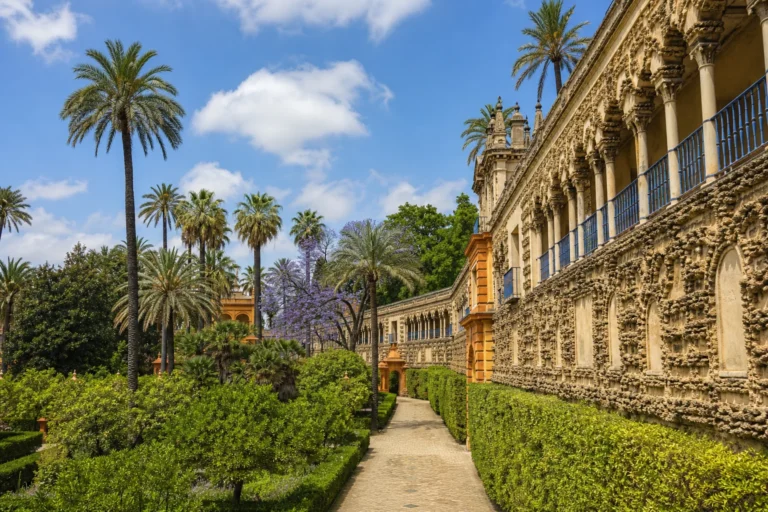
Gardens are integral to the experience, shifting from small tiled patios to broad promenades shaded by orange trees. Water channels, fountains and planted rooms create cooling microclimates; distinct sectors include formal Renaissance terraces and later English‑style plantings.
Plan time for both interiors and gardens, and check the palace’s official site for tickets and accessibility details.
Seville Cathedral and La Giralda
Seville Cathedral occupies the site of the former Great Mosque and developed into one of the world’s largest Gothic churches. Inside, a vaulted nave, richly carved choir and an impressive high altarpiece dominate the interior, while funerary chapels and monumental tombs trace the city’s late medieval and Renaissance wealth.
La Giralda began as a twelfth‑century minaret; its wide ramps—originally intended for mounted ascent—lead to panoramic viewpoints over tiled roofs and the Guadalquivir River. Many visitors combine interior, rooftop and tower visits; guided tours and official resources help explain the cathedral’s mixed Islamic and Christian layers and current access arrangements.
Plaza de España
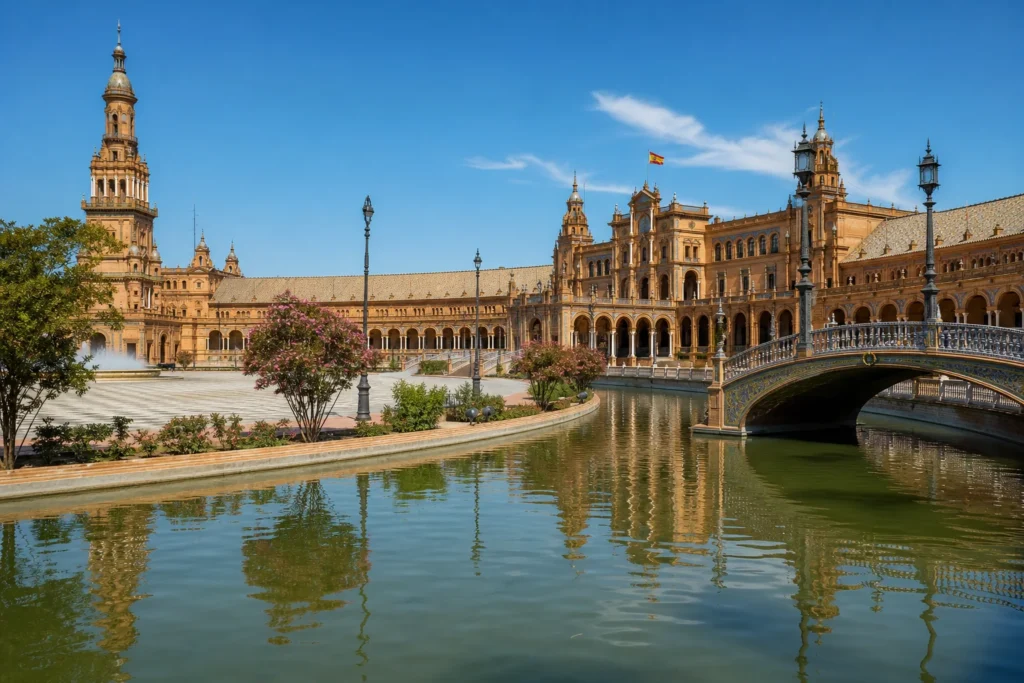
Plaza de España forms a sweeping semicircle at the northeast edge of Parque de María Luisa, designed by Aníbal González for the 1929 Ibero‑American Exposition. The curving brick and tile complex, twin towers and central fountain create a staged civic backdrop approached through the park.
A shallow canal traces the plaza’s curve and is crossed by four ornate bridges. Behind the canal a balustraded gallery contains 48 painted ceramic bench‑panels—one for each then‑existing Spanish province—each combining a map, coat of arms and pictorial scene.
The plaza celebrates regional craft and is especially rewarding for photography, slow looking and family visits; check official tourist sources for current access details.
Archivo General de Indias
The Archivo General de Indias houses the documentary memory of Spain’s administration in the Americas and the Philippines. Founded in 1785, the archive centralized records formerly dispersed among several repositories so scholars could assemble a coherent documentary history of colonial administration.
Occupying the Casa Lonja de Mercaderes, a late‑Renaissance merchant exchange, the archive preserves series such as the Council of the Indies and the Casa de la Contratación alongside maps, ship logs and legal petitions.
Many documents are accessible through national digitization portals; researchers should consult the archive’s official resources for catalogues, access rules and digitized series before planning on‑site work.
Parque de María Luisa
Parque de María Luisa is Seville’s principal historic public garden and green lung, partly formed from the Palacio de San Telmo gardens donated by the Infanta María Luisa and reshaped for the Ibero‑American Exhibition under Jean‑Claude Nicolas Forestier. The park offers shaded promenades, intimate glorietas and broad vistas across ornamental plantings.
Features include small ponds and fountains—the Estanque de los Lotos and Isleta de los Patos—and many sculptural monuments. Plaza de España and Plaza de América frame the park’s edges, and period pavilions now house cultural displays.
Because the site covers about thirty‑four hectares, plan a relaxed visit and allow time for slow walking amid its cool canopy.
Metropol Parasol (Setas de Sevilla)
Metropol Parasol, commonly called Las Setas, is a bold contemporary timber canopy above Plaza de la Encarnación designed by Jürgen Mayer H. Its undulating wooden lattice and two concrete cores create a honeycomb roof that reframes the urban square.
The complex layers civic uses across four levels: a street‑level market and cafés, the subterranean Antiquarium displaying Roman, Visigothic and medieval remains, and a rooftop promenade and elevated walkway offering wide views across the cathedral and river.
The project transformed a neglected square into a mixed public facility; check the official site for current ticketing and rooftop access details.
Barrio de Santa Cruz
Barrio de Santa Cruz sits immediately east of the Cathedral and Alcázar and reads as a compact maze of narrow lanes, sun‑white façades, orange trees and small plazas. The quarter grew from the medieval judería and still reveals its street pattern and courtyard‑based fabric in converted synagogues, churches and fragments of medieval walls.
Key experiences include wandering Callejón del Agua, pausing at Plaza de Santa Cruz and exploring the Jardines de Murillo. Small museums, convent churches and family‑run tapas bars sit behind plain façades; allow time for side streets and patios but expect crowds in peak months.
Consult official tourism resources for specific access to monuments.
Triana
Triana occupies the west bank of the Guadalquivir and preserves a strong riverside identity defined by pottery, trade and flamenco. Crossing the Isabel II bridge marks entry into a neighbourhood of colorful facades, workshops and lively terraces along Calle Betis.
Triana’s alfarería grew from local clay deposits and long artisanal lineages; ceramics studios and the Triana Ceramic Centre interpret glazing and tile techniques. The Church of Santa Ana and archaeological traces around the market recall the district’s layered past.
Visitors will enjoy workshop visits, riverside promenades and neighborhood taverns—check local pages for current museum openings and guided tours.
Museo de Bellas Artes de Sevilla
The Museo de Bellas Artes de Sevilla houses the city’s richest historic painting collection and occupies the former Convent of La Merced. Visitors move through cloisters, a former church nave and adapted convent rooms where architectural features such as tiled courtyards and a grand staircase remain visible.
Collections focus on Sevillian Baroque painting of the seventeenth century with major works by Murillo, Zurbarán, Velázquez and Valdés Leal, alongside altarpieces, sculpture and decorative objects. The museum rewards slow, sequential looking; because major works may travel for loans or conservation, consult official museum resources before planning specific expectations.
Best Time to Visit Seville
Seville has a Mediterranean climate with very hot summers and mild winters. For comfortable walking and sightseeing, visit in spring (March–May) or autumn (September–November) when temperatures are milder, gardens are at their best, and many cultural events occur.
Winters are cooler and quieter but wetter; January–February and late autumn can offer lower prices and fewer crowds. If traveling in summer, plan heat‑sensible itineraries with early starts and afternoon breaks.
Getting Around Seville
The historic centre is highly walkable; most major monuments, plazas and museums are within short walking distances. For longer trips the city runs a compact public transport network—metro, suburban trains and buses—that connects outer neighbourhoods, the Santa Justa station and Triana.
SEVici public bikes and extensive bike lanes make cycling practical for short cross‑city trips. Taxis and ride‑hailing cover routes and late‑night travel, and AVE trains link Seville to other Andalusian cities and Madrid for regional day trips.

Location
Map of Seville, Spain
The interactive map loads only when you choose to view it.
Plan Your Visit to Seville
The Alcázar, Cathedral/La Giralda and Archivo de Indias cluster in the historic centre, so plan to walk between them. Fly into Seville–San Pablo or arrive by AVE at Santa Justa.
Use TUSSAM buses, Metro line 1 or the Metrocentro tram for outer areas; rechargeable multi‑journey cards or short tourist passes are practical for frequent trips. SEVici bikes are useful in spring and autumn.
Book timed‑entry tickets for Alcázar and the Cathedral in advance and adjust summer itineraries to avoid midday heat.
Local Tips for Seville
Prioritise early‑morning or late‑afternoon visits to major sights to avoid crowds and midday heat. Reserve Alcázar and Cathedral tickets online and expect Plaza de España and Parque de María Luisa to be busiest at peak times.
Cross the Isabel II bridge to explore Triana’s pottery shops, tapas bars and flamenco venues; wander aimlessly in Santa Cruz’s lanes to discover hidden patios. Use official taxi ranks or licensed apps, carry water, wear comfortable shoes for cobbles, and download offline maps or the city’s visitor guides before you go.
Live conditions
Current Weather

Updated 2026-09-20 18:15
- Feels like
- 30°C / 87°F
- Today’s high / low
- 34°C / 94°F · 21°C / 70°F
- Humidity
- 23%
- Wind
- → 20 km/h
- Precipitation
- 0 mm
- Chance of rain
- 1%
- Local time
- 2026-09-20 18:30
Safety
Seville is generally safe for visitors but exercise normal urban precautions. Watch for pickpockets in crowded tourist sites, public transport and nightlife areas—keep wallets in front pockets or zipped bags.
During summer the main risk is heat: plan rest breaks, stay hydrated, and avoid long midday exposure. Use licensed taxis or well‑known ride apps after late‑night outings, lock bikes and secure belongings, and call 112 for emergencies.
For non‑urgent police matters, consult local tourist police offices.