
Travel Guide
Plan your visit around Mutianyu Great Wall, Badaling Great Wall, and more of Great Wall, China.
Discover the best things to do in Great Wall, China, from signature sights to memorable local experiences.
The Great Wall of China is a historic fortification system across northern China, not a single town. This guide focuses on visitor sections in the Beijing area and nearby facilities that belong in a wall-focused trip.
Start by choosing the section that fits your interests, walking needs and travel time. Mutianyu, Badaling, Juyongguan, Huanghuacheng and Simatai have different approaches and visitor arrangements.
The official links below take you to an operator or government visitor page for each named place.
The map and weather reference for this guide uses the Mutianyu area as a planning point. It is not the location of the entire Great Wall.
Use the precise entrance of your selected section for navigation and check local conditions before setting out.

Why Visit Great Wall
The Great Wall brings together historic architecture and a striking mountain landscape. Its towers and defended passes help explain how routes through northern China were protected.
A visit can focus on walking, photography, architectural detail or learning about the history of a particular section.
You do not need to visit every section to have a worthwhile trip. For a first visit, choose one managed visitor area and give it enough time.
Compare the approach, steps, transport options and open route before committing to a ticket. Cableways can reduce part of the climb, but they do not make all wall paths step-free.
Treat the listed places as alternatives and a few nearby complements, not a suggested one-day circuit. In particular, Simatai and Gubei Water Town form one planning area, while the Mutianyu exhibition belongs with a Mutianyu visit.
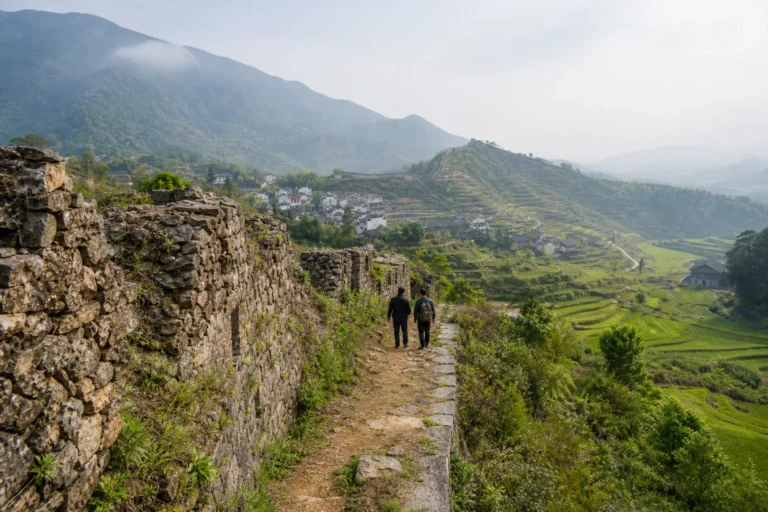
Top Things to Do in Great Wall, China
Choose one main Great Wall section, then add a relevant nearby stop when time allows. Each link leads to verified official visitor information; Chinese-language official pages are valid sources too.
Opening arrangements and ticket products can change, so consult the linked source for your date.
Mutianyu Great Wall
Mutianyu offers a managed Great Wall visit in Beijing’s Huairou District. Its mountain setting, watchtowers and cable-car options make it a useful choice when you want to balance time on the wall with the approach.
Choose your route before buying transport extras: reaching the wall by cable car does not remove the steps on the wall itself. Read the operator’s current access notices and ticket instructions before travelling.
Badaling Great Wall
Badaling is a developed visitor section in Yanqing District, northwest of Beijing. It is a separate destination from Mutianyu, not another gate on the same local walking route.
Choose it for a dedicated wall visit and use the official visitor information to plan the approach. Allow enough time for the entrance, the wall and the return journey instead of trying to combine several distant sections in one day.
Juyongguan Great Wall
Juyongguan is a fortified Great Wall pass in Beijing’s Changping District. It combines a mountain setting with towers, gates and other defensive buildings.
It is worth considering when you are interested in how a defended pass worked, rather than treating every wall section as an identical ridge walk. Follow the routes open to visitors and select a turnaround point that suits your group.
Check the government visitor page for current admission information.
Huanghuacheng Lakeside Great Wall
Huanghuacheng combines Great Wall scenery with a reservoir landscape in Huairou District. This is an alternative to a visit focused entirely on climbing a long line of watchtowers.
The tourist area describes lakeside sightseeing and boat experiences; access to particular activities must be checked with the operator. Follow the managed paths and do not assume that every wall visible around the reservoir is an authorised hiking route.
Simatai Great Wall
Simatai is the Great Wall section associated with Beijing WTown in Miyun District. The operator describes steep mountain terrain and visitor routes that can use the cableway.
A night-visit option is also advertised, but availability and the accessible route should be confirmed for your date. Check which entrance, transport and wall-access components your booking includes; a water-town visit is not automatically the same product as a wall visit.
Gubei Water Town
Gubei Water Town, also marketed as Beijing WTown, is a resort at the foot of Simatai. Its waterways, accommodation and visitor facilities make it a complementary stop for a Simatai plan, rather than a Great Wall section itself.
Decide whether you want a wall-focused day or a longer resort stay. Keep the distinction clear when booking: verify the town admission, wall visit, cableway and accommodation separately rather than assuming one ticket covers everything.
Great Wall Spirit Exhibition Hall
The Great Wall Spirit Exhibition Hall at Mutianyu provides an indoor context for the surrounding wall. Its operator describes displays including maps, stone rubbings, historic objects and material about restoration.
Consider it as a companion to your Mutianyu visit, not a substitute for checking outdoor access conditions. Confirm current exhibition access locally, especially when planning around a short visit or limited walking time.
Best Time to Visit Great Wall
Choose a day around the conditions at your selected section rather than relying only on central Beijing’s forecast. Mountain weather and visibility affect the experience, and a route that is comfortable in dry conditions can be a poor choice in wind or rain.
For an outdoor visit, check the forecast and the operator’s access notices before leaving. Plan around daylight and the latest entry and transport times shown by that operator.
A advertised evening visit at one section does not mean that another section stays open after dark.
Spring and autumn are commonly considered for outdoor sightseeing, but no season guarantees a clear view or an open route. Keep some flexibility in your plan and have an alternative activity in Beijing when conditions are unsuitable.
Getting Around Great Wall
Plan transport to a named section and entrance. Searching only for “Great Wall” can lead to the wrong point, because the monument covers a very large area.
Keep the Chinese name and official entrance information available for your driver or transport enquiry.
Use the operator or government page linked to your chosen section to check the current approach. Verify both directions of the trip, including your final transfer and return pickup.
Allow for the access road, entrance procedures and any shuttle or cableway you choose to use.
Do not assume that nearby-looking stretches on a map are connected by an open tourist path. A road transfer between sections may be required.
Plan one principal section first instead of building a day around several separate entrances.
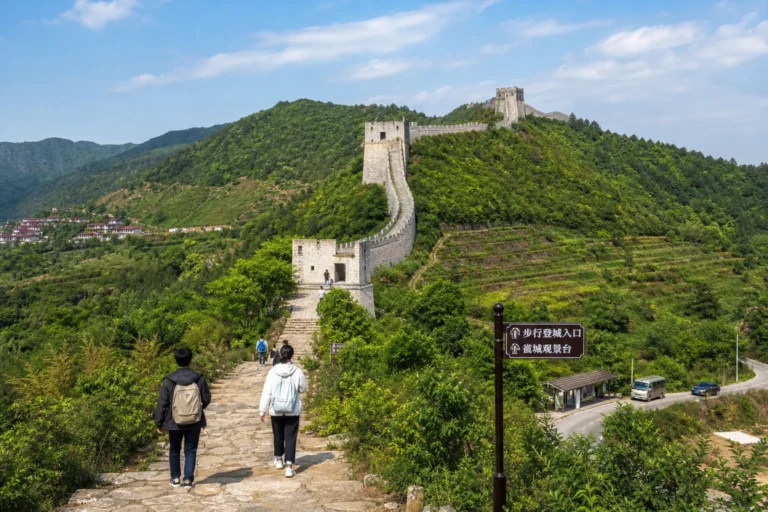
Location
Map of Great Wall, China
The interactive map loads only when you choose to view it.
Plan Your Visit to Great Wall
Read the current admission instructions from the official source before paying. Confirm the correct date, entrance and identity-document requirements, and check whether shuttles, cableways or other activities are separate purchases.
Do not assume a ticket sold by a third party includes every part of the visit.
Choose a walking plan for the least confident member of your group. Allow time to turn back, and ask the operator about suitable access when travelling with limited mobility.
A cableway is a transport option, not a promise that the wall itself is fully accessible.
Carry water, weather-appropriate layers and shoes with reliable grip. Keep the official entrance name, booking confirmation and return arrangements accessible even when mobile service is inconvenient.
Avoid relying on this guide for a fixed price or timetable; the linked operator is the current source.
Local Tips for Great Wall
Pick a clear purpose for the visit: a manageable wall walk, a particular pass, lakeside scenery or an evening experience where officially offered. That makes it easier to choose between sections without chasing a long checklist.
Keep a copy of the official visitor page and the attraction’s Chinese name. Use translation help when the best authoritative information is in Chinese, rather than substituting an unverified reseller page.
Check ticket inclusions carefully before comparing prices.
Leave space for stops and the return journey. At Mutianyu, the exhibition can add historical context to the outdoor visit.
At Simatai, the adjacent water-town resort is a separate choice with its own booking details. Neither requires turning the day into a tour of distant wall sections.
Live conditions
Current Weather

Updated 2026-09-21 23:45
- Feels like
- 16°C / 60°F
- Today’s high / low
- 25°C / 76°F · 12°C / 54°F
- Humidity
- 56%
- Wind
- ← 5 km/h
- Precipitation
- 0 mm
- Chance of rain
- 2%
- Local time
- 2026-09-21 23:48
Use managed visitor routes
Stay on the routes open to visitors and follow posted instructions. Do not enter a closed or unrestored stretch just because a path appears on a map or in a social-media video.
Conditions and permissions can differ from one section to the next.
Allow extra care on steps, slopes and exposed viewpoints. Stop when the route or weather no longer suits your group, and leave enough time to return before your selected entrance and transport close.
Consult the operator about current conditions rather than treating any online route description as permission to proceed.
Keep children close near edges and steps. Ask for practical access information in advance when balance, stamina or mobility is a concern.
A shorter, appropriate visit is better than forcing a route that does not fit your needs.