
Travel Guide
Plan your visit around Osaka Castle, Dotonbori district, and more of Osaka, Japan.
Discover the best things to do in Osaka, Japan, from signature sights to memorable local experiences.
Start with the city’s compact core where history, food, and big‑city entertainment meet.
Umeda in the north and Namba/Dotonbori in the south are linked by frequent rail and metro services, making it easy to move between Osaka Castle’s parkland, neon-lit food corridors, and bay-area attractions such as Universal Studios Japan and the Kaiyukan aquarium.
Why Visit Osaka
Visitors come to Osaka for an energetic urban culture that balances history, entertainment, and food. Landmarks like Osaka Castle, Shitenno-ji, and Sumiyoshi Taisha offer direct links to Japan’s past, while Dotonbori and Kuromon Ichiba highlight the city’s street-food legacy.
Family attractions, panoramic observatories, compact neighborhoods, lively nightlife, and fast rail links to Kyoto, Nara, and Kobe make Osaka a practical base for both cultural touring and leisure travel.
Top Things to Do in Osaka, Japan
Osaka’s attractions cluster into walkable neighborhoods and easy rail rides. Below are the city’s signature sites.
Castles and temples, food markets, observatories, and major family destinations. Each offering a clear way to plan a day or two in the city.
Osaka Castle (Osaka-jo)
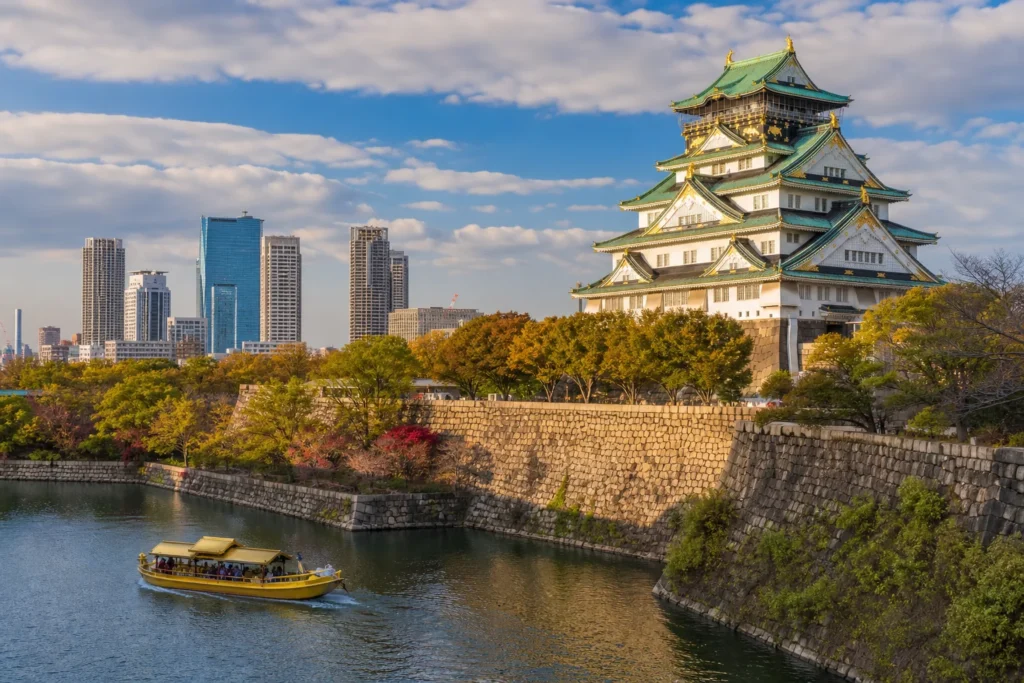
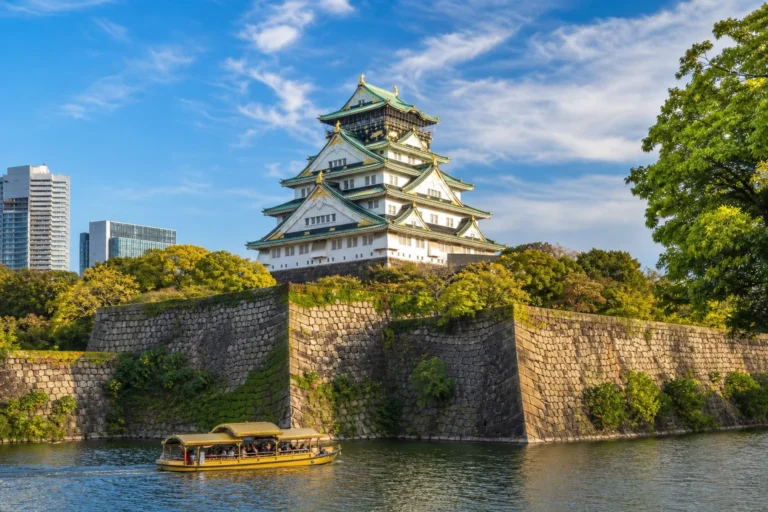
Osaka Castle stands as one of Japan’s most recognizable urban landmarks, built originally by Toyotomi Hideyoshi and reconstructed over centuries. The present main tower rises above dramatic stone walls, wide moats, and formal gardens, giving a clear impression of samurai-era defensive design and urban symbolism.
Inside the multi-level keep, museum exhibits use artifacts, models, and modern displays to trace Hideyoshi’s era and Osaka’s development. The top floor observatory offers broad city views that contrast the historical complex with modern Osaka, while surrounding grounds—including Nishinomaru Garden—provide framed photo viewpoints, especially during cherry blossom season.
Dotonbori district
Dotonbori is Osaka’s lively canal-side entertainment and dining corridor, famous for neon billboards and iconic signs such as the Glico runner and the Kani Doraku crab. The riverside promenade and Ebisu Bridge are natural photo spots, and the area’s theatrical storefronts reflect a long history as an entertainment quarter.
Food is central here: dense concentrations of takoyaki stalls, okonomiyaki restaurants, and kushikatsu bars let visitors sample local specialties while strolling. Expect heavy foot traffic after sunset; plan time for bridge viewpoints and, if you like, a canal cruise to experience the neighborhood from the water.
Universal Studios Japan
Universal Studios Japan is a large film-themed park on Osaka Bay that recreates cinematic settings with rides, shows, and street entertainment. Signature areas include The Wizarding World of Harry Potter, Super Nintendo World, and family-focused Minion Park, each combining large-scale rides with themed shops and character encounters.
The park operates with high visitor demand, so plan a full day and use the official mobile app for wait times and timed-entry features. Express Passes and accessibility services are available to reduce queueing; check height and safety requirements and verify ticketing rules on the park’s official resources before visiting.
Osaka Aquarium Kaiyukan
Osaka Aquarium Kaiyukan traces Pacific Rim marine habitats around a central “Pacific Ocean” tank, which anchors surrounding galleries and showcases large pelagic species. The tank’s scale and depth make it a highlight, with whale sharks, rays, and broad schools of fish featured in exhibit descriptions.
Galleries move visitors through coastal, island, and tropical habitats, using touch pools, interpretive signage, and keeper talks to emphasize education and close encounters. Located in Tempozan Harbor Village, the aquarium pairs well with nearby waterfront attractions and is a short walk from Osakako Station on the Chuo Line.
Umeda Sky Building (Floating Garden Observatory)
The Umeda Sky Building is a striking twin-tower landmark connected at the top by the Floating Garden Observatory. Visitors ascend via glass escalators and indoor galleries to reach the 39th and 40th floors, where an open-air rooftop loop offers 360-degree views of Osaka’s skyline and the Yodo River.
The observatory’s open exposure is its defining feature—especially at sunset or on clear days—and the building’s basement Takimi-koji recreates a Showa-era shopping street for a nostalgic detour. The Sky Building sits within the Shin-Umeda City complex, a short walk from Osaka Station, making it easy to combine with nearby shopping and dining.
Official Umeda Sky Building (Floating Garden Observatory) website →
Shitenno-ji Temple
Shitenno-ji is one of Japan’s oldest state-sponsored temples, founded in 593 by Prince Shōtoku. The precinct follows a deliberate axial plan: successive gates open onto a pebble courtyard, a five-storied pagoda, the main hall, and the lecture hall, reflecting classical temple planning.
Many buildings are reconstructions informed by archaeological study; the complex remains an active religious site with daily rites, market days, and a treasure repository. Visitors can combine free outer grounds with paid access to inner gardens or museum displays—check current access rules before your visit.
Sumiyoshi Taisha Shrine
Sumiyoshi Taisha is a venerable Shinto shrine known for its ancient Sumiyoshi-zukuri architecture and its high arched Sorihashi (Taiko) Bridge. The shrine’s four principal sanctuaries stand in a distinctive arrangement that recalls a fleet of ships and reflects historic maritime connections.
Architectural details such as hinoki-bark roofs, vermilion pillars, and white plaster walls transmit pre-Buddhist building forms; the honden are nationally significant. Sumiyoshi Taisha remains a living ritual center with seasonal observances and daily rites—respectful behavior and quiet photography in worship zones are appropriate.
Kuromon Ichiba Market
Kuromon Ichiba is a long-running covered market in Namba with roughly 150 shops and stalls selling fresh seafood, produce, prepared foods, and sweets. The market functions as both a wholesale precinct and a popular sampling destination, exemplifying Osaka’s tabe-aruki (eating-while-walking) culture.
Look for counter dining at fish stalls and freshly prepared skewers; some vendors adapt service for travelers while others remain trade-focused. Practical tips: bring small bills, be mindful of narrow aisles and crowd flow, and check individual store policies before photographing or making large purchases.
Osaka Museum of History
The Osaka Museum of History occupies a purpose-built tower overlooking Osaka Castle Park and arranges exhibits so visitors move from the top floors downward. This vertical routing uses dioramas, reconstructions, and archaeological material to trace Osaka from ancient Naniwa through medieval commerce to modern industrial growth.
Galleries emphasize everyday urban life, canal networks, and the city’s maritime and mercantile roles. Large windows periodically frame views of Osaka Castle, linking exhibits to the living city outside.
The museum offers shorter and complete routes, multilingual materials, and easy access from Tanimachi 4-chome Station.
Nakanoshima Park
Nakanoshima Park is a long, narrow island park set between the Dojima and Tosabori rivers and functions as an urban green spine about 1.5 kilometres long. Tree-lined promenades, waterfront paths, and open lawns create a continuous recreational route through a dense business district.
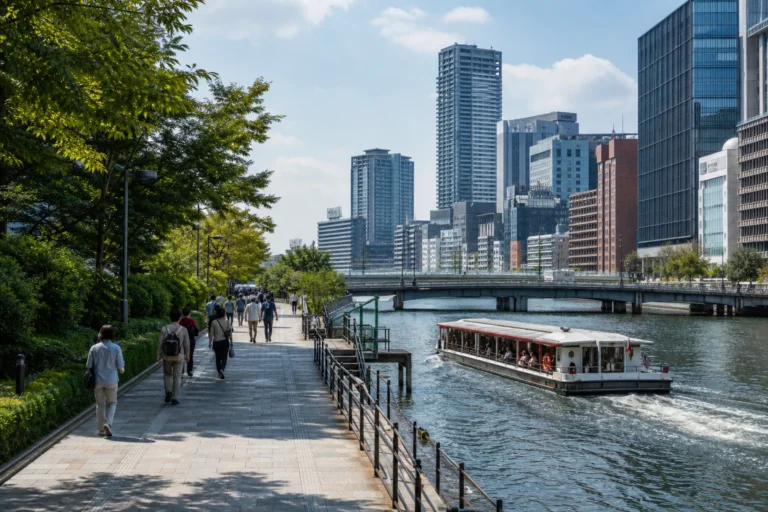
A central rose garden produces notable spring and autumn displays, and late-Meiji and Taisho-era civic buildings such as the Osaka City Central Public Hall face the park. The setting encourages combining a relaxed stroll with visits to nearby museums, library reading rooms, or a short riverside boat ride.
Best Time to Visit Osaka
Osaka is pleasant year‑round but each season offers something different: late March. Early April for cherry blossoms around Osaka Castle.
May for mild weather and festivals. And late October.
November for comfortable temperatures and autumn color. Summers (July–August) are hot and humid and can bring typhoons; winters are cool and usually dry.
Avoid the busiest domestic holidays (Golden Week and New Year’s) if you prefer smaller crowds.
SPECIAL EVENTS IN Osaka
Naniwa Yodogawa Fireworks Festival (なにわ淀川花火大会)
A major urban fireworks festival presented by a volunteer-run committee along the Yodo River in Osaka. The show is a locally produced, ticketed spectacle that draws large crowds and features coordinated music-and-fireworks programming. Travelers should note viewing restrictions on riverbanks, likely ticketed seating areas, and heavy transit demand; public transportation and advance ticket purchase are strongly recommended. The festival is culturally significant to the city and offers a dramatic skyline display valued by both residents and visitors.
- Dates
- October 17, 2026
- Venue
- Yodogawa riverbanks (riverbed) between Shin-Midōsuji / Shin-Yodogawa Bridge downstream to National Route 2 / Yodogawa Bridge
Osaka Marathon (大阪マラソン)
Osaka Marathon is a major annual road marathon attracting recreational and elite runners to a city-centre course that showcases Osaka’s urban landmarks and energetic spectator culture. Organized by Osaka municipal authorities together with national athletics bodies, the event combines mass-participation waves, charity entries, and elite competition. Travelers may value the race for its efficient race logistics, easy transport links, strong local hospitality, and the chance to combine running with sightseeing and regional food experiences in Osaka.
- Dates
- February 28, 2027
- Venue
- Osaka Castle Park (finish)
Osaka Asian Film Festival (大阪アジアン映画祭)
Osaka Asian Film Festival is a major annual film festival in Osaka presenting contemporary cinema from Japan and across Asia, including competition, special screenings, and industry programs. Travelers may enjoy premieres, filmmaker Q&As, and curated retrospectives across city venues, making it a cultural highlight for cinephiles visiting Osaka. The festival draws international guests and offers opportunities to see films before wide release. Check the official festival site for program, venue, and ticket announcements, as some details are released closer to the event.
- Dates
- March 5, 2027 - March 14, 2027
AnimeJapan
AnimeJapan is one of the world’s largest anime trade shows and public festivals, bringing major studios, exhibitors, merchandise sellers, premieres, stage programs, and voice-actor appearances into a single event. It combines industry-focused business days with public festival days, offering exclusive previews, official goods, cosplay areas, and live panels. Travelers who follow Japanese pop culture, collectors, and industry professionals value the show for its product launches, rare merchandise, networking opportunities, and immersive experiences not available elsewhere.
- Dates
- March 26, 2027 - March 28, 2027
- Venue
- INTEX Osaka (Halls 1–6)
Getting Around Osaka
Osaka’s dense public-transport network—JR lines, private railways (Hankyu, Hanshin, Keihan, Kintetsu, Nankai) and Osaka Metro—links major hubs such as Osaka/Umeda, Namba, and Tennoji. Many attractions lie a short walk from stations, and rapid trains make day trips to Kyoto, Nara, and Kobe convenient.
Use an IC card (ICOCA, Suica, or Pasmo) for seamless local travel; taxis, cycling, and river ferries are practical for short or luggage-heavy trips.
Location
Map of Osaka, Japan
The interactive map loads only when you choose to view it.
Plan Your Visit to Osaka
Osaka is best explored by train and on foot. Buy an IC card for local travel and small purchases, and consider regional passes only if you plan intercity trips.
Tourist information centers at JR Osaka Station and Kansai Airport offer maps and multilingual help. For busy attractions such as Osaka Castle, the Umeda Sky Building, and Universal Studios Japan, arrive early or late in the afternoon and allow extra time for crowds and timed-entry procedures.
Local Tips for Osaka
Osaka dining is casual—sample takoyaki, okonomiyaki, and kushikatsu while strolling Dotonbori and Kuromon Ichiba. Many places accept cards, but small market stalls and some temple shops prefer cash, so carry coins and small notes.
Observe Japanese etiquette: remove shoes where requested, keep noise low on public transport, and avoid eating while walking in some neighborhoods. For quieter visits, go to Shitenno-ji, Sumiyoshi Taisha, or Nakanoshima early on weekday mornings.
Live conditions
Current Weather

Updated 2026-09-22 06:00
- Feels like
- 21°C / 69°F
- Today’s high / low
- 28°C / 82°F · 22°C / 71°F
- Humidity
- 61%
- Wind
- ↑ 18 km/h
- Precipitation
- 0 mm
- Chance of rain
- 4%
- Local time
- 2026-09-22 06:07
Safety in Osaka
Osaka is generally safe for visitors; usual urban precautions apply. Watch belongings in crowded stations and nightlife areas, and be alert to pickpocketing risks on busy trains and at Dotonbori.
Follow official guidance during natural hazards: Japan issues clear earthquake and typhoon advisories—register for local alerts and know evacuation routes at your accommodation. Respect local rules on public behavior and littering, and report emergencies to local authorities or a tourist information center.