
Travel Guide
Plan your visit around Petra Archaeological Park, The Siq, and more of Petra, Jordan.
The best things to do in Petra, Jordan begin with the dramatic walk through the Siq and continue into a vast ancient city carved into rose-colored sandstone. Centered on Wadi Musa, Petra brings together monumental tombs, temples, theatres, churches, water channels, and mountain trails shaped by Nabataean, Roman, Byzantine, and medieval cultures.
Why Visit Petra
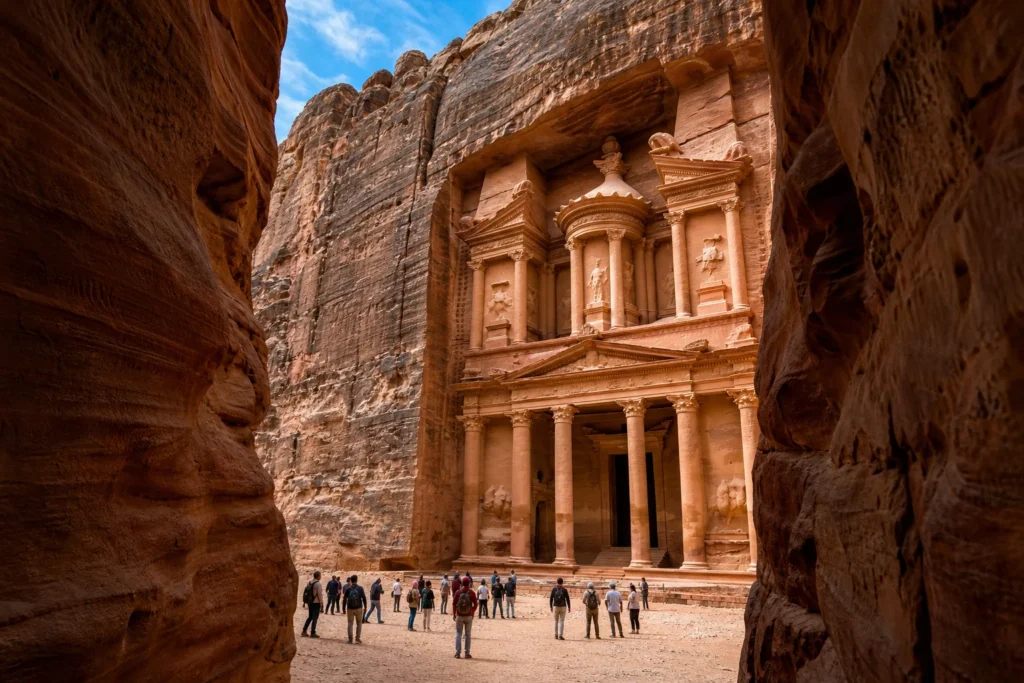
Petra combines archaeology, geology, history, and walking adventure in one remarkable landscape. The Siq gradually reveals Al Khazna, the Treasury, before paths continue through a broad valley of monumental tombs, temples, colonnades, rock shelters, and traces of domestic and religious life.
Longer hikes lead to viewpoints, the Royal Tombs, and Ad Deir, the Monastery, whose isolated mountain setting is one of Petra’s defining experiences. The site further reveals how Nabataean engineers supported a large settlement in an arid environment through dams, channels, reservoirs, and cisterns.
Beyond the central monuments, Little Petra offers a quieter perspective on regional caravan networks, while Jabal Haroun adds a high-mountain setting connected with longstanding religious tradition.

Top Things to Do in Petra, Jordan
Petra Archaeological Park is the essential starting point for understanding the ancient city. Follow the principal route from the Siq through monumental tombs, temples, streets, theatres, churches, water systems, and viewpoints, then allow extra time for the Monastery and separate outings to Little Petra or Jabal Haroun.
Petra Archaeological Park
Petra Archaeological Park protects the ancient Nabataean city in the mountains near Wadi Musa. Its broad archaeological landscape includes rose-red sandstone cliffs, natural valleys, carved façades, freestanding buildings, tombs, temples, and ancient routes.
Petra’s role as a major caravan centre between Arabia, Egypt, Syria-Phoenicia, Greece, and Rome helps explain its cultural variety and monumental scale.
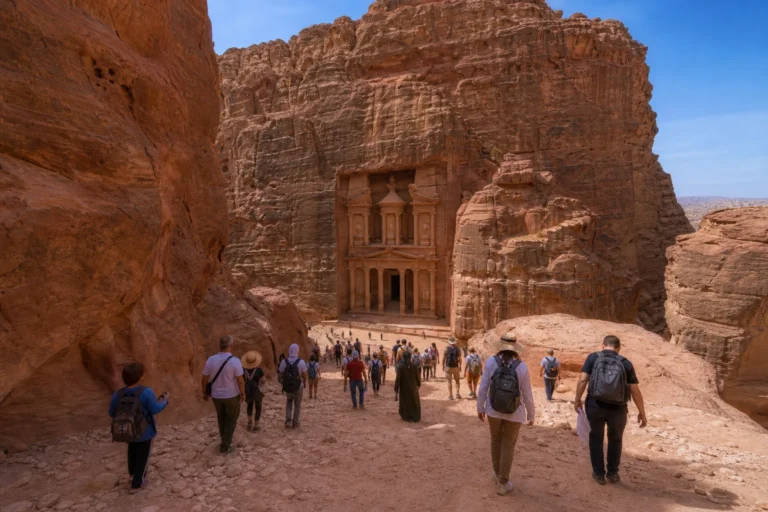
Most visitors enter through the Siq and continue toward the Treasury and central valley. The main route reaches the Street of Facades, Theater, Royal Tombs, Colonnaded Street, Great Temple, Qasr al-Bint, and the area near the Petra Museum.
Longer walks lead toward the High Place of Sacrifice, Ad-Deir, and viewpoints above the valley.
The Siq
The Siq is Petra’s dramatic eastern entrance, a natural sandstone gorge leading toward the Treasury. Formed through geological fractures and later developed as an approach to the Nabataean city, it narrows and bends between high walls of red, orange, yellow, and pink stone.
Its enclosed scale makes the arrival at the Treasury especially powerful.
Along the route, look for ancient paving, rock-cut features, niches, inscriptions, channels, and traces of water-control works. Nabataean engineers used the gorge as part of Petra’s wider water system, directing and managing seasonal flow.
The walk is the main approach from the visitor area, although uneven surfaces, shade changes, animal traffic, and occasional water runoff can affect the experience.
Al Khazna (The Treasury)
Al Khazna, commonly called the Treasury, is Petra’s most famous rock-cut monument. It stands where the narrow Siq opens into the ancient city, creating one of Jordan’s most memorable archaeological views.
The rose-red sandstone façade rises about 39.5 metres and combines local carving traditions with Hellenistic architectural forms.
Despite its name, the monument was probably a royal mausoleum rather than a treasury. Many archaeologists associate its construction with the reign of Nabataean King Aretas IV, between 9 BC and AD 40.
Its decoration includes Corinthian capitals, winged griffins, vessels, plant scrolls, Amazons, and a central figure identified with Isis. Take time to study the façade and its setting, but do not climb or touch the carved surfaces.
Ad Deir (The Monastery)
Ad Deir, traditionally known as the Monastery, is one of Petra’s largest and most imposing monuments. Carved into the cliff face of Jabal ad-Dayr, its broad façade measures approximately 46.77 metres wide and 48.3 metres high.
Its decoration is more restrained than the Treasury’s, with niches replacing many sculpted figures.
The monument was probably built during the late first or early second century AD, possibly under King Rabel II. Later, the hall was reused as a Christian chapel, and carved crosses help explain its modern Arabic name.
The usual route climbs roughly 800 steps over about 1.6 kilometres from near Qasr al-Bint, passing sanctuaries, tombs, betyl niches, and the Lion Triclinium.
Petra Royal Tombs
The Petra Royal Tombs are four monumental burial façades carved into the western slope of Khubtha Mountain. Their elevated position overlooks Petra’s central valley and creates a strong combination of archaeology, geology, and views.
The group includes the Urn Tomb, Silk Tomb, Corinthian Tomb, and Palace Tomb.
The Urn Tomb was later converted into a Byzantine church, while the naturally banded sandstone of the Silk Tomb creates one of Petra’s most distinctive façades. The Corinthian Tomb recalls the Treasury’s Hellenistic-inspired architecture, and the Palace Tomb is the largest and most elaborate of the group.
Steps, uneven ground, exposed sun, and limited shade make supportive footwear and water useful.
Petra Theater
The Petra Theater is a large semicircular performance and assembly space carved directly into the sandstone mountainside. It stands near the Street of Facades and the Royal Tombs, beneath the High Place of Sacrifice.
Unlike a freestanding Roman theatre, much of its auditorium was cut from one continuous rock face.
The monument probably originated during Petra’s Nabataean period and was later adapted under Roman rule. Its auditorium includes rising horseshoe-shaped seating, vertical stairways, and horizontal passageways.
Creating the theatre damaged earlier rock-cut tombs, whose remains can still be seen around the upper seating area. This overlap makes the site valuable for understanding Petra’s layered urban history and civic development.
Qasr al-Bint Temple
Qasr al-Bint, also called the Palace of the Pharaoh’s Daughter, is Petra’s principal surviving freestanding temple. It stands near the western end of the Colonnaded Street, within a sacred precinct that formed one of the city’s major religious centres.
The Arabic name comes from a later local legend, not the temple’s original history.
The nearly square monument reflects Hellenistic architectural traditions and probably dates to the first half of the first century AD. Scholars commonly associate it with Dushara, the chief male deity of the Nabataeans, although details of worship remain debated.
Nearby water channels demonstrate Petra’s hydraulic planning, while the Temenos Gate marks the ceremonial approach. Follow official access guidance and avoid climbing or touching the remains.
Petra Church Complex
The Petra Church Complex is a group of three Byzantine churches built above earlier Nabataean structures and tombs. It includes the Ridge Church, Blue Chapel, and the larger Petra Church, occupying a raised position overlooking the central valley.
The buildings are especially notable for architectural reuse and water-management features.
The principal church is known for its preserved mosaic pavement, with medallions depicting animals, birds, people, plants, vessels, and personifications of the seasons, ocean, earth, and wisdom. A large cistern beneath the Ridge Church collected rainwater, while the Blue Chapel’s four blue Egyptian granite columns were probably moved from a nearby Nabataean monument.
Remain on marked paths and protect the mosaics.
Little Petra (Siq al-Barid)
Little Petra, also called Siq al-Barid, is a Nabataean site north of Petra’s main city. It probably served as a caravan station on routes connecting southern Arabia with Gaza, where traders could rest, eat, exchange goods, and obtain water.
The approach passes through a narrow natural cleft in the sandstone.
Inside, visitors find carved façades, open courtyards, cisterns, dams, water channels, and rock-cut dining halls. Several tricliniums, or dining rooms, suggest formal meals, hospitality, or ritual feasting.
The wider Bayda area adds further archaeological context, including a Neolithic farming settlement and a later church. Uneven ground, exposed sun, and limited shade make sturdy footwear, water, and sun protection useful.
Jabal Haroun
Jabal Haroun, or Mount Aaron, is a sacred mountain southwest of Petra. Local, biblical, and Islamic traditions identify it as the burial place of Aaron, brother of Moses.
A small white-domed shrine at the summit is visible from many parts of Petra, while the high setting provides views across Petra’s mountains, Wadi Araba, and the Ashara range.
The mountain preserves evidence of long religious use, including a Byzantine monastic complex dating mainly from the fourth and fifth centuries and a summit shrine established during the fourteenth century. The official trail begins near Pharaoh’s Column and covers about seven kilometres one way.
Best Time to Visit Petra
Spring and autumn, particularly March to May and September to November, are generally the most comfortable periods for exploring Petra on foot. Daytime conditions are usually more suitable for extended hikes than during the hottest part of summer.
Start early whenever possible. Morning usually brings cooler walking conditions and softer light in the Siq and around the Treasury.
Winter can offer quieter visits and pleasant daytime sightseeing, although cold conditions, wind, rain, and occasional flash-flood risk require flexibility. Summer visits remain possible, but heat can make exposed trails and climbs demanding, especially around the Monastery and high viewpoints.
Plan conservatively, carry water, wear sturdy footwear, and check official site guidance before setting out.
Getting Around Petra
Petra is reached through the visitor area at Wadi Musa, with road connections to Amman, Aqaba, and other Jordanian destinations by car, taxi, bus, or organised transfer. Inside the archaeological park, the principal experience is on foot.
The Siq leads into the central valley, while branching trails connect the Treasury, Royal Tombs, Theater, Qasr al-Bint, Church Complex, and Monastery.
Distances, uneven ground, steps, heat, and steep ascents make a full visit physically demanding. Licensed transport options may be available for parts of the approach or for visitors needing assistance; confirm arrangements at the Visitor Center.
Little Petra and Jabal Haroun are separate outings rather than simple extensions of the main walking route.
Location
Map of Petra, Jordan
The interactive map loads only when you choose to view it.
Plan Your Visit to Petra
Petra is accessed through the visitor center near Wadi Musa. Official tourism information lists road, taxi, JETT bus, and public-minibus connections from Amman, with buses also available from Aqaba.
The archaeological park is extensive, uneven, and largely explored on foot, so plan a full day for the principal route and longer for Ad Deir, viewpoints, or side trails. Wear supportive footwear, carry water and sun protection, and allow extra time for uphill sections.
Confirm current entry requirements, trail access, transport arrangements, and any weather-related restrictions through Visit Petra or the Petra Development and Tourism Region Authority before departure.
Local Tips for Petra
Base yourself in Wadi Musa, where accommodation, restaurants, shops, taxis, and visitor services are concentrated around the archaeological-site entrance. Start early to experience the Siq, Treasury, Theater, Royal Tombs, and Qasr al-Bint in more comfortable temperatures and with fewer visitors.
The main route and major monuments can be combined with longer walks toward the Monastery, while Little Petra and Jabal Haroun require separate planning. Consider hiring a licensed local guide for historical context and route orientation, and agree clearly on the itinerary and services before setting out.
Respect local customs and support authorised local businesses.
Live conditions
Current Weather

Updated 2026-09-20 16:45
- Feels like
- 26°C / 79°F
- Today’s high / low
- 30°C / 86°F · 19°C / 65°F
- Humidity
- 24%
- Wind
- ↘ 16 km/h
- Precipitation
- 0 mm
- Chance of rain
- 1%
- Local time
- 2026-09-20 16:50
Safety in Petra
Petra combines desert exposure, steep stairways, narrow passages, loose surfaces, and long walking distances. Heat, dehydration, sun exposure, fatigue, and slips are realistic risks, so pace yourself, drink regularly, and avoid isolated or strenuous trails without adequate preparation.
Flash floods can affect wadis and confined routes after heavy rain. Follow authority instructions and do not enter flood-prone areas when conditions are uncertain.
Stay on established paths, do not climb or touch fragile monuments, and follow site barriers and staff directions. Use official tickets and authorised guides or transport providers, keep valuables secure, and carry a charged phone, identification, and essential medication.